News
Matteo Bruni: Pope Leo XIV’s name choice highlights the Church’s mission

- /home/u249204778/domains/spectator.com.gh/public_html/wp-content/plugins/mvp-social-buttons/mvp-social-buttons.php on line 27
https://spectator.com.gh/wp-content/uploads/2025/05/IMG-20250509-WA0013.jpg&description=Matteo Bruni: Pope Leo XIV’s name choice highlights the Church’s mission', 'pinterestShare', 'width=750,height=350'); return false;" title="Pin This Post">
- Share
- Tweet /home/u249204778/domains/spectator.com.gh/public_html/wp-content/plugins/mvp-social-buttons/mvp-social-buttons.php on line 72
https://spectator.com.gh/wp-content/uploads/2025/05/IMG-20250509-WA0013.jpg&description=Matteo Bruni: Pope Leo XIV’s name choice highlights the Church’s mission', 'pinterestShare', 'width=750,height=350'); return false;" title="Pin This Post">
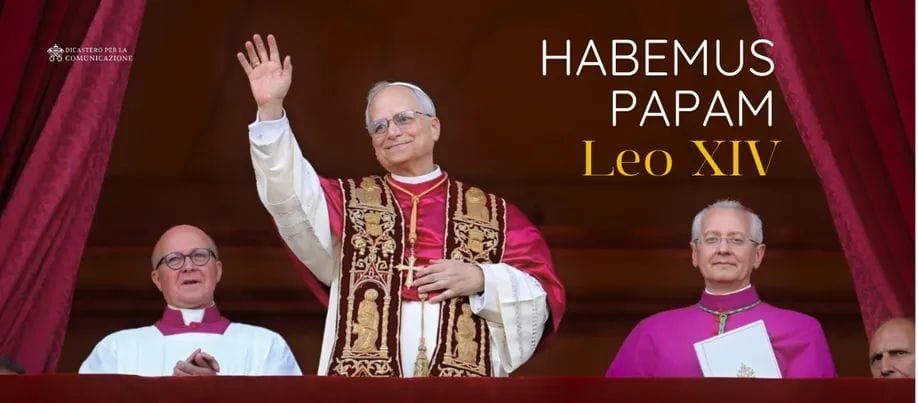
Shortly after the announcement of the new Pope, Matteo Bruni, Director of the Holy See Press Office, addressed journalists at a conference in the Holy See Press Office.
“We have heard the Pope’s first words,” said Bruni, words of peace, “unarmed and disarming.”
Bruni noted that the Pope spoke of dialogue, and that his first blessing recalled Pope Francis’ message just a few days ago, on Easter Sunday: “God cares for us, He loves you all, and evil will not prevail”.
Turning to the name chosen by the new Pope, Bruni confirmed that the decision to be called Leo XIV was a clear and deliberate reference to Pope Leo XIII, author of the 1891 encyclical Rerum Novarum. That document marked the beginning of the Church’s modern social doctrine.
“In this context,” Bruni said, “it is clearly a reference to the lives of men and women, to their work – even in an age marked by artificial intelligence.”
The new Pope will celebrate Mass with the College of Cardinals on Friday at 11:00 in the Sistine Chapel. The liturgy will be broadcast live.
On Sunday, he will lead the Regina Coeli prayer at 12:00 from the central loggia of St Peter’s Basilica.
Then on Monday, 12 May at 10:00, Pope Leo XIV will meet with media professionals in the Paul VI Hall.
Source: The Vatican News



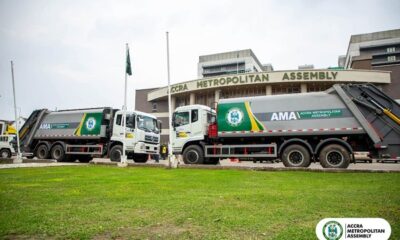

Lauritz Knudsen Electrical and Automation, a unit of Schneider Electric, has deepened its investment in Ghana with a showcase of new low voltage switchgear, industrial and agricultural automation solutions.
The company with over 70 years of engineering experience, brought together partners, distributors and customers at Nova Plus in Accra to unveil its expanded portfolio tailored for the Ghanaian market.
The move comes as Ghana prioritises grid modernisation and industrialisation.
Power outages cost the economy an estimated $2.1 billion annually, about two per cent of Gross Domestic Product affecting real estate, agriculture, manufacturing and other sectors.
The Head of Strategy, Business Development, Pricing and LK MEA International Operations, Dallal Slimani said the company’s technology was built to suit Ghana’s environment.
“Our low voltage switchgear is engineered to keep critical operations running through exactly the kind of instability Ghanaian businesses deal with every day, whether that’s a mining camp running off-grid or a hospital that cannot afford a single second of downtime,” she said, adding that “We’re bringing technology refined through years of working alongside our partners here.”
According to her, Lauritz Knudsen solutions were critical across mining, oil and gas, manufacturing, healthcare, data centers, and real estate in hubs like Tema and Accra.
She said her outfit expected demand to grow as the Energy Commission rolled out regulations for EV charging infrastructure.
“With an existing distribution network in Ghana, Lauritz Knudsen plans to expand further into medium voltage switchgear, smart energy management, and solar,” Ms Slimani stated.
She said the company had supported over 50GW of solar capacity globally.
The Business Development Manager of Lauritz Knudsen in charge of West Africa, Valentine Mbachu, noted that unreliable power directly impacts productivity.
“A $2.1 billion annual loss isn’t an abstract figure, it’s downtime on factory floors, spoiled inventory, and stalled investment decisions. We’ve built strong partnerships in Ghana because this market has the industrial ambition to grow fast,” he said.
BY EDEM TSORTORME
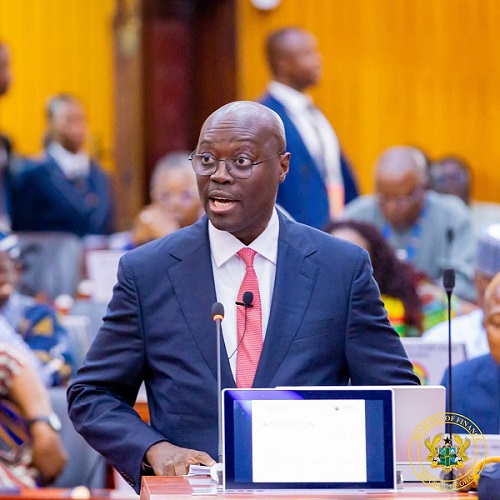
The International Monetary Fund (IMF) has approved the final review of Ghana’s US$3 billion Extended Credit Facility (ECF) programme, bringing the country’s bailout programme to an end after three years.
The Minister of Finance, Dr Cassiel Ato Forson announced on his facebook in a statement onTuesday , July 28, 2026, that the approval unlocks a final disbursement of about US$371 million to the Bank of Ghana. This brings the total amount received under the programme to US$3 billion.
The bailout programme began in May 2023 following Ghana’s economic crisis in 2022.
According to the statement , the successful completion of the programme shows that Ghana has made significant progress in stabilising the economy.
It explained that the government maintained fiscal discipline, reduced inflation, strengthened foreign exchange reserves, and implemented key economic reforms during the programme period.
The ministry indicated that Ghana would now move into a new phase of engagement with the IMF through a 36-month Policy Coordination Instrument (PCI).
It noted that the PCI is not a bailout programme and does not provide financing, but would support the government’s reform agenda and help maintain confidence in the country’s economic policies.
The government expressed appreciation to Ghanaians for their patience, resilience, and support throughout the reform programme.
It thanked the IMF Executive Board, IMF management and staff, development partners, civil society organisations, and the private sector for their support.
The Ministry of Finance stated that the government remains committed to protecting the gains made under the programme and continuing reforms aimed at building a stronger and more resilient economy.
By: Jacob Aggrey