News
12 teachers trained on Gender-Based Violence in schools

- /home/u249204778/domains/spectator.com.gh/public_html/wp-content/plugins/mvp-social-buttons/mvp-social-buttons.php on line 27
https://spectator.com.gh/wp-content/uploads/2024/08/Particpants-displaying-their-certificates-after-the-training-1000x600.jpg&description=12 teachers trained on Gender-Based Violence in schools', 'pinterestShare', 'width=750,height=350'); return false;" title="Pin This Post">
- Share
- Tweet /home/u249204778/domains/spectator.com.gh/public_html/wp-content/plugins/mvp-social-buttons/mvp-social-buttons.php on line 72
https://spectator.com.gh/wp-content/uploads/2024/08/Particpants-displaying-their-certificates-after-the-training-1000x600.jpg&description=12 teachers trained on Gender-Based Violence in schools', 'pinterestShare', 'width=750,height=350'); return false;" title="Pin This Post">
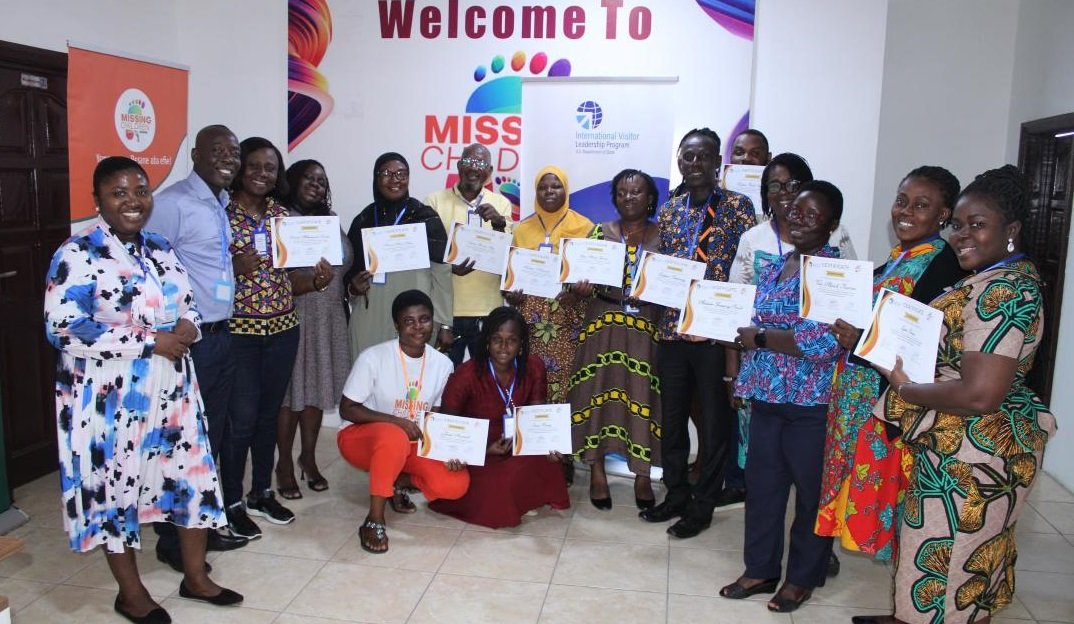
Twelve teachers from 10 schools in the Greater Accra Region have been trained as gender advocates to help fight Gender-Based Violence (GBV) within their schools.
This training formed part of the “Young voices matter: empowering boys and girls in the fight against GBV” project, led by Regina Asamoah, an International Visitor Leadership Programme (IVLP) Impact Awardee.
It covered essential aspects of GBV, including understanding its dynamics, recognising psychological impacts, leveraging technology for intervention, and employing age-appropriate communication strategies.
Speaking at the event, ACP (Rtd.) Dr. Patience Quaye, a U.S. Embassy Ghana GBV Champion and Fellow of Missing Children Ghana, said gender-based violence was a crime against humanity, hence the need to educate learners, support survivors, and ensure that perpetrators face justice.
She also addressed the potential for teachers to be perpetrators and highlighted the importance for school to have policies and procedures for reporting and addressing such incidents.
A Clinical Psychologist and Senior Lecturer at the University of Ghana Medical School (UGMS), Dr Dzifa Abrah Attah, guided the teachers in identifying psychological traits in learners that may indicate they are experiencing GBV and taught them how to provide emotional and psychological support.
Dr Attah encouraged teachers to familiarise themselves with their school’s mental health resources, consider referrals, follow up on them, and provide academic accommodations during students’ recovery.
Prof. Samuel Kojo Kwofie, Head of the Biomedical Engineering Department at the University of Ghana, educated teachers on the use of technology to address Gender-Based Violence (GBV).
Prof. Kwofie said there were Technology-Facilitated Gender-Based Violence (TFGBV), which includes cyber stalking, cyberbullying, doxxing (searching for and publishing private or identifying information about a particular individual on the internet, typically with malicious intent), cyber mob attacks, image-based abuse, online impersonation, sextortion (a form of online blackmail where the typically unknown offender creates a fake online profile and tricks or coerces the victim into sending sexual images of themselves), online harassment, revenge porn.
TFGBV is a kind of digital violence committed and amplified through the use of information and communications, technologies or digital spaces against a person based on gender.
“Many of our students may be experiencing TFGBV, and we need to be vigilant, especially given that almost every student has a phone and spends a significant amount of time online,” he said.
Prof. Kwofie advocated the development of locally relevant apps tailored to address the specific manifestations of GBV in schools.
By Jemima Esinam Kuatsinu








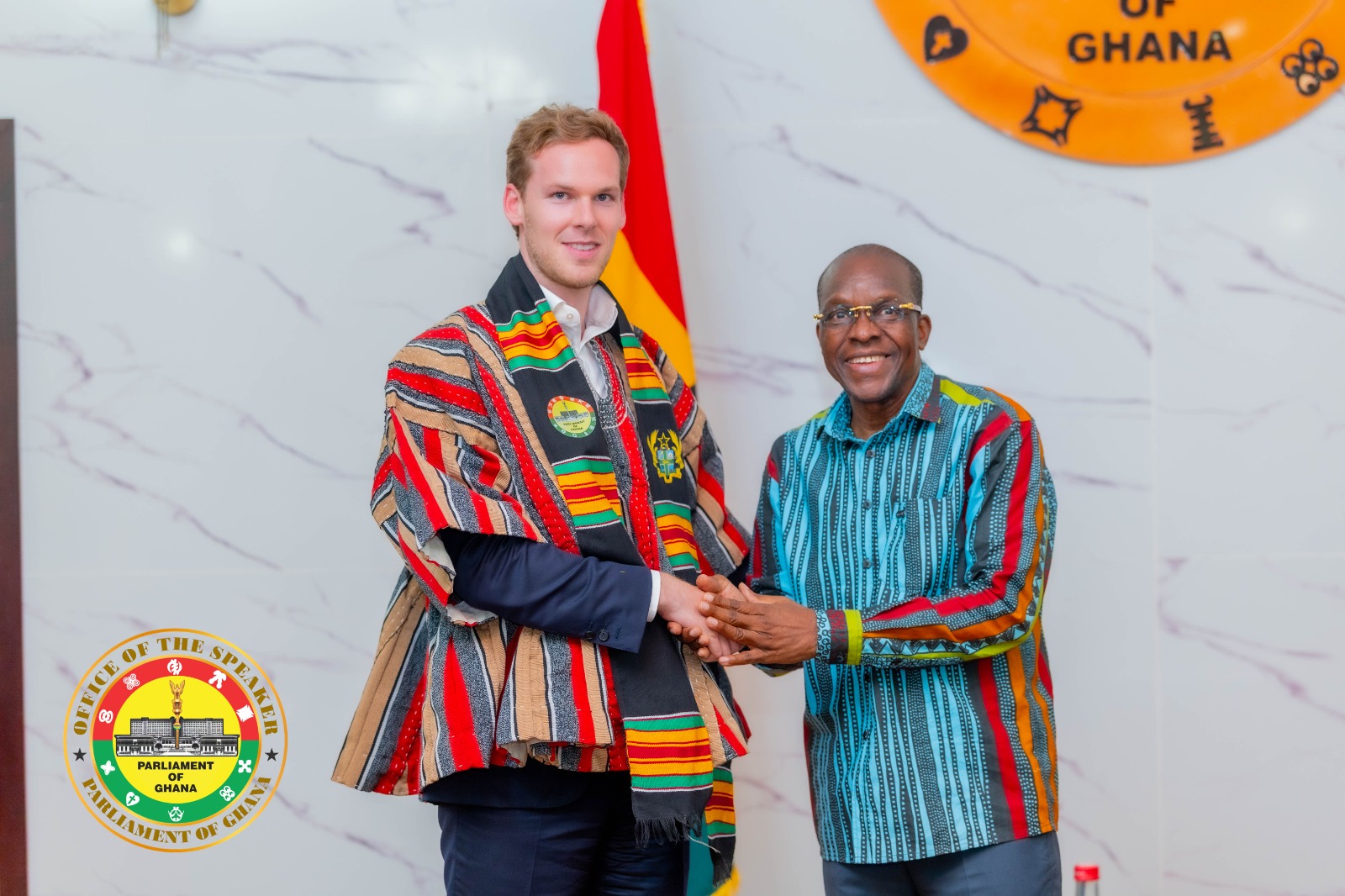
Mr. Alban Sumani Kingsford Bagbin has announced private sector led initiative that will see “Visit Ghana” on the “front of jersey” of Sunderland Football Club for the 2026/2027 football season.
The “Visit Ghana” project is a special marketing drive that will have presence on the front of jersey of Sunderland Football Club during the English Premier League.
Under this initiative, Sunderland FC will have on the front of their jerseys, “Visit Ghana” as part of efforts to drive and promote tourism in Ghana.
“We are entering a formal engagement with them to put Visit Ghana on their jerseys and all paraphernalia.
“We have gone far with the discussions, and therefore they usually showing interest,” Mr. Bagbin stated this at the 37th sitting of Parliament.
Mr. Bagbin explained further that, the initiative is not being sponsored by Parliament, but by the private sector adding that, the project will boost tourism in Ghana.
“This is not being sponsored by parliament. Infact the main sponsor is from the private sector, we are leading under my canopy to get this done.
“The GFA, the Ministry of Sports and Recreation and the Ministry of Finance have also been very supportive in this project,” he stated.
The Visit Ghana Front of Shirt Partnership with Sunderland, is expected to make Ghana the first African country to occupy such a position with a premier league club, and also offer global promotion for Ghana through EPL broadcasts, digital platforms and international media channels.
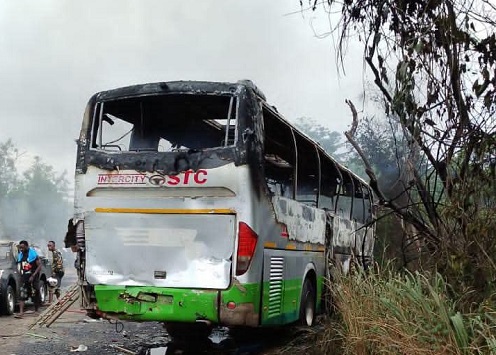
Motorists traveling between Accra and Kumasi are facing major delays today following a serious road crash at Birimso Bridge on the N6 Highway.
The accident, which involved a high-occupancy passenger bus, a loaded articulated truck, and a sedan, has completely blocked both lanes of the highway. As a result, all Accra-bound and Kumasi-bound traffic has been brought to a standstill.
Personnel from the Eastern South Regional Police MTTD, based in Kibi, are currently at the scene managing the situation.
To ease congestion, police have put in place temporary traffic diversions effective today.
By Edem Mensah-Tsotorme