News
Tackling gender discrimination …Give boys, girls equal opportunity to thrive


- /home/u249204778/domains/spectator.com.gh/public_html/wp-content/plugins/mvp-social-buttons/mvp-social-buttons.php on line 27
https://spectator.com.gh/wp-content/uploads/2024/04/Boys-and-girls-deserve-an-equal-opportunity-to-thrive-1.jpg&description=Tackling gender discrimination …Give boys, girls equal opportunity to thrive', 'pinterestShare', 'width=750,height=350'); return false;" title="Pin This Post">
- Share
- Tweet /home/u249204778/domains/spectator.com.gh/public_html/wp-content/plugins/mvp-social-buttons/mvp-social-buttons.php on line 72
https://spectator.com.gh/wp-content/uploads/2024/04/Boys-and-girls-deserve-an-equal-opportunity-to-thrive-1.jpg&description=Tackling gender discrimination …Give boys, girls equal opportunity to thrive', 'pinterestShare', 'width=750,height=350'); return false;" title="Pin This Post">
Boys and girls deserve an equal opportunity to thrive
Every girl and boy deserves an equal chance to survive and thrive, yet gender discrimination, continues to rob them of their childhood and limit their potentials.
The United Nations Economic and Social Commission for Western Asia (UNESCWA) defines gender discrimination as any distinction, exclusion or restriction made on the basis of sex which has the effect or purpose of impairing or nullifying the recognition, enjoyment or exercise by women, irrespective of their marital status, on the basis of equality of men and women, of human rights and fundamental freedoms in the political, economic, social, cultural, civil or any other field.
Gender discrimination has the tendency to deny girls their rights, kept from school, forced to marry and subjected to violence while her voice is undervalued. This assault on childhood also deprives nations of the energy and talent they need to progress.

According to the United Nations Children’s Fund (UNICEF), boys also suffer from gender norms. Notions of masculinity can fuel child labour, gang violence and recruitment into armed groups. No matter where it prevails, or how it manifests, gender inequality harms every member of society.
An International Organisation, Save the Children says, it will take over 200 years to achieve gender equality, and that is just in the United States of America (USA).
The organisation therefore describes as unacceptable, adding that together, we can create a more equal world, right from the start.
What are the causes of gender discrimination?
Gender discrimination begins from childhood. From the moment girls and boys are born, they face unequal gender norms as well as social norms regarding expectations and access to resources and opportunities in their homes, schools and communities.
For example, girls are most often made to carry or do household chores with the notion of preparing them for future marriage, pregnancy and caring for their children while the boys are often encouraged to go to school and get an education to prepare for work.
This tendency often leads to child marriage and pregnancy among girls.
Effects of gender discrimination
In Ghana, gender discrimination among boys and girls exposes them to the possibility of child marriage, teenage pregnancy, child domestic work, poor education and health, sexual abuse, exploitation and violence.
Girls are more likely than their male counterparts to drop out of school, marry at an early age, and experience challenges in their sexual and reproductive health and rights. They are also more likely to be exposed to violence and exploited in child labour.
Way Forward
Gender equality is a basic right for all people, including both girls and boys, it is therefore critical for Ghana to directly address gender discrimination in order to ensure that no harm comes to children while ensuring that every child attains their equal right to grow up healthily, educated and safe.
Gender equality is essential to close the inequality gaps including those who are most vulnerable.
To build a more equal, inclusive future, free from gender discrimination, Ghana needs to start in childhood.
Also according to Ghanaians Against Child Abuse (GACA), a social drive campaign for the protection of children and also aimed at reducing violence, abuse, neglect and exploitation of children, gender inequalities were drivers of many child protection violations.
They begin with boys’ and girls’ socialisation in the family, school or community which encourages them to follow specific cultural norms and roles deemed appropriate for their gender.
The gendered socialisation can mean that girls are expected to do more domestic work, not get as much or as quality schooling as boys, to marry younger, be less mobile, or tolerate physical and sexual abuse.
Conversely, it can mean that boys are expected to be more aggressive, violent, mobile, unruly and responsible for and capable of making money, having a job, etc.
GACA said it is the role of families, schools and communities to ensure boys and girls grow up with more gender equitable roles and practices, and achieve gender equitable outcomes in protection, safety and life opportunities.
According to UNICEF, Gender equality means that girls and boys enjoy the same rights, resources, opportunities and protections. In 2021, UNICEF ushered in a new gender policy (2021–2030) articulating its vision for gender equality in its programmes, as well as at workplaces and practices, around the globe.
The Gender Action Plan (2022– 2025) charts UNICEF’s way forward with a series of time-bound results that deliver lasting, transformative change for children, adolescents and women worldwide.
UNICEF and other international organisations are working with partners in Ghana on a variety of educational initiatives including the development of gender-responsive school curricula; gender training for education professionals to help eliminate gender discrimination.
Conclusion
Tackling gender discrimination in boys and girls is a collective responsibility for all Ghanaians. It is therefore important for individuals, organisations and governments to take deliberate steps to achieve gender equality for all irrespective of one’s gende
By Jemima Esinam Kuatsinu


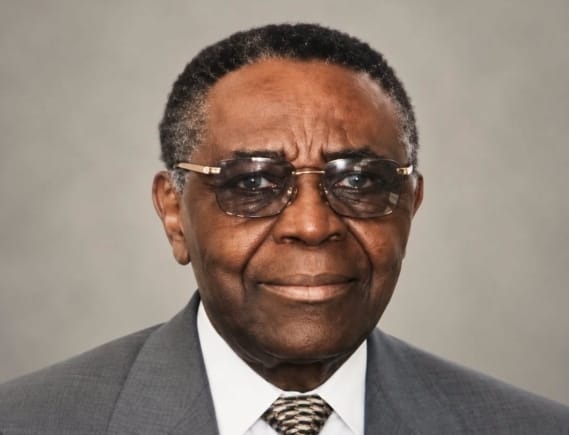
The New Patriotic Party (NPP) has announced with profound sorrow the passing of Ambassador Samuel Arthur Odoi-Sykes, describing him as an eminent statesman, distinguished patriot, and one of the founding pillars of the party.
In a statement issued by the party, Ambassador Odoi-Sykes was eulogized for dedicating several decades of his life to the service of Ghana and the cause of democratic governance.
“His constant dedication to public service, constitutional democracy, and principled political leadership earned him the admiration and respect of colleagues across the political divide,” the statement said.
Ambassador Odoi-Sykes served as Member of Parliament for Ashiedu Keteke, now Odododiodio, during the Third Republic, where he rose to become Minority Leader of Parliament. He was noted for his exemplary parliamentary leadership and advocacy for democratic ideals.
As a founding father of the NPP, he played a pivotal role in laying the institutional and ideological foundations of the party.
His leadership as National Chairman from 1998 to 2001 was instrumental in uniting and strengthening the NPP, culminating in its historic electoral victory in the year 2000 and the first democratic transfer of power between political parties under the Fourth Republic.
Following that landmark achievement, he continued his service to the Republic as Ghana’s High Commissioner to Canada from 2001 to 2006, where he represented the nation with distinction and enhanced Ghana’s diplomatic relations abroad.
The party noted that throughout his lifetime, Ambassador Odoi-Sykes served on numerous national and party committees, offering wise counsel, strategic leadership and invaluable institutional memory.
“His integrity, humility, intellect, and constant commitment to Ghana’s democratic development will remain an enduring source of inspiration for present and future generations,” the NPP said.
“His passing marks the end of an illustrious chapter in Ghana’s political history. The nation has lost a distinguished public servant, while the New Patriotic Party has lost one of its most respected elder statesmen and steadfast architects.”
The party extended its deepest condolences to his wife, children, the entire Odoi-Sykes family, friends, and associates.
“As we mourn his passing, we also celebrate a life exceptionally lived in faithful service to God, country, and the Party. Ambassador Samuel Arthur Odoi-Sykes has indeed paid his dues, and his legacy of principled leadership, patriotism, and selfless service will forever remain etched in the annals of Ghana’s democratic history.
“May his soul rest in perfect peace, and may his memory keep inspiring generations yet unborn,” the statement concluded.
By Edem Mensah-Tsotorme
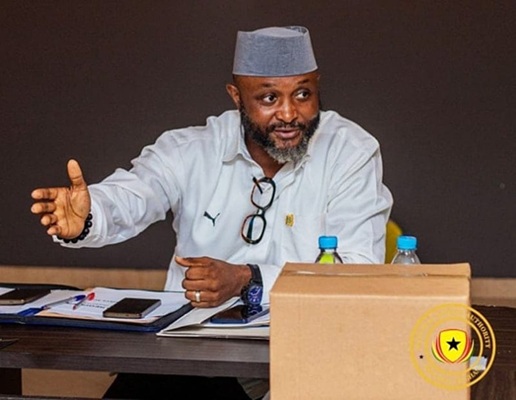
Lawyers for suspended National Sports Authority (NSA) Director-General, Yaw Ampofo Ankrah, say he will not appear before Parliament for now because matters concerning him are currently under investigation by the Criminal Investigations Department (CID) of the Ghana Police Service.
In a statement issued on behalf of Mr Ampofo Ankrah, his legal counsel, Jerry Avenorgbor of Brookman Amissah & Associates, said the sports administrator has cooperated and will continue to cooperate with the police as they work to establish the facts.
The lawyers said Mr Ampofo Ankrah and his representatives would refrain from making detailed public comments on the allegations while the investigation is ongoing.
They urged the media and the public to exercise restraint and avoid presenting allegations, speculation or unverified information as established facts.
The lawyers stressed that the existence of an investigation does not, by itself, amount to a finding of wrongdoing against Mr Ampofo Ankrah or any other person.
On calls for Mr Ampofo Ankrah to appear before Parliament, his lawyers said it would be “imprudent” for him to do so while the CID investigation remains active and he is under suspension.
According to them, appearing before Parliament at this stage could create complications for the investigation and potentially affect the process through which the facts are being established.
Mr Ampofo Ankrah has therefore decided to defer any appearance until the investigation has been concluded and the circumstances surrounding his suspension have been determined by the appropriate authorities.
His lawyers, however, stressed that the decision should not be interpreted as a refusal to submit to lawful processes or to account to Parliament or any other constitutionally mandated institution.
They explained that the position is intended to protect the integrity of the ongoing investigation and prevent any action that could potentially interfere with it.
The lawyers further indicated that if his suspension is lifted and he is restored to his position as Director-General of the NSA at the discretion of the Office of the President, he will respond appropriately to any lawful request to appear before Parliament or another competent institution.
Mr Ampofo Ankrah and his legal representatives are expected to respond to the findings of the investigation and address any issues requiring clarification once the appropriate authorities have completed their work.
They have meanwhile called for patience and respect for the ongoing investigative process.
By: Jacob Aggrey