News
Vaccinate boys, girls against cervical cancer

- /home/u249204778/domains/spectator.com.gh/public_html/wp-content/plugins/mvp-social-buttons/mvp-social-buttons.php on line 27
https://spectator.com.gh/wp-content/uploads/2024/02/Dr-Partey-Newman-2.jpg&description=Vaccinate boys, girls against cervical cancer', 'pinterestShare', 'width=750,height=350'); return false;" title="Pin This Post">
- Share
- Tweet /home/u249204778/domains/spectator.com.gh/public_html/wp-content/plugins/mvp-social-buttons/mvp-social-buttons.php on line 72
https://spectator.com.gh/wp-content/uploads/2024/02/Dr-Partey-Newman-2.jpg&description=Vaccinate boys, girls against cervical cancer', 'pinterestShare', 'width=750,height=350'); return false;" title="Pin This Post">
Dr Partey-Newman
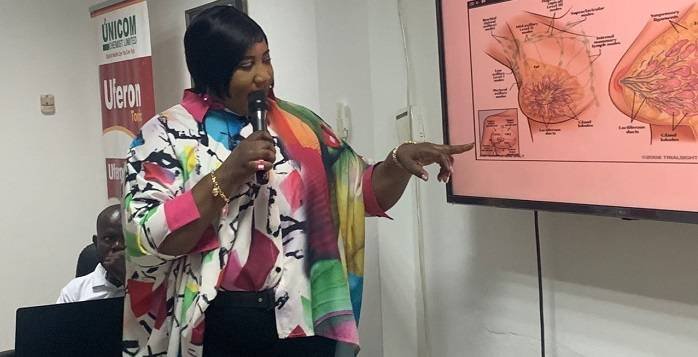
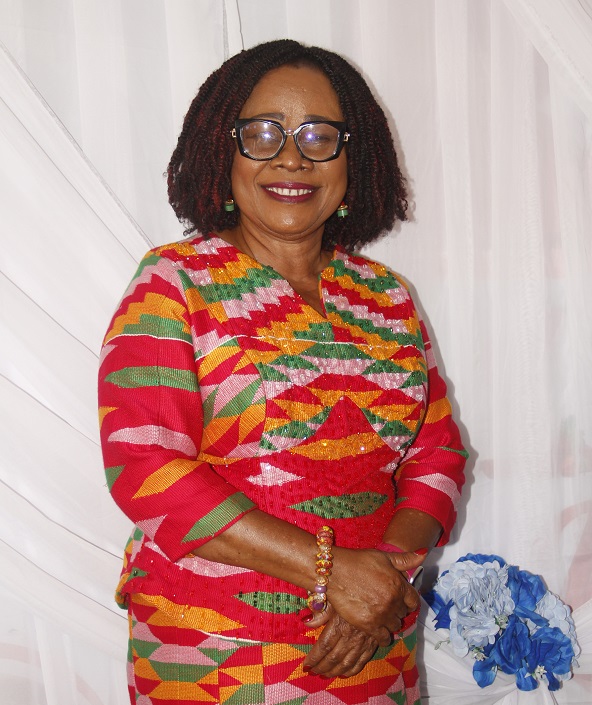
Dr Victoria Partey-Newman, a Resident Public Health Physician, West African College of Surgeons (WACS), has advocated the vaccination of both boys and girls in the fight against cervical cancer.
In her view, it was the most effective way to prevent the disease from spreading.
Consequently, she expressed the view that it should be engrafted in the educational policy of the country for the Human Papillomavirus (HPV) vaccine to be administered in schools to boys and girls from the age of nine.
According to her, vaccinating both boys and girls could facilitate the eradication of the HPV and also protect boys from infection, reduce transmission, increase herd immunity and effectively reduce HPV associated diseases.
She explained that although men do not suffer from the cancer, they can still contract the HPV after having sex with an infected woman and transmit it.
Dr Partey-Newman said this in an interview with The Spectator on Tuesday in Accra as Ghana joined the world to commemorate the Cervical Cancer awareness month observed in January every year.
The theme for 2024 edition is ‘learn, prevent, screen.’
The month is set aside each year by the World Health Organisation (WHO) to raise awareness of the disease and vaccination against HPV, which is the main cause of cervical cancer.
According to WHO, this year’s Cervical Cancer Awareness Month aims to highlight the importance of increasing access to HPV vaccines, regular screening, and state-of-the-art treatment for cervical cancer in its early stages.
It said, its shared objective was to dramatically reduce the occurrence of cervical cancer by 2030 and to eliminate the disease as a public health problem by 2120.
Dr Partey-Newman, who is also the Chief Executive Officer of Ladybits Health and Wellness Center said “due to our culture about sex, most young girls have not yet been vaccinated right from age nine in schools.”
She urged women to be proactive with their health by visiting the hospital when they experience vaginal bleeding after sex, bleeding after menopause, bleeding between periods, pain during sex, watery vaginal discharges with odour which sometimes contains blood.
She urged women to go for their regular screening each year and avoid smoking, having multiple sexual partners, eat a well-balanced diet and exercise regularly.
Dr Party-Newman mentioned that cervical cancer was primarily caused by persistent infection with high-risk strains of human papillomavirus (HPV).
Currently, she said estimates show that every year 2,797 women are diagnosed with cervical cancer, out of which 1,699 die from the disease.
She said the Catalan Institute of Oncology (ICO) and the International Agency for Research on Cancer (IARC) ranked cervical cancer as the second most frequent cancer among women in Ghana and the second most frequent cancer among women be
By Jemima Esinam Kuatsinu

A nine-member board for the New Times Corporation (NTC), publishers of The Ghanaian Times and The Spectator newspapers was sworn into office on Thursday with a call to strengthen the governance of the Corporation.![Dr. Binka (seated second from right) with Dr Okpoti [right] the board and Management of NTC photos Okai Elizabeth.](https://spectator.com.gh/wp-content/uploads/2026/08/Dr.-Binka-seated-second-from-right-with-Dr-Okpoti-right-the-board-and-Management-of-NTC-photos-Okai-Elizabeth-1024x683.jpg)
The new NTC board is chaired by Dr Charity Binka and has Very Rev. Helena Amma Serwah Opoku-Sarkodie, Mr Tito Kojo Voegborlo Esq and Naana Aklerh Amenyah Kubi I as members. Read More
SKIP THE QUEUE, TAP THE NEWS
You can now read the Ghanaian Times and The Spectator newspapers from the comfort of your device via TimesNewsPlus.
Join our WhatsApp Channel: https://whatsapp.com/channel/0029VbBElzjInlqHhl1aTU27

Christians have been urged to demonstrate a living faith in Jesus Christ by allowing their confession of Him as Lord and Saviour to reflect in their daily lives.
According to the Kaneshie District Pastor of the Evangelical Presbyterian Church, Ghana (EPCG), Rev. Dzidzor Nathaniel Affram, a genuine Christian’s confession should go beyond words and be demonstrated through obedience to God, love for others and service to the Church.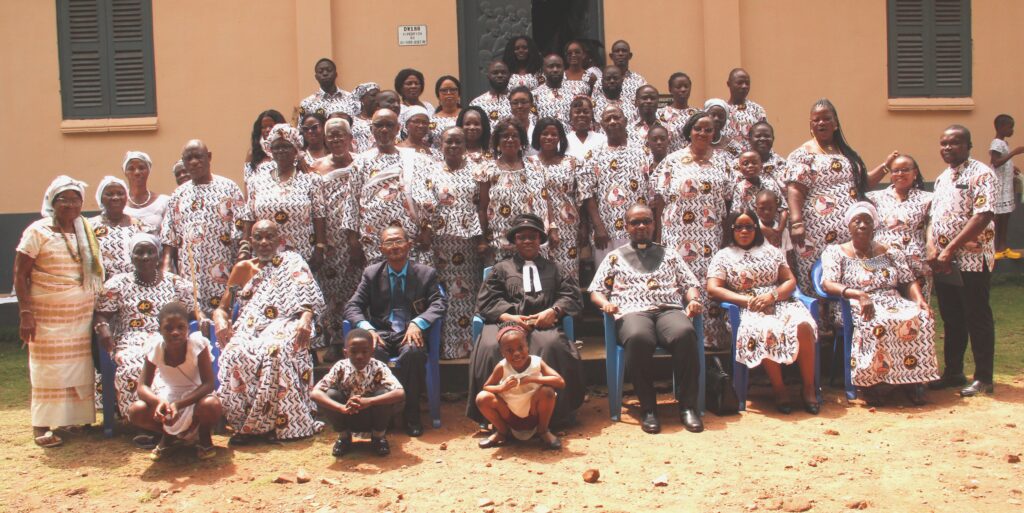
He made the call at the 40th anniversary remembrance service for the late Wesley Kwasi Kwadzo at the Evangelical Presbyterian Church, Ghana, Maranatha Congregation at Awudome Avenui in the Volta Region.
Speaking on the theme, “The Church Built on a Living Confession,” Rev. Affram said life would continually present challenges capable of testing Christians’ faith, making it necessary for believers to hold firmly to their confession that Jesus Christ is Lord.
He explained that accepting Jesus Christ as Lord and Saviour required Christians to live according to His teachings, stressing that their faith must be evident in their conduct.
“A living confession listens to God and not man,” he said, urging Christians to remain obedient to God even when faced with difficulties and pressures.
Rev. Affram further encouraged the congregation to care for vulnerable people and demonstrate concern for others, adding that such acts were practical expressions of Christian faith.
He also urged Christians to identify and use their God-given gifts to build the Church.
He said every member of the Church had a role to play and cautioned Christians against looking down on others because of their status or abilities.
The remembrance service brought together family members, friends, members of the congregation and sympathisers to commemorate the 40th anniversary of the late Wesley Kwasi Kwadzo.
By Lizzy Okai