Features
SAME TRAIN

- /home/u249204778/domains/spectator.com.gh/public_html/wp-content/plugins/mvp-social-buttons/mvp-social-buttons.php on line 27
Warning: Trying to access array offset on false in /home/u249204778/domains/spectator.com.gh/public_html/wp-content/plugins/mvp-social-buttons/mvp-social-buttons.php on line 27
&description=SAME TRAIN', 'pinterestShare', 'width=750,height=350'); return false;" title="Pin This Post">
- Share
- Tweet /home/u249204778/domains/spectator.com.gh/public_html/wp-content/plugins/mvp-social-buttons/mvp-social-buttons.php on line 72
Warning: Trying to access array offset on false in /home/u249204778/domains/spectator.com.gh/public_html/wp-content/plugins/mvp-social-buttons/mvp-social-buttons.php on line 72
&description=SAME TRAIN', 'pinterestShare', 'width=750,height=350'); return false;" title="Pin This Post">
‘‘Same Train carry mother,
‘’Same Train; same Train;
‘’Same Train carry my father;
‘’Same Train carry my brother;
‘’Same Train carry my sister;
‘’Same Train;
‘’Same Train.’’
We were taught to sing ‘’Same Train’’. We learned it is called a ‘’Negro Spiritual.’’ And we did so with gusto at the Kindergarten. The lyrics had no immediate implication for us. So we innocently did not recognize the painful nostalgia which prompted them, unlike the cry in Lamentations Chapter Five particularly. Then we later during the late 30s learned of the ‘’Slave Trade’’. We also learned that some of ancestors participated to get rich. In retrospect, I make it five phases in our Continental history, there had been five phases of becoming wealthy outside of formal trade in whatever else: [i] conquests-loot ; [ii] colonial favors in return for collaboration—scholarships for Kids, relatives and appointments which facilitated the purloining of our treasures, ingrained bribery via largess, creating class; [iii] a culture [actually kulturkampf] of cheating through the paucity of professional know-howers; [iv] pre-independence miseading of ‘winner takes all’; and [v] ‘’Wabenzy’’ the Mercedes Benz signaling political graft progressed into apparently what we have presently. Independence did not initiate a renaissance of back to roots to nurture adopting to adapt systemically. It has been pile on, undergirded by partisanship. Talk and protest about racism hardly discern that it is here. Anyway, let’s freeze my peroration momentarily because the puzzle, if that is, would explain itself away eventually.
Problem is I have always thought that something very significant link up was missing after the abolition of Slave Trade 1865. The phases I have previously sketched were deemed honorable and the best route to achieve, from distinction through influence to confident. Those were also felt as the honest means to earn deserved respect. The key- note which labels it INTEGRITY in private and public. The goals today are said ostensibly to motivate a re-writing of history such as the World is witnessing in the revolt of the ‘colored race’ presently.
The wave of demonstrations against racism and policing spreads and intensifies. For all of its forms, there is only one character common; and this ‘’ANGER’’ which dates back 1918, the end of World War I—slavery had been abolished in the preceding top half of the prior century and the European Colonialists begun a gradual-forced to wrap up and decolonize. Hiccups occurred and the momentum went into stutters dragged into post-World War –II. It is to be noted that the US had not been in that League all that while. Its imperialism consisted of territorial conquests for place to settle, slavery was its adjunct for construction into wealth. But that had officially been abrogated.
It meant the free slaves could live side by side, making life according to ‘work-for-yourself’ without impeded and not treated as down-trodden, yet to be completed for centuries now. European decolonization and evidence of the counter-part ‘’Free Colored’’ into sovereign National States lit the possibility for the Negroes to push their rights in the ‘’New World’’ as it was called. After years of principled dialogues, from marches, often raucous and with the full support of newly independent Africa and Asia at the UN [1945-1975] and the half-shut-mind agreement of the European principal former Colonialists led by Britain, shifted American intransigence to juggle basic racists misconducts to accommodate equality from where eventually, the ‘’Negro’’ became ‘’Afro-American.’’ And its failure represents the street pitched-battles, a running global news headlines.
All of these have a single loss practically, because it obscures the goal and indeed plays into the hands of Resistors. The mini-uprisings have given White America a nightmare whose reaction is to resist into current hostile xenophobia as the ‘’Afros’’ press their case. Then here we are at the junction of a hell-threatening stalemate in a very discordant world as if there is no other solution than flying bricks, tiles, Molotov cocktails, burning-tyres road blocks, take the knee and get responses in knee-choker, tear gas and live shots on killing spree, because ‘they are black, it is said and believed conclusively because there is no other tangible excuse to contradicted.
The attacks and counter would have to taper off and the questions are: what did we achieve and is the circus of violence and protests over?. The whole game seems to me to be that each side strides into cessation with pyrrhic trophies. That leaves the ‘’Trojan Horse’’ to re-open by another incendiary—not George Floyd. I think without waiting for that, it is time for quiet reflection bringing back memory lane’s experiences and lessons to foster the new approach to gain the goal—if you don’t mind the hype, the ‘golden fleece’ to shut down a filthy era. The re-call dwells in the mid-fifties struggles in Africa, Asia, the Pacific and the Caribbean [Windies] for independence. It combined wars and heinous brutalities.
At a juncture similar to today’s crises across the world for color-equality, WHITEE had to reach out to negotiating, more than less in the knowledge that it is best for peace against the carnage, cost and enlarging global outrage. Talks about talks brought settlements however long they took like Southern Rhodesia, Ceylon, Cyprus and Vietnam where America lost the war to Ho Chi-Mihn to unify the then two Vietnams. That veiled compulsion from sheer fatigue and essentially the global reproach for the senselessness of apartheid South Africa for instance collectively made gigantic contribution for the dust to simmer and of course after the independence euphoria throughout, the Recipients today have themselves to blame for the variety of botches, looking intractable but they are working at them with glimmer of hope and huge disappointments in let downs.
That perhaps epitomizes Dr Nkrumah’s ‘’we prefer self-government with or in danger to servitude in tranquility.’’ The days are far gone with that. The current eruption needs a different definition target for pursuit, which is what the renaissance is about. However, in its nature historically between Church and State as in politics, it moves only to live with the old order, satisfied that the Establishment has understood the quakes. In deliberate reference to such posthumous discovery, the driving point is to encourage-propose set about re-thinking basic attitudes towards history of the African or indeed the
Our own revered John Kofi Mensah Sarbah urged the following once and I find it pertinent: ‘’Let us therefore formally acknowledge our own limitations, not with an intention to rest and be thankful, but to make good our defects and press on to a higher level of usefulness.’’ Most American Writers are describing this torrid time as Phase-II of Decolonization saying inter alia, ‘’if colonialism made the modern world, decolonization cannot be complete until the world –including Europe—is remade.’’(Adom Getachew; NY Times 27 July 2020).
None in all of the pieces for or against goings-on specify significant departures from the present old style campaigning of hell creation. There is a commonly approved assumption for examples that the hauling down of colonial Statues, scrawling graffiti and destroying both slavery and colonial landmarks necessarily are good tools to change the innate color-hatreds, empirically and ultimately. I doubt and differ. The dangerous consequences are the reversal of what wants correction in terms of where is the story ?. Erasure of that evidence leaves no one with a history. And received wisdom stipulates that a country [people] without a history does not exist.
Such defaults apart from the vacuum for any chercher du temps perdu, are caused by anger; and or hatred probably bound in envy of sort. Neither does good nor pleases posterity for both pride and shame. For a quick list, the Afghan Taliban bombed giant Statues, the Russians removed Joseph Stalin for reburial elsewhere, the Chinese don’t remember Mao Tse Tung, Trump disdains Dr Martin Luther King [Obama? Sacrilege for Trump]and replaces his portrait with Sir Winston Churchill’s.
But history hides this fact that the man was reportedly a racist, the general British type – not crude ‘Enoch Powellite’; but seemingly benign to most patronizing, irrespective of moot. That is an unwanted sensitivity to state. In any case it reconnects, writing-wise, the cauldron back home in the US where no one knows it leads. For sure, we are not going sing ‘’Hello Dolly’’ yet; but we can expect to feel like ‘’What a wonderful world’’—
‘’The colors of the rainbow
‘’So pretty in the skies
‘’I see friends shaking hands
‘’Say: How do you do?
‘’They really saying
‘’I love you…’’
I mean we can achieve this in another way. It was mainly the coloured nascent countries which swelled the UN in numbers but weight and huge meaning –51 to 144 between 1945 and 75. That outnumbering, despite the East-West misuse of the ‘’veto powers’’ which they instituted for themselves, itself a blatant discrimination, the new entrants lost it by wrongly walking out. It seems to me on short r eflection back to the 80s, this error was realized and the evidence was UNCTAD at Cancun, when the group stood up ‘’poor’’ against the unscrupulous ‘’rich’’ and rattled them well. The lot fell back got smug and not until again, the Anglo-US to clobber others into supporting the invasion of Iraq. At least the AU unanimously rejected the bid at the Summit in Paris to persuade a summersault and failed. By the close before each Head of State arrived back home, the US declared to accord 35 of them ‘’most favored state status’’ plus cash.
It is irrelevant raking mud to ask for accounting of that money if that was received at all because it could be sadly typical of us, gone. The more profitable wisdom deriving but constantly ignored for whatever reason(s) is that after’’ push’’ against not only WHITEE as in this case specifically, the ‘’shove’’ leads to sit down to talk. It is a natural sequitur outside of continuous or contentious bellicose, which has solved nothing to date. The only alternative is ‘’dispute resolution’’. Remember the Brits called in a Canadian military officer to snatch peace after long years of the IRA. In the US it might be argued immediately that the Dr Martin Luther-King March struck a deal. Better bitter truth regrettably is that we did not follow up through to logical conclusions meant. Consider that we failed everywhere to cultivated pursue the goals. The time to go for it, couldn’t be better than today, if we all mean’’ life matters’’—black or white. Sincerely.
©Prof nana essilfie-conduah.

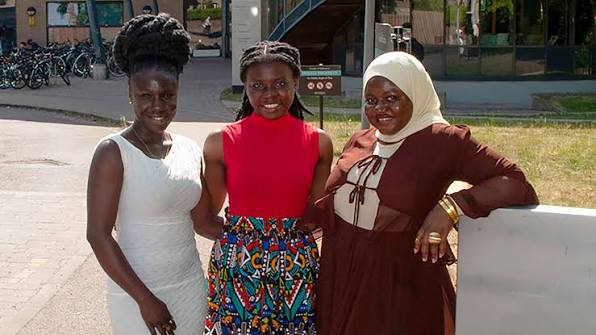
The average modern Gold Coaster born and bred in Sikaman is an adventurous creature. Go to any part of the world and you’ll find Ghanaman diligently slugging it out either in the snow or in hot sweltering weather, earning a decent living.
Go to Guinea and see Ghanaman in the garb of a herbalist, curing the sick of various ailments. He makes the Guinean understand that not all diseases are caused by James Lucifer alias Jimmy Satan. On the contrary, most diseases are caused by kooko which can even attack the human nose and turn it upside down.
That kooko is also the cause of poverty and the internal bleeding of personal back-pocket economies. And that kooko can be cured using the chemistry underlying Sikaman herbal medicine which has been blessed by the gods of Larteh.
And before Ghanaman starts dispensing his herbal concoctions, he must attract the passing crowd with some Sıkaman-originated choreography, akin to a combination of adowa and agbadza, such that the dancer can easily dislocate a shoulder and start crying for his mother.
When the crowd is enough to form a quorum, Ghanaman must perform magic as a side-attraction, and proceed to sell his drugs. The drugs are genuinely made from potent herbs which the Pharmacy Board of Sikaman says it has no confidence in. Believe me, Ghanaian herbalists are practising in neighbouring countries like Guinea, Cote d’Ivoire, Sierra Leone and Benin, while we are discouraging them from practising in Sikaman.
Go to Las Palmas and see Ghanaman as a fisherman. He sails on Korean-owned boats and is forced to eat garlic and raw tuna for radiant health. The garlic is also supposed to protect him against witches. But sometimes, he is not good bedfellows with some Korean crew members, and once in a while a fight breaks out.
The typical Korean is a Kung Fu expert and before displaying a golden dragon data. He must first terrify Ghanaman with a Korean dance which consists of wild arms and leg throwing. But Ghanaman is usually not daunted. Why has he been eating cancer kenkey all years without developing cancer? It mean is a superhuman capable of countering Kun fu side-kicks to the ribs.
Anyhow Ghanaman’s most potent arsenal lies in his fists. If he is a southpaw, it mean left fist is probably insured and can cause damage. When Ghanaman lands a cassava blow and it lands on a Korean chest, it has the effect of a cruise missile. If there is no ceasefire a funeral cannot be ruled out.
Greenland
Go to Alaska and find Ghanaman there. Greenland, Iceland, Brazil, Argentina, Madagascar, everywhere and you’ll find him. He has become an international citizen and is generally lauded for his hardwork, sincerity and honesty.
However, some bad nuts are also condemned and despised.
The world and all its parts and corners are for the human race, and anyone can choose to live anywhere and earn a decent living so long as he doesn’t misconduct himself or become a social misfit and a law unto himself.
Sıkaman for instance accepts foreigners, and we are so liberal that people just come in through our borders and we welcome them with the best palmwine in town and goat light soup. Who cares about passports and visas? Our hospitality is, as it were legendary.
So we have Liberians, Nigerians, Sierra Leoneans, Togolese, Europeans, Americans, Scandinavians and Koreans in Sikaman. And some of them have misinterpreted our overzealous accommodation to mean “foolishness” and are misconducting themselves.
The newspapers carry stories of some unscrupulous Nigerians stealing, defrauding and collaborating with their Sikaman counterparts to rob people. You’ll find some good and law-abiding Liberians around but some other Liberians are in the business of fraud, robbery, money printing, money doubling, anything criminal.
Ghanaian hospitality can no longer be extended to such people. I do not think Ghanaians will be treated kindly either, when they misbehave anywhere in the world. Those who come from outside with the intention of bringing down their evil deeds and to practise them here professionally must be getting ready because Ghanaians are getting fed up with the menace.
These days, you’ll find strange people following you as soon as you emerge from a bank. If you are not careful, they’ll wrestle your briefcase from you and speed away in a waiting taxi.
Someone was just saying that many foreign criminals are flocking to Ghana because in their countries, they are enable to operate either because they are being looked for by the police for offences committed or fear instant justice at the hands of mobs. Ghanaians, it is said, are humanitarian in dealing with criminals.
Well, in some African countries, a thief who is being chased runs directly to the police station in his own interest and begs the officer at the counter to lock him up. Otherwise he’ll be lynched or be burnt to death. In Ghana, it is the opposite. The thieves run far away from the cop stations.
The criminals must reform and stay peacefully in Sikaman or quit. No court case!
This article was first published on Saturday September 5, 1998
The human condition is defined by two absolute, biological bookends: the commencement of complex cellular animation and its ultimate, irreversible cessation.
For centuries, medicine treated life and death as strictly separate states. Today, modern pathology and molecular biology reveal a more profound truth: the mechanisms that allow us to live are the exact same mechanisms that dictate how we die.
Understanding this relationship is no longer just a philosophical pursuit. It is a clinical necessity for managing public health in the 21st century.
Part I: How we live – The mechanics of animation
At its core, biological life is a continuous, high-stakes battle against entropy (the natural tendency of systems to degrade into disorder). To maintain form, consciousness, and function, the human body relies on three fundamental pillars:
1. Cellular respiration and energy production
Every second of human life is powered by the conversion of oxygen and glucose into Adenosine Triphosphate (ATP), the universal energy currency of our cells. This process occurs within the mitochondria.
Without a constant supply of ATP, the microscopic pumps that maintain electrical gradients across our cell membranes fail, causing cellular collapse within minutes.
2. Homeostasis: The balancing act
To survive, the internal environment of the body must remain incredibly stable, regardless of external chaos. This balancing act, known as homeostasis, regulates:
Blood pH: Strictly maintained between 7.35 and 7.45.
Core Temperature: Ideally kept around 37°C (98.6°F).
Electrolyte Balance: Precise ratios of sodium, potassium, and calcium that allow nerves to fire and muscles to contract.
3. The Autonomic Nervous System (ANS)
The ANS acts as the invisible conductor of life, split into two complementary branches:
Part II: How we die – The path of cessation
Death is rarely a singular event; it is a progressive biological cascade. Whether caused by old age, chronic illness, or sudden trauma, the final pathways of mortality generally follow a predictable trajectory.
1. The cellular horizon: Senescence and Apoptosis
Every time a human cell divides, the protective caps at the ends of its chromosomes-telomeres-shorten. Eventually, telomeres become so depleted that the cell can no longer divide safely. It enters senescence (a state of permanent arrest) or triggers apoptosis (programmed cell death). This gradual, systemic loss of cellular renewal is the underlying engine of aging.
2. The clinical cascade of somatic death
When the body can no longer maintain homeostasis, somatic death (the death of the organism as a whole) begins. This occurs in a distinct sequence:
1
Clinical Death
Zero to four minutes
The heart stops pumping blood, and respiration ceases. While breathing and circulation have ended, the body’s tissues still contain residual oxygen and cellular energy reserves. At this stage, resuscitation is often still possible.
2
Brain Death (Infarction)
Four to six minutes
Deprived of fresh oxygenated blood, the brain’s highly sensitive neurons begin to starve. Lacking ATP, the brain cells lose their electrical charge, swell, and begin to burst. Permanent, irreversible neurological damage occurs within minutes.
3
Biological Death
Hours to days
The organs fail entirely. Without central control or blood flow, individual cells throughout the body consume their final energy reserves. Enzymes that once aided digestion begin to break down the body’s own tissues from the inside out, a process known as autolysis.
Part III: The modern collision of life and death
In the modern era, the boundary between how we live and how we die has blurred. Historically, humanity died primarily from infectious diseases and acute trauma. Today, global mortality is dominated by non-communicable, chronic lifestyle diseases.
Modern Pathology: How we live (the cause) how we die (the result)
Cardiovascular disease, chronic stress, poor diet, and lack of sleep keep the sympathetic nervous system hyper-activated, damaging blood vessels .Occlusion of coronary arteries leads to myocardial infarction (heart attack) or ischemic stroke.
Metabolic syndrome over nutrition and physical inactivity overwhelm cellular mitochondria, leading to systemic insulin resistance. Multi-organ failure, chronic kidney disease, and severe vascular complications.
Neurodegenerative Disorders Chronic systemic inflammation and sleep deprivation prevent the brain from clearing metabolic waste. Gradual loss of synaptic connections, leading to dementia and the eventual loss of basic autonomic functions.
Conclusion: The unified theory of health
Ultimately, how we live directly shapes the path of how we die. The micro-choices of daily existence-how we manage emotional stress, the quality of our rest, our communal connections, and our nutrition-either preserve the integrity of our homeostatic systems or accelerate their decline.
True medical advancement is shifting away from merely extending the final, frail stages of biological death. Instead, the focus is turning toward optimising our living years-ensuring that the intricate, beautiful machinery of human animation runs smoothly until its natural, quiet conclusion.
By Robert Ekow Grimmond-Thompson