News
Don’t use face shield without nose masks

- /home/u249204778/domains/spectator.com.gh/public_html/wp-content/plugins/mvp-social-buttons/mvp-social-buttons.php on line 27
Warning: Trying to access array offset on false in /home/u249204778/domains/spectator.com.gh/public_html/wp-content/plugins/mvp-social-buttons/mvp-social-buttons.php on line 27
&description=Don’t use face shield without nose masks', 'pinterestShare', 'width=750,height=350'); return false;" title="Pin This Post">
- Share
- Tweet /home/u249204778/domains/spectator.com.gh/public_html/wp-content/plugins/mvp-social-buttons/mvp-social-buttons.php on line 72
Warning: Trying to access array offset on false in /home/u249204778/domains/spectator.com.gh/public_html/wp-content/plugins/mvp-social-buttons/mvp-social-buttons.php on line 72
&description=Don’t use face shield without nose masks', 'pinterestShare', 'width=750,height=350'); return false;" title="Pin This Post">
The use of face shield is gradually gaining root in the country as some use it as facial protection to prevent the coronavirus disease (COVID-19).
It has now become more fashionable for people to use the face shield, especially women who think that because the shield is a transparent plastic cover, their makeup could still be visible.
While some say they feel more comfortable in the face shield compared with the nose mask, others claim they cannot wear the nose mask because of underlying medical conditions hence the use of the face shield only or none at all.
However, the Ghana Medical Association (GMA) and the Ghana Chapter of the West African College of Surgeons (WACS) have expressed concern over the use of face shield without masks as protection from COVID-19 and have described the practice as “very dangerous.”
In a press statement jointly signed by Prof. Peter Donkor, 1st Vice-President and Country Representative of WACS and Dr Frank Ankobea, President of GMA, the two bodies have warned the public to desist from that practise with immediate effect as it would rather lead to increased cases of COVID-19 in the country.
Although the face shield covers the face, it does not wrap around the face nor extend below the chin but there is space at the sides, the top and the bottom. The shield is not close to the face; therefore, it makes the wearer vulnerable to contracting the virus as it is spread through droplets.
Instead of using the face shield, members of the GMA and WACS have advised the public to rather use nose masks at all times since according to scientific evidence, the use of face shield alone (without a nose mask) does not protect the user from COVID-19 as there is potential airborne spread of the virus.
The statement again urged the public to disregard “unsubstantiated reports on some social media platforms about a decrease in blood oxygen concentration as well as a buildup of carbon dioxide when one uses a mask” because as doctors, they wear face masks all the time during work but have not observed any such thing.
The Spectator commends the GMA and WACS for their timely education on this practice as the public is ignorant of the dangers associated with using face shield without a mask and pleads with the public to adhere strictly to this directive by wearing the nose masks at all times.
Although the wearing of nose masks is now mandatory in Ghana some people still refuse to comply with the directive given by the President, Nana Addo Dankwa Akufo-Addo and their actions endanger the lives of others.
We fervently appeal to the authorities to ensure that this directive is strictly adhered to, to ensure public health, safety and protection.
Organisations, companies, institutions and shop owners among others should also enforce the “No mask-No entry” policy to help curb the spread of the virus which is increasing at an alarming rate. Currently, confirmed cases are 25,430 with 21, 511 recoveries/discharges and 139 deaths.
As an individual, there is the need to cooperate and once you step out of your home ensure that you wear a nose mask, even if you use a face shield.
Also, ensure that you wash your reusable nose mask regularly and iron it and clean or disinfect face shield after use. If you use a disposable nose mask wrap it well with tissue after use and dispose of it appropriately in a bin.
Remember, COVID-19 is no respecter of person so besides the wearing of face mask and shield, observe social distancing, wash your hands regularly with soap under running water, use sanitiser, and avoid shaking hands.
So, use both the face shield and nose mask as protection from COVID-19.



The Accra Regional Police Command has arrested former professional boxer Michael Ayitey Okai, popularly known as “Ayitey Powers,” over an alleged threat of death against the Director-General of the National Sports Authority, Yaw Ampofo.
According to the Police, the 46-year-old former boxer was arrested on Monday, August 24, 2026, in connection with the alleged threat.
The Police said the arrest followed a video circulating on social media in which Ayitey Powers is alleged to have issued the threat against Mr Ampofo.
He is currently in Police custody and is assisting with investigations.
The Accra Regional Police Command said investigations are ongoing to establish the circumstances surrounding the alleged threat and determine the appropriate action to be taken in accordance with the law.
The Command has urged the public to refrain from sharing unverified information about the matter while the investigation continues.
By: Jacob Aggrey
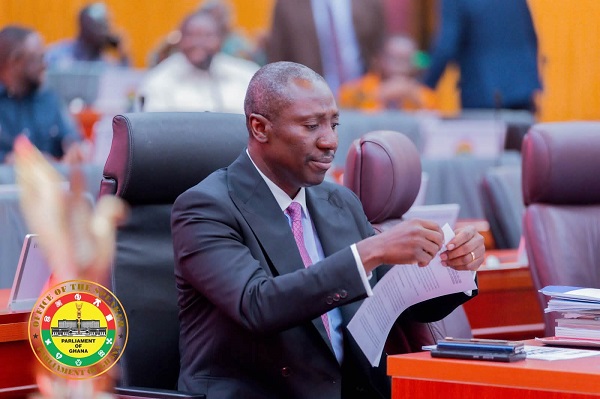
Minority Leader in Parliament Alexander Afenyo Markin has sued the Chief Executive Officer of the Ghana Gold Board (GoldBod), Sammy Gyamfi, and Multimedia Group Limited over alleged defamatory comments made against him on the Newsfile programme.
In a writ filed at the High Court in Accra, Mr Afenyo Markin is seeking GH¢15 million in damages, an apology and retraction of the statements, among other reliefs.
The suit follows comments allegedly made by Mr Gyamfi during the Saturday, August 22, 2026 edition of Newsfile, hosted by Samson Lardy Anyenini.
According to the statement of claim, Mr Gyamfi described Mr Afenyo Markin as an “extortionist” while responding to a question about GoldBod’s reported profits and its position on losses arising from its operations.
The plaintiff claims that Mr Gyamfi repeated the allegation when the host sought clarification on whether he stood by the description.
Mr Afenyo Markin further claims that Mr Gyamfi challenged him to sue him and insisted that the allegation was true.
The plaintiff argues that the statements created the impression that he engages in extortion, uses his political influence to put improper pressure on public institutions and officials, and conducts himself in a manner inconsistent with the standards expected of a lawyer and public office holder.
He denies the allegations and maintains that he is not an extortionist and has never engaged in the conduct alleged by Mr Gyamfi.
The Minority Leader also argues that the comments were made maliciously and were presented as facts without evidence being disclosed.
He claims the statements have damaged his reputation, professional standing and public image, particularly because of his position as a senior political figure and legal practitioner.
The suit also names Multimedia Group Limited as a defendant because, according to the plaintiff, the alleged defamatory comments were broadcast through JoyNews and subsequently circulated on social media platforms, including X, Facebook and YouTube.
Mr Afenyo Markin claims Multimedia failed to stop the comments or deactivate Mr Gyamfi’s microphone after the allegations were made.
He is therefore asking the court to award him general, aggravated and exemplary damages, as well as GH¢15 million in compensation and legal costs.
He is also seeking an order compelling the defendants to issue a full, unconditional and unequivocal retraction and public apology.
The plaintiff wants the apology and retraction to be given similar prominence and reach as the original publication, including through JoyNews and the social media platforms where the comments were disseminated.
He is further seeking a permanent injunction preventing the defendants from repeating the alleged defamatory statements or words with a similar meaning.
The writ requires the defendants to enter an appearance within eight days after being served.
It warns that failure to do so could result in judgment being entered in their absence.
The case was filed by lawyer Paa Kwesi Abaidoo of Dehyena Chambers on behalf of Mr Afenyo Markin.
By: Jacob Aggrey