Features
False Predictions Of Election Results By Pollsters And Emerging Consequences

- /home/u249204778/domains/spectator.com.gh/public_html/wp-content/plugins/mvp-social-buttons/mvp-social-buttons.php on line 27
Warning: Trying to access array offset on false in /home/u249204778/domains/spectator.com.gh/public_html/wp-content/plugins/mvp-social-buttons/mvp-social-buttons.php on line 27
&description=False Predictions Of Election Results By Pollsters And Emerging Consequences', 'pinterestShare', 'width=750,height=350'); return false;" title="Pin This Post">
- Share
- Tweet /home/u249204778/domains/spectator.com.gh/public_html/wp-content/plugins/mvp-social-buttons/mvp-social-buttons.php on line 72
Warning: Trying to access array offset on false in /home/u249204778/domains/spectator.com.gh/public_html/wp-content/plugins/mvp-social-buttons/mvp-social-buttons.php on line 72
&description=False Predictions Of Election Results By Pollsters And Emerging Consequences', 'pinterestShare', 'width=750,height=350'); return false;" title="Pin This Post">
Political pollsters conduct opinion polls for political parties, politicians, advocacy groups, elected and government officials, think tanks and corporations among other groupings. They use their knowledge of statistical analysis, social behaviour and survey methods to question representative samplings of either the general population, or certain demographic groups regarding political issues.
Their job duties among other things, are to conduct research on specific issue or set of issues by reviewing reference material and conferring with clients, create or supervise the creation of carefully worded questions in order to generate clear response and devise strategies regarding how and when the survey will be conducted.
DUTIES OF POLLSTERS
They also perform interviews in person, over the phone, by email or online, analyze survey data, while being sure to adhere to recognised standards regarding the interpretation of complied data, communicate survey results to clients and ensure prompt and accurate assessment of findings.
Indeed, this is a specialised field with a clearly defined aims and objectives that will produce good, perfect and accurate results for clients so that they will depend or rely upon them to plan their strategies to promote their business objectives and other tangible assessment. The practitioners in this noble profession who may be political science degree holders or students pursuing political science in various tertiary institutions and universities as well as well- established institutions, have an in-depth knowledge about election and how it is conducted and above all a deep understanding about the whole process of election, data collection and gathering, interviews among others and are well trained to accomplish the noble task.
POLLSTER IS SPECIALISED JOB
It is important to state that not every person can just stand up and assume the role or title of pollster for the sake of it. You may have a little background on mathematics and data gathering and collection, but that will not guarantee you to be a pollster or to parade yourself as one since it is a specialised area. I am not a pollster and I cannot be one because I don’t have the qualities and pedigree to be one.
I am a journalist, but a very good one though, with the simple task of educating, informing and entertaining people about issues and events happening around them so that they will be well informed in order not to be left behind, fall astray or kept in the dark as far as news is concerned.
Besides, I continue to use my God-given talent to write about all manner of interesting articles for readers to assimilate and enjoy. I criticise when it is due and offer constructive suggestions when and where necessary. This is the type of profession and the job I have been trained to do and I enjoy it each and every day.
SELF-STYLED POLLSTERS
I have decided to go or follow this tangent because of the way some self-styled pollsters are churning out inaccurate results to Ghanaians of late, thus creating tension and anxiety in the political space. I do not intend to mention names of people or individuals involved in this falsehood but it is happening and the recent by-election in Kumawu in the Ashanti Region and Assin North in the Central Region, attested clearly to this fact.
I am not downplaying or degrading every pollster in this country but only cautioning that those who don’t have the pedigree to forecast and predict accurately need to advise themselves because their actions can cause controversy and chaos among the people. These ‘try and error’ predictions must give way to proper and constructive analysis and data collections that are result-oriented.
KUMAWU BY- ELECTION
In the Kumawu by-election that was held on May 23, 2022, it was clear and evident that the New Patriotic Party (NPP) was going to win the election hands down because the area is a stronghold of the party. You don’t need any pollster to predict the outcome of that election. It was a forgone conclusion for the NPP candidate, Ernest Yaw Annim who won by 70 per cent representing 15,264 votes with the National Democratic Congress (NDC) candidate, Kwasi Amankwaa, obtaining 3,723 votes representing 17.29 per cent of the valid votes cast. The only duty of a pollster in the Kumawu by election is to predict whether there were appreciation or depreciation of votes for both candidates.
ASSIN NORTH BY-ELECTION
The Assin North by-election was a different ‘ball game’ altogether. The place had been a swing constituency with both the NDC and the NPP winning at a point in time during the general elections and that made that election very unique in terms of who would emerge the winner. More so, the candidates involved, especially the NDC candidate, James Gyakye Quayson, who was booted out of parliament by a Supreme Court ruling on his dual citizenship, gave cause for those pollsters to do their own predictions. The NDC defied all odds and fielded the embattled Quayson while the NPP as a strategy brought Charles Opoku from the same area where the NDC candidate hails from to provide a stiff opposition.
NPP IN ASSIN NORTH
Prior to that election, the NPP marshalled all resources including excavators and earth moving equipment to the constituency to re-shape some of their bad roads in the midst of rains. An astrotech football pitch had to be commissioned in the rain by the Vice President Alhaji Mahamudu Bawumia, all in an attempt to garner and gather more votes for the NPP candidates. The powerful team led by President Nana Addo Dankwa Akufo-Addo himself, travelled to the Assin North for a full-scale campaign for their candidate.
NDC AT ASSIN NORTH
The NDC with Its leader, John Dramani Mahama, MPs and party functionaries also went on campaign trail in the Assin North Constituency. Accra was virtually deserted on the election day. Days before the election in the Assin North, pollsters, some of whom were not known, started putting and throwing figures across based on survey they claimed they have conducted in the area, having spoken to a few people in the constituency. Most of these pollsters predicted a done deal for the NPP candidate because of the last-minute campaign by the President which gave them high hopes. However, their predictions did not materialise as Quayson managed to win convincingly with 17,245 votes representing 57.56 percent of the valid votes cast with the NPP Charles Opoku placing second with 12,630 votes representing 42.15 percent.
TRY AND ERROR POLLSTERS
All those scenarios pointed to the fact that the so-called pollsters were only engaged in a ‘try and error’ or speculation business, using the high -profile personalities involved in the campaign exercise as their yardstick, especially in the case of the Assin North by-election. In fact, there had been several occasions in the past when some of these most established institutions have had accurate results in their predictions, but this time round, they got everything wrong.
POLLSTERS AND 2024 ELECTIONS
Very soon, we will be heading towards the presidential and parliamentary elections and these organisations and individual pollsters will start doing their own thing to predict the outcome of the elections. Nobody is baring them from carrying out their individual mandate and there is no law in this country that bars any person or group of persons from carrying out election surveys and predicting the outcomes. However, in doing this self-assigned job, one need to be careful and circumspect about these outcomes in order not to deceive and cause disaffection among the populace. It is interesting to note that even so-called pastors, evangelists, prophets of doom and ‘what not’, have joined the fray of pollsters, predicting and churning out election results which eventually turned out to be false.
NPP FLAGBEARERSHIP RACE
Shortly, the NPP will be electing its flag-bearer in a hectic contest involving 10 contestants namely, Alhaji Mahamudu Bawumia, the current Vice President of Ghana, Mr. Allan Kwadwo Kyerematen, Boakye Agyarko, Kwabena Agyei Agyepong, Francis Addai-Nimoh, Dr Kofi Konadu Apraku, Dr. Owusu Afriyie Akoto, Kennedy Ohene Agyapong, Joe Ghartey and Kwadwo Poku. All these contestants are reputable and qualified personalities who have what it takes to be the presidential nominee for the NPP. However, it is only one who will get the nod to lead the party in the 2024 presidential election.
As usual, the so-called pollsters, religious groupings and forecasters will be at their wit end doing their own thing and predicting the outcome of the primaries in what they termed data collection from delegates who will be casting their ballots to pick one among the lot. When they fail in their attempt with their “try and error” business, they will then turn to the supporters of the NPP and apologise for their ineffectiveness. We need to thread cautiously in this regard.
Contact email/WhatsApp of author: ataani2000@yahoo.com 0277753946/028933366
By Charles Neequaye


There is a scripture that is found in Matthew 6:22 which says that the lamp of the body is the eye and therefore the eye must see well to enable the body to get to its destination.
What most people do not know is that behind the scenes, there is a strong interaction between the eyes and the brain before a picture becomes clear. The state of mind therefore is crucial to the eye seeing clearly to enable the body to process accurately the information the eyes are feeding it for proper identification of what the eyes see.
This is similar to how a person behaves i.e. what informs the decisions that forms in the mind that results in the actions that a person performs. The actions of a person does not therefore just happen but is as a result of things that went on in the mind, which in most cases resulted from information passed on to it by the eyes either consciously or unconsciously.
There are so many issues that affect our society which makes one wonder, whether the people who displayed such acts were created by someone or something other than God.
How can a person see a beach created by God with beautiful beaches and fresh air blowing all around, decides to defecate at such places, and therefore desecrate the environment? lt is simply mind boggling?
When other people in other countries who dwell on the coast are using their beaches for tourist attraction purposes as a means of livelihood and also to promote environmental health, some people living around our beaches, have turned them into rubbish dumping sites and toilets.
It is a very sad situation and the earlier we did something about it the better. It is a national emergency that must engage the attention, first of the government and then the citizenry, where religious bodies and NGOs must play a critical role.
The things we focus on in this country, needs to be addressed. Our minds which processes the info the eyes send to the brain, must be disciplined. There are certain behaviours that a disciplined mind can ignore even when the eye has provided info to the brain. One of the things a disciplined mind does, is the avoidance of a second look, which is critical for every person who wants to avoid adultery or fornication.
Once a person is not blind, he will see things. The boobs, the ‘shankus’, the coca cola shapes, the light complexioned, the dark complexioned etc. the eyes will definitely see and report same to the brain. What the brain or the mind decides to do or instructs the eye to do is the issue.
It can decide to instruct the eye to take a second look and let the mind drool over it or say ignore it and that will be the end.
If the mind becomes trained to focus on environmental issues like clean environment, the eyes will automatically be reporting on insanitary conditions to the brain as and when it sees them. The mind will pay attention to such data and begin to process them and to identify solutions to deal with the reported insanitary conditions.
There is the need to encourage citizens to train the mind to focus on the right thing so that in tandem with the eyes, focus will be maintained. When the mind is so trained, it communicates with the eye to also focus on hood things that helps in both are spiritual life and our secular lives, for indeed the eyes are the lamp of the body. God bless.
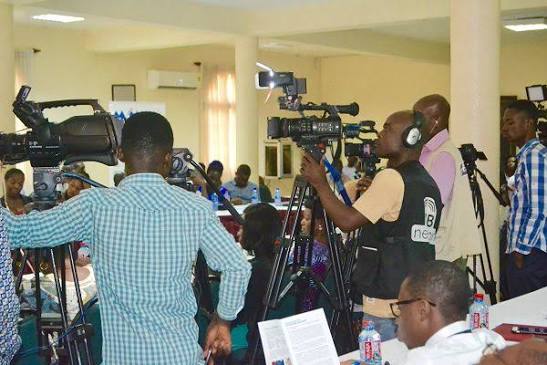
THE relationship between New Times Corporation (NTC) and African Concrete Productions (ACP) is based entirely on matters of the stomach. Each depends on the other in a dietary symbiosis, reinforced by the close proximity of each other
At lunchtime, you’d see a particular set of Times workers marching regimentally to ACP to face the wall. You’d think they are soldiers. It has long been declared that the company manufactures the best kokonte in the Greater Accra Region. ACP is, therefore, a culinary haven for those NTC kokonte fans, both male and female.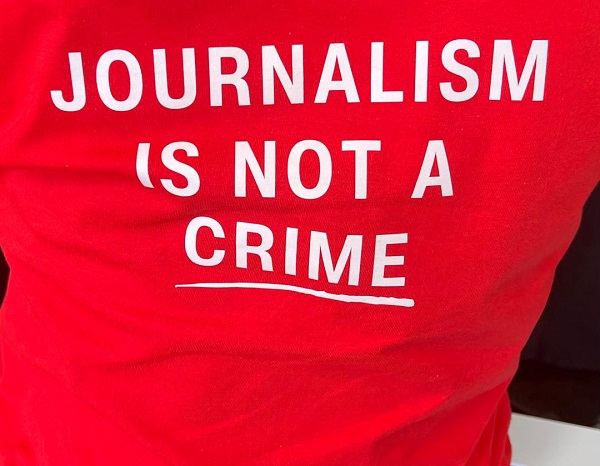
As the NTC kokonte warriors cross the border to ACP, you’d see some ACP banku fanatics dancing joyously to NTC. They are lucky folks because they do not have to obtain visa to enter into ‘Times’ to attack the balls of banku with precision and accuracy. They also claim that the lightsoup at ‘Times’ is arguably the best in West Africa.
So the relationship between the two entities was quite cordial and based practically on stomach palaver, until ACP workers staged an industrial revolution, whereupon the managing director, accountant and estate manager were allegedly stripped naked and locked up in a room. An insurgency had began in earnest.
An ACP worker came to ‘Times’, this time not to eat banku and okro. He had come to inform newsmen that juicy stuff awaited them at ACP. It could make a front page lead story.
A camerawoman and a female reporter were accordingly dispatched to go and bring back news, juicy news as juicy as kokonte and groundnut soup.
I was driving to work when I espied the familiar camerawoman clicking away outside the ACP premises. I didn’t see any ‘Times’ reporter but angry workers who were on the verge of getting violent. I slowed down and the driver behind blew his horn at me like a lunatic. I drove on.
Later, I heard the reporter and camerawoman were harassed and brutalised. The report came,. “The camerawoman, Mrs Salome Adonu-Agbottah and reporter Mrs Doreen Allotey, in an attempt to retrieve the camera which the workers had seized from them were severely beaten. They were manhandled and almost pushed into a big gutter opposite the company’s premises.
BRUISES
“….The camerawoman had bruises on her body, her hand bag was destroyed and the money in it stolen. Mrs Allotey’s watch was also snatched and her feet stamped on.”
Luckily, it was not her nose that was trampled upon. She has a beautiful nose.
The bad news was received with extreme sorrow. If the victims had been men, it would not have seemed too bad. But to brutalise women is just unacceptable. The New Times Corporation has not stopped mourning the incident which has been condemned in many circles.
Some people keep asking me why Times sent females to cover a potentially violent demonstration. I tell them they might as well ask why CNN’s amazon, Christina Amanpour, is assigned to cover the carnage in Bosnia-Herzegovina and Rwanda. She is always on the frontline in jeans and jacket.
Journalism is a potentially hazardous profession, and once you accept to study and practise the trade, you might as well bone up to face any assignment as long as your superiors feel you are capable of handling it or you have demonstrated the capacity to handle it. Both males and females can be assigned anywhere, anytime just like policemen and women are assigned.
The only difference between cops and pressmen is that the latter are armed only with a pen and the former with a gun. The question is should newsmen also arm themselves so that in any event of an assault they would not be found wanting in self-defence? They can’t adequately defend themselves with a pen and a jotter. A pen cannot even disfigure an opponent’s upper lip.
Photo-journalists have particularly suffered violence. Spectator ace-cameraman Vincent Dzatse was severely assaulted by AMA men when he attempted to take pictures of their indiscretions.
Sports cameraman, P. K. Arthur has been beaten more than once at the sports stadium when riots errupted and he wanted to capture it on his lenses.
Some sports journalists have been banned from entering the Accra Sports Stadium by supporters because in their comments, they didn’t write “sense”. Some supporters once nearly lynched Christian Abbew, Spectator Sports Editor, near a courtroom. He was stoned like the biblical Stephen. He had gone to defend a contempt charge.
I think it is time journalists met and discussed how best to defend themselves in any event of an attack by individuals or mobs. In the pursuance of their duty, they must be free from harassment and assault.
Some journalists go to work and return home with a black-eye or a double fore-head. It is just not right. Something has to be done about it. I think journalists should be armed. But first we must be trained in the use of firearms so that our warning shot do not hit below the belt. What about training in Kung Fu?
This article was first published on Saturday, October 17, 1998.