Features
A dilemma called Ghana (Final Part)

- /home/u249204778/domains/spectator.com.gh/public_html/wp-content/plugins/mvp-social-buttons/mvp-social-buttons.php on line 27
https://spectator.com.gh/wp-content/uploads/2023/07/Independence-Arch-Pix.jpg&description=A dilemma called Ghana (Final Part)', 'pinterestShare', 'width=750,height=350'); return false;" title="Pin This Post">
- Share
- Tweet /home/u249204778/domains/spectator.com.gh/public_html/wp-content/plugins/mvp-social-buttons/mvp-social-buttons.php on line 72
https://spectator.com.gh/wp-content/uploads/2023/07/Independence-Arch-Pix.jpg&description=A dilemma called Ghana (Final Part)', 'pinterestShare', 'width=750,height=350'); return false;" title="Pin This Post">
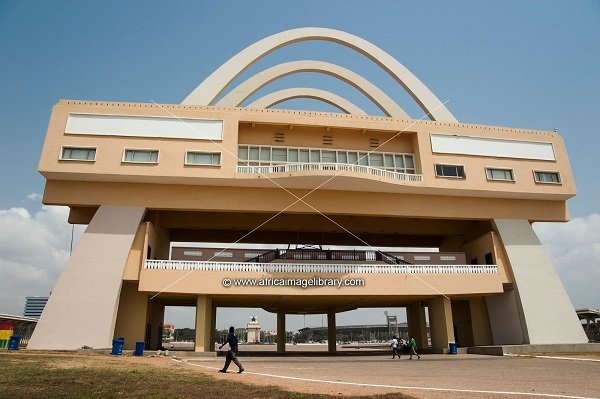
The Independence Arch
So, in the evening of July 24, 2012, John Dramani Mahama was sworn in as President of Ghana to complete the term of Prof. Atta Mills according to constitutional provisions. This was barely five months until Election 2012.
John Mahama was declared elected president by the Electoral Commission in that election, but Nana Addo Dankwa Akufo-Addo and the NPP would have none of it and marched to the Supreme Court to contest the results. Governance almost stalled for the next eight months till the Supreme Court ruled John Mahama as duly elected.
In my estimation, Akufo-Addo lost the election and, I believe, he and his party knew it. The recourse to the Court was a needless waste of time even if some of us got educated on some legal jargon and expressions.
To me, these were just ego trips to court public sympathy for the bruises inflicted by their electoral loss, nothing more.
After his victory in 2012, John Mahama embarked on a massive infrastructure development in health facilities, the energy sector, schools, roads, the airport, housing, markets and others as if to compensate for the eight lost months of litigation at the Supreme Court. But the opposition did not let up. Mahama’s administration was accused of corruption by the opposition.
Issues like the purchase of an aircraft from Brazil, GYEDA and a gift of a Ford vehicle to the President were played in the media space as acts of corruption. There was this laughable one of a flock of Guinea fowls flying from farms in the North across our frontier into Burkina Faso. One thing I know from people close to Mahama was that he caused rumours of corruption against his appointees investigated. Indeed, an appointee was imprisoned as a result.
One positive act of Mahama’s administration was the setting up of the Heritage Fund in which millions of dollars from a percentage of the oil sector was deposited for the future. Teacher education was increased with the withdrawal of trainee allowances and replaced with a students loan regime to enable more teachers to be trained. This was met with opposition from the NPP which promised to reverse it if they regained power.
Our Presidents come to office with certain personal traits. Unlike President Atta Mills, who was a stickler for punctuality, John Mahama hardly is on time for any public event. Nana Addo is also noted for being very punctual with his time. Noted for his reliance on his fan base, President Rawlings would rather be late so as to receive adulation from his fans. President Kufuor was respected in this regard.
Election 2016 was quite as toxic as the previous ones before it. Accusations and counter accusations of corruption were thrown into the fray from every angle imaginable. Nana Addo had mouthwatering promises the electorate were hardput to ignore. He would reduce the cost of buying fuel. One village, one dam. A million dollars for each constituency each year. Free Senior High School education and many more.
Any dispassionate observer of the political scene was clear in their minds that it would take more than his massive development agenda to retain John Mahama as President. Of course, Mahama campaigned on this record of achievement.Truth be told, Mahama did everything but appeal to the grassroots. He seemed to keep a distance from the ordinary people.
As it turned out, Nana Addo Dankwa Akufo-Addo was elected president and was sworn in on January 7, 2017. Almost every project initiated by the Mahama administration that was yet to be completed was abandoned. What came to be known as E-Block Senior High School buildings were left to rot. An affordable housing project at Saglemi was left to deteriorate.
In order to be seen to fulfill his campaign promises, Akufo-Addo began to implement the Free SHS programme, very much against advice from stakeholders and professionals to go gradually with its implementation.
Dugouts were presented as dams, many existing businesses were touted as his one district one factory project, but not even one constituency saw the million dollars. Fuel prices rather kept rising at the pumps to the chagrin of his own supporters. Comparisons started as to whether Mahama was a better leader.
Vice President Mahamudu Bawumia became the poster boy of the government, touting the administration’s economic management. The very statements he made about government economic policy while he was in opposition stared him in the face at every turn.
Teacher trainee allowances were restored, but admissions were drastically curtailed as were nursing trainees. SHS and basic school timetables were so jumbled up that guardians did not know when their wards would be in or out of school.
Nana Addo appointed the highest number of Ministers in the country’s political history. Issues of massive corrupt practices surfaced against his administration as well. Family, friends and cronies became beneficiaries of political patronage.
Then COVID 19 was upon the world. Purported to have originated in China, the virus took the world by storm, infecting millions on a killing spree. As at the beginning of this week, Ghana has recorded only 1,462 deaths with only 34 active cases. It must be admitted that Ghana under Akufo-Addo managed the pandemic better than many other nations of the world. However, COVID and the war in Ukraine have become the excuses government spokespersons give for the economic dilemma the country is in today.
Ghanaians went to the polls on December 7, 2020, to elect a new government. John Mahama was once again the flagbearer of the NDC. His record was pitted against Nana Addo’s. For the first time since 1992 Ghana’s Electoral Commission could not make up their minds on the true figures to announce for the presidential poll. Eventually, they announced Nana Addo as winner though the NDC almost won more seats in Parliament.
Methinks this was why John Mahama also headed for the Supreme Court. My information has been that there were people close to Mahama who worked against him. Their beef was that John had lost touch with the base of the Party. He was running the campaign like a celebrity superstar, they said. So they botched the setting up of a credible collation centre. My astrological predictions for Election 2020 was published in this column on December 4, 2020. Another concern for these people, which has been expressed by many media friends is what they describe as Mahama’s rabid desire to keep Mr. Stan Dogbe as his closest confidant. My information is that Mahama is aware of this concern but seems unwilling to do anything about it.
Many journalists feel that Stan denied them access to Mahama. Many big shots in the Party are worried about this and fear the Stan Dogbe factor could affect the electoral fortunes of the former President.
Now, my take: Ghana is not in a dilemma; Ghana is the dilemma.
Nothing seems to be working in the land. Food prices have hit the roof. The dollar is difficult for our currency to match. Government refused to heed advice to go to the IMF. It refused to even review the Free SHS programme. A tin of mackerel is fed a soup for a dozen students.
Today, Ghana is with the IMF. We are ready to review the Free SHS programme. If this country were not a dilemma, why do we elect people who are impervious to sound advice? Why do we elect people who listen only to themselves? Over 80 members of Parliament demand the President should expel the Minister of Finance, but get ignored.
By Dr. Akofa K. Segbefia
Writer’s email address: akofa45@yahoo.com


THE POLICE force has produced some of the country’s best dancers, but when it comes to shooting, I cannot vouch for all of Peter Nanfuri’s men. Most of them are excellent marksmen, but as for some, they whimsically believe that a warning shot must be targeted at a human jaw to make it effective. The shot must warn the jaw not to misbehave.
Coming back to dancing, I must stand at ease and doff my hat to the police force. I do not know whether Honourable Peter dances stylishly. But I have attended at least two parties organised by policemen and I was doubly impressed by the rare showmanship of inspectors, superintendents, commissioners, constables and all. I called a corporal friend aside and asked whether dancing was part of the syllabus at Police College.
Indeed, I was overwhelmed, even awe-inspired at the high quality of individual choreographic spins, jerks, twists and turns. As the climax approached at one such party, a sergeant, determined to steal the show, almost ‘took to flight’ in one of Sıkaman’s most celebrated choreographic exhibitions. Virtually airborne, he combined traditional dance styles with Pentecostal boogie and ended up break-dancing, triggering off a standing ovation.
But it was a lady corporal who finally sent the crowd into a frenzy. She did not only belly-dance; her body was vibrating as if it had been connected to electricity. It was a marvel. I have never been so much impressed in life.
Actually, I do not know why police staff do not contest in national dance competitions. They can have a try at it, why not? Just like journalists planning to try their hands at boxing part-time, to supplement their income.
We’ve got some pen-pushers whom you could mistake for fierce welter-weights or formidable super-featherweight, Azumah Nelson type. We are also privileged to have a few southpaws and I’m thinking about getting into the heavyweight division and ask Kofi Coomson to be my sparring mate. The only problem is that I can’t guarantee the safety of his ribs, taking into consideration that he is not quite macho.
He’d have to ‘beef up’ before we meet.
Yes, returning to the palaver of the police, I must say unreservedly that some bad nuts are embarrassing the force. It is for very good reasons that the Police Administration is about to institute a special judicial tribunal to try its personnel who resort to rampant and careless use of firearms, to the extent that a warning shot into the air can mysteriously wind up someone’s liver.
On many occasions, I have been surprised because the police are well-trained and remember they once won a shooting contest, they beat the army and navy to second and third places. So how come that some of them mishandle weapons so childishly as to cause injury when there should be no cause for it?
The Inspector-General of Police’s embarrassment is evinced in his words. He observes that various accidents resulting from now indiscriminate “stray” bullets and warning shot give the impression that the police aren’t properly, trained in weapons handling.
“Members of the public have become so aggrieved and intolerant that they are not even prepared to listen to official explanations on how the accidents happened, “he said.
Well, until the police sort themselves out as to those who are hopelessly incompetent in handling weapons aim who are not, I do not think it would be prudent to make policemen use live ammunitions in public unless the situation really demands it. Other means of subduing recalcitrant are available – rubber bullets, blank shots, tear gas, etc.
When tear gas was recently used at Legon during a students’ demonstration, it was quite effective in dispersing them. I didn’t know student could run that fast on empty stomachs. Some did not eat breakfast before joining the demo, but when the tear gas came, they exhibited excellent footwork, taking off in Olympic fashion, Bravo!
In any case, the topic cannot be exhausted without reflecting on another aspect of the IGP’s speech at the opening of a refresher course for Police Inspectors. He noted that even if a police Officer suffers any form of death at the hands of a criminal in the course of protecting life and property, the tragedy of the policeman’s death does not evoke any sympathy whatsoever from the public.
I think that is a good point to ponder, and it brings into question the idea of self-defense on the part of policemen. Should a policeman, for instance, kill a criminal who is out to cause harm or death to him? It needs to be debated because both the policeman and the dangerous criminal have the right to life.
Anyhow, the embarrassment being caused to the IGP by some careless policeman is well expressed. The problem is that when a policeman fires a warming shot that causes injury, people do not blame only the policeman. They also blame the government. It is just like someone who blamed the government when his mother-in-law slapped him hard in the eye. I don’t know whether he wanted the government to receive the slap on his behalf.
At any rate, customs officers who are also trigger-happy and misuse weapons in the performance of their duties will be sanctioned. In fact, they’ll be sacked! Sounds deterring isn’t it?
This article was first published on Saturday November 14, 1998

Today, I focus on the theme of mental health and wellbeing among Ghanaian migrants in Finland, a move away from the topic of personalities or groups and their accomplishments within the Ghanaian community in Finland that I have been writing on.
In recent times, I have been thinking about the mental health of Ghanaian (and other) migrant parents’ social environments and the impact on their children’s wellbeing in Finland.
According to research, childhood disadvantage is associated with adult psychological distress, although the role of behavioural risk factors around it may be unclear.
Mental health is a huge problem in the world, according to the World Health Organisation (WHO). Studies have also shown that maternal, paternal and parental distress (i.e. both maternal and paternal distress) are associated with reduced linear growth of the children.
When things go bad, social child welfare interventions ensure that children are taken away (child removals) from the parent or parents for safe keeping.
In Finland, studies have examined how behavioural risk factors mediate the effects of childhood disadvantage on adult psychological distress. There is a correlation between parent and infant psychotherapy on maternal mental health and psychological functioning and children’s welfare. The question is: what is the situation with Ghanaian migrants and their health in Finland?
The focus of NGOs and migrant associations
The World Health Organisation (WHO) defines health as “a state of complete physical, mental, and social well-being and not merely the absence of disease or infirmity” (see www.who.int).
Finland has a very good healthcare delivery system and social services accessible to all residents in the country. Many migrants, including those in the Ghanaian community, are aware of these opportunities and are expected to take advantage of such chances.
As I wrote some time ago, a healthy migrant community is beneficial to the society as a whole. In Finland, public agencies, migrant associations and other non-governmental organisations (NGOs) have been giving health information in various channels— webinars, mass media (radio, TV, as well as the new media and others). Such actions are very helpful to the people.
It has been pointed out that factors that improve mental health and wellbeing must be supported. Migrants’ mental and general health or wellbeing are affected by many factors, including cultural ideas of health, illnesses, and the prevention, treatment and symptoms of illnesses (see www.thl.fi).
Advocacy by the civil society sector
I have recently been making inquiries about migrants’ health generally and wellbeing in Finland. Many people see the need for advocacy, to intensify education and create more awareness about health and wellbeing of migrants in Finland.
NGOs and other organisations as part of the civil society sector play a crucial role in supporting migrant health in Finland, completing public services by offering legal advice, mental health support, and specialized services for vulnerable groups. Such NGOs and social groups, including migrant associations, offer specialized support for migrant women, while others are involved in activities that address social exclusion issues that impact health.
Research and other reports indicate that NGOs and other social institutions advocate for the involvement of individuals and communities in health decision-making. It has been pointed out that migrants’ involvement in health decision-making requires explicit national policies that are implemented evenly across policy-making.
Integration
According to the Finnish health department, health and wellbeing are an important part of the integration process. Hence, it is accepted that factors to improve health and wellbeing must be supported.
Generally, migrant associations help the health authorities and formally create awareness among their members and other migrants, usually in collaboration with some Finnish institutions, and are thus an important tool for several migrants to be positively active and to get their interest and concerns heard.
As I wrote previously, the role of migrant associations acting as bridge-builders for the integration and inclusion of migrants through participation in the decision making process and by acting as a representative voice is highly appreciated in Finland.
The social media outlets have become an important means for disseminating information and it could be a key medium through which migrant groups or associations and other institutions could educate people.
A positive outlook on the Finnish healthcare system
As I keep saying, Ghanaian and other African migrants in Finland generally have a positive mind and hope for the best in life. They know that the Finnish healthcare system, one of the best in the world, has a comprehensive healthcare service that caters for every resident in the country.
Migrants know that as residents they can count on and readily access good healthcare service delivery in Finland. All they need to do is to go for regular medical checks and counselling since early diagnosis is key in the treatment of any illness. Adhering to treatment at the hospital is the key. Assigning spiritual interpretations could be detrimental. Thank you!
GHANA MATTERS column appears fortnightly. Written in simple, layman’s terms, it concentrates on matters about Ghana and beyond. It focuses on everyday life issues relating to the social, cultural, economic, religious, political, health, sports, youth, gender, etc. It strives to remind us all that Ghana comes first. The column also takes a candid look at the meanings and repercussions of our actions, especially those things we take for granted or even ignore. There are key Ghanaian values we should uphold rather than disregard with impunity. We should not overlook the obvious. We need to search for the hidden or deeply embedded values and try to project them.
With Dr Perpetual Crentsil