Hot!
‘Body odour can push partners away’

- /home/u249204778/domains/spectator.com.gh/public_html/wp-content/plugins/mvp-social-buttons/mvp-social-buttons.php on line 27
https://spectator.com.gh/wp-content/uploads/2022/07/Ms-Bature-addressing-the-women-e1656673718168.jpg&description=‘Body odour can push partners away’', 'pinterestShare', 'width=750,height=350'); return false;" title="Pin This Post">
- Share
- Tweet /home/u249204778/domains/spectator.com.gh/public_html/wp-content/plugins/mvp-social-buttons/mvp-social-buttons.php on line 72
https://spectator.com.gh/wp-content/uploads/2022/07/Ms-Bature-addressing-the-women-e1656673718168.jpg&description=‘Body odour can push partners away’', 'pinterestShare', 'width=750,height=350'); return false;" title="Pin This Post">
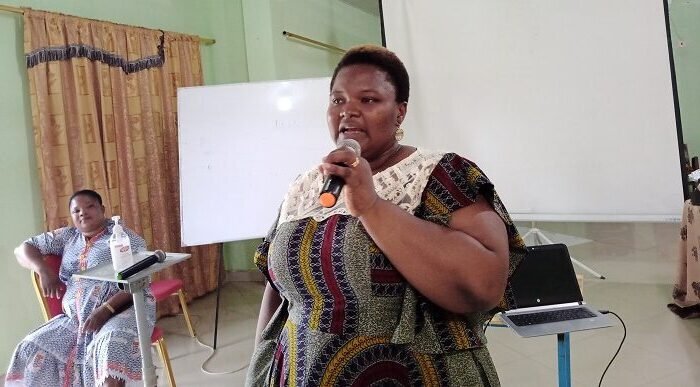
The Director at the Department of Gender in the Upper West Region, Ms Charity Bature has advised married women to maintain a healthy body and practise good personal hygiene to keep their husbands at home.
She explained that having body odour due to lack of good personal hygiene could push married men away from the home and force them to “recruit” other women to perform the duties of wives.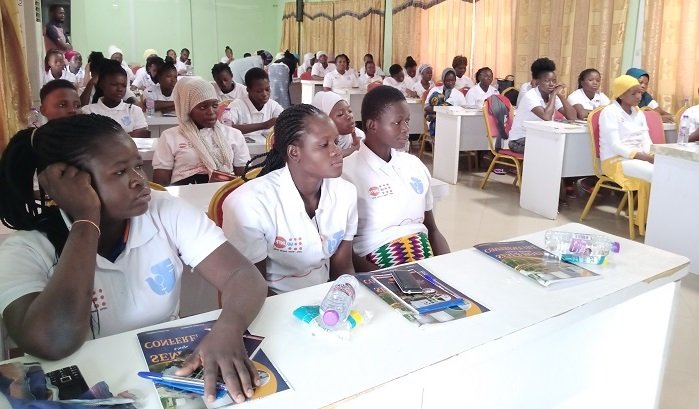
She maintained that it was necessary for women to take very good care of their bodies, especially during their menstrual cycle to prevent them from infections and other issues.
Ms Bature stated this at a day’s workshop orgainsed by the department for female artisans in the region on sexual and reproductive health issues.
The programme, which was supported by the United Nations Population Fund (UNFPA) discussed issues such as safe sex devoid of sexually transmitted infections and diseases (STIs/Ds), personal hygiene during menstruation and sex as well as gender based violence (SGBV).
She explained that sensitisation programmes organised earlier by the Department of Gender had targeted females in the formal sector to the neglect of others, therefore, the workshop at Wa was to ensure that every woman was sensitised to SGBV issues regardless of their social status.
Ms Bature advised women to bath regularly, change their sanitary pads often, wash their private parts with only water to avoid rashes and other infections and also ensure that they discarded their sanitary pads appropriately.
She expressed the need for unmarried persons to abstain from sex but advised that if they could not, then they should indulge in safe and protected sex.
The director defined safe sex as “the use of condoms to reduce the risk of transmitting or acquiring STI/Ds” and said the only form of contraceptive that prevented the transmission of STIs was the condom.
She indicated that STIs/Ds such as gonorrhoea, syphilis and the human immunodeficiency virus (HIV) could cause symptoms such as fever, sores around the mouth, anal itching, bleeding and soreness, frequent urination as well as itching or redness around the genitals.
She cautioned women against having multiple sexual partners which according to her could easily lead to the acquisition of an STI/D.
Touching on SGBV issues, Ms Bature explained that if women were adequate and self-sufficient, the likelihood of suffering abuse from men would be quite minimal and urged them to develop themselves in order to remain independent.
“When women have their own means of sustenance, they will not overly depend on a man for their every need so that when the men withhold those needs from them they are unable to function,” she said.
In light of this, the director encouraged the women to endeavour to educate their female children and give them skills training to ensure that they were gainfully employed so they would not fall victim to unscrupulous men.
Some participants who spoke to The Spectator lauded the department for the training and said it had broadened their horizon how to handle issues regarding their reproductive health and family life.
From Lydia Darlington Fordjour, Wa


General Secretary of the New Patriotic Party (NPP), Justin Kodua Frimpong, has filed his nomination to contest the position of General Secretary again as the party begins its rebuilding efforts ahead of the 2028 general elections.
He was accompanied by party stalwarts and supporters who were in high spirits, expressing confidence that he is the right person to hold the position.
Speaking after filing his nomination, Mr Kodua Frimpong assured the rank and file of the party that he would not disappoint them.
“I can assure you that the faith the rank and file of the party have had in me, I will never disappoint them,” he said.
He also pledged to run a clean campaign devoid of personal attacks.
“I can assure you that our internal campaign will be devoid of personal attacks,” he told his fellow contestants and the rank and file of the party as he seeks to retain his position.
His tenure has seen the party through the 2024 general elections, where the NPP lost power to the National Democratic Congress (NDC) after eight years in government.
The party is currently in a rebuilding phase, with internal elections scheduled to elect new national executives to lead its reorganization towards the 2028 polls.
The General Secretary position is considered one of the most influential in the party’s administrative structure, responsible for the day-to-day running of the party secretariat and implementation of party decisions.
By Edem Mensah-Tsotorme

The University of Ghana Medical Centre (UGMC) has disputed claims made on social media by comedian Michael Blackson concerning the treatment given to his late mother, saying a review found that the allegations did not accurately reflect what happened during her stay at the hospital.
In a statement issued in Accra on August 5, 2026, the management of UGMC expressed condolences to Mr. Blackson and his family over the death of his 83-year-old mother, who died at the facility on July 16, 2026.
The hospital said it had taken the concerns raised by Mr. Blackson seriously and conducted a thorough review in line with its clinical and administrative procedures.
According to the statement, the facts presented by Mr. Blackson on social media contained “numerous inaccuracies” and did not accurately reflect the medical care provided to his mother.
UGMC explained that she was referred to the facility from another hospital and received treatment there from May 27 to July 16, 2026, a period of about eight weeks.
The hospital stated that it would not release details of her diagnosis, treatment, medical records or other aspects of her care because it had a duty to protect patient confidentiality, even after death.
It said the decision was intended to respect the dignity of the deceased and the privacy of her family.
UGMC further stated that all clinical decisions at the facility are made by qualified healthcare professionals based on medical judgment, established standards of care and the best interests of the patient.
The statement added that such decisions are made in consultation with authorised family representatives where necessary and that billing and financial procedures are governed by institutional policies and are separate from clinical decision-making.
The hospital noted that it values feedback from patients and their families and considers both positive and negative comments important for improving the quality of care.
Mr. Blackson had earlier used social media to criticise the care his mother received at UGMC, prompting the hospital’s response.
By: Jacob Aggrey