News
Coconut Revitalisation Programme launched in Volta Region

- /home/u249204778/domains/spectator.com.gh/public_html/wp-content/plugins/mvp-social-buttons/mvp-social-buttons.php on line 27
https://spectator.com.gh/wp-content/uploads/2020/05/coconu-Revitalisation-Dr-Letsa-middle-performing-the-launching-ceremony.jpg&description=Coconut Revitalisation Programme launched in Volta Region', 'pinterestShare', 'width=750,height=350'); return false;" title="Pin This Post">
- Share
- Tweet /home/u249204778/domains/spectator.com.gh/public_html/wp-content/plugins/mvp-social-buttons/mvp-social-buttons.php on line 72
https://spectator.com.gh/wp-content/uploads/2020/05/coconu-Revitalisation-Dr-Letsa-middle-performing-the-launching-ceremony.jpg&description=Coconut Revitalisation Programme launched in Volta Region', 'pinterestShare', 'width=750,height=350'); return false;" title="Pin This Post">
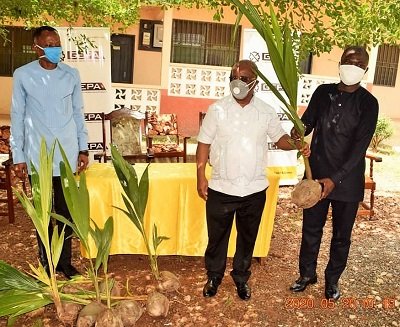
The Coconut Revitalisation Programme (CRP) was launched in Ho last Wednesday with the distribution 26,416 coconut seedlings to producers of the fruit in five districts and municipalities in the Volta Region.
The beneficiaries are from the Afadzato South, Ho West and Adaklu districts.
The rest are from the Ketu North and Ketu South municipalities.
The programme, which is under the supervision of the Ghana Export Promotion Authority (GEPA), is meant to promote the cultivation of coconut in those areas, not only for domestic consumption but more importantly for export.
The Volta Regional Minister, Dr Archibald Yao Letsa, who launched the programme, assured coconut growers of good returns for the venture, saying the cultivation and sale of coconut had become a lucrative business for the farmers and others in the value chain in recent times.
“The exportation of the raw coconut and the processed products has been identified as another viable source of foreign income for our dear nation,” he added.
Apart from that, Dr Letsa stated that the CRP fell in line with the Planting for Food and Jobs, and Planting for Export and Rural Development initiatives.
Therefore, the Regional Minister urged farmers to embrace the CRP to reap the guaranteed benefits of good income.
Earlier, the Regional Officer of GEPA, Mr Hope Amrado said that coconut had been identified as one of the vital non-traditional crops that had bright and reassuring prospects for export.
He gave the assurance that the GEPA would also collaborate vigorously with the Department of Agriculture to provide coconut producers with the appropriate support for the success of the programme.
To ensure the success of the CRP, he said that the beneficiary farmers would sign an undertaking, pledging the proper use of the seedlings.
FROM ALBERTO MARIO NORETTI, HO


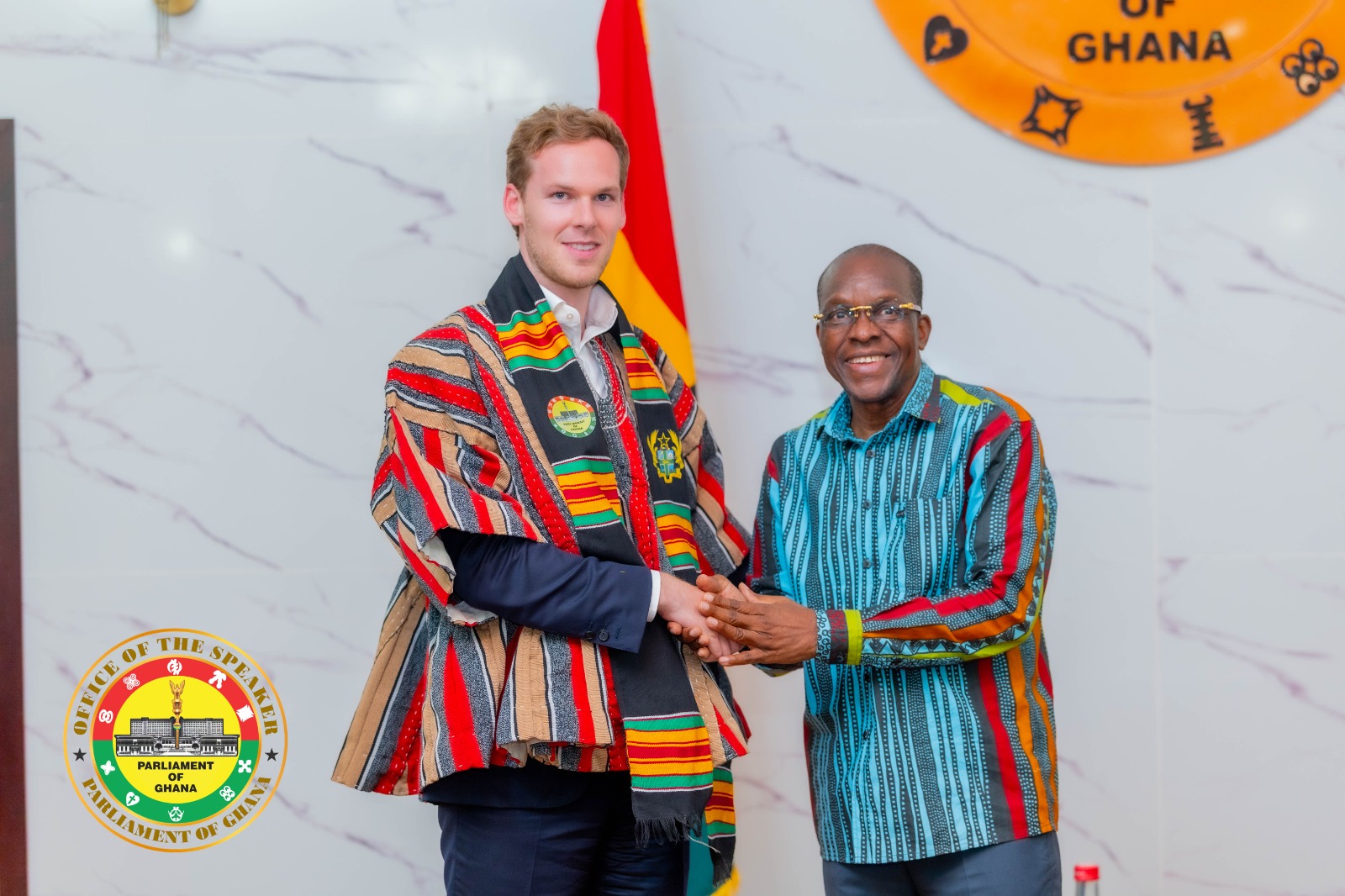
Mr. Alban Sumani Kingsford Bagbin has announced private sector led initiative that will see “Visit Ghana” on the “front of jersey” of Sunderland Football Club for the 2026/2027 football season.
The “Visit Ghana” project is a special marketing drive that will have presence on the front of jersey of Sunderland Football Club during the English Premier League.
Under this initiative, Sunderland FC will have on the front of their jerseys, “Visit Ghana” as part of efforts to drive and promote tourism in Ghana.
“We are entering a formal engagement with them to put Visit Ghana on their jerseys and all paraphernalia.
“We have gone far with the discussions, and therefore they usually showing interest,” Mr. Bagbin stated this at the 37th sitting of Parliament.
Mr. Bagbin explained further that, the initiative is not being sponsored by Parliament, but by the private sector adding that, the project will boost tourism in Ghana.
“This is not being sponsored by parliament. Infact the main sponsor is from the private sector, we are leading under my canopy to get this done.
“The GFA, the Ministry of Sports and Recreation and the Ministry of Finance have also been very supportive in this project,” he stated.
The Visit Ghana Front of Shirt Partnership with Sunderland, is expected to make Ghana the first African country to occupy such a position with a premier league club, and also offer global promotion for Ghana through EPL broadcasts, digital platforms and international media channels.
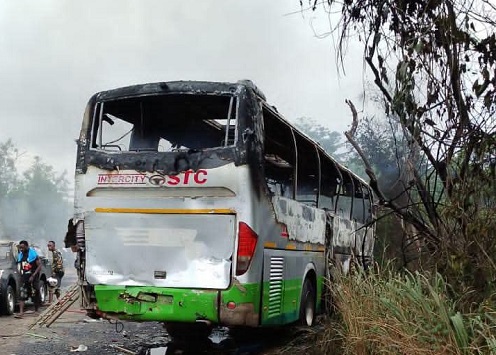
Motorists traveling between Accra and Kumasi are facing major delays today following a serious road crash at Birimso Bridge on the N6 Highway.
The accident, which involved a high-occupancy passenger bus, a loaded articulated truck, and a sedan, has completely blocked both lanes of the highway. As a result, all Accra-bound and Kumasi-bound traffic has been brought to a standstill.
Personnel from the Eastern South Regional Police MTTD, based in Kibi, are currently at the scene managing the situation.
To ease congestion, police have put in place temporary traffic diversions effective today.
By Edem Mensah-Tsotorme