News
Minority demands full disclosure on energy sector debts


- /home/u249204778/domains/spectator.com.gh/public_html/wp-content/plugins/mvp-social-buttons/mvp-social-buttons.php on line 27
https://spectator.com.gh/wp-content/uploads/2020/05/Settled-in-Full-Adam-Mutawakilu.jpg&description=Minority demands full disclosure on energy sector debts', 'pinterestShare', 'width=750,height=350'); return false;" title="Pin This Post">
- Share
- Tweet /home/u249204778/domains/spectator.com.gh/public_html/wp-content/plugins/mvp-social-buttons/mvp-social-buttons.php on line 72
https://spectator.com.gh/wp-content/uploads/2020/05/Settled-in-Full-Adam-Mutawakilu.jpg&description=Minority demands full disclosure on energy sector debts', 'pinterestShare', 'width=750,height=350'); return false;" title="Pin This Post">
The Minority in Parliament is disputing claims by the Minister of Energy, John Peter Amewu, that the government has settled in full its indebtedness to the Electricity Company of Ghana (ECG).
The caucus has, therefore, challenged Mr Amewu to come out with the total debt portfolio in the energy sector so that Ghanaians appreciated the true state of indebtedness of the country in that sector.
Mr Amewu at the Ministers’ bi-weekly press briefing in Accra on Tuesday to update Ghanaians on the coronavirus (COVID-19) situation said the government had cleared the legacies debt in the sector including the GH¢2.63 billion it inherited from the previous government.
“It is a fact that on assumption of office, this administration was confronted with a huge indebtedness to the ECG. As of December 2016 the state owed ECG GH¢ 2.63 billion. Government ensured it was current on all bills incurred from 2017,” Mr Amewu said.
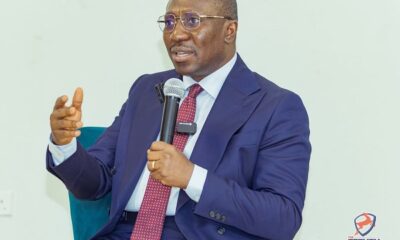
But the ranking member on the Mines and Energy Committee and Member of Parliament for Damango, Adam Mutawakilu, briefing the media in Parliament yesterday said the claims by the Energy Minister were not true.
“Currently, the ECG owes the Ghana Gas Company more than US$800 million, and, if you multiply $800 million by the exchange rate of GH¢5.5 that is over GH¢4 billion owed to one company. Besides, independent power producers have not been paid US$1.26 billion.
“The Minister of Energy did some cherry-picking analysis of the energy sector debts by picking debts of metropolitan, municipal and district assemblies owed to the ECG and fuel supply to analyse government’s performance in addressing the energy sector debt.
“What he refused to do was picking the total energy sector debts, including what debts the government inherited, what it had added and what debt is left. We therefore call on the minister to, as a matter of urgency, let Ghanaians know how much energy sector debt is left,” Mr Mutawakilu stated.
According to him, as far back as 2015, the legacy debt from 1992 to 2015 was US$2.4 billion.
With the introduction of the Energy Sector Levies Act (ESLA), he said, the debt had dropped to US$2.2 billion as at the end of 2016.
“So before President Nana Addo Dankwa Akufo-Addo came to power, he knew that the energy sector debt was $2.2 billion and this is made up of what government owed the ECG, suppliers, independent power producers, banks and others.
“So by just coming to pick one item to analyse and say that you are doing well cannot be used to measure your performance.
“We call on the Minister of Energy to tell us how much debt is left for Ghanaians to pay, what has the ESLA, introduced by former President Mahama raised and how much they have been able to manage and to pay so that we will be able to know the total debt of the energy sector,” he demanded.
He claimed that out of what government had paid to fuel suppliers, the highest beneficiary was StratCom Energy which he alleged belonged to “family and friends of the Energy Minister.”
“So the payment of liquid supplied is just to liquid his family and friends to make money when independent power producers had not been paid US$1.26 billion.
“That is why we are asking that the Minister of Energy comes with the whole portfolio of debt so that we will know exactly how much we do owe as a country in the energy sector,” he stated.
BY JULIUS YAO PETETSI


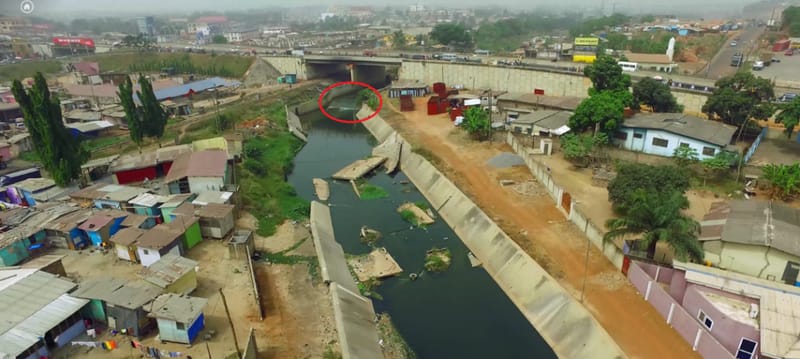
Construction of a major underground stormwater drain along the Dr. Busia Highway within the Kaneshie enclave will commence on September 7, 2026.
The Project Coordinator for the Greater Accra Resilient and Integrated Development (GARID) Project, Dr. Kwadwo Ohene Sarfo, announced this at a special media briefing on Wednesday.
According to him, the works will involve the construction of a double-cell underground rectangular drain measuring approximately 10 metres wide and 1.95 kilometres long, stretching from Pamprom Junction to First Light Junction.
The new drain will replace the existing two 1.2-metre diameter pipes, which are inadequate to carry the volume of stormwater in the area.
Dr. Sarfo said the drain will connect at one end to the recently completed section within the Accra Academy campus and at the other end to the existing drain at Pamprom Junction.
He said the construction is expected to run from September 2026 to October 2027.
The project forms part of government’s broader flood prevention and mitigation programme aimed at addressing perennial flooding in Accra.
By Edem Mensah-Tsotorme
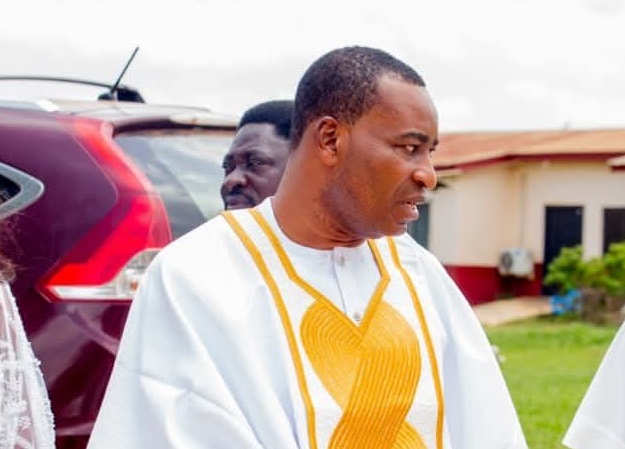
The former Ashanti Regional Chairman of the New Patriotic Party (NPP), Bernard Antwi Boasiako, popularly known as Chairman Wontumi, has withdrawn from the party’s National Chairmanship race.
In a statement issued yesterday, Chairman Wontumi who is currently serving a 20-year jail term said his decision was driven by his love for the party and his unwillingness to let his personal circumstances distract the NPP from its rebuilding efforts.
“There are moments in the life of a man when the heart wants to continue, but duty demands sacrifice. Moments when one must quietly set aside personal ambition, not because the dream has died, but because the family he loves must not be made to carry his burden. Today, I find myself at such a painful moment,” he wrote.
He disclosed that after many nights of prayer, sober reflection and consultations with his family, legal team, party elders, campaign team and trusted supporters, he concluded that his present situation must not become an additional burden on the NPP.
“This is not the decision my heart desired, but sometimes, true love requires us to release what we deeply want in order to protect what we love even more,” he added.
Recounting his years of service, Chairman Wontumi said he had served the party with everything within him, walking through heat and rain, travelling to remote communities and standing with the grassroots in both victory and defeat.
“For many years, I have served the NPP with everything within me… The NPP is not merely a political party to me. It is my family. It is my home. It is a cause to which I have dedicated a significant part of my life,” he stated.
He explained that the party, already carrying the pain of electoral defeat and the huge responsibility of preparing for the future, should not be made to carry his personal weight.
“That is why I cannot allow my present situation or personal ambition to distract the party from the difficult work of rebuilding. I cannot ask the party to carry my weight when it is already carrying the pain of defeat and the enormous responsibility of preparing for the battle ahead. I would rather carry this pain quietly than allow the party I love to suffer because of me,” he said.
He further sympathized with his supporters across the 16 regions, acknowledging that the decision would be painful for many who had sacrificed for his campaign.
“To my teeming supporters across all sixteen regions, I know this message will hurt. I know many of you will read it with tears in your eyes because I understand the sacrifices you have made for this journey,” he said.
By Edem Mensah-Tsotorme