News
27th TGMA Music Summit: Stakeholders talk brands, contracts and music business

- /home/u249204778/domains/spectator.com.gh/public_html/wp-content/plugins/mvp-social-buttons/mvp-social-buttons.php on line 27
https://spectator.com.gh/wp-content/uploads/2026/06/WhatsApp-Image-2026-06-26-at-16.50.29.jpeg&description=27th TGMA Music Summit: Stakeholders talk brands, contracts and music business', 'pinterestShare', 'width=750,height=350'); return false;" title="Pin This Post">
- Share
- Tweet /home/u249204778/domains/spectator.com.gh/public_html/wp-content/plugins/mvp-social-buttons/mvp-social-buttons.php on line 72
https://spectator.com.gh/wp-content/uploads/2026/06/WhatsApp-Image-2026-06-26-at-16.50.29.jpeg&description=27th TGMA Music Summit: Stakeholders talk brands, contracts and music business', 'pinterestShare', 'width=750,height=350'); return false;" title="Pin This Post">
Over 230 artistes, managers, music executives, media practitioners, legal professionals, aspiring music professionals and creative entrepreneurs converged at the British Council in Accra for the 27th Telecel Ghana Music Awards (TGMA) Music Summit, a high-impact industry engagement designed to equip Ghana’s music community with practical knowledge to build sustainable and successful careers.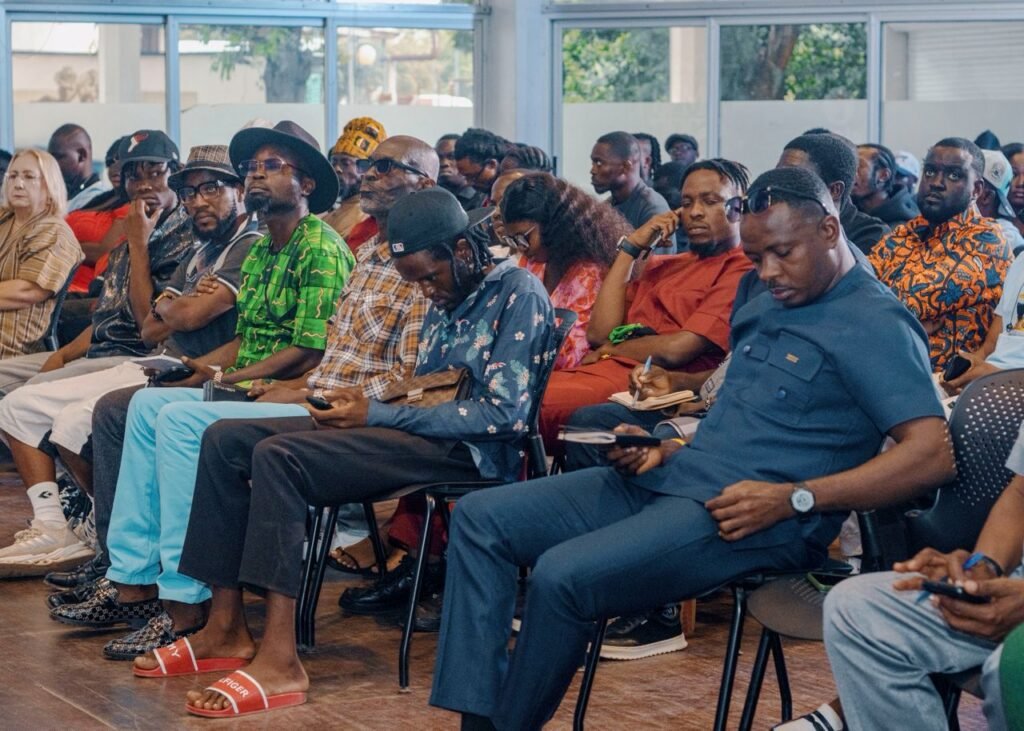
Held in commemoration of World Music Day, the 27th Telecel Ghana Music Awards Music Summit brought together some of the industry’s most respected voices to discuss two critical pillars of today’s music business: brand endorsements and music contracts.
Opening the Summit, Robert Klah, TGMA Lead and Head of Public Events and Communications at Charterhouse, welcomed participants and highlighted the purpose of the gathering.
He emphasised the importance of creating platforms that go beyond celebrating musical excellence to strengthen the business and professional capacity of industry stakeholders.
He noted that while talent remains the foundation of success, knowledge, strategic partnerships and legal awareness are increasingly becoming the differentiators in today’s music ecosystem.
The Summit also created valuable networking opportunities, enabling artistes, managers, music business professionals, media practitioners and other stakeholders to connect, exchange ideas and explore potential collaborations.
The Summit also received strong endorsement from the leadership of the music industry. Delivering a solidarity message, MUSIGA President and renowned highlife musician, Bessa Simons, commended Charterhouse for creating platforms that contribute to the professional development of musicians and music stakeholders.
He encouraged emerging artistes and young music professionals to actively participate in educational initiatives such as music business seminars and industry workshops, stressing that knowledge remains one of the most valuable assets for building a successful and sustainable career.
Bessa Simons further called for deeper collaboration between event organisers and industry associations, emphasizing the important role collective effort plays in advancing the interests of musicians and strengthening Ghana’s music ecosystem.
The first session focused on one of the most important yet often misunderstood revenue streams available to artistes and creatives: brand endorsements.
Leading the conversation was Mariam K. A-Buahin, Chief Operating Officer of Akuna Group, who brings over eighteen years of experience in marketing and brand management across multiple industries.
Her presentation, “Brand Endorsements: What Companies Look For,” provided participants with a deeper understanding of how brands evaluate potential ambassadors and partners.
She explored the importance of personal branding, audience alignment, credibility, consistency, professionalism, values and long-term influence.
The session underscored an important reality within today’s music industry: as music consumption patterns evolve, endorsement deals have become a significant source of income for artistes.
To successfully attract and retain corporate partnerships, artistes and music professionals must understand exactly what brands seek before committing their resources and reputation to a partnership.
The presentation was followed by an engaging question-and-answer session during which participants sought practical guidance on positioning themselves for brand opportunities and building mutually beneficial relationships with corporate organizations.
The second half of the Summit shifted focus to music contracts, an area that continues to have a profound impact on the careers and livelihoods of musicians and creatives.
The session began with an overview of the music business and the role of contracts by Grammy-recognized creative entrepreneur and music business executive Kofi Boachie Ansah, who provided participants with a foundational understanding of how contractual agreements govern relationships across the music value chain.
Award-winning entertainment entrepreneur and Founder and CEO of Lynx Group, Richie Mensah, followed with a presentation exploring seven key contract areas every artiste and music professional should understand.
Drawing from his personal experiences building one of Ghana’s most successful entertainment companies, he illustrated how contracts influence artist development, business growth and long-term success.
Entertainment lawyer Bobby Banson then highlighted critical issues that creatives must examine before signing any agreement. His presentation reinforced the importance of due diligence, legal representation, ownership rights, obligations, termination clauses and intellectual property protections.
Throughout the session, one message remained clear: the legal system is ultimately what protects the work of musicians and creative professionals. Without a proper understanding of contractual terms and obligations, artistes risk signing away rights, revenue opportunities and control over their creative output.
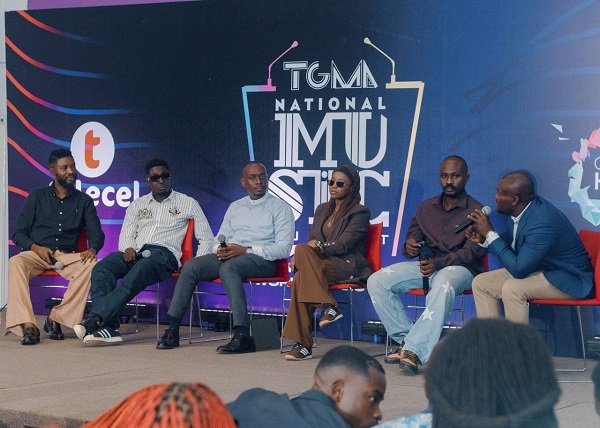
The contracts conversation culminated in an insightful panel discussion moderated by respected arts and culture journalist Kwame Dadzie of Joy FM and Hitz FM.
The panel featured an accomplished group of industry experts, including Seven Xavier (George O. Yartey), Music Executive and Industry Strategist; Patrick Tetteh Odestsi, Legal Practitioner and Contract Law Expert; Daniel Ahenkorah (Yaw Dan), A&R and Music Licensing Specialist; Khadijat El-Alawa, Music Executive and Talent Strategist; and Emmanuel Sedo (Electro Mirror), Founder and CEO of Flip The Music.
Together, they unpacked practical issues relating to contract negotiations, music licensing, rights management, publishing, talent development, artiste performance and navigating the evolving realities of the music business.
Their diverse perspectives provided attendees with a rare opportunity to engage directly with professionals whose experience spans legal practice, talent management, licensing, strategy and music entrepreneurship.
Music, Recognition and Celebration
Adding to the vibrant atmosphere was a musical interlude by emerging Alternative Hiphop and Pop artiste Elsie Raad, whose performance provided another reminder of the exciting new talent emerging within Ghana’s music landscape.
The Summit also featured the presentation of commemorative plaques to winners of the 27th Telecel Ghana Music Awards who were present, recognizing their achievements and contributions to Ghanaian music.
As the day’s discussions concluded, attendees continued networking over refreshments courtesy of Guinness Ghana, rounding off an event defined by knowledge-sharing, collaboration and professional growth.
Beyond the presentations and performances, the 27th TGMA Music Summit reinforced the growing importance of music business education in Ghana’s creative economy.
By creating a platform where emerging talents can learn directly from accomplished professionals, the Summit continues to bridge the gap between creativity and commerce, helping artistes and industry practitioners make informed decisions that protect their careers and unlock new opportunities.
Produced by Charterhouse with support from British Council, Closeup, Guinness Ghana and TV3, and powered by Telecel Ghana under its inspiring brand promise, “Connecting Energies,” the 27th TGMA Music Summit once again demonstrated that the future of Ghanaian music will be shaped not only by artistic excellence, but also by knowledge, strategic partnerships, legal awareness and strong industry collaboration.
As the conversations sparked during the Summit continue beyond the event, participants left with new insights, stronger networks and a renewed appreciation for the business structures that support successful music careers.
From understanding what brands seek in potential ambassadors to learning how contracts can protect—or potentially compromise—creative rights, attendees were reminded that success in today’s music industry requires both talent and informed decision-making.




Residents of Brodi, a farming community in the Tain District of the Bono Region, have been left in shock and mourning following the alleged murder of a 45-year-old woman by her husband, who later died by suicide.
According to information gathered by the Ghana News Agency (GNA), the suspect, popularly known as Kwabena Jack, believed to be in his 50s, allegedly attacked and killed his wife, Abena Donkor, while the couple were working on their farm on Monday, August 11, 2026.
Mr Kingsley Obah, Assembly Member for the Brodi Electoral Area, confirmed the incident to the GNA.
He explained that after news of the woman’s death spread through the community, residents launched a search for the suspect. His lifeless body was later discovered in a nearby bush on Tuesday, August 12, 2026.
Police have since conveyed both bodies to the Tain District Government Hospital, where they have been deposited for preservation and autopsy.
Investigations into the incident are ongoing. -GNA
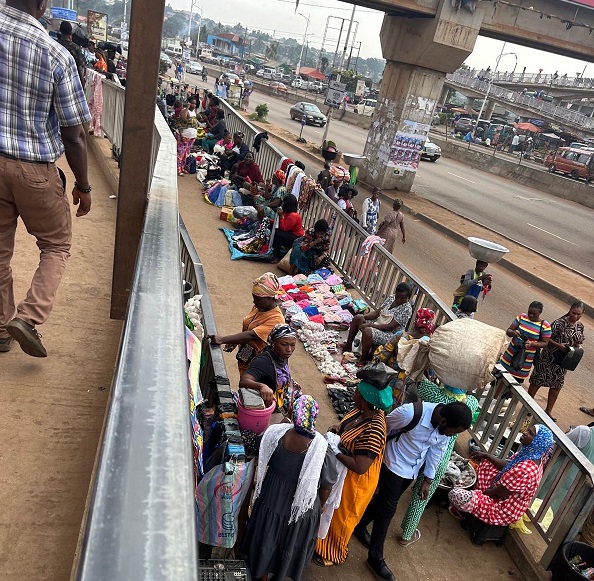
Hawkers and roaming preachers have taken over the five-metre high Madina REDCO footbridge and adjoining streets, making it increasingly difficult for pedestrians to use the facility intended to promote safe road crossing.
The traders have virtually turned sections of the footbridge into a marketplace, displaying their wares on the floor using jute sacks, plastic sheets and metal trays, while others have occupied both sides of the walkway with their merchandise.
Foodstuffs such as okro, garden eggs, pepper, onions, dried fish, smoked fish, grains, spices and other groceries are openly sold on the footbridge and along the roadside, forcing pedestrians to weave through the crowded path.
Clothing and fashion accessories including slippers, brassieres, panties, socks, bags and other household items are also displayed for sale, leaving only limited space for commuters to use.
The situation is worsened by the presence of itinerant preachers who position themselves on the footbridge with public address systems to evangelise, drawing crowds to further obstruct pedestrian movement.
Head porters are also seen crossing the highway through the median while carrying heavy loads instead of using the footbridge, exposing themselves to the danger of being knocked down by speeding vehicles.
Also, portions of the footbridge are showing signs of deterioration. Several metal railings are rusted, bent and loosely secured with pieces of wire, raising concerns about the safety of users, especially children, the elderly and persons with disabilities.
Sections of the concrete surface are worn and chipped, while makeshift wooden supports attached to parts of the structure suggest temporary repairs.
After a visit by The Spectator last week, it emerged that many commuters preferred crossing the busy Madina Highway instead of using the footbridge because of the congestion created by the trading and preaching activities.
For years, successive attempts by the police, the military and the La Nkwantanang Madina Municipal Assembly to address congestion around the REDCO and Zongo Junction enclave have yielded little success, with the area becoming notorious for roadside trading, indiscriminate parking and pedestrians refusing to use the footbridge.
A pedestrian, who gave her name only as Maame Yaa, described the situation as worrying, saying the footbridge, which was constructed to protect lives, had gradually lost its purpose because of the growing encroachment by traders and preachers.
According to her, many pedestrians were discouraged from using the facility because navigating through the crowded walkway had become difficult and uncomfortable.
She appealed to the La Nkwantanang Madina Municipal Assembly and other relevant authorities to intensify enforcement to prevent unauthorised trading and other activities on the footbridge and ensure it served its intended purpose of promoting pedestrian safety.
However, during the visit, personnel of the Ghana National Fire Service (GNFS) were seen carrying out a decongestion exercise to remove hawkers from sections of the roadside around the footbridge as part of efforts to improve public safety and ease the movement of both pedestrians and motorists.
The exercise forms part of a pilot project initiated by the Municipal Fire Commander for Madina, Division Officer II (DO II) Abdul Salia, who assumed command of the Madina Municipal Fire Station three months ago.
Speaking in an interview with The Spectator, DO II Abdulai Salia, who is also a long time resident of the community, said the month long project began on July 1 and ended on July 31, with 30 firefighters deployed daily to regulate traffic, clear hawkers from the streets and footbridge, and create access for emergency vehicles.
Continued on page 12
By Esinam Jemima Kuatsinu