Hot!
Youth unemployment, terrorism in Sahel can disrupt Ghana’s political stability – Security Report

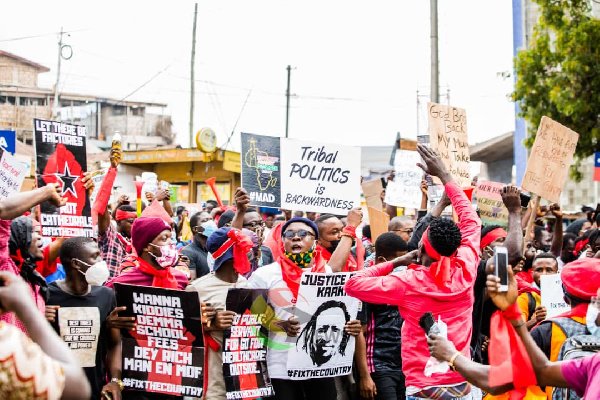
The West Africa Center for Counter-Extremism (WACCE), says Ghana’s political stability may be disrupted, in the wake of terrorism in the Sahel and other domestic challenges such as youth unemployment.
In a report by the regional security research organisation, it said even though Ghana has been relatively peaceful over the years, there is the likelihood of an upsurge, due to recent happenings in the sub-region, and neighbouring countries such as Benin, Togo and Ivory Coast.
WACCE maintained that the threats of political instability can, however, be forestalled if measures are put in place to prevent the impending dangers.
“The threat of terrorism is increasingly descending from the Sahel towards the Coastal States. Today more than 53% of all ECOWAS states are experiencing insurgencies. The pervasive spillover phenomenon makes Ghana’s border regions a key area of concern.
“Recent attacks in Benin, Togo and Ivory Coast highlight the determination of the terrorists to expand beyond landlocked Sahelian countries, where the insurgency has devastated thousands of lives and property in the last decade.
“Ghana has a big number of prolonged unresolved chieftaincy and ethnic conflicts and tensions, particularly in the Northern regions.
“The inherently high exploitative capacity of extremists implies that these vulnerabilities put Ghana in danger of terrorist exploitation”, a summary of the report revealed.
The report further stated that “Many analyses project the pervasive youth unemployment rate of about 5%9 as one of the biggest risks. The present government set up the Nation Builders Corps (NABCO) to absorb the high number of unemployed graduates, most of them temporarily.
The growing joblessness has driven many onto cyberspace to live in an illicit economy.
The determination of social activists such as the #FixTheCountry campaigners to exploit the security, economic and governance challenges amplifies the risks associated with youth grievances.
The above highlight the widespread nature of the threat to Ghana and underscores the importance and urgency needed to escalate national commitment to preventing the threat from spilling into Ghana”.
In a related development, an international conflict resolution expert, Col. (Rtd.) Festus Aboagye has charged government to address the socio-economic inequalities to fight terrorism and attacks.
According to him, factors and circumstances that have led to military coups in other West African countries exist in Ghana; hence, government must put stringent measures to deal with the grievances of agitated groups and individuals.
n an earlier interview on Newsfile, the ex-military officer warned that the country is susceptible to similar coups and attacks in other neighbouring countries if the socio-economic needs of the citizens are not fixed.
“All of us need to be worried. I belong to the school of thought that you don’t fight terrorism with only guns and bullets. Indeed, it will be more productive to address some of the socio-economic inequalities.
I don’t need to be a political scientist or an economist to argue that the Northern part of this country [is] bordering countries that are unstable, where there are gross socio-economic inequalities”, he stated.
Touching on how the looming political instability can be averted, WACCE said, “The overall effectiveness of Ghana’s response will be determined by the State’s willingness to recognise that the battle against terrorism and the drivers that underpin it cannot be won on the battlefield alone.
It will be won in the local community in dealing with the drivers of radicalization and building resilience against the threat.
It will be won by effectively addressing grievances, mobilizing local community support and goodwill to build the social and economic infrastructure that is required to build resilience against extremism”.
Source: www.myjoyonline.com


The Diaspora Affairs Office at the Office of the President has hosted a delegation of African diaspora women who are in Ghana ahead of a planned Presidential Conferment of Citizenship ceremony.
The Director of Diaspora Affairs, Kofi Okyere Darko, explained in a Facebook post that the visit was a gesture of appreciation by the delegation to the Government of Ghana for its continued efforts to reconnect Africans in the diaspora with their ancestral homeland.
He indicated that the ceremony, scheduled for next Monday, will officially grant Ghanaian citizenship to members of the delegation as part of the country’s broader engagement with the African diaspora.
The delegation was led by Erica Bennett, Founder of the Diaspora Africa Forum.
According to Mr Okyere Darko, her years of advocacy have played an important role in strengthening ties between Africa and people of African descent living abroad.
He noted that the group’s journey towards citizenship represents not only a legal process but also a cultural and spiritual return to their roots.
Also present at the meeting was Natalie Jackson, an attorney who is also expected to receive Ghanaian citizenship during the ceremony. She works closely with renowned civil rights lawyer Ben Crump.
Mr Okyere Darko emphasised that Ghana remains committed to strengthening relationships with the African diaspora and promoting unity, identity, and shared heritage among people of African descent worldwide.
By: Jacob Aggrey
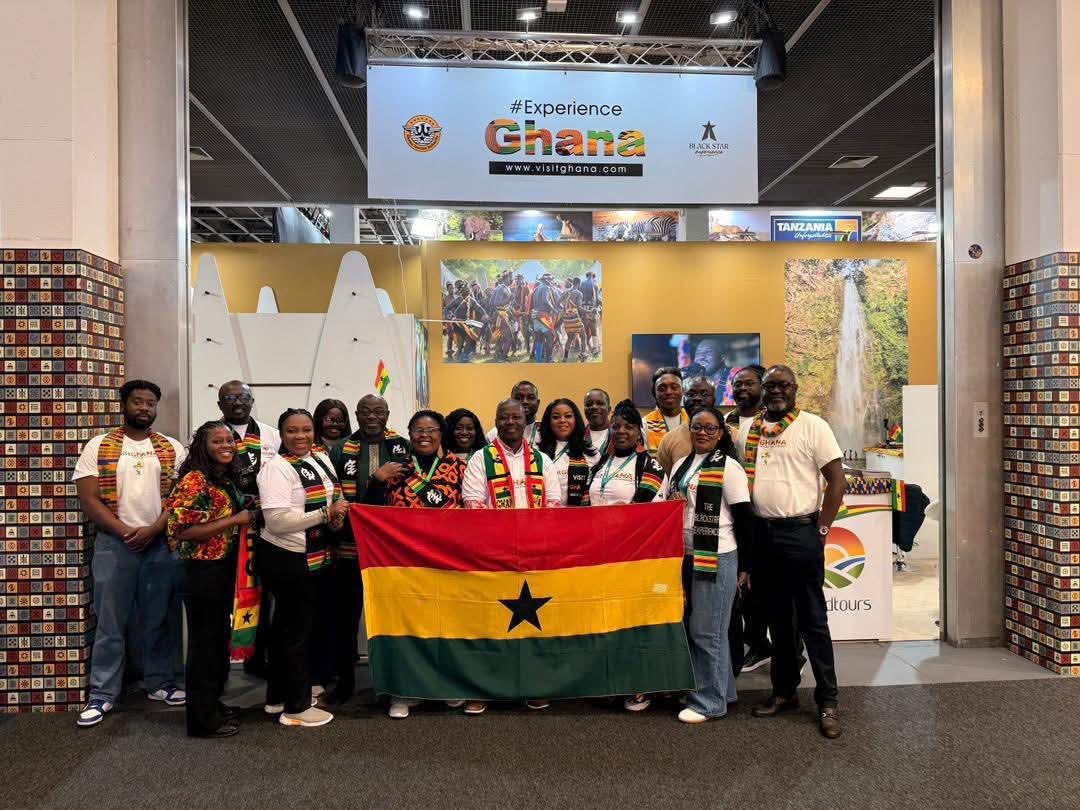
Ghana Tourism Authority is leading Ghana’s participation at ITB Berlin, which opened in Berlin with a vibrant national pavilion highlighting Ghana’s rich cultural heritage, tourism destinations and investment opportunities.
March 5 has been designated as Ghana Day, a special platform to promote Ghana’s languages, cuisine, Kente, festivals and business prospects to the global tourism community. The stand has already drawn strong interest with traditional arts and crafts displays, immersive multimedia presentations and popular Ghanaian snacks.
Seven private-sector players are exhibiting alongside government officials as part of efforts to deepen trade partnerships, expand market access, and attract investment across the hospitality, heritage tourism, ecotourism, and creative arts sectors.
Ahead of the official opening, the Ghana delegation also engaged young Ghanaian investors in Germany in collaboration with V Afrika-Verein and the Ghana Embassy, strengthening diaspora investment linkages and highlighting opportunities within the tourism value chain.
Ghana’s coordinated presence at ITB Berlin 2026 reinforces its strategy to position the country as the Gateway to Africa and a competitive destination for leisure travel and global investment.

 News1 week ago
Finance Minister outlines new gold policies to boost reserves and curb smuggling
- News1 week ago
Sam George launches the 2026 Meteorological Awareness Month; presents the 2026 seasonal forecast for southern Ghana
- Hot!1 week ago
Breaking: Footballer who killed two children in Abesim handed lifetime sentence