Hot!
Prof. Dodoo named ARSO President Emeritus


- /home/u249204778/domains/spectator.com.gh/public_html/wp-content/plugins/mvp-social-buttons/mvp-social-buttons.php on line 27
https://spectator.com.gh/wp-content/uploads/2025/07/Dodoo.jpg&description=Prof. Dodoo named ARSO President Emeritus', 'pinterestShare', 'width=750,height=350'); return false;" title="Pin This Post">
- Share
- Tweet /home/u249204778/domains/spectator.com.gh/public_html/wp-content/plugins/mvp-social-buttons/mvp-social-buttons.php on line 72
https://spectator.com.gh/wp-content/uploads/2025/07/Dodoo.jpg&description=Prof. Dodoo named ARSO President Emeritus', 'pinterestShare', 'width=750,height=350'); return false;" title="Pin This Post">
The African Organisation for Standardisation (ARSO) has unanimously conferred Professor Alex Dodoo with the honorary title of President Emeritus following resolutions by both its executive council and general assembly.
The decision, which was taken during the 31st General Assembly of ARSO in Zanzibar, Tanzania, last Friday, recognised Prof. Dodoo’s exceptional leadership in advancing continental standards for trade, safety and sustainable development.
The resolution ensured his continued advisory role in the strategic direction of ARSO while mentoring future standardisation leaders across Africa.
The Secretary-General of ARSO, Dr Hemogene Nsengimana, said the title of President Emeritus was reserved for leaders whose impact transcended their tenure, reflecting lifelong dedication to their field.
Excellence
As immediate past ARSO President and Director-General of the Ghana Standards Authority, Prof. Dodoo spearheaded the creation of critical structures within ARSO and influenced harmonisation initiatives supporting the African Continental Free Trade Area (AfCFTA).
Professor Dodoo, an expert in pharmaceuticals, public health, and standards regulation, has played a pivotal role in shaping the standardisation landscape of Africa.
Under his leadership, ARSO saw effective collaboration among member states culminating in the general assembly this year, and bringing together a record 34 countries, the highest in the history of the organisation.
The advocacy of Professor Dodoo for “One Standard, One Test, One Acceptance” across Africa has been instrumental in reducing technical barriers to trade and fostering economic integration.
In his new role, Professor Dodoo would continue to provide strategic guidance to ARSO, mentor emerging leaders in standardisation, and champion the voice of Africa in global standards bodies such as the International Organisation for Standardisation (ISO) and the World Trade Organisation (WTO).
Professor Dodoo, in his acceptance remark, said, “This honour is not just a personal milestone but shows the collective efforts of all stakeholders working toward a standardised, competitive, and quality-driven Africa.”
He said, “Our journey is far from over, and I remain committed to the vision of an Africa where standards fuel prosperity.”
As President Emeritus, Professor Dodoo is expected to focus on critical areas such as strengthening Africa’s quality infrastructure, advocating for standards in emerging sectors such as renewable energy and digital economies and bridging the gap between academia, industry, and policymakers in standardisation.
Competence
The Executive Director of the Standards Division at the South African Bureau of Standards (SABS), Dr Sadhvir Bissoon, said Prof. Dodoo had contributed towards the leadership of the ARSO Council in driving strategy, governance, “reviewing our laws and statutes and ensuring their implementation”.
“I hope he will still serve the needs and aspirations of ARSO in his new role,” he said in an interview with the Daily Graphic.
Private sector leaders who attended the event also lauded Professor Dodoo’s efforts to align African standards with global best practices.
The Regional Director of COTECNA, a key partner in the continental standards community, Antoine Anne, for his part, said the appointment of Professor Dodoo reaffirmed the commitment of the African continent to excellence.
Source: Graphic.com.gh


The Tema Regional Police Command has arrested a 32-year-old man for allegedly posing as a soldier and extorting money from unsuspecting members of the public at Ashaiman.
The suspect, identified as Bright Atsu Kudiabor, was arrested by the Ashaiman Police on Wednesday, September 16, 2026, at about 7:00 a.m.
According to the Police, he was arrested at an area known as “I Shall Return”, where he was allegedly parading himself as a soldier and demanding money from people.
The Police said Kudiabor, who is an ex-convict, was initially arrested by personnel of the Ghana National Fire Service in Ashaiman with assistance from other members of the public.
A search conducted on him after he was handed over to the Police reportedly led to the recovery of a set of military camouflage uniform.
The suspect is currently in Police custody and assisting with investigations.
The Tema Regional Police Command said he would be processed for court after investigations are completed.
The Police urged the public to remain vigilant and report anyone who falsely presents themselves as a soldier or a member of another security agency to deceive or extort money from the public.
By: Jacob Aggrey
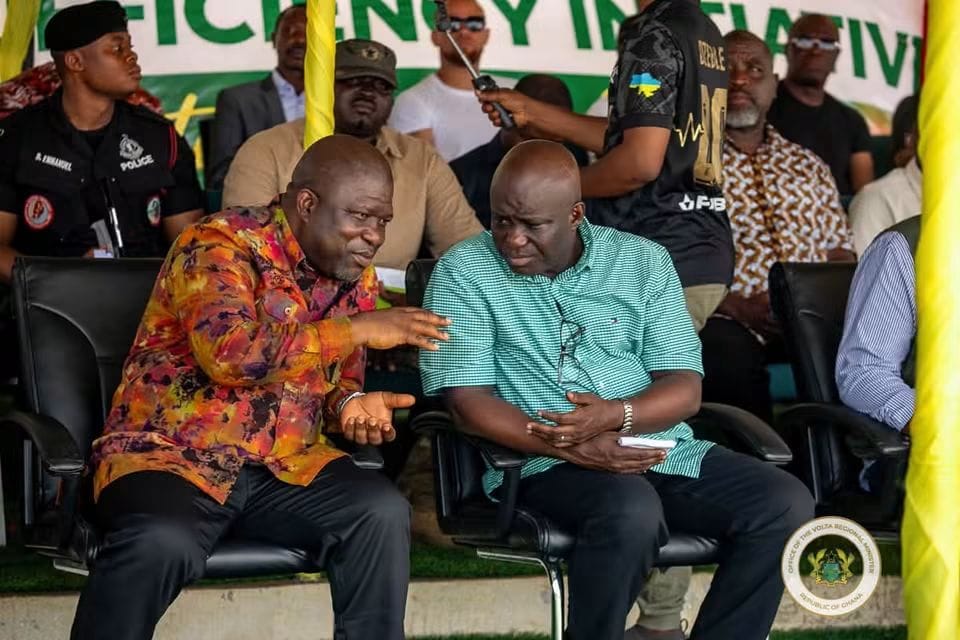
Volta Regional Minister, James Gunu, says the Volta Region holds enormous agricultural potential and efforts must be geared towards connecting farmers to the needed resources to unlock that potential.
He said focus must be on linking farmers to resources, technology, financing and markets to increase production, create jobs and build sustainable livelihoods.
Hon. Gunu made the remarks at the national launch of the Ghana Tomato Self-Sufficiency Initiative (GHATSI) held at Anloga in the Volta Region on Tuesday, September 15.
The initiative, under the theme “Produce at Home. Feed the Nation. Export the Surplus,” seeks to boost local tomato production, processing and marketing while reducing Ghana’s heavy reliance on imported tomatoes.
The launch was attended by the Minister for Food and Agriculture, Eric Opoku, his Deputy, John Setor Dumelo, Feed Ghana Coordinator, Bright Demordzi, Members of Parliament, traditional leaders, MMDCEs, farmers and other stakeholders.
Mr.Gunu expressed appreciation to the Minister for Food and Agriculture for the support announced for the region, including two excavators, 200 cartons of organic fertiliser, and GH¢200,000 for Ms. Kuatudzo Esther Dela, a tomato farmer and processor from Ziope.
He described the initiative as an important step towards making agriculture a stronger driver of food security, job creation and economic growth in the Volta Region.
By Edem Mensah-Tsotorme