Hot!
World leaders must share the responsibility of protecting young girls: Jeanette Kagame

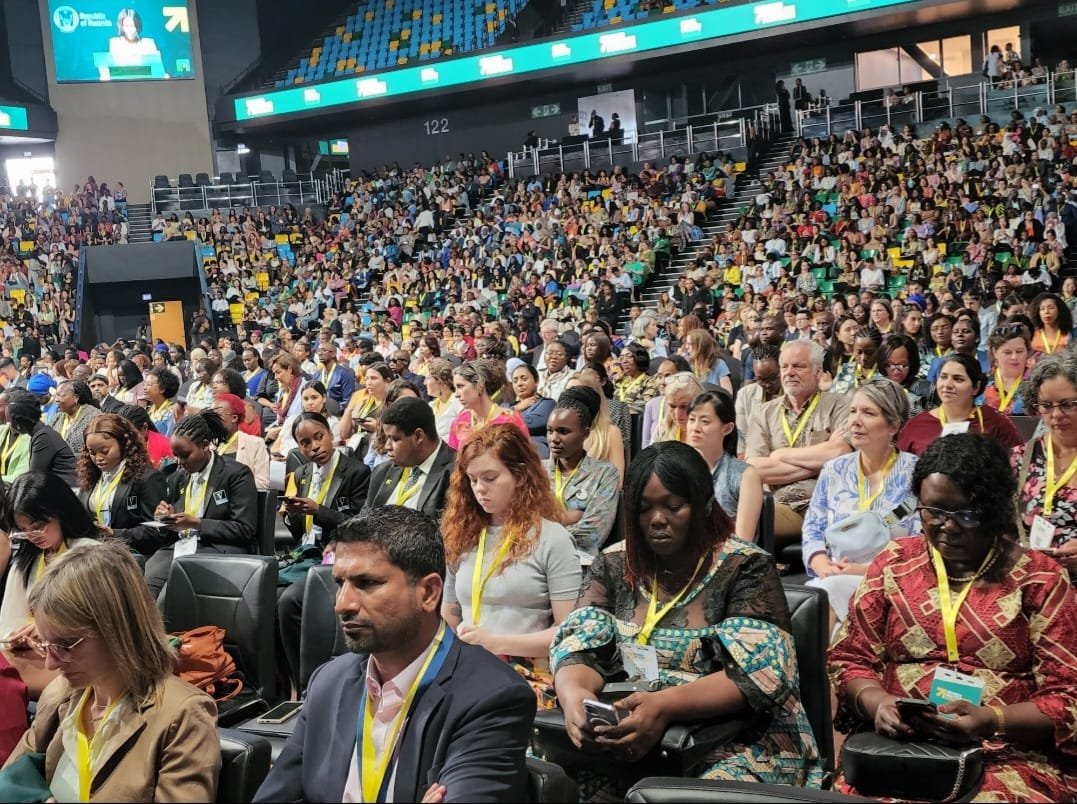
First Lady of Rwanda, Mrs Jeanette Kagame has called on world leaders to share the responsibility of fighting all forms of violence against women and young girls.
According to her, if crisis of vulnerable people were globally shared, such occurrences would drastically reduce to make the world safer for women and children.
“In times where the world is already weakened by devastative occurrences, who gains when women and girls who make up more than half of the population of communities worldwide are disempowered and victimized?” she quizzed.
Mrs Kagame made the call at the Global Crisis plenary session of the just ended Women Deliver (WD) conference in Kigali, Rwanda.
She stated that in the event of disaster or other global disruptions, a person’s gender, origin, race, health status and financial strength would determine the extent of misfortune the individual experiences.
She therefore underscored the need for all persons with the power to effect change to ensure they do not pretend to bear no influence over who gets to suffer the least and who must endure the most.
“Are we really that apathetic to the fate of women and girls that we wish to consider gender equality to be solely a female issue as opposed to a moral human issue? We do not have the luxury of time considering our current pace.”
“We need to as a matter of urgency find the integrity and perhaps bravery to address core questions that loom over women’s fates and deploy the diverse range of resources available to us to design sustainable solutions,’ she added.
Referring to the World Bank report that estimates the loss in human capital wealth due to gender inequality to be at least $160.2 trillion or twice the global Gross Domestic Product (GDP), she indicated that it would take much less to develop self-reliant systems for female empowerment and achieve gender equality at last.
The Global Fund, a worldwide movement to defeat HIV, tuberculosis and malaria to ensure a healthier and more equitable future for all, she said, had been a very strong partner to Rwanda and to non-profit organisations such as Imbuto Foundation which she chaired, adding that Rwanda had secured remarkable progress in the health status of communities in the country, leading to a reduction in rates of HIV infections.
Mrs Kagame also revealed that mother to child transmissions of HIV in Rwanda has been almost nonexistent for many years, “to all that fought to get us here we say thank you.”
Meanwhile some participants of the conference in separate interviews with the Ghanaian Times commended the organising team for the initiative and called for more actions to be taken to address all issues affecting women and young girls.
Evelyn Mukundihi from Uganda said “This has been a very valuable experience for me and I am hoping that we will all put into actions whatever we learned or talked about during the programme to achieve our aims of promoting gender parity and protecting women.
Shakira Nuhu, an adolescent girls protection advocate from Ghana urged young girls to become advocates for themselves and demand accountability from decision making leaders.
FROM RAISSA SAMBOU, KIGALI, RWANDA


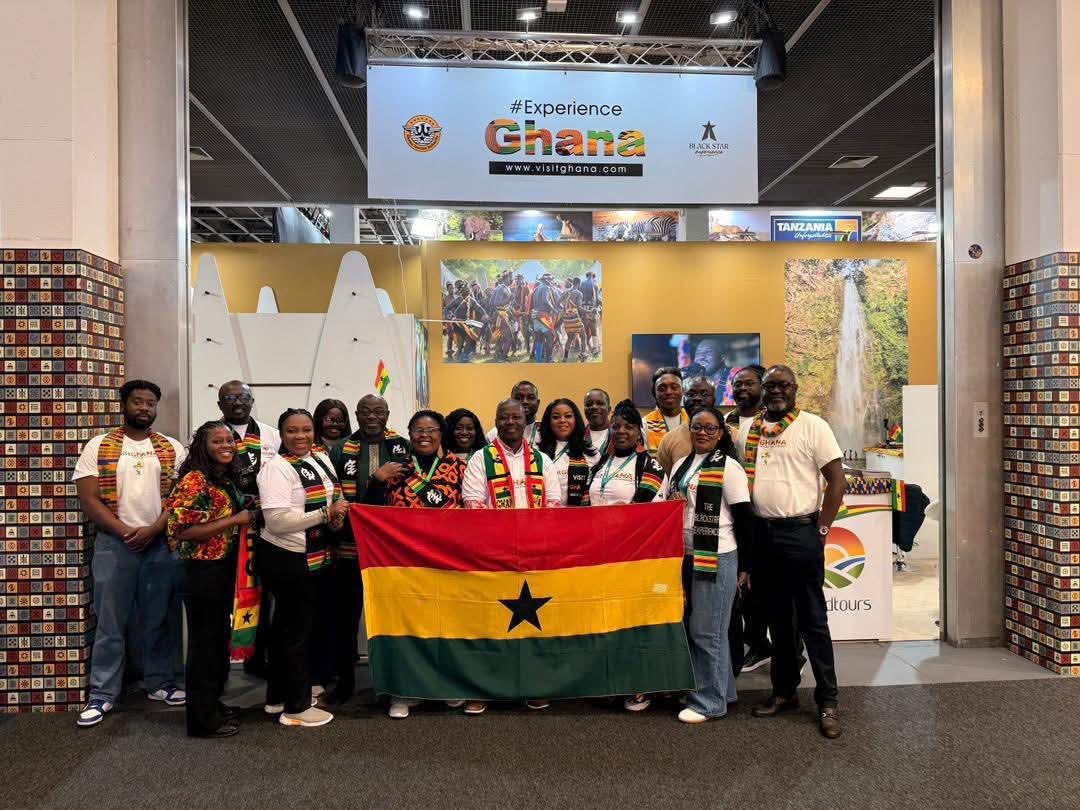
Ghana Tourism Authority is leading Ghana’s participation at ITB Berlin, which opened in Berlin with a vibrant national pavilion highlighting Ghana’s rich cultural heritage, tourism destinations and investment opportunities.
March 5 has been designated as Ghana Day, a special platform to promote Ghana’s languages, cuisine, Kente, festivals and business prospects to the global tourism community. The stand has already drawn strong interest with traditional arts and crafts displays, immersive multimedia presentations and popular Ghanaian snacks.
Seven private-sector players are exhibiting alongside government officials as part of efforts to deepen trade partnerships, expand market access, and attract investment across the hospitality, heritage tourism, ecotourism, and creative arts sectors.
Ahead of the official opening, the Ghana delegation also engaged young Ghanaian investors in Germany in collaboration with V Afrika-Verein and the Ghana Embassy, strengthening diaspora investment linkages and highlighting opportunities within the tourism value chain.
Ghana’s coordinated presence at ITB Berlin 2026 reinforces its strategy to position the country as the Gateway to Africa and a competitive destination for leisure travel and global investment.

The Member of Parliament for Nsawam Adoagyiri, Frank Annoh Dompreh, has expressed concern over delays in the release of the District Assemblies Common Fund, warning that the situation is stalling development across the country.
On his facebook page, he described as a matter of urgent national importance, the Minority Chief Whip pointed to what he sees as a growing crisis of unpaid contractors, abandoned projects, and halted infrastructure works in many districts.
He noted that several communities are grappling with half completed schools, unfinished health facilities, abandoned markets, deteriorating roads, and stalled sanitation projects.
According to him, many contractors who have executed projects for district assemblies have not been paid, forcing some construction firms to demobilise from sites while workers lose their jobs.
He stressed that the District Assemblies Common Fund is not a discretionary allocation but a constitutional requirement under Article 252 of the 1992 Constitution, intended to support development at the local level.
In his view, years of delayed releases and accumulated arrears have weakened district development financing and disrupted projects meant to improve living conditions in communities.
He further argued that some payments made in recent years were largely the settlement of old debts rather than funding for new or ongoing projects, a situation he believes has affected contractor confidence and local economic activity.
He described the issue as more than a budgetary challenge, characterising it as a development emergency and a governance concern.
He therefore urged the appropriate authorities to pay outstanding DACF arrears, settle contractors who have completed their work, and ensure that transfers to districts are automatic and predictable.
He maintained that decentralisation can only succeed when district assemblies receive adequate and timely funding to carry out development projects.
He emphasised that stalled projects directly affect ordinary citizens, since they rely on such infrastructure for education, healthcare, transportation, sanitation, and economic activities.
He called for renewed attention to grassroots development, insisting that national progress should not be concentrated only in major cities but extended to all communities.
By: Jacob Aggrey