Hot!
Women demand support for higher education


The government has been urged to develop deliberate policies to support women pursue higher education. A Senior Lecturer at Ghana Institute of Management and Public Administration (GIMPA), Dr Gifty Oforiwaa Gyamera, who made the call, said that would help bridge the gender parity gap at the higher education level. She said this at a forum last Tuesday to discuss the gender inequality gap in higher education and measures to address it. It was under the Gender Equity and Women in Higher Education Writing Programme, and sponsored by the Centre of Excellence for Equity in Higher Education (CEEHE) at University of Newcastle, Australia. The programme which was developed by the Director of CEEHE, Professor Penny-Jane Burke, and Dr Gyamera, aimed at creating collaboration and mentoring opportunities for women in higher education.
CEEHE has adapted the research Writing Programme for Widening Participation Practitioners to engage women in higher education with the critical theoretical tools to examine questions of gender equity in a collaborative space of co-mentoring and exchange of women’s differently located experiences across a two different national contexts of Australia and Ghana and a range of disciplinary fields. Dr Gyamera observed that there were more male lecturers than female lecturers at higher education level which ought to be addressed. “Now you cannot teach without PhD at the University and so there must be conscious effort by the government or stakeholders to promote female in higher education to pursue their PhD,” she stated. In view of this, she said scholarships must be provided for women to pursue their PhD in order to be at par with their male counterparts at the higher education level. She suggested that the number of ‘academic papers’
that women PhD holders needed to publish to be promoted, though debatable could be reduced for them and urged women to collaborate with their counterparts both in and outside the country to co-author academic publications. At the institutional level, she said, organisations needed to support their female staff to pursue higher education to help train more female lecturers.
“There should also be deliberate policies to emphasise mentorship and coaching particularly for the early career academics,” she added. The Human Resource Director at GIMPA, Mrs Victoria Kumbuor also said academic work at the higher education level favoured men than women. She proposed that “Professors should pair with women who have the capacity to write academic papers for
publication.” That, Mrs Kumbuor said, would help equip them to assume leadership positions at the higher education level. “We do not say that standards must be lowered for women but what we are asking for is support be provided for women to be able to meet those criteria so that they could assume leadership positions and the gap can be bridged,” she added.
By Vivian Arthur


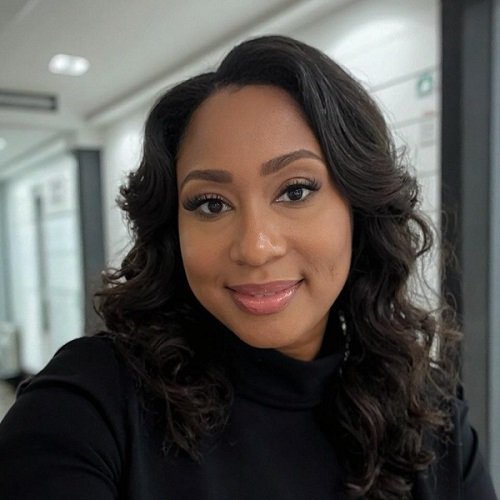
The Africa Investment Network has entered a new partnership with 17 Asset Management to expand investment opportunities for Africans in the diaspora.
The two organisations will work together to open more pathways for diaspora investors, provide better data on markets, and connect investors to viable projects across the continent.
The partnership will focus on mapping investment opportunities across countries and sectors, building a Diaspora Pathways Program to guide new investors, and creating a shared research platform that provides market insights, returns benchmarks, regulatory updates and sector outlooks.
The two groups will also develop a trade and deal catalogue to help match businesses with partners.
As part of the collaboration, both institutions will host investment roadshows through the Global Africa Summit series, starting with GAS Accra from December 11 to 12 at the Alisa Hotel.
The event will showcase deals, hold sector briefings and connect investors with government and private sector actors.
Africa Investment Network founder and Chief Executive Jane Reindorf Osei noted that diaspora capital remains one of Africa’s strongest advantages because it is patient, purpose driven and closely linked to local development outcomes.
She explained that the partnership will help direct more diaspora investment into areas where it can make the most impact.
Chairman of 17 Asset Management, John Morris, highlighted that the joint effort will blend strong investment design with Africa Investment Network’s networks and convening power.
He stressed that improved research and compliant market access will give diaspora investors more confidence across different markets.
The two institutions will open their diaspora investment platform in the second quarter of 2026, followed by the launch of a co investment window.
Investment roadshows will also be held in North America, the Caribbean and key African centres next year.
Africa Investment Network and 17 Asset Management invited governments, development finance institutions, family offices, asset managers and other partners to support deal creation, risk sharing and market building initiatives aimed at boosting diaspora participation.
By: Jacob Aggrey
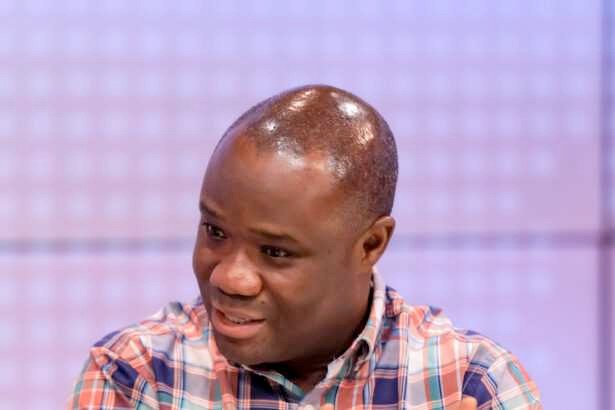
Government Communications Minister Felix Kwakye Ofosu insists that neither President Mahama nor the National Democratic Congress has filed any petition seeking the removal of the Electoral Commission Chairperson and her two deputies.
In a one on one Interview with GHone, he explained that the President only forwarded petitions he received, as required by law, and has not initiated any action against the EC leadership.
According to him, the identities and motives of the petitioners remain unknown to government, and the Presidency is not involved in that part of the process.
Mr Kwakye Ofosu stressed that while the NDC has openly disagreed with some actions of the Electoral Commission in the past, the party has not submitted any petition asking for the removal of the EC Chair or her deputies.
He noted that comments by the NDC National Chairman, Johnson Asiedu Nketiah, questioning the EC’s competence, do not amount to a formal petition.
He added that criticism of public officials is normal and does not automatically translate into a request for their removal.
Mr Kwakye Ofosu explained that once a petition is received, the President’s only role is to forward it to the Chief Justice.
The Chief Justice then decides if the allegations have merit. If they do, a committee is set up to investigate.
He said those named in the petitions will be officially informed by the Chief Justice, not the Presidency.
They will then have the opportunity to appear before the committee, respond to the claims, and provide any evidence in their defence.
Mr Kwakye Ofosu expressed confidence that the process will be fair and will protect the rights of all those involved.
By: Jacob Aggrey