News
WIN trains 15 youth to turn Coconut waste into Charcoal briquettes

- /home/u249204778/domains/spectator.com.gh/public_html/wp-content/plugins/mvp-social-buttons/mvp-social-buttons.php on line 27
https://spectator.com.gh/wp-content/uploads/2025/08/WhatsApp-Image-2025-08-26-at-10.29.02.jpeg&description=WIN trains 15 youth to turn Coconut waste into Charcoal briquettes', 'pinterestShare', 'width=750,height=350'); return false;" title="Pin This Post">
- Share
- Tweet /home/u249204778/domains/spectator.com.gh/public_html/wp-content/plugins/mvp-social-buttons/mvp-social-buttons.php on line 72
https://spectator.com.gh/wp-content/uploads/2025/08/WhatsApp-Image-2025-08-26-at-10.29.02.jpeg&description=WIN trains 15 youth to turn Coconut waste into Charcoal briquettes', 'pinterestShare', 'width=750,height=350'); return false;" title="Pin This Post">
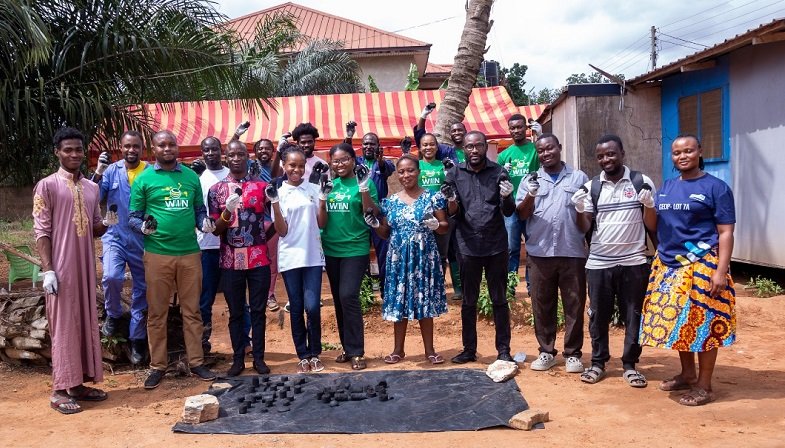
The World Inspiring Network (WIN) has organised a two-day training workshop for 15 young people in the Greater Accra Region to equip them with skills in converting coconut waste into charcoal briquettes.
This initiative, dubbed EcoFlames, aims to promote clean energy, reduce waste, and create green jobs by addressing three key challenges facing the city: mounting coconut waste, youth unemployment, and the reliance on harmful cooking fuels.
The workshop was a collaborative effort with the Accra Metropolitan Assembly, Bloomberg Philanthropies, the International Trade Centre’s Ye! Community, and EBApreneur Solutions Limited.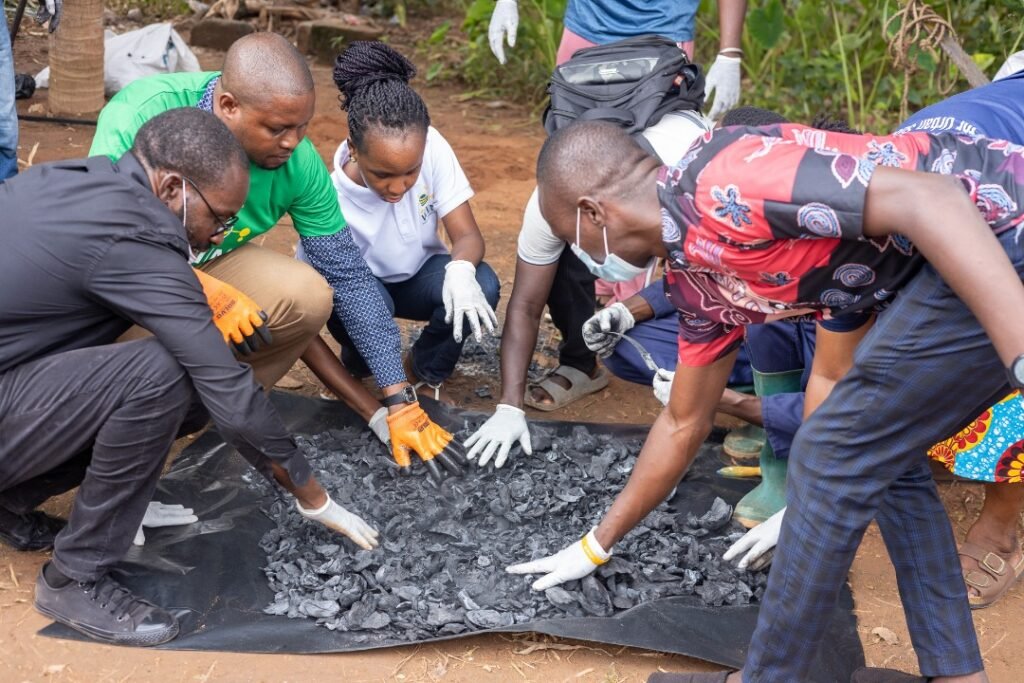
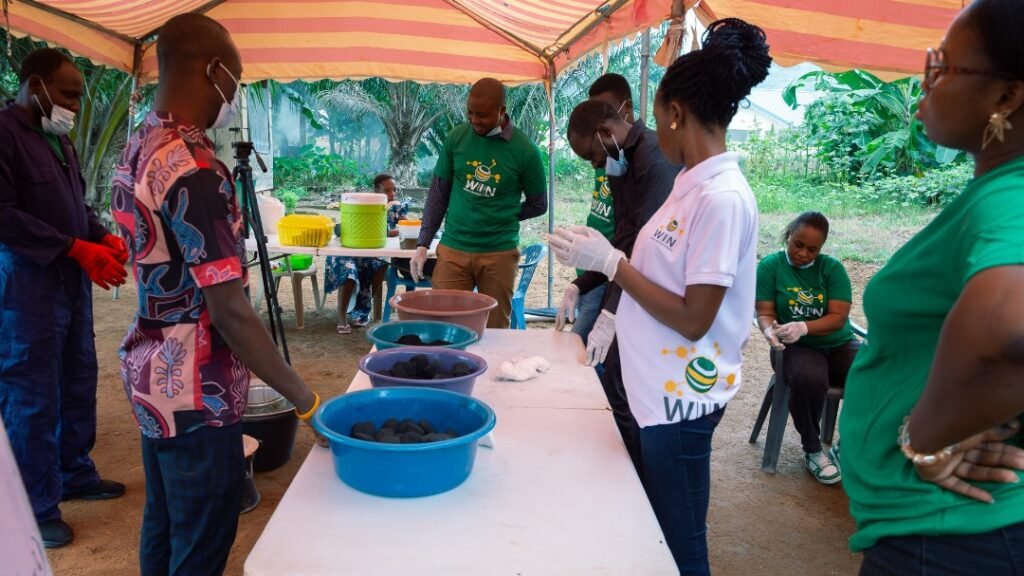
Participants at the workshop were taken through waste collection, segregation, carbonisation, manual and mechanised briquette production, and the environmental and health benefits of clean energy.
They also engaged in hands-on sessions to prepare them for both small-scale and large-scale production.
Speaking on the sidelines , the Executive Director of World Inspiring Network, Maxwell Odonkor, said the EcoFlames Initiative was designed to empower young people to turn coconut husks and shells into clean-burning briquettes while starting sustainable businesses.
He explained that over 80 percent of households in Accra depended on firewood and traditional charcoal for cooking, which continued to damage the environment and expose users to health risks such as cardiovascular diseases.
Mr Odonkor added that Accra alone generated an estimated 151 tonnes of coconut waste daily, much of which ended up in open drains or landfill sites.
He said converting this waste into briquettes would not only improve sanitation but also provide affordable alternatives to traditional fuels.
He noted that the next phase of the project would involve campaigns in markets and schools to educate women, students and food vendors on the benefits of switching to clean energy.
According to him, plans are also underway to host the Green Action Summit, which is expected to bring together over 200 young people to explore innovative climate solutions.
The Project Lead for EcoFlames and Executive Secretary of WIN, Thelma Naroog Bamanteeh, said the training was intentionally designed to be practical so that participants could immediately apply the knowledge and skills acquired.
She explained that the initiative was addressing two problems at once: reducing deforestation caused by cutting trees for charcoal and tackling improper disposal of coconut waste in the city.
According to her, the NGO had plans to set up a demonstration site but the high cost of equipment remained a challenge.
She therefore appealed to the government to partner with suppliers to reduce the cost of production machines so that more young people and organisations could venture into the sector.
Ms. Bamanteeh maintained that in the long run, the project would not only create green jobs but also improve public health, protect the environment and help Ghana meet its climate action goals.
Background:
Under Phase Two in Accra, the Accra Metropolitan Assembly selected 20 youth-led projects from 59 applications.
The chosen teams received microgrants from a total budget of $100,000 to implement their projects over a six-month period.
Most of the groups have already received their funding and started work on initiatives in waste management, clean energy, urban greening and public education, with WIN’s EcoFlames Initiative among them.
By: Jacob Aggrey





Residents of Brodi, a farming community in the Tain District of the Bono Region, have been left in shock and mourning following the alleged murder of a 45-year-old woman by her husband, who later died by suicide.
According to information gathered by the Ghana News Agency (GNA), the suspect, popularly known as Kwabena Jack, believed to be in his 50s, allegedly attacked and killed his wife, Abena Donkor, while the couple were working on their farm on Monday, August 11, 2026.
Mr Kingsley Obah, Assembly Member for the Brodi Electoral Area, confirmed the incident to the GNA.
He explained that after news of the woman’s death spread through the community, residents launched a search for the suspect. His lifeless body was later discovered in a nearby bush on Tuesday, August 12, 2026.
Police have since conveyed both bodies to the Tain District Government Hospital, where they have been deposited for preservation and autopsy.
Investigations into the incident are ongoing. -GNA

Hawkers and roaming preachers have taken over the five-metre high Madina REDCO footbridge and adjoining streets, making it increasingly difficult for pedestrians to use the facility intended to promote safe road crossing.
The traders have virtually turned sections of the footbridge into a marketplace, displaying their wares on the floor using jute sacks, plastic sheets and metal trays, while others have occupied both sides of the walkway with their merchandise.
Foodstuffs such as okro, garden eggs, pepper, onions, dried fish, smoked fish, grains, spices and other groceries are openly sold on the footbridge and along the roadside, forcing pedestrians to weave through the crowded path.
Clothing and fashion accessories including slippers, brassieres, panties, socks, bags and other household items are also displayed for sale, leaving only limited space for commuters to use.
The situation is worsened by the presence of itinerant preachers who position themselves on the footbridge with public address systems to evangelise, drawing crowds to further obstruct pedestrian movement.
Head porters are also seen crossing the highway through the median while carrying heavy loads instead of using the footbridge, exposing themselves to the danger of being knocked down by speeding vehicles.
Also, portions of the footbridge are showing signs of deterioration. Several metal railings are rusted, bent and loosely secured with pieces of wire, raising concerns about the safety of users, especially children, the elderly and persons with disabilities.
Sections of the concrete surface are worn and chipped, while makeshift wooden supports attached to parts of the structure suggest temporary repairs.
After a visit by The Spectator last week, it emerged that many commuters preferred crossing the busy Madina Highway instead of using the footbridge because of the congestion created by the trading and preaching activities.
For years, successive attempts by the police, the military and the La Nkwantanang Madina Municipal Assembly to address congestion around the REDCO and Zongo Junction enclave have yielded little success, with the area becoming notorious for roadside trading, indiscriminate parking and pedestrians refusing to use the footbridge.
A pedestrian, who gave her name only as Maame Yaa, described the situation as worrying, saying the footbridge, which was constructed to protect lives, had gradually lost its purpose because of the growing encroachment by traders and preachers.
According to her, many pedestrians were discouraged from using the facility because navigating through the crowded walkway had become difficult and uncomfortable.
She appealed to the La Nkwantanang Madina Municipal Assembly and other relevant authorities to intensify enforcement to prevent unauthorised trading and other activities on the footbridge and ensure it served its intended purpose of promoting pedestrian safety.
However, during the visit, personnel of the Ghana National Fire Service (GNFS) were seen carrying out a decongestion exercise to remove hawkers from sections of the roadside around the footbridge as part of efforts to improve public safety and ease the movement of both pedestrians and motorists.
The exercise forms part of a pilot project initiated by the Municipal Fire Commander for Madina, Division Officer II (DO II) Abdul Salia, who assumed command of the Madina Municipal Fire Station three months ago.
Speaking in an interview with The Spectator, DO II Abdulai Salia, who is also a long time resident of the community, said the month long project began on July 1 and ended on July 31, with 30 firefighters deployed daily to regulate traffic, clear hawkers from the streets and footbridge, and create access for emergency vehicles.
Continued on page 12
By Esinam Jemima Kuatsinu