News
What children need from us as parents, guardians, caregivers

- /home/u249204778/domains/spectator.com.gh/public_html/wp-content/plugins/mvp-social-buttons/mvp-social-buttons.php on line 27
Warning: Trying to access array offset on false in /home/u249204778/domains/spectator.com.gh/public_html/wp-content/plugins/mvp-social-buttons/mvp-social-buttons.php on line 27
&description=What children need from us as parents, guardians, caregivers', 'pinterestShare', 'width=750,height=350'); return false;" title="Pin This Post">
- Share
- Tweet /home/u249204778/domains/spectator.com.gh/public_html/wp-content/plugins/mvp-social-buttons/mvp-social-buttons.php on line 72
Warning: Trying to access array offset on false in /home/u249204778/domains/spectator.com.gh/public_html/wp-content/plugins/mvp-social-buttons/mvp-social-buttons.php on line 72
&description=What children need from us as parents, guardians, caregivers', 'pinterestShare', 'width=750,height=350'); return false;" title="Pin This Post">
Children need and thrive well in a home environment where there is love, warmth and security.
How comfortable is your child at home? Is he/she a happy child? Does he/she love his home environment and enjoys being at home often if he/she has no school engagements or other social events outside that demands his/her attendance.
Is she extremely proud inviting his/her peers/friends home? If the responses to these few questions are in the affirmative then it is encouraging.
It also implies that you are also doing something right to make them comfortable. It is better for them to have their peers come over whiles you still keep a vigilant watch over them under your very nose than for them to always spend time outside.
How do children define love? / What are children’s understanding of love?
Even though we are much more experienced and fully grown adults, one thing we should never lose sight of is that our dear little ones observe us a lot and see through us. They know parents who genuinely care for them and their welfare by various measures.
To majority of them, love means providing them with their basic needs such as food and by this, it should be a delicious and of course a nutritious one! Children can simply tell how discriminatory you are by the disparity in the kind of meal you serve them or just by the mere size of the protein you serve them as compared to the other sibling (who might be your own biological or a favourite one), especially when that one has been a torn in your flesh.
However, as difficult as it is, he/ she is rather the one you should serve the largest piece! For all you know that simple act might be what will turn him/her around.
Also, how promptly you attend to their health care needs, providing and following up on their education, providing them clothes, allowing them time to play, being involved in their lives despite your busy schedule by attending their events and taking them out occasionally, protecting them from danger, harm or hurt, so in effect ensuring that they are secured, and above all correcting them in love among others show them how much you love them.
As parents and guardians we have a crucial role to play in our young ones’ lives with regard to their growth, development and conduct.
It is evident that in cases where parents have been actively involved in their children’s lives and education to a core, the children have been regular at school, made progress in their school work, and are inspired and confident.
Indeed what will it profit a man to acquire all the wealth, busy his/her whole life time and lose the very valuable person you cherish the most and toiled for? So let us strive to give our young ones our very best! Watch out for the subsequent publications on the continuation of our young one’s perspective on what love means to them as stated about!


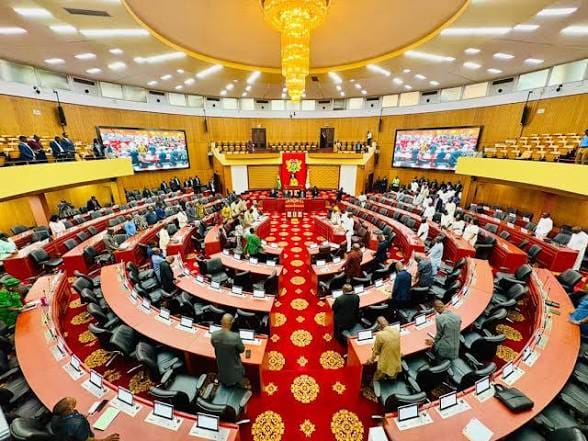
Parliament has clarified public commentary on social media regarding a notice on its notice board that read “No Vacancy for National Service Personnel 2026/2027. Kindly go for reposting.”
In a statement, signed by the Director of Media Relations, David Sebastian Damoah, Parliament said the notice has been misconstrued and was not a policy statement, a freeze on national service placements, or a change in its support for the National Service Scheme.
According to Parliament, the notice was a routine administrative message to prospective personnel who reported to the House, informing them that it has received more personnel than it can accommodate for the 2026/2027 service year and that they should seek reposting to other institutions.
It said it remains committed to the National Service Scheme and values the contribution of service personnel to its work, and regrets any confusion or inconvenience the wording may have caused.
By Edem Mensah-Tsotorme
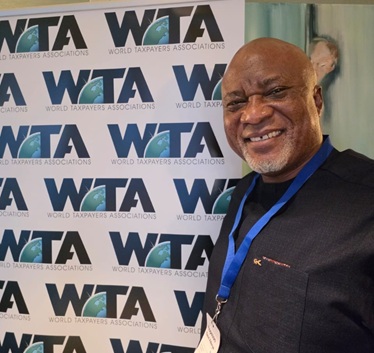
Ghanaian public advocate Hopeson Yaovi Adorye has been elected to the Board of Directors of the World Taxpayers Association (WTA).
The election took place on Sunday, October 5, 2026, during the Association’s conference in Kraków, Poland.
His election marks a significant addition to his international leadership portfolio and provides a platform for Ghanaian and African perspectives to contribute to global discussions on taxpayer rights, responsible taxation, transparency and prudent management of public resources.
Reacting to his election, Mr. Adorye expressed appreciation to the leadership and members of the WTA for the confidence reposed in him.
“I am deeply honoured by this confidence and conscious of the responsibility that comes with it. Taxpayers are at the heart of every economy, and they deserve fairness, transparency, accountability and value for the taxes they pay. I look forward to working with colleagues from across the world to strengthen the voice of taxpayers and promote responsible fiscal governance,” he said.
According to him, taxation should not be viewed solely as a mechanism for raising government revenue, but also as an important component of the social contract between citizens and the state.
Mr. Adorye said governments have a responsibility to ensure taxes are collected fairly and public resources are utilised efficiently to deliver quality infrastructure, healthcare, education, security and other essential services.
His election also creates an opportunity to bring African experiences into international conversations on taxation and public expenditure.
Mr. Adorye, who is Executive Director of Taxpayers League Ghana, has previously served as Global Board Chairman of the International Youth Network for UN Security Council Resolution 2250, an NGO associated with the United Nations Economic and Social Council (ECOSOC).
He is expected to use his new role to champion fiscal accountability, taxpayer education, good governance and stronger citizen participation in public financial management.