News
Water justice & climate solutions: Policy makers urged to listen to voices of minority and indigenous people


- /home/u249204778/domains/spectator.com.gh/public_html/wp-content/plugins/mvp-social-buttons/mvp-social-buttons.php on line 27
https://spectator.com.gh/wp-content/uploads/2023/07/IMG_5118.jpeg&description=Water justice & climate solutions: Policy makers urged to listen to voices of minority and indigenous people', 'pinterestShare', 'width=750,height=350'); return false;" title="Pin This Post">
- Share
- Tweet /home/u249204778/domains/spectator.com.gh/public_html/wp-content/plugins/mvp-social-buttons/mvp-social-buttons.php on line 72
https://spectator.com.gh/wp-content/uploads/2023/07/IMG_5118.jpeg&description=Water justice & climate solutions: Policy makers urged to listen to voices of minority and indigenous people', 'pinterestShare', 'width=750,height=350'); return false;" title="Pin This Post">
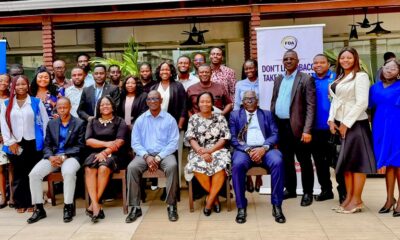
Policy makers have been urged to listen to the voices of the minority and indigenous people as they have the key to unlock water justice and climate solutions.
Speaking at the launch of a report by the Minority Rights Group (MRG), the Co-Executive Director at Minority Rights Group, Madam Claire Thomas added that mostly it was the minority who felt the brunt of water crisis.
The report titled ‘Minority and indigenous trends report 2023: People- Process- Planet; sheds light on the effect of the situation on minority communities and how systematic discrimination had left many minority and indigenous communities with precarious access to safe drinking water.
It brings together voices and knowledge systems of over 35 indigenous and minority wisdom keepers at plenatary level, for real and effective action against water crisis.
It again revealed human activities that had led to disruptions in the global water cycle, leading to enormous consequences to millions of people and also takes an indebt look at the linkage of the situation to colonialism, which led to the global commercialization and predation of water and exposes how it was being used as a weapon for the marginalization of minority groups.
It again focused on the ongoing global water crisis which had become critical challenges that is facing humanity, like climate change, biodiversity loss and food insecurity and explores human rights implications of collapsing water systems.
The report contain three in-depth chapters, 35 case studies detailing the 10 most pressing intersectional aspects of the global water crisis, like access, sanitation, pollution, floods, drought, infrastructure, conflict, usage, governance and culture.
It highlights how systemic discrimination has left many minority and indigenous communities with precarious access to safe drinking water as governments and private water companies fail to invest enough resources in the areas where they live, even when they often face displacement by these water infrastructure projects that do not benefit them.
It further highlights that many minority and indigenous populations bear the brunt of water-related disasters, such as floods and drought, while facing exclusion in the emergency relief efforts that follow. And also touched on the indigenous peoples’ deep spiritual connections to the waters on their traditional lands and their centuries’ long experience of managing water sources render them especially vulnerable when these interlink ages are disrupted.
Madam Thomas stated that listening to minorities and learning from them was part of the solution to water crisis.
For his part, Nicholas Salazar Sutil, Commissioning Editor at MRG said “the solution are right before our noses.
Indigenous peoples and minority groups are offering water conservancy and water regeneration systems of knowledge that will help restore water cycles if adopted , which based on thousands of years of practices are evidence of achieving climate cooling, mitigation of extreme water events.
For instance she said there were terrible reports from floods in Pakistan of minorities being left without emergency relief, as well as similar reports from other parts of the world.
She said major concern in the report was an abuse of the rights of those who lived closest to water and often furthest away from infrastructure –minorities and indigenous peoples arguing that not only is it not enough to say that these people hold the key to climate solutions, but that water justice must also focus on the position and responsibility of majority groups.
For her recommendation she called on governments and corporations to uphold the fundamental right of every person to safe drinking water and sanitation, regardless of their status, vis-à-vis race, ethnicity, religion, language, caste, descent.
BY BENEDICTA GYIMAAH FOLLEY



The Adenta Circuit Court has today granted bail to Techiman-based Senior Nursing Officer Salomey Bafoh-Awiti in the sum of GH¢100,000 with two sureties.
The court ordered that both sureties must be civil servants earning a minimum of GH¢3,000 each.
“They are waiting for us to meet the bail processes. We are confident that we will meet the bail conditions,” her lawyer, Nana Agyei Baffour Awuah, said after the ruling.
The bail comes after more than three weeks in custody.
Ms. Bafoh Awiti, 40, a mother of three from Hansua in the Techiman Municipality, was arrested at her home around 11:30pm on September 13, 2026.
Police allege she acted as a liaison for UK-based TikTok personality Barbara Asantewaa Kodua, known as “Ghana Jollof”, whose account is under investigation for publishing false news and inciting comments.
Prosecutors allege Bafoh assisted in disseminating videos produced by Ghana Jollof and recruited others to redistribute them on social media.
She has been charged with abetment of crime, to wit, publication of false news, contrary to sections 20(1) and 208 of the Criminal Offences Act, 1960 (Act 29), and has pleaded not guilty.
She was initially remanded by the Adentan Circuit Court and later denied bail by the Accra High Court on September 24, which cited ongoing cyber-related investigations and fears of interference with evidence.
Her continued detention sparked protests, with former Vice President Dr. Mahamudu Bawumia, the Ghana Registered Nurses and Midwives Association, and women’s groups calling for her release, describing the midnight arrest as worrying for free speech.
UK-based Barbara Kodua has since been declared wanted by police.
By Edem Mensah-Tsotorme
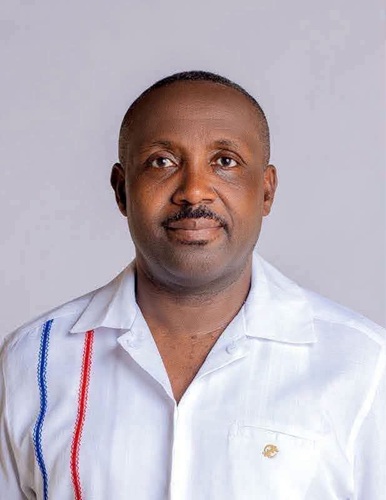
Newly elected National Chairman of the New Patriotic Party (NPP), John Boadu, has pledged to rebuild the party, promote unity and restore confidence among its members ahead of the 2028 general elections.
In a statement issued on Monday, October 5, 2026, Mr Boadu expressed gratitude to the party’s delegates and rank-and-file members for the confidence reposed in him.
He thanked his campaign team, volunteers and supporters, saying their commitment and support contributed to his victory.
Mr Boadu described the outcome as a victory for the entire NPP rather than an achievement for one person or group.
He extended an invitation to his fellow contestants to work with him, saying their ideas, experience and commitment remained valuable to the party.
“From this moment, there are no winners and losers, only one NPP, united in purpose and determined to win in 2028,” he said.
Mr Boadu said he would work with the newly elected national officers, regional and constituency executives, the Council of Elders, external branches, Members of Parliament, TESCON, voluntary groups, communicators and other stakeholders to strengthen the party.
He pledged to rebuild the party’s structures, promote discipline and ensure that members feel valued, heard and protected.
He promised to uphold the integrity of the party’s internal elections and reconnect with young people, particularly by restoring the NPP’s presence in tertiary institutions.
According to him, the party must make tertiary institutions centres for constructive political engagement and leadership development.
Mr Boadu further stressed the importance of inclusiveness, saying unity within the NPP should not mean that members must have identical views.
“Unity does not mean uniformity. Our diverse experiences are a source of strength, and I pledge to lead with an open door: to listen, consult and embrace good ideas, wherever they come from,” he said.
He said the task of rebuilding the NPP could not be left to the national chairman, general secretary, flagbearer or any single group.
“The future of the NPP will not be built by one Chairman, one General Secretary, one Flagbearer or one group. It will be built by all of us,” he said.
Mr Boadu pledged to lead with humility, consultation and reconciliation as he prepares the party for the 2028 elections.
He said his administration would work to rebuild trust, restore confidence and return the NPP to what he described as its winning ways.
By: Jacob Aggrey