Hot!
Uganda signs anti-LGBTQ bill into law

- /home/u249204778/domains/spectator.com.gh/public_html/wp-content/plugins/mvp-social-buttons/mvp-social-buttons.php on line 27
https://spectator.com.gh/wp-content/uploads/2023/05/FxR-TvcX0AIlqoh.jpg&description=Uganda signs anti-LGBTQ bill into law', 'pinterestShare', 'width=750,height=350'); return false;" title="Pin This Post">
- Share
- Tweet /home/u249204778/domains/spectator.com.gh/public_html/wp-content/plugins/mvp-social-buttons/mvp-social-buttons.php on line 72
https://spectator.com.gh/wp-content/uploads/2023/05/FxR-TvcX0AIlqoh.jpg&description=Uganda signs anti-LGBTQ bill into law', 'pinterestShare', 'width=750,height=350'); return false;" title="Pin This Post">
The new law contains a provision that would punish “aggravated homosexuality” with the death penalty. The legislation has been met with broad international condemnation.
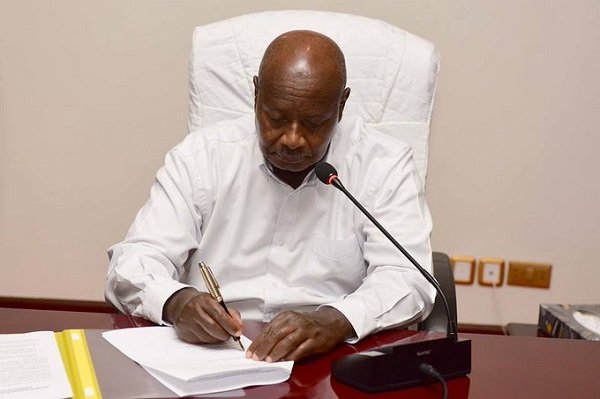
gandan President Yoweri Museveni signed new anti-LGBTQ legislation on Monday.
Museveni “has assented to the Anti-Homosexuality Bill 2023. It now becomes the Anti-Homosexuality Act 2023,” the Ugandan presidency said on Twitter.
Uganda’s ‘Anti-Homosexuality Act’
Uganda’s head of state had called on lawmakers to amend the bill, and a new draft of the legislation was presented earlier this month.
The amended version clarifies that merely identifying as gay would not be cause for imprisonment.
Museveni had also advised lawmakers to remove a provision that made “aggravated homosexuality” subject to capital punishment, but this suggestion was rejected by Uganda’s parliament. The provision pertains to repeat offenders and those found to have had sex while HIV-positive.
Uganda has not carried out capital punishment in many years.
Same-sex relations were already illegal in Uganda under a law that dates back to the British colonial period.
Uganda enacts harsh anti-gay law with death penalty | Watch (msn.com)
The new law introduces a 20-year sentence for “promoting” homosexuality.
“With a lot of humility, I thank my colleagues the Members of Parliament for withstanding all the pressure from bullies and doomsday conspiracy theorists in the interest of our country,” parliament speaker Anita Among said.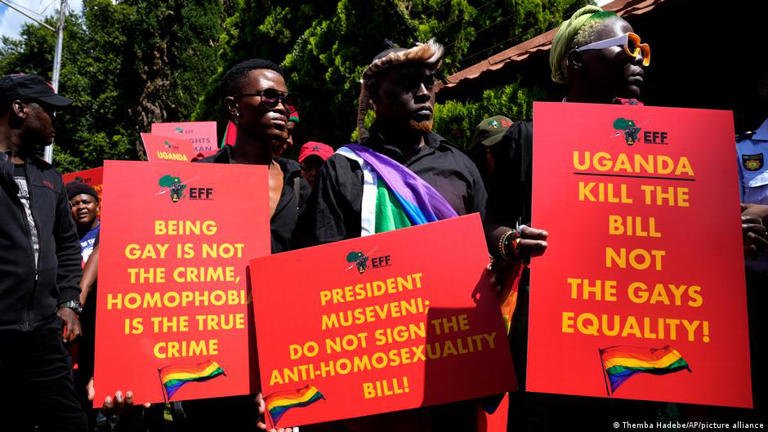
However, Ugandan LGBT rights activist Clare Byarugaba said it was “a very dark and sad day for Uganda.
“We shall continue to fight this atrocious legislation through the judiciary until human rights for all are upheld,” she said.
“We shall win, because as Martin Luther King Jr. reminded us, the moral arc of the universe always bends towards justice.”
Law draws international condemnation
The new law has been widely condemned by rights groups and Western countries.
US President Joe Biden slammed the new legislation, branding it a “tragic violation of universal human rights.” He threatened to cut US aid and investment in Uganda, calling for the law’s immediate repeal.
The Global Fund to Fight AIDS, Tuberculosis and Malaria, the UN’s HIV/AIDS program and the US AIDS relief program all expressed concern over the harmful impact of the newly signed law.
Amnesty International said that the law “flagrantly violates the human rights of LGBTI people in Uganda, including the right to a private life, protection against discrimination and the right to equal protection before the law.”
The British Foreign Office said it was “appalled” by the new law, while Canada’s foreign minister called it “abhorrent, cruel and unjust.”
International partnerships under threat
The new law has also jeopardized Uganda’s international standing.
“This law is contrary to international human rights law and to Uganda’s obligations under the African Charter on Human and People’s Rights, including commitments on dignity and non-discrimination, and the prohibition of cruel, inhuman or degrading punishment,” EU foreign policy chief Josip Borrell said in a statement.
“The Ugandan government has an obligation to protect all of its citizens and uphold their basic rights. Failure to do so will undermine relationships with international partners.”
When Museveni signed a less restrictive anti-LGBTQ law in 2014, Western governments suspended some aid, reduced security cooperation with Uganda and imposed stronger visa restrictions on its citizens.
Source: zc, sdi/kb (Reuters, AFP, AP)



The New Patriotic Party (NPP) has directed all aspirants campaigning in the Greater Accra Region to suspend their campaign activities on August 5 and 6 and instead mobilise supporters for the party’s planned “Democracy Under Attack” demonstration.
The directive was issued by the party’s National Steering Committee in a statement signed by the NPP General Secretary, Justin Kodua Frimpong, on Tuesday.
According to the statement, the decision forms part of efforts to ensure a strong turnout for the demonstration, which is scheduled for Thursday, August 6, 2026.
The party said the protest would begin at 5:00 a.m., with participants expected to gather at the Supreme Court in Accra.
It further directed Regional, Constituency and Polling Station Executives in Greater Accra to work closely to mobilise members and supporters for the event.
“The National Steering Committee is calling on all aspirants currently campaigning across the Greater Accra Region to temporarily suspend their campaign activities on the 5th and 6th of August and join in mobilising support for the upcoming demonstration,” the statement noted.
The NPP appealed to party members and supporters to remain peaceful, disciplined and orderly throughout the protest.
The demonstration forms part of the party’s response to concerns it has raised over issues relating to Ghana’s democratic governance and the justice system.
The NPP leadership expressed confidence that party members would cooperate fully to ensure a successful and peaceful event.
By: Jacob Aggrey
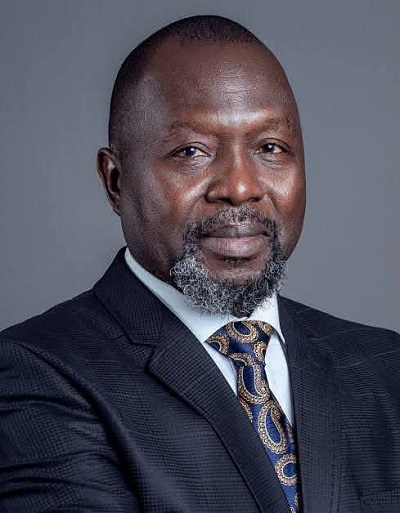
Attorney General and Minister for Justice, Dr. Dominic Ayine, has announced that the government has accepted the recommendation to abolish the death penalty and replace it with life imprisonment as part of the constitutional review process.
He said the proposed amendment would affect Articles 3, 13, 19 and 72 of the 1992 Constitution, with offences that previously attracted the death penalty instead carrying life imprisonment.
Dr. Ayine made the announcement on July 30, 2026, at the Jubilee House in Accra during the Government Accountability Series while outlining the government’s position on the final recommendations of the Constitution Review Committee.
According to him, the government believes the death penalty is inconsistent with the constitutional right to life and Ghana’s international human rights obligations.
He explained that the recommendation forms part of broader proposals aimed at strengthening the protection of fundamental human rights under the Constitution.
Dr. Ayine said the government had also accepted the spirit of several recommendations to expand rights relating to women, children, persons with disabilities, older persons and the youth.
He added that a comprehensive Human Rights Act would be introduced to protect these rights and provide detailed enforcement mechanisms instead of amending the entrenched provisions of the Constitution through a national referendum.
By: Jacob Aggrey