Hot!
Tourism is a hugely important sector to Ghana’s economy – Oppong Nkrumah

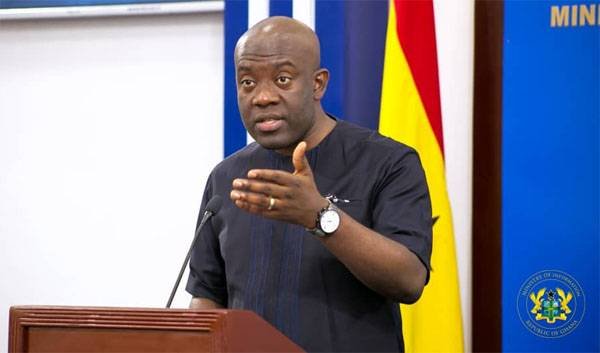
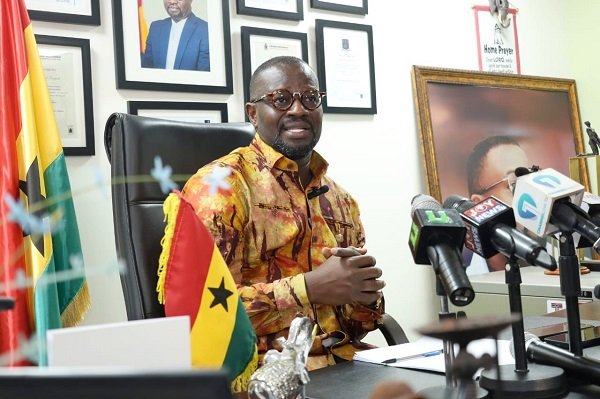
The Minister of Information, Kojo Oppong Nkrumah, has highlighted the importance of the tourism, culture and creative industries to Ghana’s economy.
He told the press at an editors’ meeting on Monday, August 14, 2023 at the Accra City Hotel that despite all the funny nicknames previously given to the sector, it is one of the biggest contributors to the gross domestic product and foreign exchange of the country.
“You know we are in a country where everybody erroneously thinks the economy is equal to finance. But the economy is the end product of many things.
Then finance people do some fiscal policy, the Bank of Ghana people do some monetary policy but the real sector where roads and jobs come from lies in the hands of various other ministries,” he said.
Oppong Nkrumah also mentioned that numbers of the tourism, creative arts and hospitality sector makes it the third largest contributor to GDP in our country.
“This means that it is the third largest sector in our country where there is productive activity, people are finding jobs, where people find incomes and improve their own quality of lives.
If you look at it from the foreign exchange point of view, it is about the sector largest contributor to foreign exchange,” he stated. “It is a very, very, very important sector but until recently people used to call it the Ministry of Enjoyment.
That is one of those places where you attend some festivals and you invite some Black Americans to come to town. But is a hugely important sector for our economy,” he further noted.
The government of Ghana in the past years, has put together measures to make Ghana a preferred destination for tourists across the world.
The Beyond the Return initiative, through its December in GH activities, drives a lot of tourists into the country every year.
As part of the effort to make Ghana the biggest tourism destination in Africa, the government has announced that it is working towards attracting two million international arrivals that will result in a $4 billion spending impact by 2025.
Shoring up the strategies to make the set objectives more achievable, the Ministry also seeks to to work on the slave routes experience, crab villages, museums, among others.
According to the Chief Executive Officer of the Ghana Tourism Authority (GTA), Akwasi Agyeman, to improve nightlife in Accra, they are also rolling out interventions like the Kwame Nkrumah Park, Nationalism Park, and the Geese Park.
The Minister of Tourism, Arts and Culture, Mohammed Awal, who was also present at the meeting said, next year, the government will be launching a project to solicit novel tourism ideas from young people.During his address at an editors’ forum, he said the initiative is aimed at imbuing the interest of tourism in the youth and encouraging them to come up with innovative business models for the sector.
“Next year we are going to launch a 100-million-cedi tourism enterprise project to encourage young people to give us projects on sustainable tourism,” he said. He also noted that next year, the ministry will be training 6,000 young people along the tourism value chain.
These people will include cooks, security, tour guides, among others. “One of our key problems in this country is customer care. I am sure when you go to the tourist sites even the Kwame Nkrumah Memorial park you don’t see people share a lot in terms of customers orientation,” he indicated.According to the minister, the most important thing in tourism is to get people to repeatedly visit places, a reason they are devising strategies to make tourist develop interest in frequently coming to Ghana.
For the creative sector, the government has promised to set up the Creative Arts Fund to support artistes, complete the theatre in Kumasi, and construct new theatres in Takoradi and Tamale.It also intends to establish, in partnership with the private sector, large recording studios in Accra, Kumasi, Tamale, and Takoradi. Recording artists can rent space to do the recordings in these studios.
As stated in the 2020 manifesto of the ruling New Patriotic Party, the government intends to build a digital platform for artists to make their products available to the global market
There is also a plan to construct one of the biggest convention and exhibition centres in the world at the Ghana Trade Fair Company site, La.
In the meantime, the construction of an Amphitheatre in Kumasi has commenced. It is hoped that the Legislative Instrument for the Development and Classification of Film Act will be passed to give assent to the Film Development Fund.
Source: Myjoyonline.com


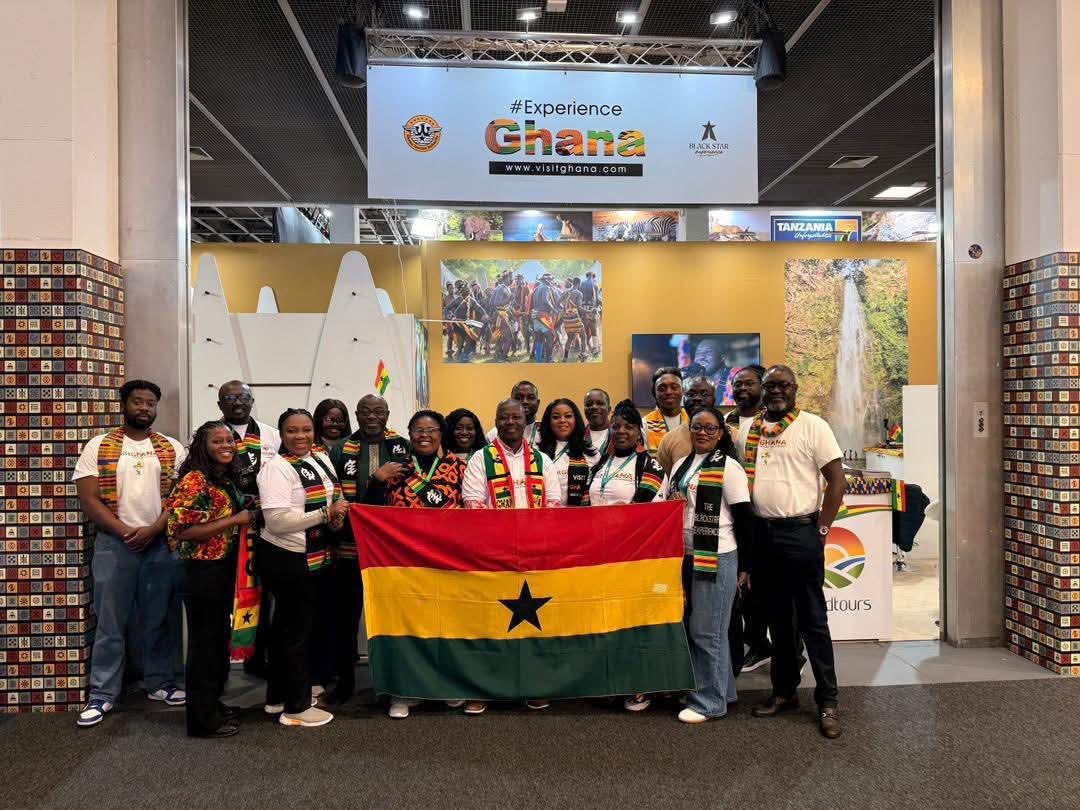
Ghana Tourism Authority is leading Ghana’s participation at ITB Berlin, which opened in Berlin with a vibrant national pavilion highlighting Ghana’s rich cultural heritage, tourism destinations and investment opportunities.
March 5 has been designated as Ghana Day, a special platform to promote Ghana’s languages, cuisine, Kente, festivals and business prospects to the global tourism community. The stand has already drawn strong interest with traditional arts and crafts displays, immersive multimedia presentations and popular Ghanaian snacks.
Seven private-sector players are exhibiting alongside government officials as part of efforts to deepen trade partnerships, expand market access, and attract investment across the hospitality, heritage tourism, ecotourism, and creative arts sectors.
Ahead of the official opening, the Ghana delegation also engaged young Ghanaian investors in Germany in collaboration with V Afrika-Verein and the Ghana Embassy, strengthening diaspora investment linkages and highlighting opportunities within the tourism value chain.
Ghana’s coordinated presence at ITB Berlin 2026 reinforces its strategy to position the country as the Gateway to Africa and a competitive destination for leisure travel and global investment.
The Member of Parliament for Nsawam Adoagyiri, Frank Annoh Dompreh, has expressed concern over delays in the release of the District Assemblies Common Fund, warning that the situation is stalling development across the country.
On his facebook page, he described as a matter of urgent national importance, the Minority Chief Whip pointed to what he sees as a growing crisis of unpaid contractors, abandoned projects, and halted infrastructure works in many districts.
He noted that several communities are grappling with half completed schools, unfinished health facilities, abandoned markets, deteriorating roads, and stalled sanitation projects.
According to him, many contractors who have executed projects for district assemblies have not been paid, forcing some construction firms to demobilise from sites while workers lose their jobs.
He stressed that the District Assemblies Common Fund is not a discretionary allocation but a constitutional requirement under Article 252 of the 1992 Constitution, intended to support development at the local level.
In his view, years of delayed releases and accumulated arrears have weakened district development financing and disrupted projects meant to improve living conditions in communities.
He further argued that some payments made in recent years were largely the settlement of old debts rather than funding for new or ongoing projects, a situation he believes has affected contractor confidence and local economic activity.
He described the issue as more than a budgetary challenge, characterising it as a development emergency and a governance concern.
He therefore urged the appropriate authorities to pay outstanding DACF arrears, settle contractors who have completed their work, and ensure that transfers to districts are automatic and predictable.
He maintained that decentralisation can only succeed when district assemblies receive adequate and timely funding to carry out development projects.
He emphasised that stalled projects directly affect ordinary citizens, since they rely on such infrastructure for education, healthcare, transportation, sanitation, and economic activities.
He called for renewed attention to grassroots development, insisting that national progress should not be concentrated only in major cities but extended to all communities.
By: Jacob Aggrey