Hot!
The thin line between branding and storytelling


Every day, new content is developed that represents one or more brands. There is no such thing as a stand-alone piece of content.
Content is created by either individuals or organizations to represent a specific brand.
Making compelling content is making something that will ‘compel’ people to watch, interact with, or even pay to see.
Understanding the fundamental importance of your brand’s legacy and positioning is what will inspire change and action.
Your unique narrative will raise the standard for you, and no one can convey it better than the people who are connected to it.
So here is the story of the brand ‘Asaana and how it has evolved over time.
Believe it or not, The hearts and taste buds of the people of Ghana have always been captivated by Asaana. It has a rich history and a special place in the hearts of all Ghanaians, with a legacy that spanned several generations.
On scorching hot afternoons, when the sun beat down relentlessly on the bustling streets by the Adabraka Market, a suburb in the city of Accra, one would defy all odds to seek solace in a refreshing calabash of Asaana.
Asana is non-alcoholic, though similar to its popular counterpart, malt, Asaana has something truly unique – a taste that resonated with tradition and heritage.
The name Asaana originated from the GA language meaning, ‘Can I taste’? or an answer to the preceding question, ‘You can taste’
Of course, it earned the enviable name from the secret behind its exceptional taste which lay in its carefully guarded recipe of fermented corn fused with caramelized sugar, ice cubes, and others, passed down through generations.
Anyone who enjoys Asaana knows that the sip of the drink brings forth memories of childhood, family gatherings, and festive occasions, Asaana had a real place in our culture.
Despite the presence of carbonated malt drinks and other alternatives, Asaana has managed to hold its ground and even compete favorably. Oh Yes! Favorably.
Those of us who love the drink know that no carbonated drink could replicate the deep-rooted flavor and nostalgia that Asaana embodied. As the story unfolds, we find ourselves on a bear street park nestled in Adabraka, I still remember, just like yesterday, how my colleague footballers after an exhaustive match will rush off the street pitch to fight over the last cup of this beloved calabash drink. Just that, the big calabash that carries the drink was not enough. But that’s the thing, no one can have enough of Asaana. Never rebranded, never advertised, no sales promotions.
For us, it is the invigoration given by the cool and revitalizing taste that only asaana could provide to our sweaty brows and tired bodies that made us opt over and over again for it. But while Asaana had already carved out a special place in the minds of Ghanaians, there is a longing for it to reach even greater heights.
Many believed that if value had been added to this beloved beverage, it could have emerged as a true champion on the global stage. Some of us dreamed of Asaana becoming a symbol of Ghana’s cultural heritage, transcending borders, and introducing the world to the taste of Ghanaian culture.
But until then, the story of Asaana continues as a testament to the enduring spirit of a local ‘malt’, which remained firmly ingrained in the bosom of Ghanaians, as they eagerly await the day it would take its rightful place among the world’s most beloved beverages. ABOUT THE AUTHOR
Daniel Lartey is a social media and public relations expert a Google certified digital marketer, brand strategist, and a leading voice in Africa’s creative industry. Daniel is currently the President of Inkniche Global Ghana, a public relation and social media agency.
Email: dannunoo@gmail.


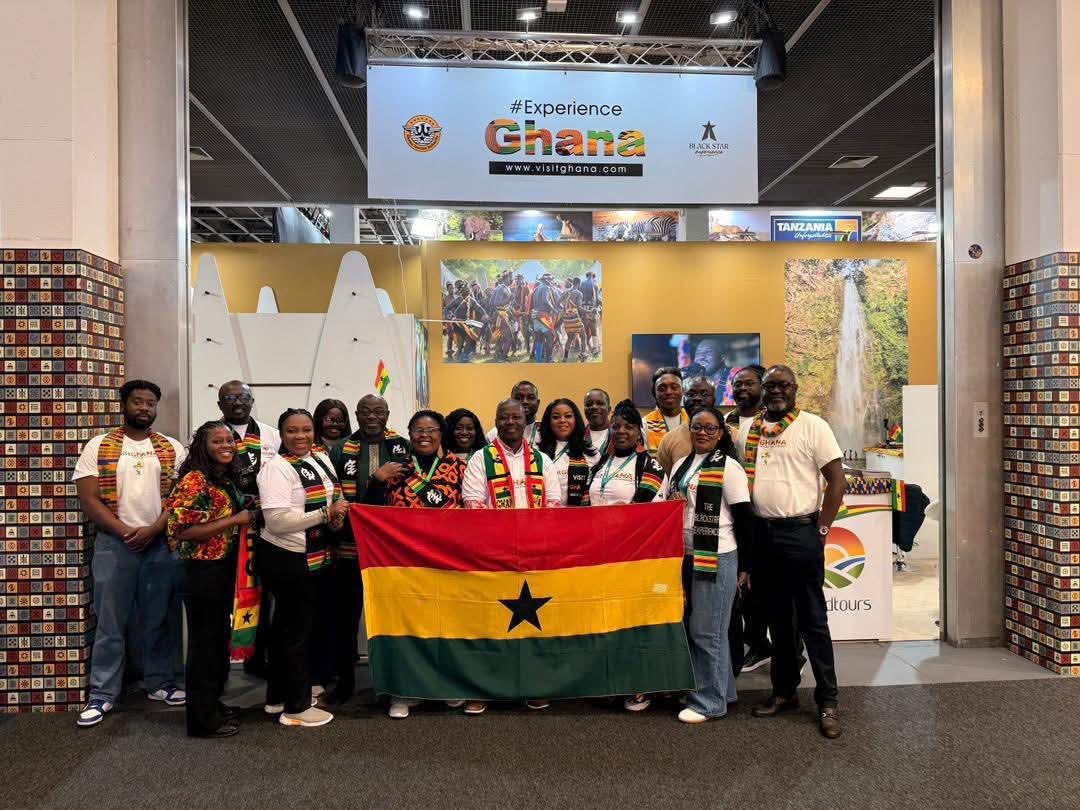
Ghana Tourism Authority is leading Ghana’s participation at ITB Berlin, which opened in Berlin with a vibrant national pavilion highlighting Ghana’s rich cultural heritage, tourism destinations and investment opportunities.
March 5 has been designated as Ghana Day, a special platform to promote Ghana’s languages, cuisine, Kente, festivals and business prospects to the global tourism community. The stand has already drawn strong interest with traditional arts and crafts displays, immersive multimedia presentations and popular Ghanaian snacks.
Seven private-sector players are exhibiting alongside government officials as part of efforts to deepen trade partnerships, expand market access, and attract investment across the hospitality, heritage tourism, ecotourism, and creative arts sectors.
Ahead of the official opening, the Ghana delegation also engaged young Ghanaian investors in Germany in collaboration with V Afrika-Verein and the Ghana Embassy, strengthening diaspora investment linkages and highlighting opportunities within the tourism value chain.
Ghana’s coordinated presence at ITB Berlin 2026 reinforces its strategy to position the country as the Gateway to Africa and a competitive destination for leisure travel and global investment.

The Member of Parliament for Nsawam Adoagyiri, Frank Annoh Dompreh, has expressed concern over delays in the release of the District Assemblies Common Fund, warning that the situation is stalling development across the country.
On his facebook page, he described as a matter of urgent national importance, the Minority Chief Whip pointed to what he sees as a growing crisis of unpaid contractors, abandoned projects, and halted infrastructure works in many districts.
He noted that several communities are grappling with half completed schools, unfinished health facilities, abandoned markets, deteriorating roads, and stalled sanitation projects.
According to him, many contractors who have executed projects for district assemblies have not been paid, forcing some construction firms to demobilise from sites while workers lose their jobs.
He stressed that the District Assemblies Common Fund is not a discretionary allocation but a constitutional requirement under Article 252 of the 1992 Constitution, intended to support development at the local level.
In his view, years of delayed releases and accumulated arrears have weakened district development financing and disrupted projects meant to improve living conditions in communities.
He further argued that some payments made in recent years were largely the settlement of old debts rather than funding for new or ongoing projects, a situation he believes has affected contractor confidence and local economic activity.
He described the issue as more than a budgetary challenge, characterising it as a development emergency and a governance concern.
He therefore urged the appropriate authorities to pay outstanding DACF arrears, settle contractors who have completed their work, and ensure that transfers to districts are automatic and predictable.
He maintained that decentralisation can only succeed when district assemblies receive adequate and timely funding to carry out development projects.
He emphasised that stalled projects directly affect ordinary citizens, since they rely on such infrastructure for education, healthcare, transportation, sanitation, and economic activities.
He called for renewed attention to grassroots development, insisting that national progress should not be concentrated only in major cities but extended to all communities.
By: Jacob Aggrey