News
The Sacred Intersection: Ouidah’s Catholic Church and Python Temple

- /home/u249204778/domains/spectator.com.gh/public_html/wp-content/plugins/mvp-social-buttons/mvp-social-buttons.php on line 27
https://spectator.com.gh/wp-content/uploads/2025/01/Some-people-walking-Infront-of-the-Catholic-church-in-Ouidah-1000x600.jpg&description=The Sacred Intersection: Ouidah’s Catholic Church and Python Temple', 'pinterestShare', 'width=750,height=350'); return false;" title="Pin This Post">
- Share
- Tweet /home/u249204778/domains/spectator.com.gh/public_html/wp-content/plugins/mvp-social-buttons/mvp-social-buttons.php on line 72
https://spectator.com.gh/wp-content/uploads/2025/01/Some-people-walking-Infront-of-the-Catholic-church-in-Ouidah-1000x600.jpg&description=The Sacred Intersection: Ouidah’s Catholic Church and Python Temple', 'pinterestShare', 'width=750,height=350'); return false;" title="Pin This Post">
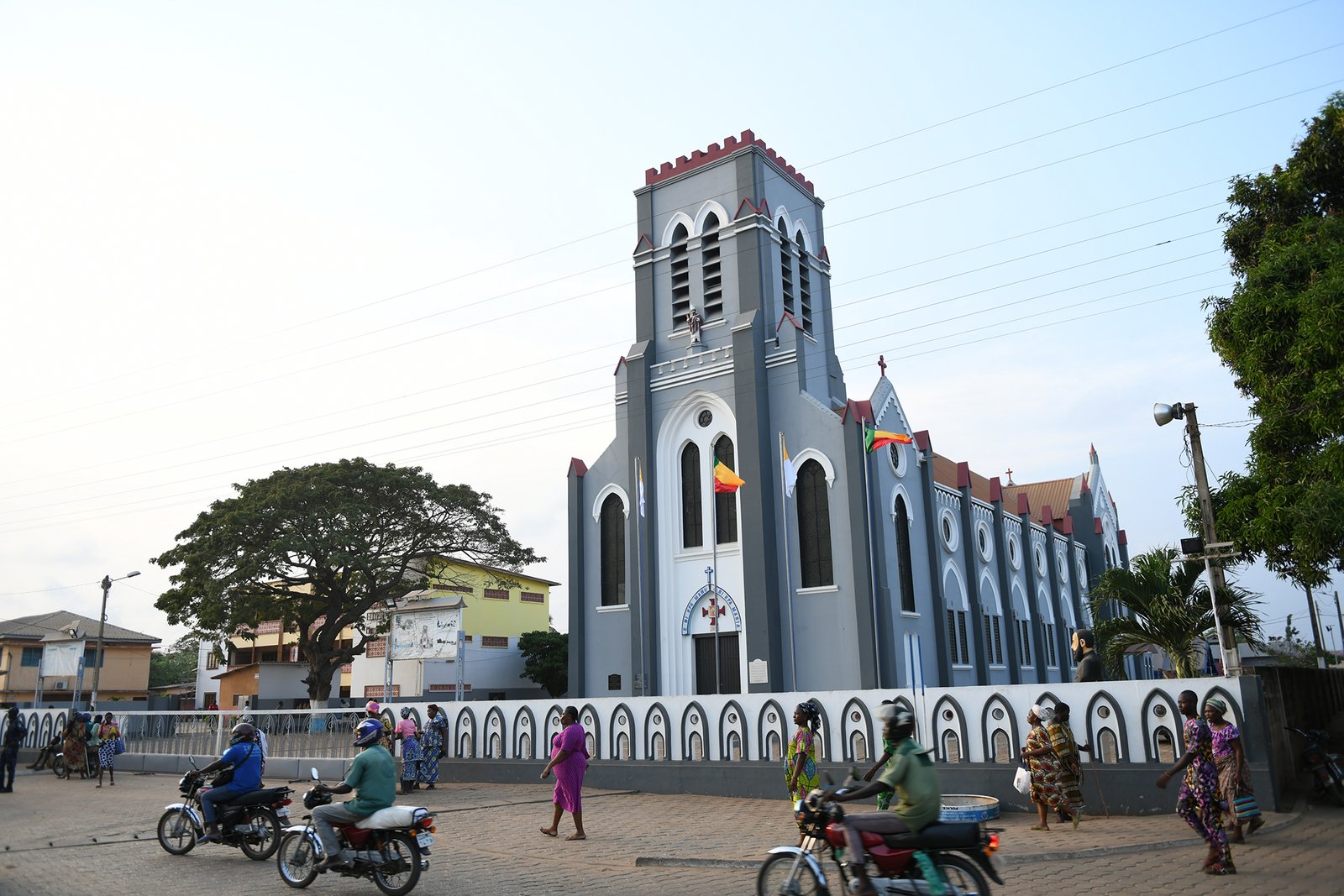
The Sun Hung Low over the ancient town of Ouidah, casting a golden shade over the baobab tree, I walked the short distance separating two landmarks that symbolise the soul of Benin.
On one side stood the imposing Basilica of the Immaculate Conception, a testament to colonial-era Christianity. On the other, the modest yet spiritually charged Python Temple, the cradle of Voodoo reverence.
This striking juxtaposition embodies a story of coexistence, resilience, and cultural syncretism.
seated by his shrine
room with a cross hanged at the entrance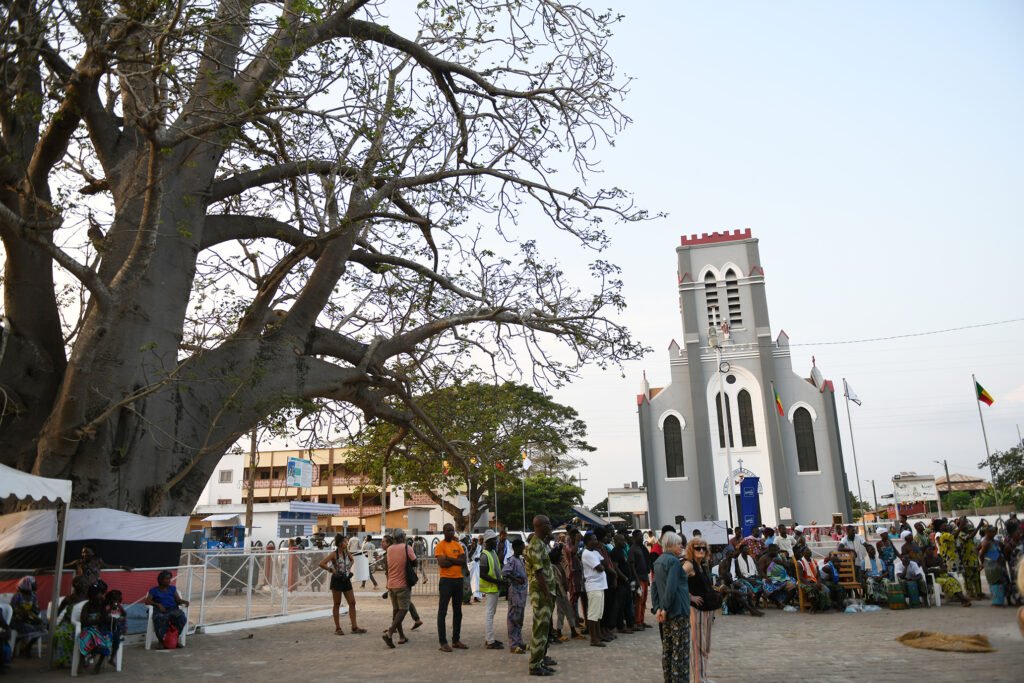

temple with the catholic church
Ouidah, a small coastal town in southern Benin, is a place where two spiritual worlds intertwine.
The Catholic Church, introduced during Portuguese expeditions in the 16th century and later reinforced by French colonial rule, brought Christianity to the region.
The basilica’s grandeur speaks to this legacy, its stained-glass windows and towering steeples reflecting the influence of European architects.
Just a few steps away, the Python Temple offers a contrasting narrative—one deeply rooted in Benin’s indigenous spirituality.
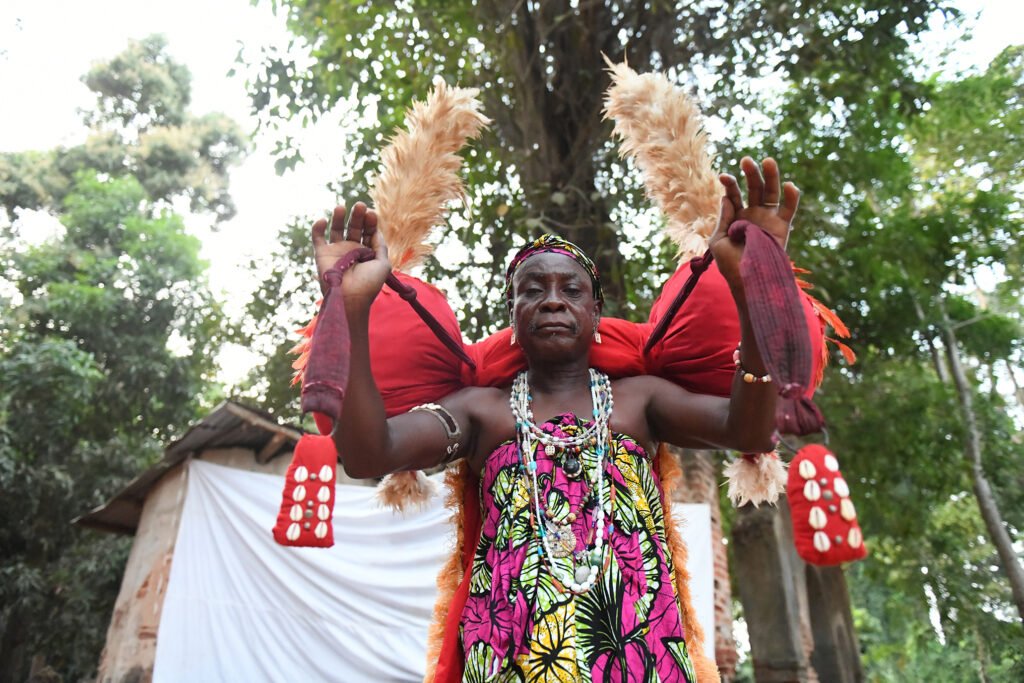
Infront of the python temple
•Some traditionalists performing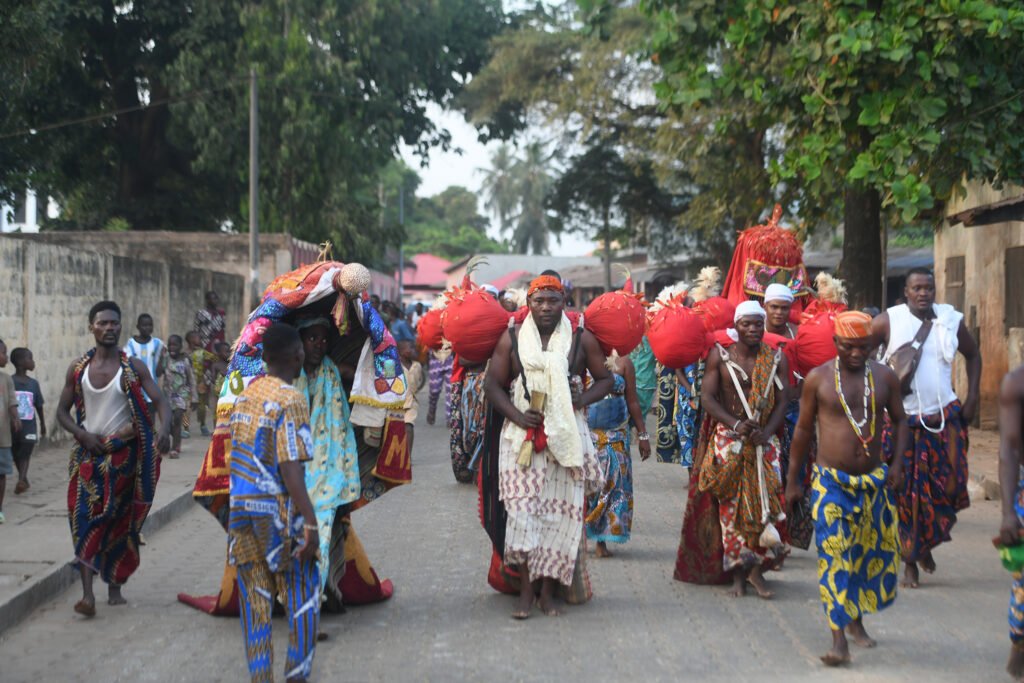
procession with their emblems behind them
the Catholic church in Ouidah
In Benin, pythons are sacred. They represent fertility, wisdom, and protection.
What makes Ouidah remarkable is not just the proximity of these two spiritual centres but the harmony they share.
Over centuries, the people of Ouidah have blended Catholicism with Voodoo, creating a unique religious syncretism. It’s not uncommon for individuals to attend mass at the Basilica and later seek blessings at the Python Temple.
This duality extends to practices as well. Catholic veneration of saints often parallels Voodoo worship of spirits or deities.
During a visit, a local priest explained that many of his congregants also participate in Voodoo ceremonies, viewing both faiths as complementary rather than conflicting.
Both the basilica and the temple serve as cultural cornerstones, drawing locals and international visitors alike. The annual voodoo festival, held every January, showcases this harmony in vibrant ceremonies that begin with traditional rituals at the Python Temple and culminate in communal gatherings that include Christian blessings.
This festival underscores the resilience of Ouidah’s cultural identity. Here, spirituality is not about division but integration, a celebration of both the old and the new. The basilica and the temple, though rooted in different traditions, stand as guardians of this heritage.
As I framed my shots, the movement of tourists crisscrossing captured the essence of Ouidah’s dual identity. The basilica’s lofty arches contrasted beautifully with the earthy simplicity of the Python Temple. Each photo told a story of continuity and change, of a town’s ability to adapt while holding steadfast to its roots.
Benoit, a Voodoo priest, shared stories of how the spirits of the forest, many of which are now gone, once guided their ancestors.
He said, the common values of both traditions, respect for life, nature, and the divine is a simple one.
The temple houses live snakes, cared for by Voodoo priests who perform rituals invoking Dangbé, the python deity.
According to my great-grand father, the serpents once protected the people of Ouidah during an invasion in the olden days, cementing their place in local folklore.
“The religion story is one of resilience and reconciliation, where the Catholic Church and the Python Temple are not just physical landmarks, but are living symbols of how two worlds can coexist without erasing each other,” he said.
Benoit lamented the encroachment of urbanisation but found solace in the enduring belief systems that anchor their community.
Grand Frere, a member of the Catholic Church said, the two faiths, that is the Python Temple and the Catholic Church, standing side by side, reminded him of the power of harmony in a world often divided.
From: Geoffrey Buta, OUIDAH, BENIN








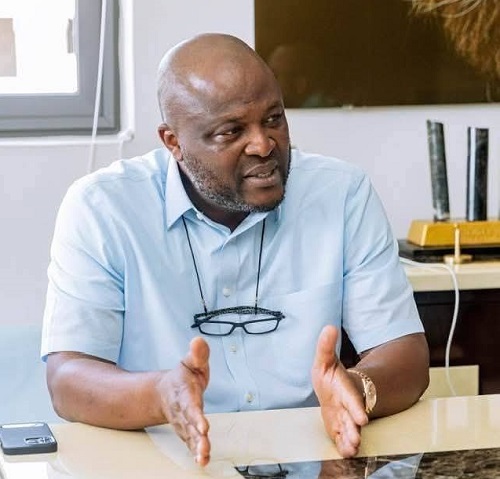
Businessman Mr. Ibrahim Mahama has denied reports linking him to a takeover bid for the Volta Aluminium Company (VALCO).
His reaction follows a demonstration by members of the VALCO Labour Union today, during which some protesters alleged that Mr. Mahama was interested in acquiring the state-owned aluminium company.
In a statement issued by his Special Aide, Rafik Mahama, the businessman said he has “no such interest” and has not made any offer to acquire VALCO.
“The allegation is the latest in several vile attempts to impute the integrity of Mr. Ibrahim Mahama and subject him to needless public engagements,” the statement said.
The statement added that Mr. Mahama’s business track record speaks for itself, describing his companies as “some of the best-run operations across the African continent.”
It further noted that all of Mr. Mahama’s business interests were “legally commenced or acquired” and operate within the law a fact it said explains why his businesses have endured across seven election cycles.
“Mr. Mahama remains committed to contributing his quota to the development of Ghana by investing in business opportunities in Ghana and beyond,” the statement added.
The statement also disclosed that Mr. Mahama has instructed his lawyers to take the necessary legal action over the publication and allegations.
By Edem Mensah-Tsotorme
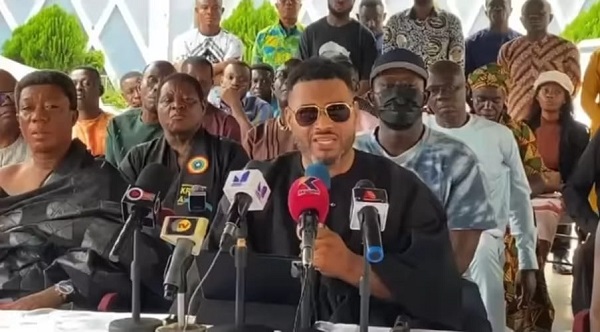
The leadership of Kristo Asafo has dismissed reports circulating on social media and in some media outlets that the late Apostle Kwadwo Safo Kantanka will be buried on July 30, 2026, describing the claim as false.
The current head of the Kantanka family and leader of Kristo Asafo, Kwadwo Safo Akofena Kantanka, addressed the issue during a press conference in Accra today.
He said no burial date has been set and urged members of the church and the general public to disregard any unofficial announcements.
“I urge the members of Kristo Asafo and the nation to disregard any burial date out there,” Akofena said.
He further stressed that neither the leadership of the church nor the Kantanka family has made any such announcement regarding the funeral.
According to him, all official funeral arrangements will be communicated only through a formal statement from the Kantanka family when the time is due.
Akofena Safo Kantanka said the family remains united in ensuring that the final funeral rites are conducted in a manner that befits the legacy of the late Apostle.
He called on Ghanaians to remain calm and wait for the official communication from the family, warning against the spread of misinformation.
Background
Apostle Dr. Ing. Kwadwo Safo Kantanka, founder and spiritual leader of Kristo Asafo Mission of Ghana, passed away recently, plunging the church and the nation into mourning.
The late Apostle was widely known not only as a religious leader but also as an industrialist, inventor, and founder of the Kantanka Group of Companies, which manufactures vehicles and other machinery in Ghana.
Since his passing, there has been heightened public interest in his funeral arrangements.
It would be recalled that a faction of the siblings and family led by former MP Adwoa Safo had earlier announced a proposed burial date and arrangements.
That announcement, however, has been rejected by the current leadership of both the church and the family.
By Edem Mensah-Tsotorme