News
The Macallan introduces redesigned whisky collections to Ghanaian market

- /home/u249204778/domains/spectator.com.gh/public_html/wp-content/plugins/mvp-social-buttons/mvp-social-buttons.php on line 27
https://spectator.com.gh/wp-content/uploads/2026/04/IMG_7015.JPG.jpeg&description=The Macallan introduces redesigned whisky collections to Ghanaian market', 'pinterestShare', 'width=750,height=350'); return false;" title="Pin This Post">
- Share
- Tweet /home/u249204778/domains/spectator.com.gh/public_html/wp-content/plugins/mvp-social-buttons/mvp-social-buttons.php on line 72
https://spectator.com.gh/wp-content/uploads/2026/04/IMG_7015.JPG.jpeg&description=The Macallan introduces redesigned whisky collections to Ghanaian market', 'pinterestShare', 'width=750,height=350'); return false;" title="Pin This Post">
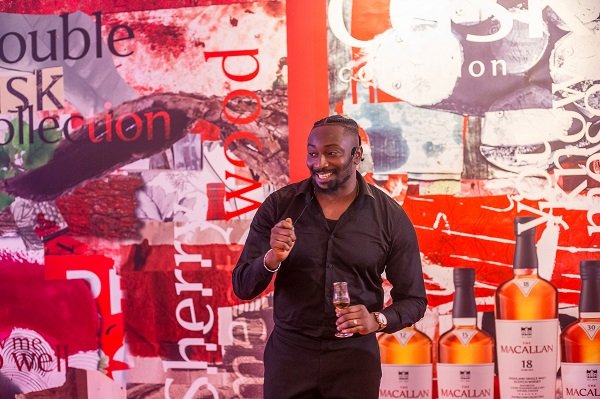
The Macallan, one of the world’s most acclaimed single malt Scotch whisky brands, on Monday, April 21, 2026 unveiled a redesigned visual identity for its Double Cask and Sherry Oak Collections at an event held in Accra, marking the Ghanaian leg of its Timeless Collection launch across West Africa.
The occasion, held at the Gallery 1957 in Kempinski Hotel Accra under the dress code ‘Timeless Elegance’, brought together forty guests, a purposefully assembled mix of Ghanaian socialites, tastemakers and trade partners, for an evening of guided tasting, product education and brand storytelling.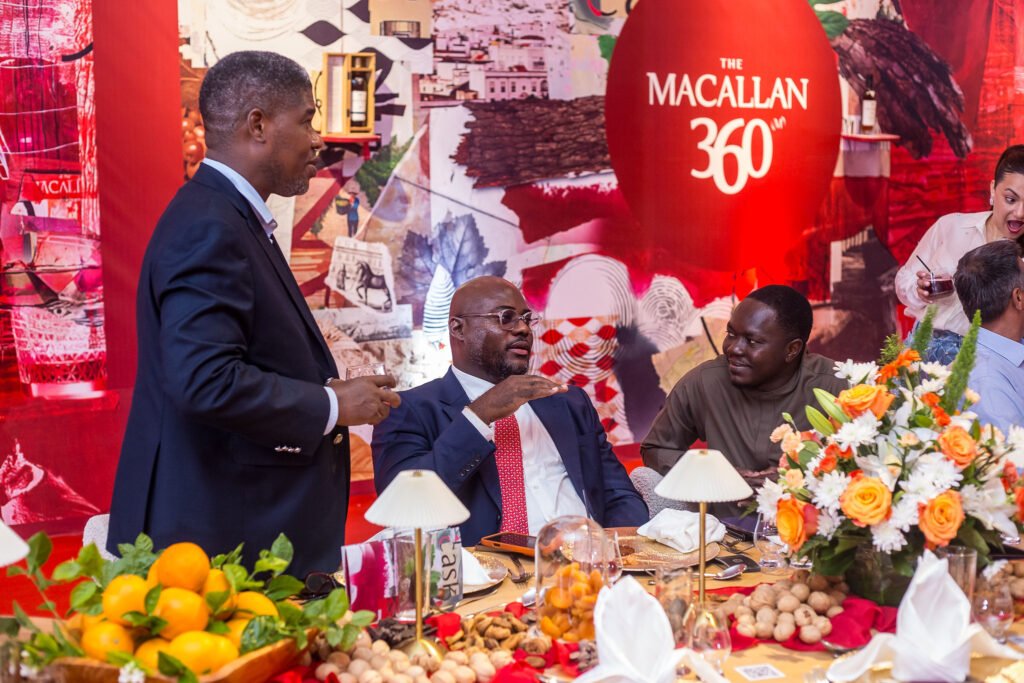
It was the first major brand activation by The Macallan on Ghanaian soil in this period of portfolio renewal and sets the tone for a deeper engagement with Ghanaian consumers going forward.
The redesign, which follows the brand’s Nigerian debut in Lagos on 17 April, represents what The Macallan describes as a brand evolution rather than a departure, a deliberate and thoughtful update that enhances how consumers interact with the brand while leaving the whisky entirely unchanged.
The new packaging was developed in collaboration with internationally recognised graphic designer David Carson.
Key design features include a bottle silhouette inspired by the curved roof of The Macallan Distillery in Speyside, a retained triangular shoulder label now explicitly referencing Spain’s Sherry Triangle, and revised rear labels carrying cask origin symbols to help consumers better understand the flavour profiles of individual expressions.
Commenting on the significance of the launch, Hammed Adebiyi, Senior Brand Manager for West and Central Africa at Edrington, stated,
“The Timeless Collection launch is an exciting moment for The Macallan in West Africa. It reflects our commitment to evolving thoughtfully while staying true to the heritage and craftsmanship that define the brand.”
He added that “For consumers, trade partners, and whisky enthusiasts, the new visual identity offers a clearer, more engaging way to experience the portfolio without altering the exceptional whisky they have come to know and trust.”
The redesign also incorporates several sustainability considerations.
The packaging is fully recyclable, with foiling, plastic and unnecessary glass weight all reduced. Advanced anti-counterfeit measures and individual QR codes on each bottle further strengthen product integrity in the market.
The Macallan has emphasised throughout the rollout that the whisky itself has not been altered. The Double Cask Collection retains the smooth, balanced profile shaped by both European and American sherry-seasoned oak casks, while the Sherry Oak Collection continues to express the depth and richness associated with European oak.
The Accra launch is the latest stop on a West African rollout that will continue across Abuja and Port Harcourt in Nigeria. For Ghana, the arrival of the Timeless Collection on the local market reflects the country’s growing stature as a destination for premium international brands and a rising consumer base that values craftsmanship, heritage and modern design in equal measure.
About The Macallan
Founded in 1824, The Macallan is renowned worldwide for its extraordinary single malt whiskies. Their outstanding quality and distinctive character reveal the uncompromised excellence pursued by The Macallan since it was established by Alexander Reid, on a plateau above the River Spey in north-east Scotland.
In 2018, The Macallan opened a new chapter in its history with the launch of its award-winning Speyside distillery. Designed by internationally acclaimed architects to promote sustainability, the building takes inspiration from the surrounding ancient Scottish hills.
It stands near Easter Elchies House, the Highland Manor built in 1700 which is The Macallan’s spiritual home and remains the heartbeat of The Macallan’s beautiful 485-acre Estate. Crafted wit




Over 20 structures built within the 50-metre buffer zone of the Kpeshie Lagoon at the Laboma Beach Resort in the La Dade-Kotopon Municipality were on Sunday demolished by the Greater Accra Regional Coordinating Council (GARCC).
Buildings such as single-unit semi-detached under construction and completed chalets at the resort were pulled down while portions of a newly constructed perimeter wall were also demolished. Read More
SKIP THE QUEUE, TAP THE NEWS
You can now read the Ghanaian Times and The Spectator newspapers from the comfort of your device via TimesNewsPlus.
Join our WhatsApp Channel: https://whatsapp.com/channel/0029VbBElzjInlqHhl1aTU27

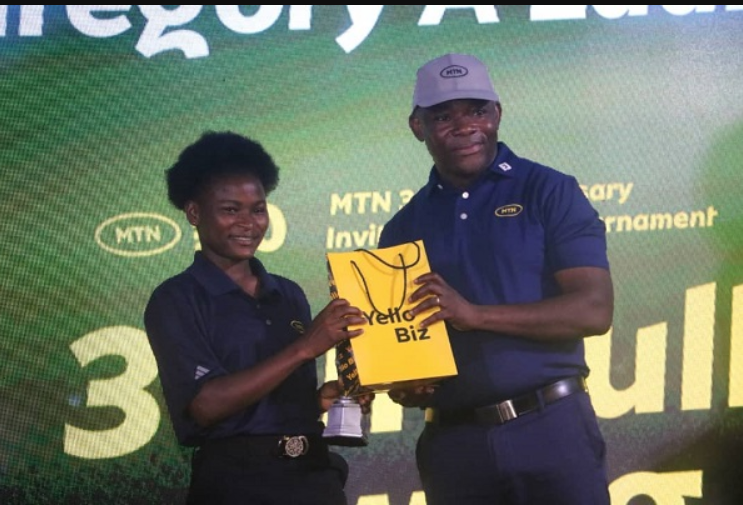
About 120 golfers from clubs across Ghana participated in an 18-hole competition, dubbed ‘MTN 30th Anniversary CEO Invitational Golf Tournament’ held at the Achimota Golf Club on Saturday.
At the end of the hectic day, Frederick Semenu Duvor won the Men’s Group A event with 39 points, while Julienne Afi claimed the Ladies’ Group A title with the same score.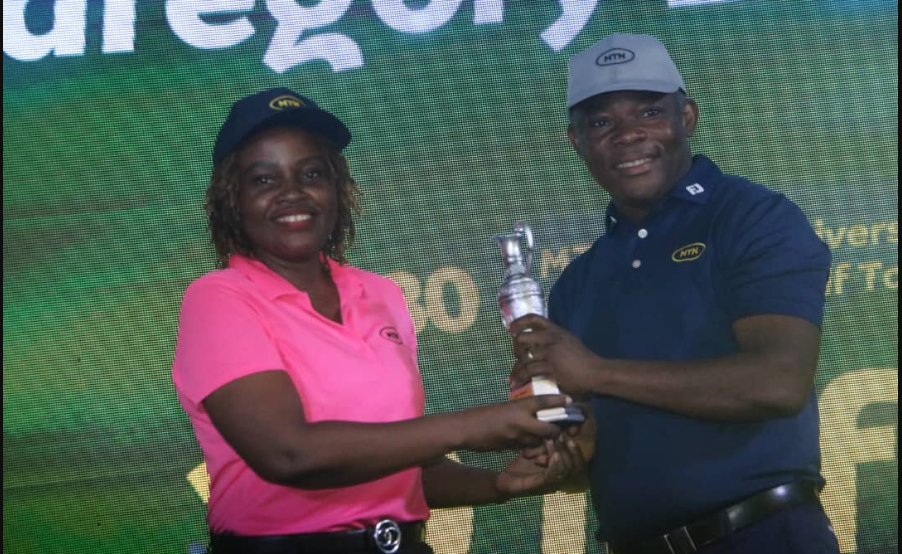
Yaw Mireku Jnr. won the Men’s Group B with an impressive 45 points, while Kous Louanges Mang took the Ladies’ Group B title with 38 points.
Kofi Mangesi won Men’s Group C with 40 points while Elorm R. Akuash Bonney claimed the Ladies’ version with 42 points.
In the Seniors Division, Jan Vogel emerged winner of the men’s category with 39 gross, while Helen Appah topped the ladies’ category with 44 gross.
Addressing participants, the company’s Board Chairman, Mr Ishmael Yamson, urged the company to approach its next phase with the same resilience, discipline and determination that have defined its success over the past three decades.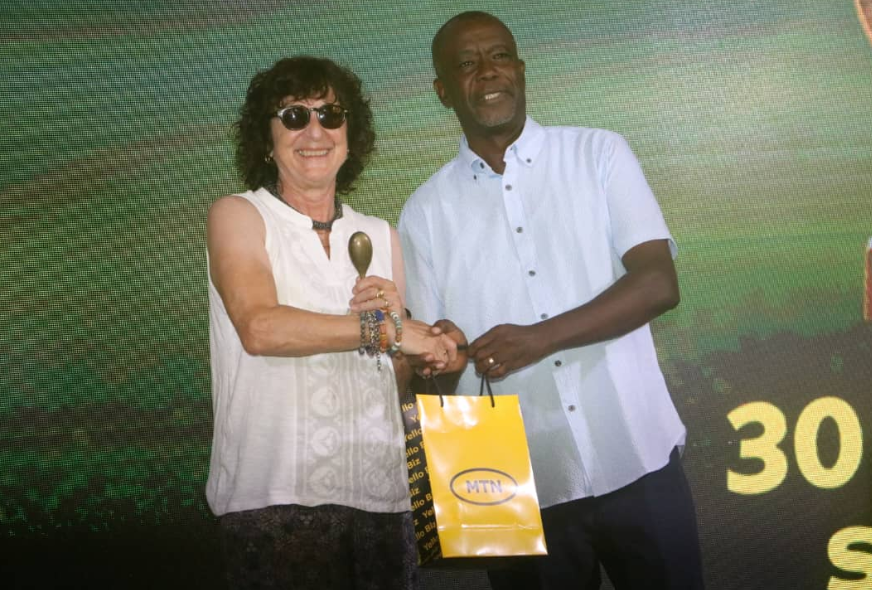
He drew a striking parallel between the game of golf and MTN Ghana’s three-decade journey, describing both as long games in which success depends less on one spectacular moment than on consistency, patience, judgment and the ability to recover from setbacks.
He said, golf had taught him a lesson that extended far beyond the fairways, thus, a round cannot be won on the first hole.
In golfing terms, he said, MTN Ghana had encountered its share of regulatory bunkers, competitive hazards and unexpected storms that had forced the company to pause, reassess and change its approach.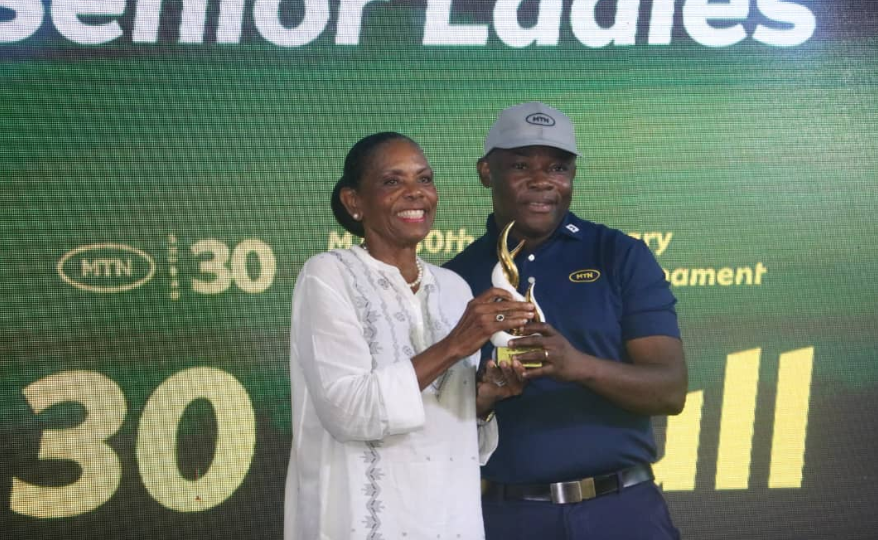
But those challenges, he suggested, were part of the journey rather than reasons to abandon it.
By Andrew Nortey
SKIP THE QUEUE, TAP THE NEWS
You can now read the Ghanaian Times and The Spectator newspapers from the comfort of your device via TimesNewsPlus.
Join our WhatsApp Channel: https://whatsapp.com/channel/0029VbBElzjInlqHhl1aTU27

 Entertainment1 week ago
Fiifi Coleman Productions adapt ‘I Told You So’ stage play into feature film
- News6 days ago
48 Engineer Regiment to be major sub-contractor on Accra-Kumasi Expressway, $2bn ready- Prez Mahama
- News1 week ago
Ghanaian journalist celebrates Texas town’s ‘Eden of the Far West’ tag after mayor’s nod