News
“The Gulf of Guinea Speaks” Art Intervention marks World Maritime Day

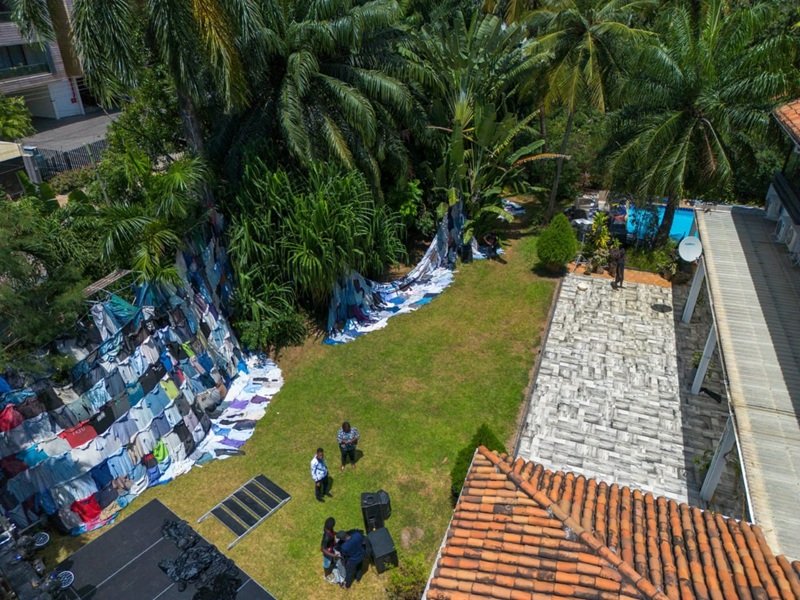
As part of activities to mark the 2026 World Maritime Day and the tenth (10th) anniversary of the Danish Maritime Security Program for the Gulf of Guinea, the Royal Danish Embassy Accra presented “The Gulf of Guinea Speaks”, a site‑specific art intervention held at the Ambassador’s Residence in Accra.
Under the theme “From Policy to Practice: Powering Maritime Excellence”, three commissioned artworks brought human ‑ centered creative perspectives to the diplomatic maritime‑security discussions.
Curated by Fang Wang (Fang W. Linulf) and Essé Dabla‑Attikpo, the show featured Ghanaian artists Patrick Tagoe‑Turkson and Emmanuel Aggrey Tieku alongside a large‑scale floor work by Fang W. Linulf.
Tagoe‑Turkson repurposes beach‑collected plastic flip‑flops for mixed‑media assemblages addressing marine waste and coastal heritage. Aggrey Tieku builds monumental installations from salvaged second‑hand textiles to interrogate waste colonialism and global‑trade pollution.
Fang’s 100 sqm floor print merges ocean imagery and maritime geographic data, letting visitors physically stand upon mapped Gulf‑of‑Guinea ocean geography.
Moving beyond official reports, the art intervention used sensory visual storytelling to highlight ocean ecology, coastal‑community realities and the human side of maritime governance for attending diplomats.
Co – curator and artist Fang W. Linulf mentioned that visitors literally walk across the ocean on my floor print whilst abstract maritime data becomes something bodily and immediate.
She further stated that “policy builds frameworks for maritime security, yet art uncovers the human and material stories often missing from official documents. We wanted delegates to feel, not only read, the realities of the Gulf of Guinea coast.”
Essé Dabla‑Attikpo, also a co‑Curator “The Gulf of Guinea Speaks” stated that “waste arriving on our shores is not just an environmental problem. It carries global trade histories.
Through re‑making discarded materials, we give visibility to these hidden narratives.”
Patrick Tagoe‑Turkson transforms ocean washed plastic flip‑flops collected from Ghana’s Atlantic shorelines into layered mixed‑media assemblages.
At the event, he said that “discarded flip‑flops and textiles washed onto our beaches hold cultural memories. Transforming waste into art is one way to advocate for our ocean and our coastal heritage.”
Commenting on the exhibition, Emmanuel Aggrey Tieku mentioned that “i work with second‑hand garments that end up in Ghana’s landfills and beaches.
These textiles are physical evidence of waste colonialism and unequal global supply chains.”
The “The Gulf of Guinea Speaks” event was attended by maritime practitioners, diplomats and industry stakeholders and created a platform to experience maritime realities through sensory, material and visual perspectives, raising public awareness through artistic practice.

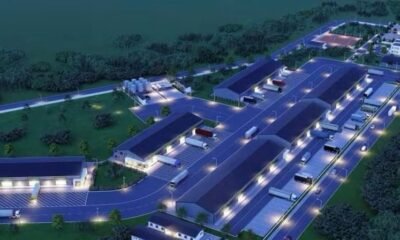




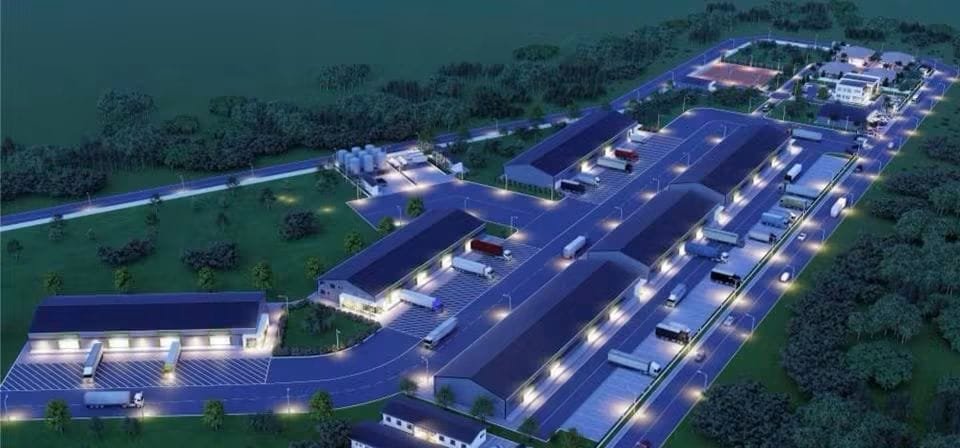
President John Dramani Mahama over the weekend inspected ongoing works on a 6,000-birds-per-hour meat processing factory at Bechem in the Ahafo Region.
The facility, being developed by the Ministry of Food and Agriculture, is a key component of government’s broader strategy to achieve self-sufficiency in poultry production and reduce Ghana’s heavy dependence on imported chicken.
President Mahama, who toured the site to assess the pace of work, was briefed by the project contractor that the factory is currently 50 percent complete.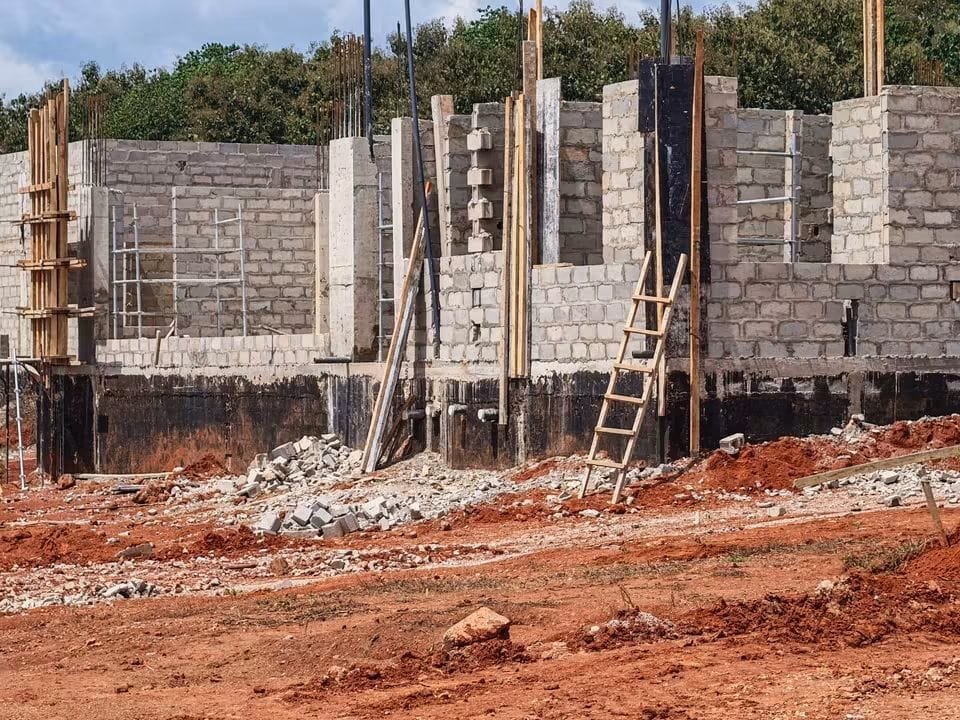
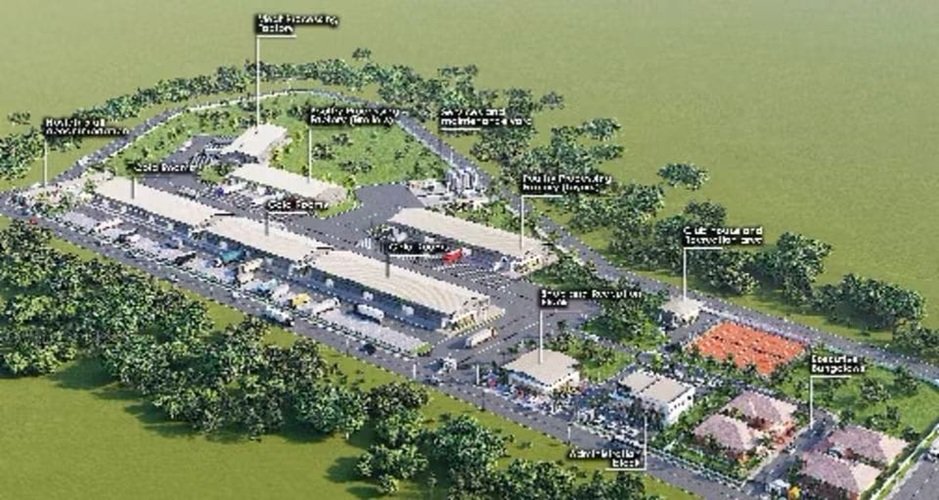
The contractor assured the President that construction would be fully completed by March next year.
He further disclosed that all required equipment for the processing plant has already been procured and is ready for installation once the building works are finished.
Once operational, the factory is expected to significantly boost local poultry processing capacity, create jobs and support poultry farmers within the Bechem enclave and beyond.
By Edem Mensah-Tsotorme
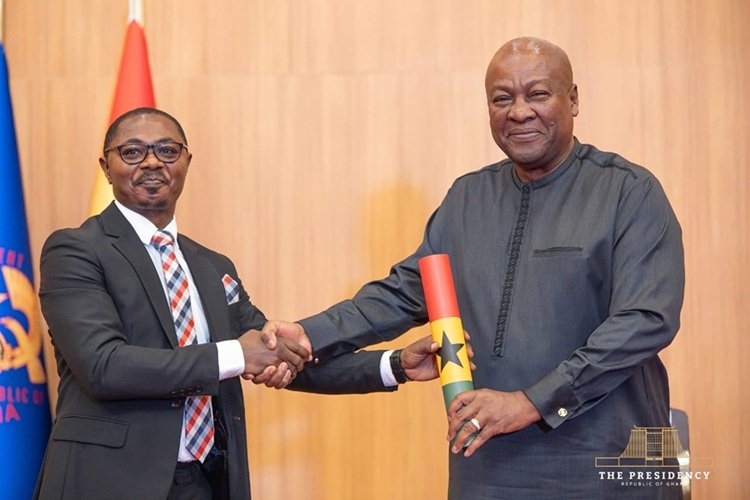
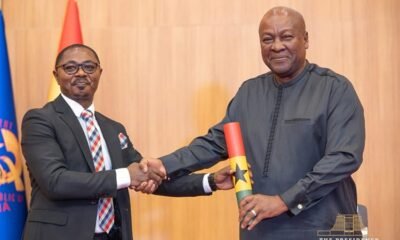
Newly appointed Electoral Commission (EC) Deputy Chairperson Joseph Kwaku Asamoah has pledged to work towards restoring public confidence in the Commission, describing it as an obligation he and his colleagues must fulfil.
Speaking after his appointment by President John Dramani Mahama, he said the Commission would work closely with its staff to review electoral processes and pursue continuous improvements.
He said the Commission was committed to delivering its mandate without fear or favour, stressing that every Ghanaian mattered.
According to Mr Asamoah, restoring public trust was particularly important because confidence in the Electoral Commission had fallen to its lowest level in more than two decades.
Citing Afrobarometer data, he said only 33 per cent of Ghanaians expressed some or a lot of trust in the Commission, compared with 75 per cent in 2005 and 63 per cent in 1999.
He described the figures as a call to action, insisting that rebuilding public confidence was not optional but an obligation imposed on the Commission.
Mr Asamoah identified misinformation, disinformation and fake news as major challenges facing electoral processes in modern times.
He warned that false information could undermine political interests and deepen divisions in the country, while calling for responsible use of new media to promote civic education and encourage public participation, particularly among young people.
He stressed that credible elections were not the responsibility of the Electoral Commission alone but a national duty requiring the involvement of political parties, Parliament, the security services, the judiciary, civil society organisations, the media and every citizen.
He therefore called on all stakeholders to work together with the Commission to strengthen Ghana’s electoral processes and restore public confidence.
By: Jacob Aggrey