News
Stop using breast enhancing creams …they expose females to breast cancer

- /home/u249204778/domains/spectator.com.gh/public_html/wp-content/plugins/mvp-social-buttons/mvp-social-buttons.php on line 27
https://spectator.com.gh/wp-content/uploads/2024/11/Mrs-Enyonam-Abiti-making-a-presentation.jpg&description= Stop using breast enhancing creams …they expose females to breast cancer', 'pinterestShare', 'width=750,height=350'); return false;" title="Pin This Post">
- Share
- Tweet /home/u249204778/domains/spectator.com.gh/public_html/wp-content/plugins/mvp-social-buttons/mvp-social-buttons.php on line 72
https://spectator.com.gh/wp-content/uploads/2024/11/Mrs-Enyonam-Abiti-making-a-presentation.jpg&description= Stop using breast enhancing creams …they expose females to breast cancer', 'pinterestShare', 'width=750,height=350'); return false;" title="Pin This Post">
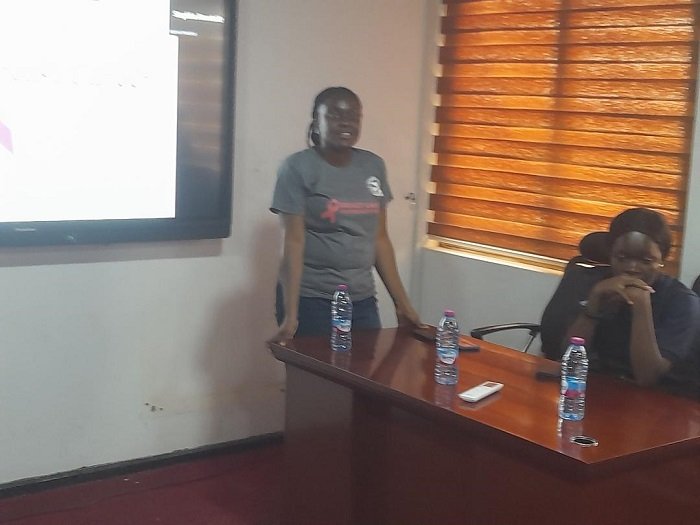
Mrs Enyonam Abiti making a presentation
Women have been cautioned to stop using of breast enhancing creams which is said to contain estrogen, predisposing them to the breast cancer disease.
Using such creams over time increases estrogen levels in patrons of such products thereby exposing them to the disease.
Estrogen is a type of sex hormone responsible for development and regulation of female reproductive system and secondary sex chart.
Mrs Enyonam Abiti, a medical officer at Madina Pentecost Hospital, said this at a day’s seminar and breast cancer awareness creation day at Sunyani in the Bono Region.
The programme, organised by the Bono Regional office of COCOBOD, forms part of activities to mark this year’s World Breast Cancer Day celebrations held every year in October.
Some staff of COCOBOD and women in cocoa farming used the opportunity to have their breast screened.
Mrs Abiti during a presentation revealed that one in every eight women was diagnosed of breast cancer while 1 from 1,000 men contract the disease.
She noted that early detection and regular screening was the surest way to salvage the situation.
She mentioned that habits such as excessive smoking and alcohol intake predisposes women to breast cancer.
Moreover, she added that people advanced in age, past history, past ovarian cancer case as well as young girls that menstruate early, among others stands the risk of contracting the disease.
The Bono Regional Administrator of COCOBOD, Michael Paddy Kwesi Asumanu, stated that the decision to organise the breast screening was to ensure that women in cocoa farming were healthy at all times to go about their farming activities in order to increase productivity.
“We don’t want a situation where our women in cocoa farming are infected with breast cancer disease to jeopardise the cocoa sector,” he said.
According him, the Regional Office of COCOBOD in partnership with the Bono Regional Teaching hospital would organised screening for about 4,000 women on October 31, 2024 at Goaso in the Ahafo Region.
The move, he said, was part of their corporate social responsibility towards women as the world mark breast cancer awareness creation this month.
Some of the women who spoke to The Spectator commended COCOBOD for the gesture and called on other institutions of state to emulate the example.
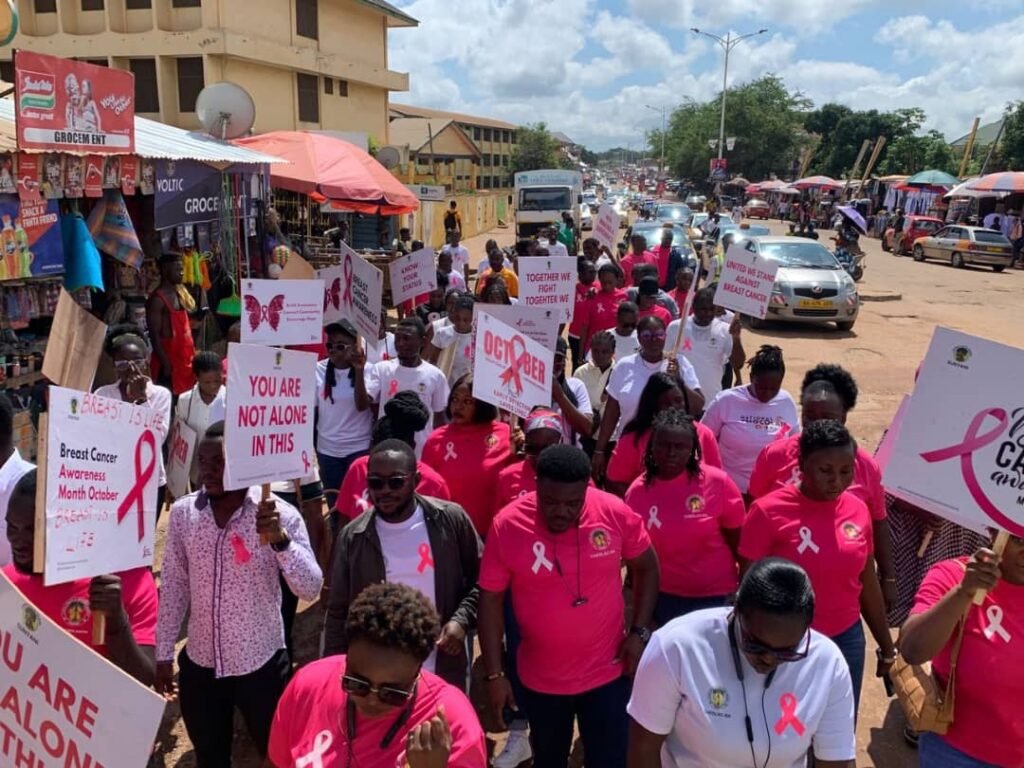
The organisers later held a float on the principal streets of Sunyani to create awareness on the breast cancer disease.
From Daniel Dzirasah, Sunyani








Deputy National Women Organiser of the New Patriotic Party (NPP), Mimi Duah, has openly declared her support for Mavis Hawa Koomson as the next National Women’s Organiser of the party.
In a statement endorsing Hawa Koomson’s candidature, Ms Duah outlined four key reasons why she believes the former MP and Minister of State is best placed to lead the party’s women’s wing.
According to her, Hawa Koomson is a motherly figure who rose from the grassroots and is widely noted for her forgiving nature and ability to foster unity.
“She is a true grassroots mother who easily forgives, fosters unity, provides guidance and arbitrates to ensure all aggrieved party women are brought on board to ensure a unified women’s wing,” she stated.
Ms Duah also pointed to Hawa Koomson’s vast experience, having served as a Constituency Women’s Organiser, Member of Parliament and Minister of State, noting that the experience positions her to provide effective leadership as National Women’s Organiser.
She further described Hawa Koomson as capable of making the women’s wing resourceful, through her extensive network and business contacts, to lobby for logistics, training and financial support for women organisers at all levels.
Lastly, she said the NPP as an opposition party needs fearless, bold and assertive leadership at the women’s front to inspire regional, constituency and polling station women organisers as the party reorganises towards the 2028 elections.
“We need a Women’s Organiser who has been tested, who is bold, who understands grassroots women, and who can lead us to victory in 2028. Hon. Mavis Hawa Koomson is that leader,” she stressed.
By Edem Mensah-Tsotorme
News
Tourism, Culture and Creative Arts Minister inaugurates Ghana-Korea Heritage Project Steering Committee
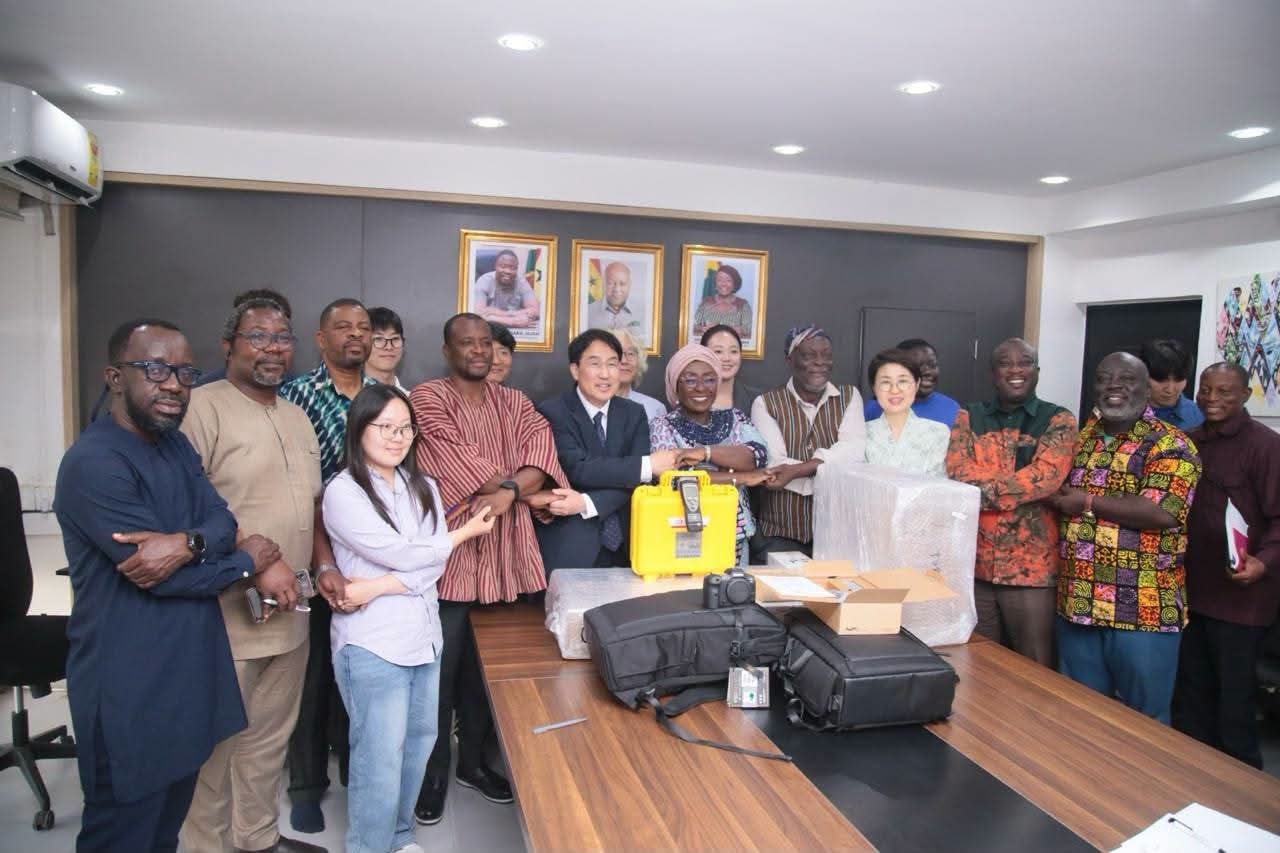
Tourism, Culture and Creative Arts Minister, Abla Dzifa Gomashie, has inaugurated the Ghana-Korea Heritage Project Steering Committee to provide strategic oversight for a five-year programme focused on preserving Ghana’s heritage sites and strengthening their resilience to climate change.
The project will support climate-risk mapping, digital surveying and 3D modelling, joint research, capacity building, community engagement and modern monitoring technologies.
Korea is also providing specialised equipment, including drones, 3D scanners, digital microscopes, thermal imaging cameras and GPS survey instruments, to enhance Ghana’s capacity to scientifically assess, document and conserve heritage structures.
The partnership, which will run through 2030 and beyond, is expected to deepen Ghana-Korea cultural ties while promoting sustainable, technology-driven and climate-adaptive heritage management for future generations.
By Edem Mensah-Tsotorme