Hot!
Stakeholders urged to provide requisite platforms to support young green businesses


- /home/u249204778/domains/spectator.com.gh/public_html/wp-content/plugins/mvp-social-buttons/mvp-social-buttons.php on line 27
https://spectator.com.gh/wp-content/uploads/2023/12/IMG-20231218-WA0059.jpg&description=Stakeholders urged to provide requisite platforms to support young green businesses', 'pinterestShare', 'width=750,height=350'); return false;" title="Pin This Post">
- Share
- Tweet /home/u249204778/domains/spectator.com.gh/public_html/wp-content/plugins/mvp-social-buttons/mvp-social-buttons.php on line 72
https://spectator.com.gh/wp-content/uploads/2023/12/IMG-20231218-WA0059.jpg&description=Stakeholders urged to provide requisite platforms to support young green businesses', 'pinterestShare', 'width=750,height=350'); return false;" title="Pin This Post">
Relevant stakeholders focused on climate related issues have been advised to provide the necessary platform to support numerous wonderful ideas and innovations of young people in the climate space.
According to Dr Yaw Agyeman Boafo, a research fellow at the Centre for Climate Change and Sustainability Studies, University of Ghana indicated that green business was the way to go in the quest to tackle climate change, hence attainment of the Sustainable Development Goals (SDGs) by 2030.
To him, investing in young people’s innovations was of essence because the youth were the future of the nation.
“They are the ones expected to be controlling the affairs of countries of the world or Sub-Saharan Africa in the coming years. And the youth with their energy can start the movement of driving green businesses all around us,”
he reiterated.
Dr Yaw Boafo made these appeal at the 3-day YouSustain Conference held from 6th to December 8, 2023 in Accra.
The Conference aimed at providing network and resource opportunity for young people involved in ecopreneural businesses created a platform for young people, developmental agencies, and researchers to have an intellectual discourse on how best young people could be supported to contribute to urban sustainability in sub-Saharan Africa through ecopreneurship.
Speaking to the media, Dr Boafo explained that it was time for stakeholders both in the government and private sector to give technical support to build young people’s capacity as well as financial support that would aid them to utilize the skills and knowledge acquired, hence turning their ideas into businesses that can survive and help address the multiple sustainable development challenges facing Sub-Saharan Africa which Ghana is not an exception.
“Yes, the National Youth Policy and other youth related policies exist. However, the challenge the youth are facing is financial backing to practically implement their business ideas to help fight climate change”, he emphasized.
He was however hopeful that the conference would provide the needed platform to attract financial support for young ecopreneurs in the Sub-Sahara Region including Ghana.
Dr Boafo used the occasion to urge young people to continue to be dedicated, committed and should never give up on their eco-business.
“Young people should develop resilience, have the energy or the desire to keep working on what they believe in and should be willing to work with other people from different parts of the continent,”he admonished.
Elaborating more on the 3-day conference, the Conference Coordinator, Mr. Paul Dankwa explained it was to provide a networking and resource opportunity for young people involved in ecopreneural businesses to share knowledge and potentially collaborate for green business development; select viable ecopreneur ideas from the conference and provide them with incubation support and potential grants for their project implementation.
In addition, to create a platform for young people to showcase their green businesses, products, and services, and gain exposure and visibility for their work, hence exploring avenues for upscaling; and exploring how successful practices and solutions for sustainability in sub sahara,” he stated.
BY BENEDICTA GYIMAAH FOLLEY


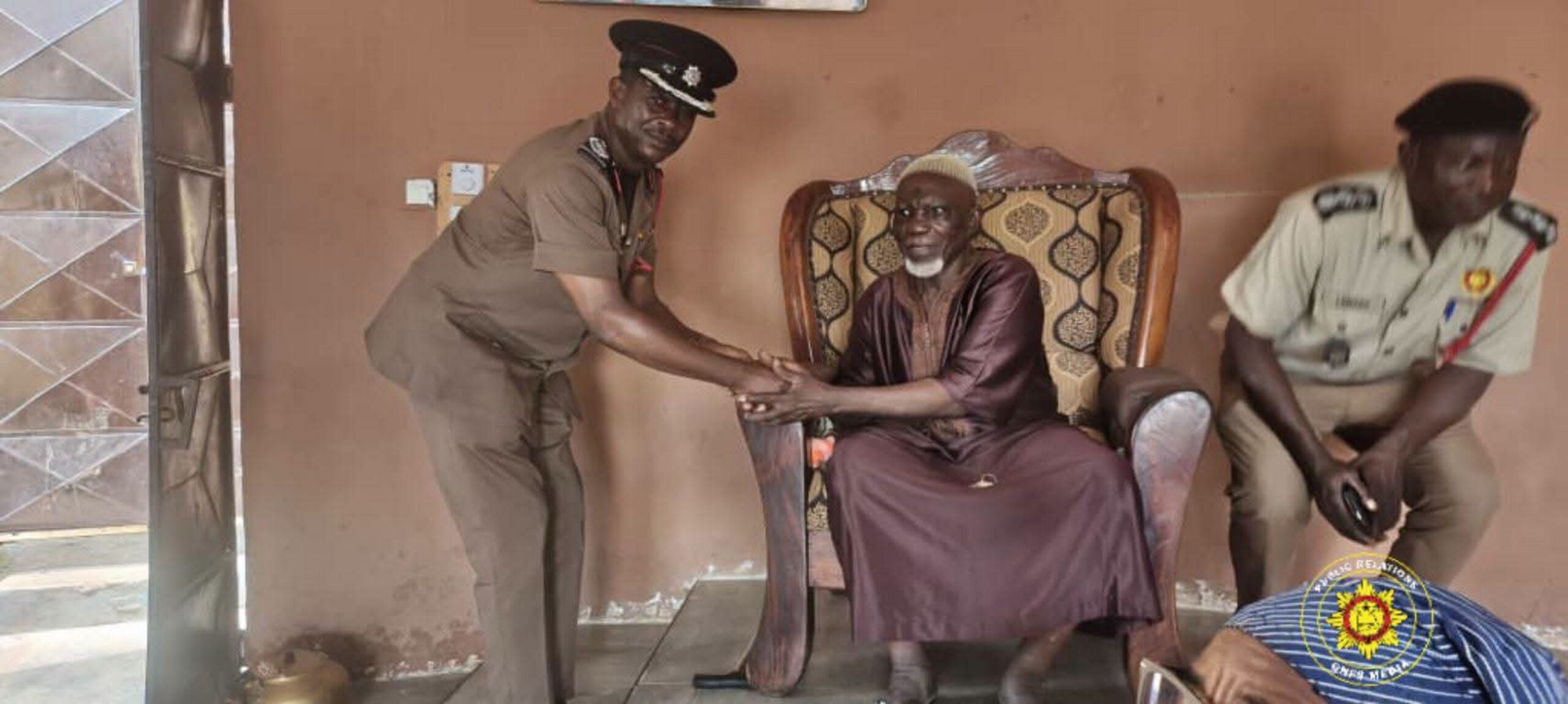
The Paramount Chief of Bamvum, Abdulai Ziblim, has donated a one-acre plot of land at Jongshegu, a suburb of Tamale, to the Ghana National Fire Service (GNFS) for the construction of a new fire station.
The Northern Regional Commander of the GNFS, ACFO I Joseph Koranteng, led a delegation to formally accept the land and expressed appreciation to the Chief for his commitment to public safety.
The proposed fire station is expected to improve emergency response times and strengthen fire safety coverage as Jongshegu and surrounding communities continue to expand rapidly.
The Chief called on stakeholders to support the swift development of the facility, while ACFO I Koranteng described the donation as a strong example of collaboration between traditional authorities and state institutions to protect lives and property.
By Edem Mensah-Tsotorme

A 24-year-old tricycle (Pragyia) rider, has been jailed three months by the Nkawie Circuit Court in the Atwima Nwabiagya South Municipality of the Ashanti Region for biting a Community Police Assistant (CPA) at Nkawie.
Abdul Aziz pleaded guilty to the charge of negligently causing harm and was convicted on his own plea.
Police Inspector Kwaku Frimpong, prosecuting told the court presided by Mr Robert Addo that, complainants in the case were officers from the Nkawie Divisional Motor Traffic and Transport Department (MTTD) of the Ghana Police Service.
He said on September 3, at about 8:40am, the complainants led by Chief Inspector Abedi Larbi, were on their official patrol duty to ensure safety at Nkawie township and met the convict, who was in-charge of a Pragya tricycle with registration number M-25-A-3722.
He explained that, after a careful inspection, it was detected that the convict was without licence and other required documents, so Alhassan Seidu, the CPA, was instructed to lead him to the office for the next action.
On their way to the office, the convict took a different direction, so the CPA directed him to take the right route to the police station, but he disobeyed and attacked the CPA, resulting in a struggle between them.
In the process the convict bit the CPA on the chest, so he shouted for help and some nearby youth rushed to the scene and helped him to arrest the convict.
In his caution statement, he admitted the offence and after further investigations he was charged and brought before the court. –GNA
SKIP THE QUEUE, TAP THE NEWS
You can now read the Ghanaian Times and The Spectator newspapers from the comfort of your device via TimesNewsPlus.
Join our WhatsApp Channel: https://whatsapp.com/channel/0029VbBElzjInlqHhl1aTU27

 Entertainment1 week ago
Sarkodie to SarkNation: You don’t have to tear someone down to prove your loyalty
- Entertainment7 days ago
“Without principle, advice is just an opinion” – Stonebwoy replies Sarkodie
- Entertainment3 days ago
Fiifi Coleman Productions adapt ‘I Told You So’ stage play into feature film