/home/u249204778/domains/spectator.com.gh/public_html/wp-content/themes/zox-news/parts/post-single.php on line 153
">
Warning: Undefined array key 0 in /home/u249204778/domains/spectator.com.gh/public_html/wp-content/themes/zox-news/parts/post-single.php on line 153
Warning: Attempt to read property "cat_name" on null in /home/u249204778/domains/spectator.com.gh/public_html/wp-content/themes/zox-news/parts/post-single.php on line 153
Should l accept him back?

- /home/u249204778/domains/spectator.com.gh/public_html/wp-content/plugins/mvp-social-buttons/mvp-social-buttons.php on line 27
Warning: Trying to access array offset on false in /home/u249204778/domains/spectator.com.gh/public_html/wp-content/plugins/mvp-social-buttons/mvp-social-buttons.php on line 27
&description=Should l accept him back?', 'pinterestShare', 'width=750,height=350'); return false;" title="Pin This Post">
- Share
- Tweet /home/u249204778/domains/spectator.com.gh/public_html/wp-content/plugins/mvp-social-buttons/mvp-social-buttons.php on line 72
Warning: Trying to access array offset on false in /home/u249204778/domains/spectator.com.gh/public_html/wp-content/plugins/mvp-social-buttons/mvp-social-buttons.php on line 72
&description=Should l accept him back?', 'pinterestShare', 'width=750,height=350'); return false;" title="Pin This Post">
Dear Obaa Yaa,
Our lovely relationship ended when l disclosed to him that l was pregnant. Initially, he denied responsibility of the pregnancy, but his mother who said she would not condone wrongdoing because the two of us were always together said she believed her son was responsible.
I went through painful labour after which l was delivered of my baby.
Since he wasn’t working then, his mother who was a single parent came to my assistance and helped me and my baby until her resources were depleted.
Luckily, he was able to get a job and this good fortune revived my hopes that things would be better and the education of my child and upkeep were assured.
This could not be as my man abandoned us and moved to settle in Accra without any prior information and stayed with a new lady he had befriended.
For close to three years, l was left to cater for my child’s education and everything by taking up menial jobs.
Painfully, he has changed his telephone number which makes it difficult for me to reach him on phone to discuss issues concerning the wellbeing of our child.
A week to Christmas, he came and pleaded with me to forgive him the wrong he had done against me and accept him back.
It was not easy entertaining him because of the way he had treated me, and for the fact that l lost my parents which he never considered to sympathise with me or find out how his child fared.
He has left me thinking about the appropriate step l have to take under the circumstance.
Should l accept him back?
Nancy, Cape Coast.
Dear Nancy,
It is not easy living under such circumstances and from all indications you have endured a lot of pain and hardships over the period.
I can confirm that two of such ‘come backs’ had produced different results. In the first instance, the gentleman returned a changed and very humble person who eventually brought back smiles to the family.
In the second example, the man was only looking for another opportunity and succeeded by taking advantage of the leniency of the lady and ended up doing worse things.
You ought to be careful about this gentleman who could be an opportunist, and has come back to deceive you once again as though he is a changed person who has come to improve your condition.
Be mindful of his decision to reject the pregnancy in the beginning but for the intervention of his mother. This gentleman could be making a return because of your new looks.

Warning: Undefined array key 0 in /home/u249204778/domains/spectator.com.gh/public_html/wp-content/themes/zox-news/parts/post-single.php on line 493
Warning: Attempt to read property "cat_ID" on null in /home/u249204778/domains/spectator.com.gh/public_html/wp-content/themes/zox-news/parts/post-single.php on line 493

For Leonora Adjin-Tettey, acting is more than standing before the camera or playing different characters. It is a platform to tell stories, inspire change and create opportunities for others.
Over the years, she has steadily built a reputation not only as an actress but also as a communications professional, entrepreneur, creative director, philanthropist and beauty queen whose influence continues to extend beyond Ghana’s entertainment industry.
Born on April 1, 1995, in Kpong, Leonora’s journey is one of resilience, determination and purpose. She is the daughter of Mr Jasper Adjin-Tettey, a Ga, and Madam Joyce Amanatey from Ada.
At the age of seven, she moved to Accra, where she was raised by her aunt in Abossey Okai. Growing up in the bustling community exposed her to life’s realities at an early age and helped shape the discipline, humility and perseverance that have become the hallmarks of her success.
Her academic journey reflects her belief that education is an essential tool for personal growth. After completing Holy Family R/C Junior High School and Nifa Senior High School in 2013, she obtained a Bachelor of Arts degree from the University of Education, Winneba. She later pursued a Master of Arts in Development Communication at the Ghana Institute of Management and Public Administration (GIMPA), equipping herself with the knowledge to use communication as a tool for development and social transformation.
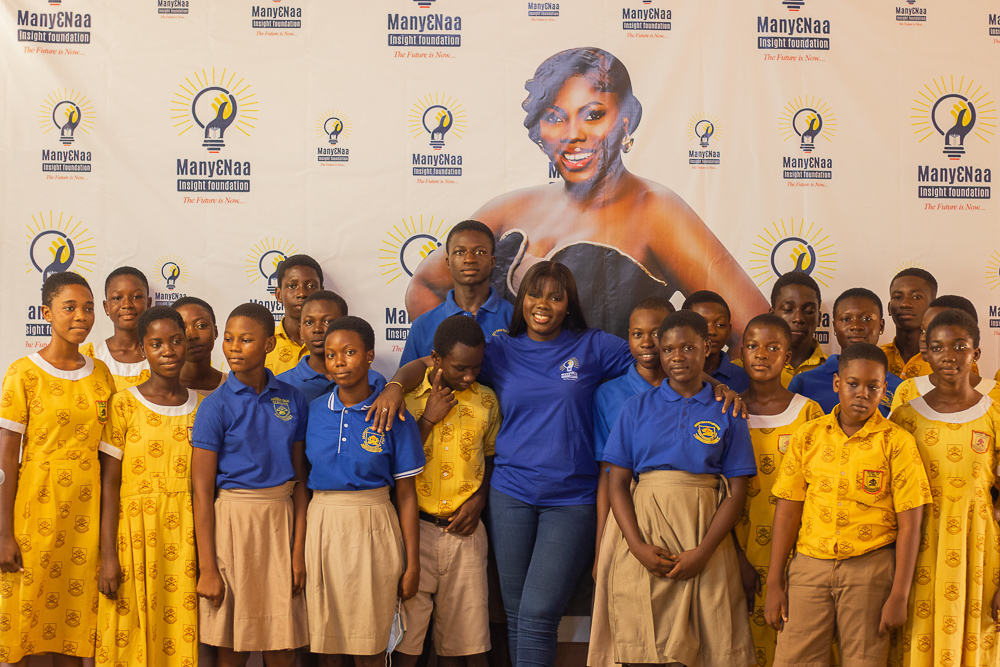
Leonora discovered her passion for acting at the age of 12 through the drama ministry of Lighthouse Chapel International. What began as church performances soon developed into a professional career that has seen her feature in more than 50 film productions in Ghana and beyond.
Her performances in productions such as SEVSU, Queen of Accra and Office Crush have earned her admiration for her versatility and professionalism. Even before becoming a professional actress, her talent had already been recognised with Best Actress awards during her Senior High School and university years.
Since then, she has received several nominations in Ghana’s film and entertainment awards, affirming her growing influence in the industry.
Away from the movie set, Leonora has also made her mark as a commercial model, appearing in television commercials and nationwide billboard campaigns for brands such as Fortune Rice and Madar Detergent.
Driven by an entrepreneurial spirit, she founded LNORE, a creative brand that focuses on storytelling, branding, fashion and visual communication. Through the brand, she continues to explore innovative ways of using creativity to solve problems and tell compelling stories.
Her passion for helping others also led to the establishment of the Manyenaa Insight Foundation, a non-governmental organisation dedicated to education, health advocacy, youth empowerment and community development. Through the foundation, she continues to support initiatives that inspire hope and create opportunities for vulnerable communities.
Leonora’s leadership qualities have equally been recognised on the pageantry stage. She was crowned Miss Health Ghana in 2014, represented the Greater Accra Region in Ghana’s Most Beautiful in 2018 and later won the Miss Global International Ghana title in 2019.
These platforms have enabled her to champion public health awareness, women’s empowerment and community development.
Despite her achievements, Leonora remains grounded. She enjoys reading, travelling, fashion, mentoring young people and engaging in charitable activities. She believes that success becomes meaningful when it is used to inspire others and improve lives.
Looking ahead, she hopes to expand her acting career into Nollywood and Hollywood while continuing to tell authentic African stories to global audiences.
Through her work in film, business and philanthropy, she is determined to project Ghana positively on the world stage and leave behind a legacy of excellence, service and impact.
By Esinam Jemima Kuatsinu
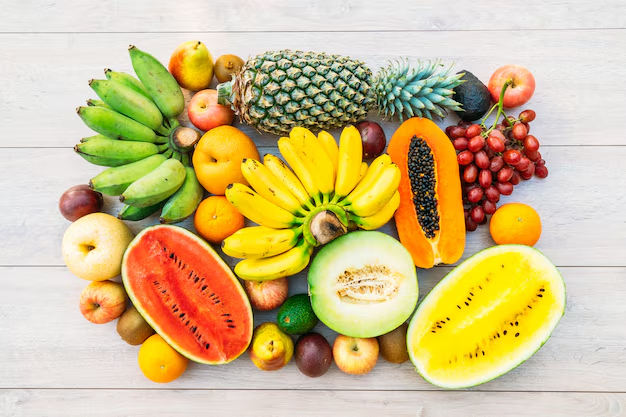
Walk through any market in Ghana during fruit season and one thing is unmistakable: nature has been generous. Mangoes, pineapples, oranges, watermelon, pawpaw, bananas, and avocados sit in abundance, often at their most affordable prices of the year.
And yet many families still eat far less fruit than they should even as non-communicable diseases like hypertension, diabetes, and obesity continue to rise nationally. Encouraging more seasonal fruit in everyday diets is one of the simplest, most cost-effective nutrition wins available to Ghana.
Nature’s nutrient package
Fruits deliver the vitamins, minerals, fibre, and antioxidants that the body needs to function well. Vitamin C strengthens immunity and helps the body absorb iron. Potassium supports healthy blood pressure. Fibre aids digestion and helps regulate blood sugar. For children, fruit fuels healthy growth and development. For adults, regular fruit intake is linked to lower risk of heart disease, stroke, and certain cancers, all while staying naturally low in sodium and free of added sugar, unlike most processed snacks.
Why eating in season just makes sense
Seasonal fruit is fresher, tastier, cheaper, and at its nutritional peak, all at once. Buying in season saves households money, supports local farmers, and reduces post-harvest losses across the supply chain. Small habits compound: a banana at breakfast, watermelon as an afternoon snack, a slice of pawpaw after dinner. None of it dramatic, all of it adding up.
The competition from processed foods
Despite this local abundance, sugary drinks, biscuits, and processed snacks are steadily winning market share, especially with children and adolescents. Aggressive marketing and convenience have made them the easier choice, even though they’re typically high in sugar, salt, and unhealthy fat and low in real nutrition. Swapping just one processed snack a day for a piece of fresh fruit is a small change that pays off over time.
Making the healthy choice the easy choice
Fixing this is not just about telling people to eat better. It is about shaping the environment around them. Schools can build fruit into feeding programmes. Workplaces can offer healthier snacks at meetings. Markets and supermarkets can give locally grown fruit better visibility and shelf space. Local authorities can support vendors with better storage to cut spoilage. And nutrition education should spotlight Ghana’s own fruits, not just imported alternatives.
Seasonal fruit is one of Ghana’s greatest and most underused nutritional assets. Sometimes the best solution to a nutrition problem isn’t a new product. It’s already growing in our own communities.
Feature article by Women, Media and Change under its Nourish Ghana: Advocating for Increased Leadership to Combat Malnutrition project