Selective justice! …Why only Hearts?


Ghana’s COVID-19 situation is alarmingly scary! Really scary! To have more than 700 people contracting the fatal virus daily should be a huge concern for all.
As of Thursday, the nation has recorded 5,786 active cases, 68, 559 confirmed cases and 433 deaths. In all, the recoveries/discharges have been a little over 62,000. Whichever way you look at it, the situation is very dire and frightening.
To stem the disturbing tide, a number of Ghanaians have even suggested a second partial lock-down to be imposed by the government. Others disagreed with that suggestion.
The Ghana Football Association (GFA) has, perhaps, taken the first carping step.
On Saturday January 30, 2021, the GFA ordered Hearts of Oak to play the rest of their Ghana Premier League matches behind closed-doors after they were said to have breached COVID-19 protocols in their game against rival side, Accra Great Olympics on Saturday night.
In a letter signed by the GFA’s General Secretary, Prosper Harrison Addo, the exact nature of the violations were not stated, but the club has been ordered to play all home games without fans at the stadium until the matter is determined by the Disciplinary Committee.
Hearts slumped 0-2 to their sworn rivals Accra Great Olympics in a tie that saw many supporters throng the stadium, discarding a standing guideline to clubs to only permit a maximum supporter number of 25 per cent of the stadium capacity due to the COVID-19 outbreak.
Of course, during a virtual meeting with Safety and Security Officers and Representatives of the 18 Premier League Clubs on Wednesday January 20, the FA warned the clubs that it would close down any match venue where the COVID-19 Safety Protocols were violated.
Perhaps, one must commend the GFA for having the character to crack the whip on the Phobians, at least for now.
However, the FA cannot be said to be fair-and-square to fans and maybe Hearts when many other clubs have over time, glaringly flouted such directives and are walking scot-free.
For instance, the game between Asante Kotoko and AshantiGold SC held at the Len Clay Sports Stadium on Sunday January 31, attracted hundreds of supporters, far in excess of the legal 25 per cent stadium capacity. This cannot be lost on the FA.
Again, on the same day, there were several reports pointing to the fact that the King Faisal v Berekum Chelsea tie at the Gyamfi Park in Bekwai registered quite a sizable number in attendance, more than 30 per cent full.
If this be the case, why should the FA turn its sledge hammer on Hearts alone? Why the selective justice? Making them a scapegoat? If we really are poised to fight the COVID-19 pandemic, then we must be seen to be fair-minded and resolute in the implementation of the law.
That said, the National Sports Authority (NSA) too cannot be absolved from blame. The NSA is the owner of the stadium and It is also its responsibility to ensure that the right thing was done at the gates.
The NSC must have a system where it can easily monitor the number of fans that enter the stadium and ensure that they do not surpass what has already been agreed on – especially when it also have its men at the gate.
Of course, there must be a concerted effort between the NSA, security officers at match venues and clubs to ensure fans observe the protocols.
Indeed, it is all-too simplistic to blame the clubs – whilst the NSA that had allowed its facility to be violated, go blameless or overlooked.
The NSA must, therefore, be proactive to enforce the directive and not take things for granted. At all times, they must work closely with the clubs to ensure full compliance.
Some years ago, NSA security men at the main gate were said to have prevented then Deputy Minister of Youth and Sports, Professor Addy, from entering the Accra stadium because he did not have a complimentary ticket in clear violation of the rules they made. That is the way to go!
But in all these, do we not as fans also value our lives? Why must it take the government to compel us to protect our own lives and those of others? Incredible!
Whilst we support the FA in their avowed bid to enforce the rules, it would not be out of place to advise it to be holistic in their approach. That way, all clubs would be on the qui vive and do the right thing.
PlainTalk with JOHN VIGAH


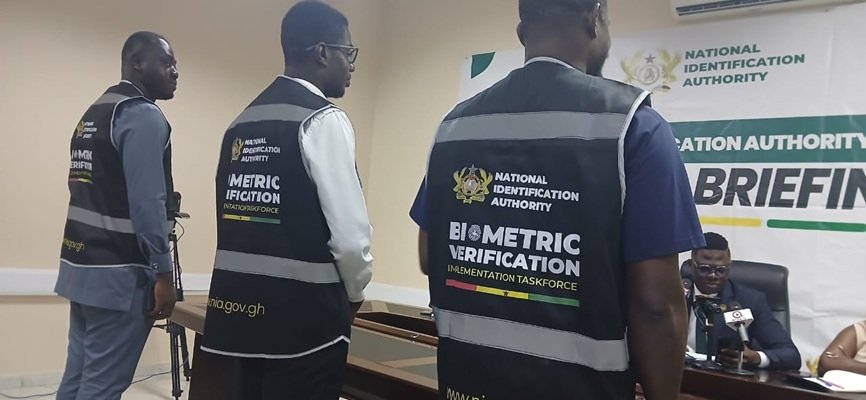
The National Identification Authority (NIA) has announced the commencement of enforcement of the National Identity Register (Amendment) Regulations, 2026 (L.I. 2523), warning institutions that fail to comply with the new requirements of possible fines of up to 2,000 penalty units.
The Authority says it will deploy a Biometric Verification Implementation Task Force to inspect institutions and ensure they comply with the regulations, following the expiration of a three-month grace period granted to businesses and public institutions.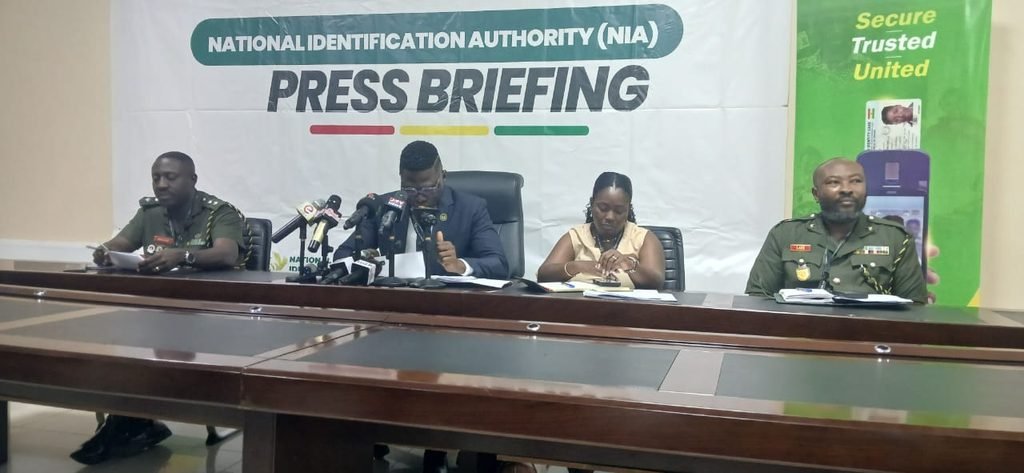
Speaking at a press briefing in Accra on Monday, November 2, 2026, the NIA’s Corporate Affairs representative, William Ampomah Emmanuel Darlas, said the Authority had completed its public education and stakeholder engagement activities and was now moving into the enforcement and compliance monitoring phase.
He explained that the regulations require institutions that verify the identities of customers or applicants as part of their operations to use the NIA’s approved biometric verification platform instead of relying solely on visual inspection of the Ghana Card.
Under the new rules, institutions are prohibited from photocopying, scanning or keeping copies of the Ghana Card for identity verification purposes.
Mr Darlas stressed that simply collecting a customer’s Ghana Card, looking at the photograph and comparing it with the person presenting it would no longer be accepted as a valid method of identity verification.
He, however, clarified that the Ghana Card remains the country’s official national identity document and that citizens are not required to register for a new card or capture their biometrics again under the new regulations.
He said the new system is intended to reduce identity fraud, impersonation and other crimes by ensuring that the person presenting the Ghana Card is the actual owner.
According to him, the biometric verification process will rely on information already captured during Ghana Card registration, including fingerprints, iris details and facial features stored in the card’s chip.
Mr Darlas warned institutions against using third-party companies or individuals to access the NIA’s identity verification platform, insisting that the Authority does not work with intermediaries.
He said institutions seeking access to the National Identity Register must deal directly with the NIA and complete its official onboarding process.
The process requires institutions to prove that they are legally registered companies in Ghana, obtain certification from the Data Protection Commission and work with the NIA’s technical team to establish the necessary connection to its platform.
He further cautioned institutions already connected to the platform against subletting their access to other businesses, particularly small and medium-sized enterprises.
He disclosed that the Authority had received reports of some institutions providing their verification services to other businesses without the NIA’s approval and warned that those involved would face legal action.
Mr Darlas said organisations that fail to comply with L.I. 2523 could face fines ranging from 500 to 2,000 penalty units, depending on the nature of the offence.
He explained that the NIA does not have the authority to impose the fines directly but would take offenders to court for the appropriate punishment.
He indicated that Institutions found guilty could also face additional administrative measures, including being barred from accessing the NIA’s verification platform in the future.
The NIA representative further clarified that the new regulations do not prohibit all institutions from physically using the Ghana Card during transactions.

The Managing Director of the Ghana Publishing Company Limited, Nana Kwesi Boatey, has revealed how he transformed a major overstaffing challenge into a success story through the government’s 24-Hour Economy initiative.
Speaking at the Government Accountability Series on Monday, November 2, Mr. Boatey disclosed that when he assumed office in February 2025, and inherited a bloated workforce of 250 employees doing work that could be efficiently handled by 150 people, a situation that created serious liquidity challenges for the state-owned company.
Instead of resorting to downsizing, he adopted an innovative approach by instituting a 24-hour operational system.
Under the new system, staff were redistributed across three shifts: 7 a.m. – 4:30 p.m., 10 a.m. – 7 p.m., and 10 p.m. – 4:30 a.m.
This not only ensured optimal use of labour but also maximized machine utilization and improved overall output.
According to him, the single move redefined the productivity culture within the company, reinforcing discipline, accountability, and efficiency.
The Ghana Publishing Company’s turnaround is being cited as a practical example of how the 24-Hour Economy policy can drive growth without job losses.
By Edem Mensah-Tsotorme