News
Righting Historical Wrongs: President Akufo-Addo calls for Reparative Justice at UN Assembly”

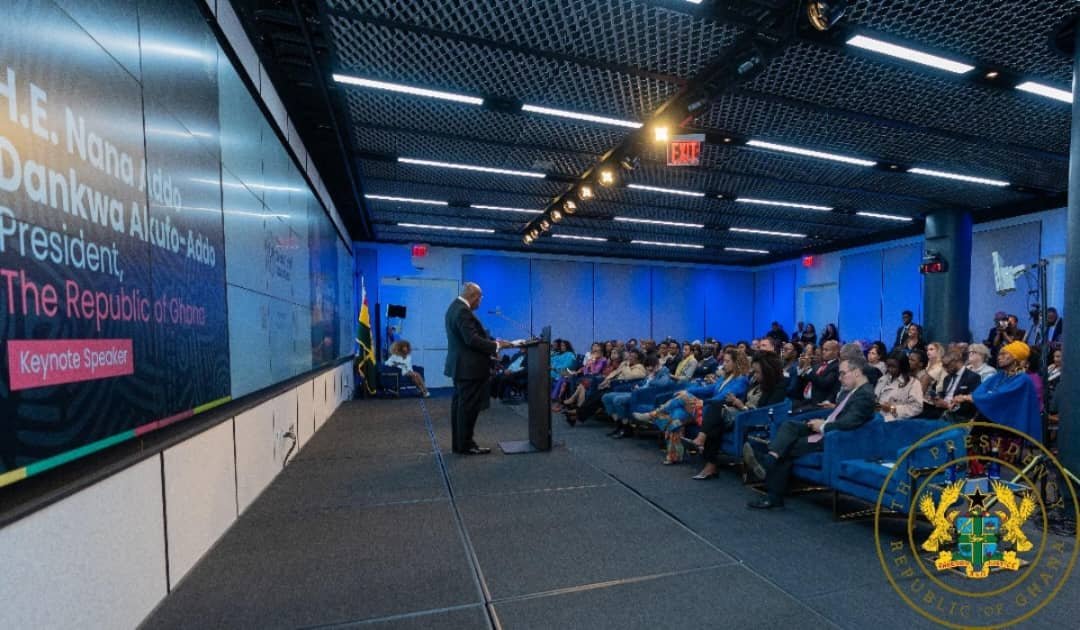
At a significant side event during the 2024 UN General Assembly in New York, President Nana Addo Dankwa Akufo-Addo of Ghana delivered a compelling address on reparations, calling for a global reckoning with the historic injustices inflicted on people of African descent.
In his passionate speech, the President outlined the importance of reparative justice, while stressing that this moment in history is not merely about reflecting on past wrongs but about forging a path toward a just and equitable future.
“We are not convening this evening to share words, nor are we merely reflecting on history,” President Akufo-Addo began.
He said, “No, my friends, we are here to envision a new future—a future that corrects the injustices of the past and ensures that our children, and their children, are born into a world that embraces their dignity and humanity.”
In addressing the gathered dignitaries, diplomats, and representatives of African nations and the African diaspora, the President underscored the brutal legacy of slavery, colonialism, and systemic racism that continues to reverberate in the lives of people of African descent.
He emphasized that reparations are not just about compensation but about rebuilding the dignity and future of a people whose humanity was denied for centuries.
Akufo-Addo highlighted the historical examples of Haiti and the United States, where former enslaved peoples were further burdened instead of compensated.
He recounted the harrowing case of Haiti, a nation that was forced to pay reparations to France for the audacity of gaining its independence from colonial rule in 1804.
Haiti was shackled with an unjust debt of $21 billion that crippled its economy and prospects for generations.
“Haiti’s example illustrates a fundamental truth: reparations, when wrongly administered, do not serve justice. Rather, they can reinforce the very power structures that perpetuate dominion and inequality,” President Akufo-Addo asserted.
He added, “It was the enslaved who paid their former slave masters, a story that still resonates across the Global South.”
Akufo-Addo’s address also recounted the injustices perpetrated in the United States and the United Kingdom, where compensation for the abolition of slavery was perversely awarded to the slave masters, rather than to those who had endured years of forced labor and inhumane treatment.
In the United States, $300 was paid to slave owners for each enslaved person they lost, while the enslaved were left with nothing but their hard-won freedom. Similarly, in the UK, £20 million—a figure now equivalent to £20 billion—was paid to former slave owners, but not a penny was awarded to those who had suffered under slavery.
“This was a perverse inversion of justice, one that allowed the structures of inequality to endure long after the formal end of slavery,” Akufo-Addo said, noting the enduring economic disparities and systemic racism that continue to afflict people of African descent to this day.
“But, as Akufo-Addo reiterated, this event was not only about reflecting on these injustices. It was about taking active steps towards creating a future where reparations can be a meaningful part of healing and building sustainable livelihoods for those whose ancestors were wronged,” he said.
At the recent Reparations Conference in Accra, held in November 2023, the groundwork was laid for defining reparative justice for Africa and the African diaspora.
The President outlined several key actions agreed upon at the conference, including the establishment of a global reparations commission, the return of stolen cultural artifacts, and investments in African nations and communities worldwide.
“This is the vision of reparations that we must hold onto—one that looks not only at compensation for past injustices but also at the creation of sustainable, just futures for our people,” the President declared.
The concept of Afro-diplomacy was also central to the President’s speech. Akufo-Addo called on African nations and their diaspora to be the architects of their future, pushing for reparations through global diplomacy, partnerships, and solidarity with other oppressed peoples.
“Reparations will not be handed to us freely—we must actively seek them,” he said, urging the world to see Africans as equals on the global stage, not beggars.
Concluding his remarks, President Akufo-Addo expressed confidence in the youth of today, whom he believes will be the ones to transform global systems and build a future of justice, equality, and empowerment for all Africans.
“My friends, we stand at the threshold of a new world—a world that we must imagine, design, and build. This is the world of reparative futures, a world where the wrongs of the past are righted, and where African nations are free to define their own destinies,” he said.
As the address drew to a close, it was clear that President Akufo-Addo’s vision for reparations is about far more than financial compensation—it is about transforming the very foundations of global justice, ensuring that the descendants of the enslaved can thrive in a future where dignity, respect, and equality are their birthrights.

The professor who spends his days exploring the intricacies of African languages found himself at the centre of a different kind of lesson on Friday, October 2, 2026. 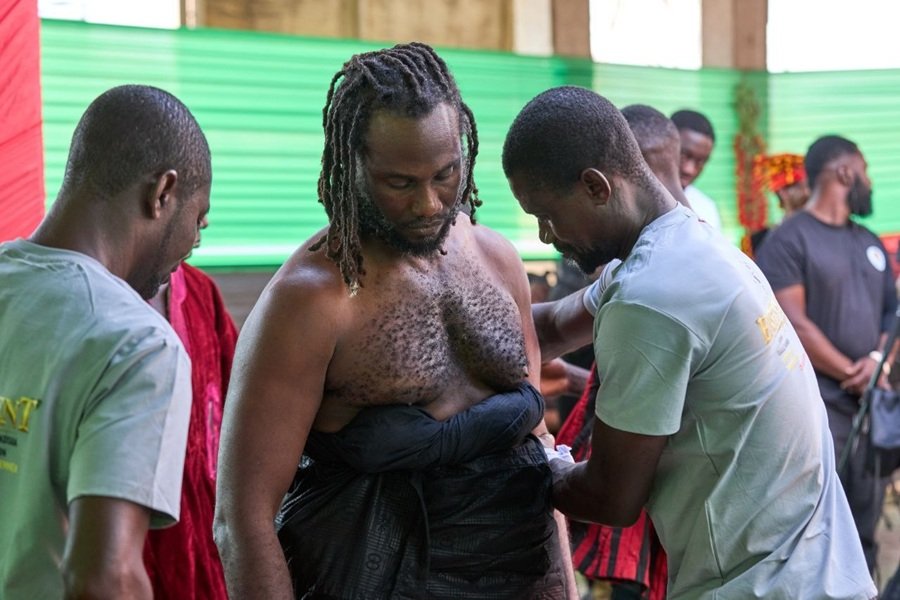
This time, there were no lecture notes, academic arguments or university classrooms. Instead, there was the weight of tradition, the rhythm of a community celebration and the solemnity of an oath at a royal palace.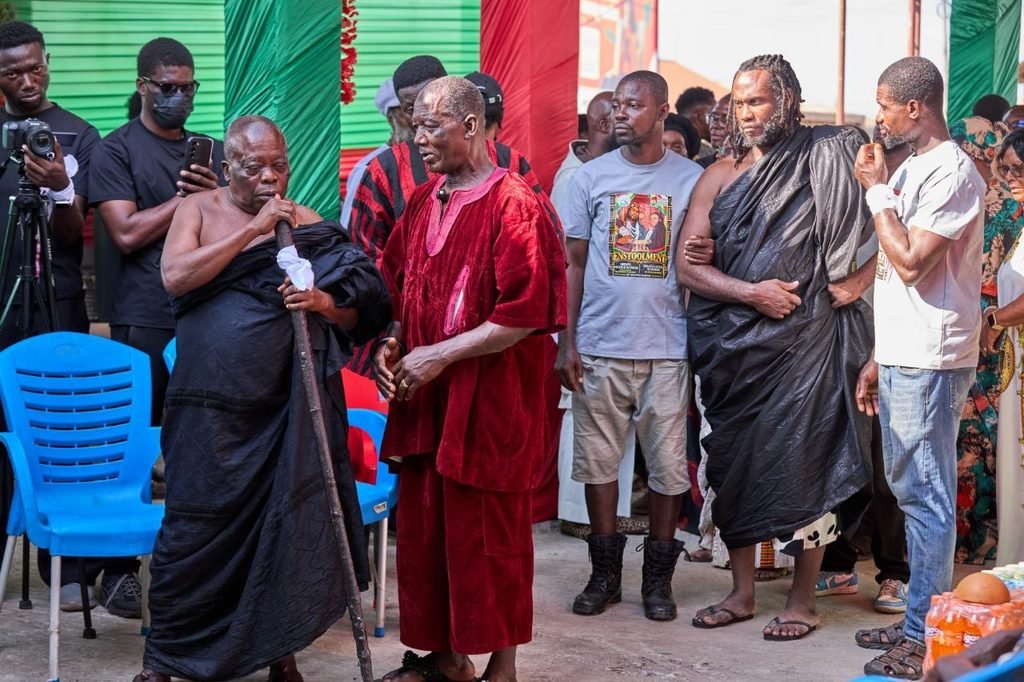
Professor Ọbádélé Kambon, a full Professor of African Linguistics at the University of Ghana, was enstooled as Apagyahene and Sunsum Ɔsahene of Akuapem Mampong in the Eastern Region in a ceremony that brought academia and traditional authority together.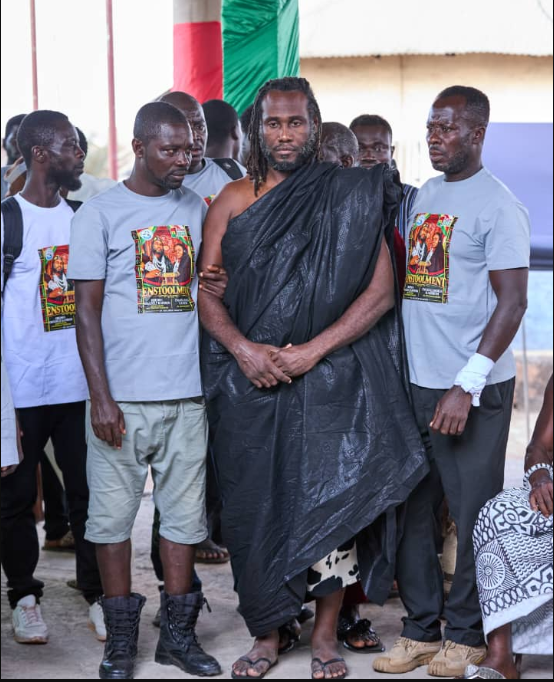
For the professor, the occasion was more than a new title. It was a moment that connected his academic interests in African languages and indigenous knowledge with the living traditions of an Akan community.
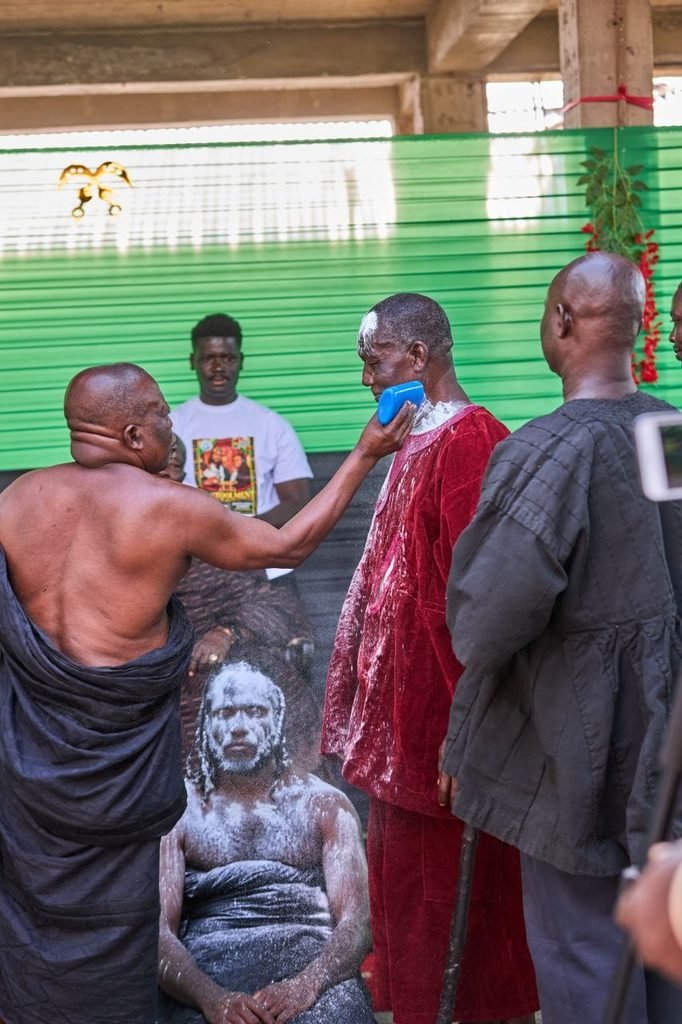
The day’s events unfolded through a series of customary observances. Kambon was first taken to the compounds of the Ɔkyeamehene and Gyasehene, where the preparations for his installation continued.
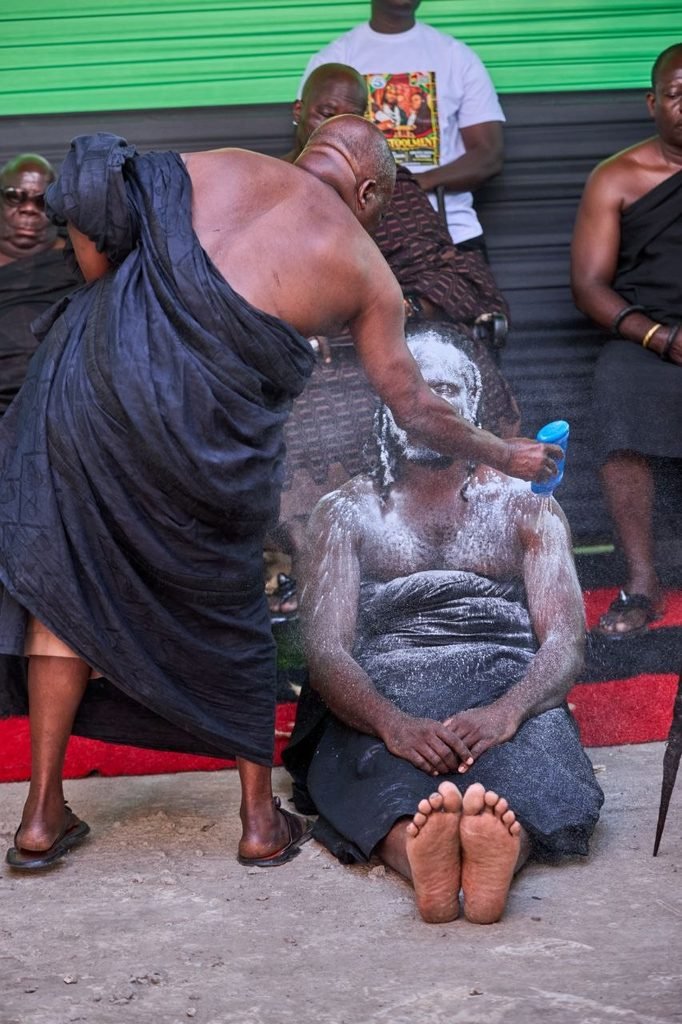
Then came the application of hyire, the white kaolin powder associated with traditional rites.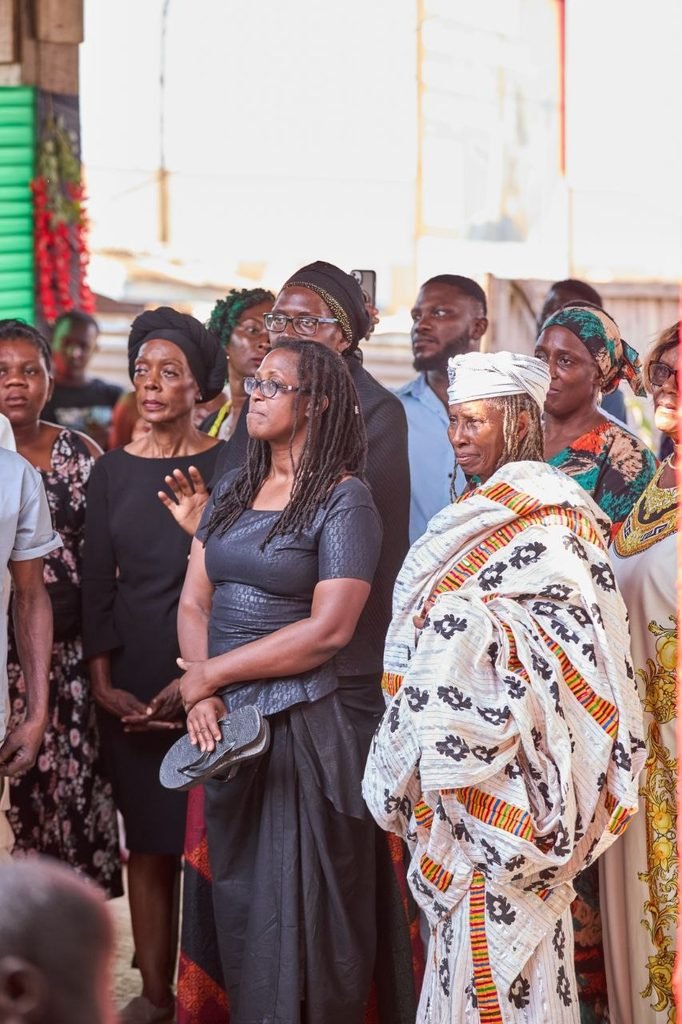
With the customary proceedings underway, the new chief was lifted onto the shoulders of celebrants and carried along the main thoroughfare of Akuapem Mampong.
The procession transformed the streets into a public stage for a ceremony rooted in the community’s traditional institutions.
There was something striking about the image, a university professor, accustomed to the measured language of academic discourse, being carried through the town in a display of traditional recognition.
Yet the celebration was not complete with the procession.
A ram was sacrificed at the Mamponghene’s compound before Kambon was taken to the palace, to swear the oath associated with his new offices.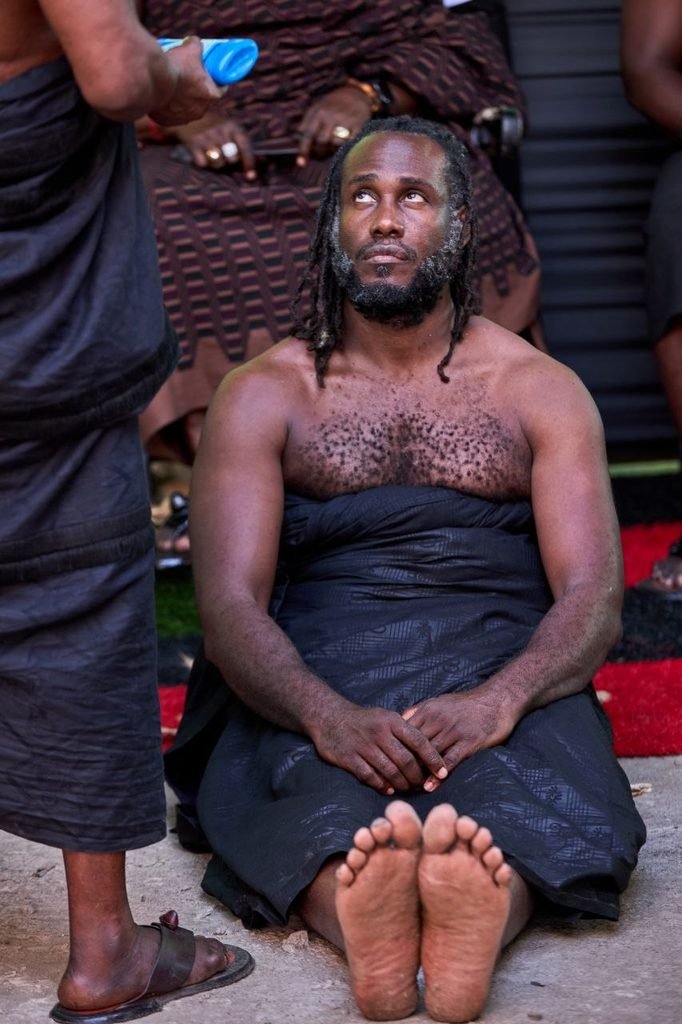

The ceremony brought him formally into his roles as Apagyahene and Sunsum Ɔsahene.
Beyond the colourful proceedings, the titles themselves carry layers of historical meaning.
Kambon in his research explores the historical connections between Apagya and Akan political and military organisation.
Accounts cited in his work linked Apagya to an asafo, or military company, while historical writing traces an Apagya stool in Asante to the reign of Opoku Ware I in the eighteenth century.
These historical associations offer a glimpse into the institutions that have shaped Akan society over generations, although they do not automatically define the precise responsibilities of the office in Akuapem Mampong.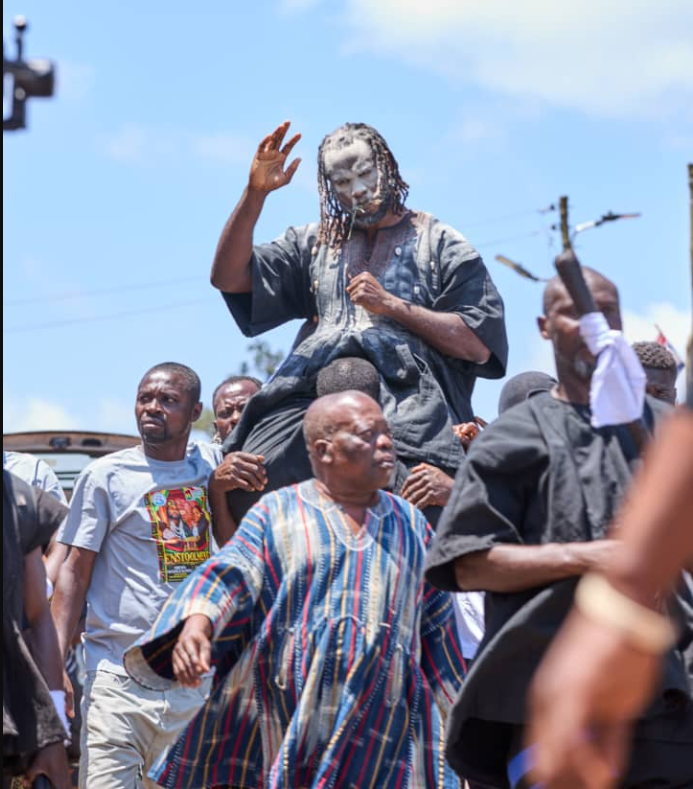
Kambon’s own professional life reflects a similar interest in preserving and examining African knowledge.
His work encompasses Akan language structure, naming practices across the Black world, proverbs and indigenous intellectual traditions.
Through Abibitumi, the platform he founded, he also promotes language learning, scholarship and cultural engagement.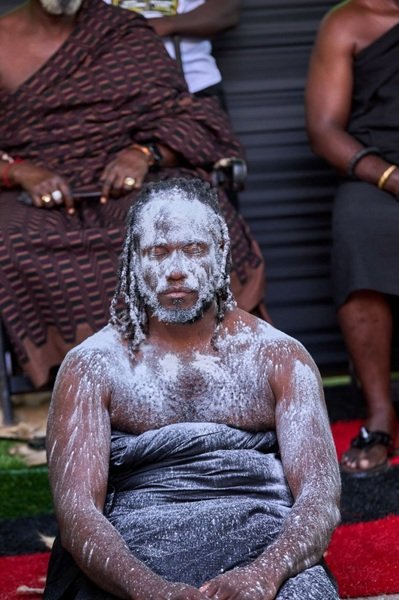
But tradition was only one part of the story that day.
When the formal ceremony gave way to a reception, the occasion expanded into a celebration of three milestones: Kambon’s enstoolment, his promotion to full professor and his daughter Ama’s admission to the University of Ghana.
The gathering therefore carried a personal significance that went beyond the honours bestowed on one man. 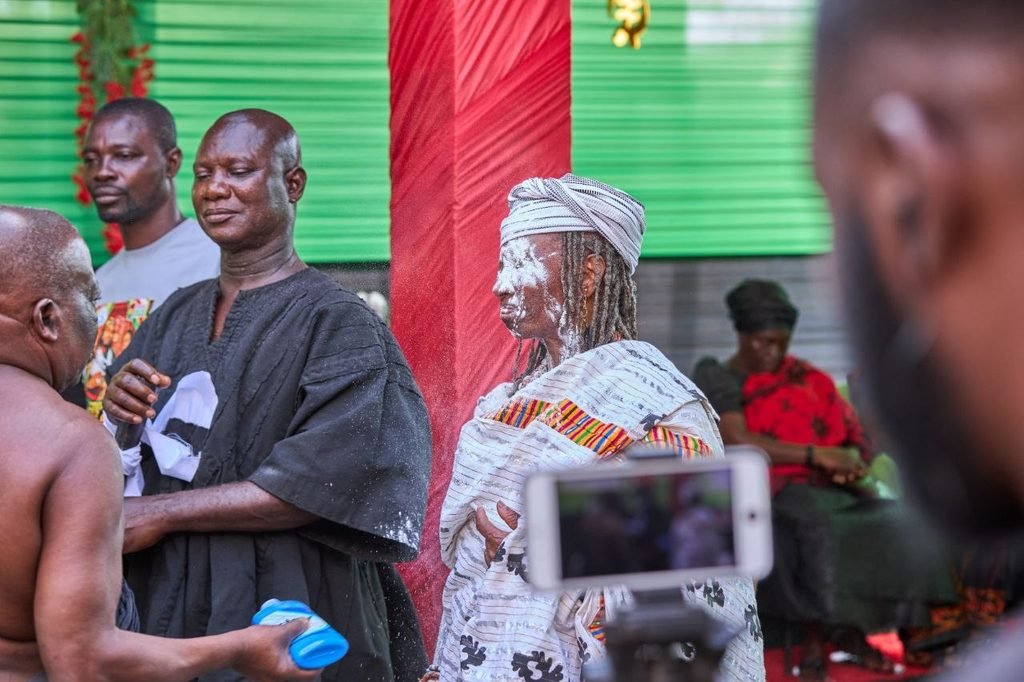
It celebrated professional advancement, the continuation of family aspirations and a connection to cultural heritage.
For a father, seeing a daughter gain admission to the same university where he holds a distinguished academic position offered another reason to celebrate.
For the professor, the moment placed family achievement alongside his own professional and traditional milestones.
Kambon had already established a place in the traditional life of Akuapem Mampɔn through an earlier installation as Banmuhene Kyidɔmhene, recorded in 2017.
His latest enstoolment adds another chapter to that relationship.
In Akuapem Mampɔn, the day brought together the university, the palace and the family table in one celebration. And for Kambon, the journey from the lecture room to the traditional procession showed how scholarship, cultural responsibility and family achievement could converge in a single memorable occasion.
By Enoch Ntiamoah Siaw
SKIP THE QUEUE, TAP THE NEWS
You can now read the Ghanaian Times and The Spectator newspapers from the comfort of your device via TimesNewsPlus.
Join our WhatsApp Channel: https://whatsapp.com/channel/0029VbBElzjInlqHhl1aTU27
News
ASOHOM organises fundraising gala to protect Ghana’s water resources, support vulnerable communities

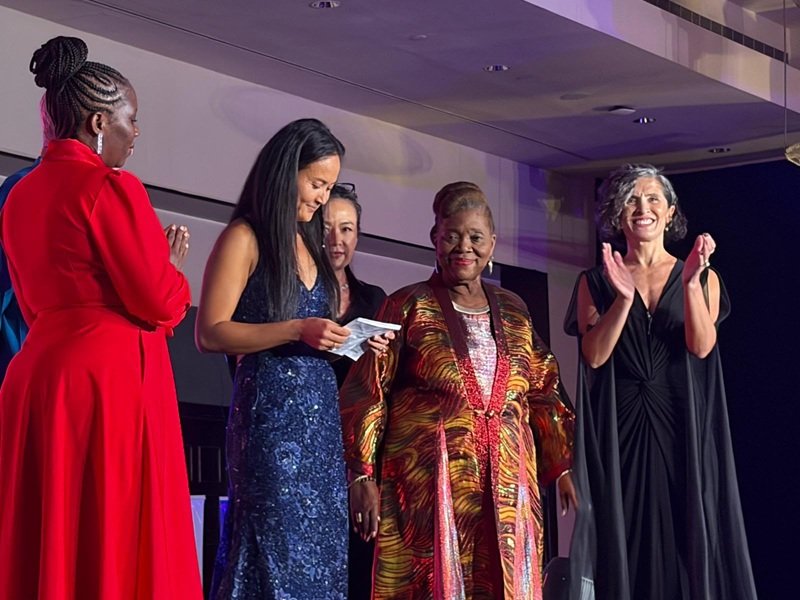
The Association of Spouses of Heads of Missions and International Organisations (ASOHOM) last Friday held the 2026 edition of its annual Charity Gala, at the Kempinski Hotel Gold Coast City, Accra under the theme ‘Woven Currents.’
It was attended by members of the diplomatic and international community, distinguished guests, corporate partners, and artists, friends of Ghana and supporters of ASOHOM’s charitable mission.
What was supposed to be a fundraiser turned into a perfect platform to celebrate friendship, culture and creativity.
Water was at the heart of this year’s message, said Sovanna Taliercio President, ASOHOM and Chairperson of its Fundraising Committee.
“Through art, music and live performance, the gala highlighted the vital connection between water, life and our shared future, while drawing attention to the importance of protecting Ghana’s water resources and supporting sustainable solutions for vulnerable communities,” a statement signed by Ms Taliercio said.
The evening featured a remarkable exhibition of Ghanaian contemporary art, live performances, an auction and raffle, alongside an elegant dinner and opportunities for guests to connect and support the cause.
She expressed gratitude to everyone who contributed to the success of the event— sponsors, artists, performers, partners, volunteers, ASOHOM members and, most importantly, every guest who chose to support its cause.
“Our fundraising efforts are ultimately about more than one evening. They are about transforming generosity into tangible support for communities in need. The funds raised through ASOHOM’s charitable initiatives will contribute to projects aligned with our humanitarian priorities and our commitment to supporting meaningful and sustainable development in Ghana,” she said.
She expressed pride at what ASOHOM represents: a community of women and men from across the diplomatic and international community who come together beyond their official roles to build bridges, strengthen partnerships and give back to the country we are privileged to call home.
She said the success of ‘Woven Currents’ was a testament to the power of collaboration, compassion and collective action and reminds that with togetherness, small contributions can create lasting impact.
By Spectator Reporter
SKIP THE QUEUE, TAP THE NEWS
You can now read the Ghanaian Times and The Spectator newspapers from the comfort of your device via TimesNewsPlus.
Join our WhatsApp Channel: https://whatsapp.com/channel/0029VbBElzjInlqHhl1aTU27