News
Report bribe-taking court officials – Chief Justice urges public


- /home/u249204778/domains/spectator.com.gh/public_html/wp-content/plugins/mvp-social-buttons/mvp-social-buttons.php on line 27
https://spectator.com.gh/wp-content/uploads/2023/08/484b3780-b927-4aa5-9ef3-53cf9ed277e8.jpeg&description=Report bribe-taking court officials – Chief Justice urges public', 'pinterestShare', 'width=750,height=350'); return false;" title="Pin This Post">
- Share
- Tweet /home/u249204778/domains/spectator.com.gh/public_html/wp-content/plugins/mvp-social-buttons/mvp-social-buttons.php on line 72
https://spectator.com.gh/wp-content/uploads/2023/08/484b3780-b927-4aa5-9ef3-53cf9ed277e8.jpeg&description=Report bribe-taking court officials – Chief Justice urges public', 'pinterestShare', 'width=750,height=350'); return false;" title="Pin This Post">
The Chief Justice, Justice Gertrude Torkornoo, has advised the public not to pay bribes to court officials who request money ostensibly on behalf of judges for favourable decisions.
She said oftentimes such money was actually not requested by judges or given to them, but merely served as a ploy by unscrupulous court staff to enrich themselves.
Justice Torkornoo consequently urged the public to report to the Judicial Service any court staff who would request money under the guise of conveying it to a judge.
Event
She made the appeal at separate Chief Justice Community Sensitisation programmes at Akwatia in the Demkyembour District and Kraboa Coaltar in the Ayensuono District, both in the Eastern Region.
She made the appeal at separate Chief Justice Community Sensitisation programmes at Akwatia in the Demkyembour District and Kraboa Coaltar in the Ayensuono District, both in the Eastern Region.
The programme is an initiative of Justice Torkornoo where she interacts directly with the public in communities to explain the work of the Judiciary and the basic principles of the law.
It is meant to demystify the work of the judiciary and let the public have a better understanding and appreciation of the third arm of government.
Justice Torkornoo said cooperation from the public in reporting cases of bribes, as demanded by court staff, would help the Judicial Service to stop the despicable and unpatriotic activities of court officials who created a market of siphoning money from court users on the pretence of giving it to judges.
“Any court registrar, interpreter, clerk, recorder or any staff who asks for money to be given to a judge is a thief.
The truth is that in the majority of these instances, the judges have not requested any money; the money does not go to them, and they are not even aware.
“Report such staff to the police and the Judicial Service.
We will investigate, and I will sack them if they are culpable and also ensure that they are decisively dealt with.
This is a bad culture destroying the image of the Judiciary, and we are determined to stamp it out,” she said.
Public complaints
The Chief Justice said it was a crime and against the standards of the Judicial Service for court officials to demand money before performing their duties, meant to enhance justice delivery, to the public.
“Bring those people to our attention, and I will not hesitate to sack them, while they also face the full rigours of the law,” she said.
She said the doors of the Judicial Service were open to receive and act on complaints against staff of the service.
“There is a revamped Public Complaints Directorate with public complaints units at all courts.
My office accepts and acts on petitions daily.
Every day, not less than 10 petitions arrive on my desk, and we act on all of them.
“If you are aggrieved by the work of a registrar, clerk, judge or any court staff, let us know, and we will deal with it,” she said.
Measures
The Chief Justice announced that as part of efforts to make the public understand the work of the Judiciary, the Judicial Service would soon come out with courts’ user guides that would explain the jurisdictions of the various courts.
The guides, she explained, would be made available at all court buildings so that the public could access them and understand in simple terms what a particular court could do.
She said the Judicial Service would also post on court premises the fees for the various services it provided to ensure transparency and to prevent staff from demanding more than what was appropriate.
“Let us allow the courts to serve us well.
We must come together and stop all the bottlenecks that frustrate people with the judicial system.
When the Judiciary succeeds, we will all have peace and prosperity,” the Chief Justice added.
As part of the sensitisation programme, participants are allowed to ask the Chief Justice questions relating to the work of the Judiciary, with the Chief Justice answering and explaining the initiatives being implemented by the Judicial Service to improve access to justice and openness and fairness in justice delivery.
On the theme: “Improving Justice Delivery through Community Engagement”, the overall objective of the sensitisation programme is to educate the public and strengthen trust and confidence in the Judiciary.
The Chief Justice normally engages in sensitisation programmes when she visits towns and villages to perform official functions such as the inauguration of new court buildings and infrastructure for the Judiciary.
So far, the programme has been organised in six communities, three in the Greater Accra Region, namely Baastonaa, Ada and Kwabenya, with the rest in the Eastern Region — New Abirem, Akwatia and Kraboa Coaltar.
ADR
One of the main issues discussed by the Chief Justice at Akwatia and Kraboa Coaltar was alternative dispute resolution (ADR) and its significance in the peaceful resolution of conflicts and litigations.
Justice Torkornoo urged litigants to take advantage of courts connected to the ADR system to resolve their differences, describing it as a faster and less cumbersome means of settling disputes.
Apart from the speedy process, she said, ADR also ensured that relationships between parties did not totally deteriorate as a result of the dispute.
“ADR is private; it is your own solution, and it helps to preserve relationships which otherwise would become strained during laborious litigation in the normal court setting,” she said.
Source: Citinewsroom.com


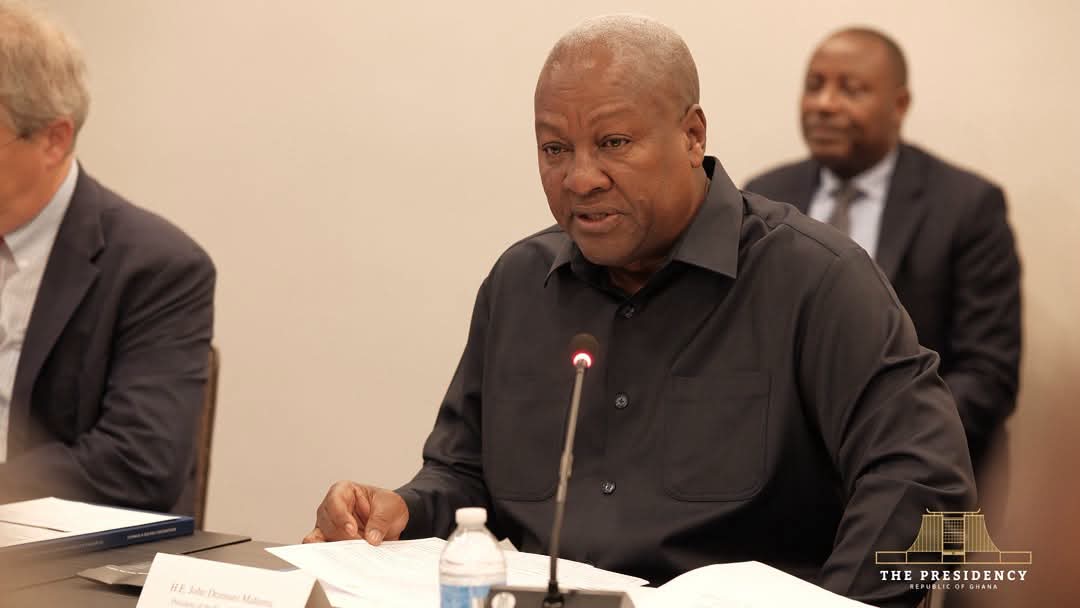
President John Dramani Mahama has called for stronger domestic capacity, effective institutions and sustainable financing as countries in the Global South continue to face growing debt pressures and disruptions in the international development landscape.
Speaking at a Presidential Roundtable organized by the Open Society Foundation in New York on Monday, on the sidelines of the 81st UN General Assembly, President Mahama said the priority for developing nations must be to create jobs, improve public services, build infrastructure and expand opportunities, particularly for young people.
“When I speak about sovereignty in this context, I am speaking about the capacity to act,” President Mahama stated.
He further stressed the need for stronger coordination across government, greater domestic resource mobilisation, sound financial management and institutions capable of delivering measurable results.
“Where an approach proves successful, the next step should be its adoption into public systems, local delivery institutions, and long-term financing models,” he added.
The high-level roundtable brought together presidents and chief executives of major global foundations to discuss sustainable development, financing and strengthening institutions across the Global South.
By Edem Mensah-Tsotorme
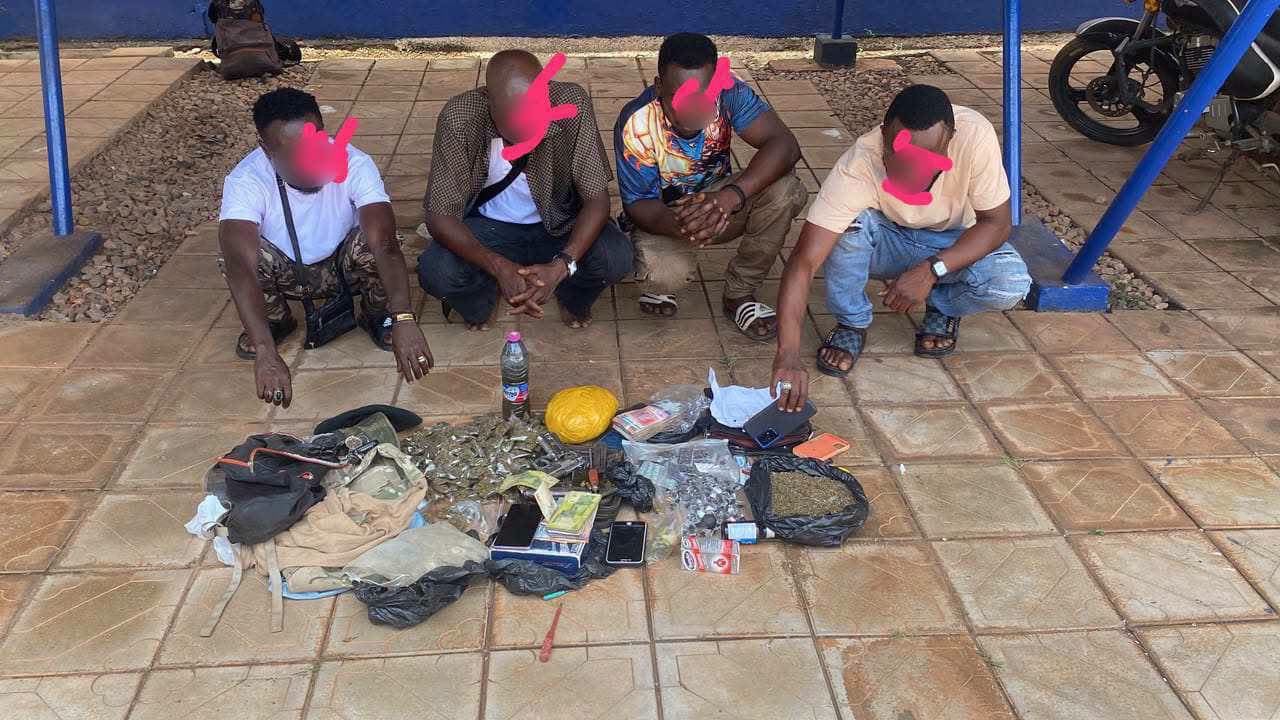
The Northern Regional Police Command has arrested five people during an operation at the Aboabo scraps area in Tamale, where two pistols, ammunition, suspected narcotics and cash were recovered.
The operation was carried out on Monday, September 21, 2026, at about 11:30 a.m. by the Special Operations Team, known as RED MARIA, as part of efforts to clamp down on drug peddling, drug use and other criminal activities in the Tamale Metropolis.
According to the police, the team acted on credible information and proceeded to the Aboabo scraps area, near the forest, where they arrested five suspects.
They were identified as Ibrahim Issahaku, 39; Mohammed John, 28; Mohammed Nawas, 25; Mohammed Osman Awal, 41; and Kwame Boateng, 28.
The police said a search at the residence of Ibrahim Issahaku led to the recovery of two foreign made pistols, two rounds of 9mm ammunition, one parcel of suspected Indian hemp and GH¢1,880 in cash.
The police also found GH¢18,825 concealed inside the motorcycle of Kwame Boateng at the ghetto. The money is suspected to be proceeds from the sale of narcotic drugs.
Other items recovered included 123 wraps of suspected Indian hemp, 12 sachets of 1mg Rohypnol, seven sachets of 250mg Tramadol, 111 wraps of suspected ashes and three motorbikes.
In a statement issued on Tuesday, September 22, 2026, the Northern Regional Police Commander, DCOP Wisdom Lavoe, said the suspects and the exhibits had been handed over to the Regional Drug Law Enforcement Unit for further investigation and the necessary action.
He added that the Regional Command would continue to conduct intelligence led operations to disrupt drug related activities and other criminal activities in the region.
By: Jacob Aggrey

 Entertainment1 week ago
Rhythms On Da Runway returns November 28 with 16th edition themed ‘Unbound’
- News1 week ago
48 Engineer Regiment to be major sub-contractor on Accra-Kumasi Expressway, $2bn ready- Prez Mahama
- Entertainment1 week ago
Ohemaa Mercy’s Tehillah Experience outfit was priestly regalia, not costume – Management clarifies