News
Producer price of cocoa jumps from $3,100 to $5,040 per tonne – Finance Minister


The Government has announced a significant increase in the producer price of cocoa ahead of the 2025/2026 crop season, which opens on Thursday, August 7, 2025.
According to the Minister for Finance, Mr. Cassiel Ato Forson, the new price has been reviewed upwards from US$3,100 per tonne to US$5,040 per tonne.
He stated that it represents a 62.58% increase in dollar terms and aligns with President John Dramani Mahama’s commitment to pay cocoa farmers 70% of the gross Free-On-Board (FOB) value of cocoa.
Mr. Forson, who chairs the Producer Price Review Committee (PPRC), said the decision followed a committee meeting to review pricing for the upcoming season.
He explained that the $5,040 per tonne figure represents exactly 70% of the gross FOB value of US$7,200 per tonne, an improvement over the previous government’s 63.9% payment to farmers under the 2024/25 season.
He noted that the FOB value was calculated using about 100,000 tonnes of cocoa sold at US$2,600 per tonne in the 2023/2024 crop year, coupled with price forecasts for the 2025/2026 season.
He added that at an average exchange rate of GHS10.25 to the US dollar, the increase also affects the Ghana cedi equivalent of cocoa prices.
Mr Forson indicated that farmers will now receive GHS51,660 per tonne, up from GHS49,600. This translates to GHS3,228.75 per bag of 64-kilogram gross weight.
The new pricing regime takes effect from Thursday, August 7, 2025.
By: Jacob. Aggrey

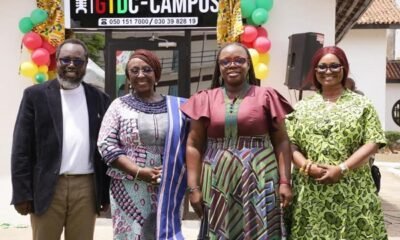

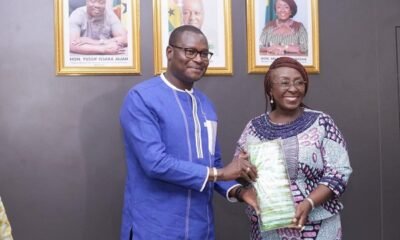




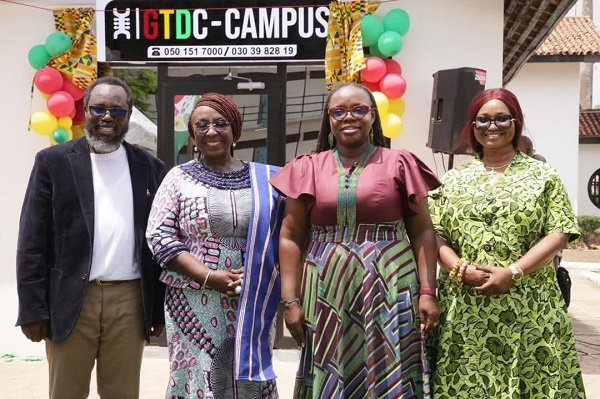
The Ghana Tourism Development Company, GTDC, under the leadership of Prof.Kobby Mensah has launched GTDC Campus Tourism Office at the University of Ghana.
The initiative aims to promote educational and domestic tourism by providing structured campus tour experiences showcasing key heritage sites, including the Archaeology Museum and the School of Performing Arts.
It will also offer students their first travel experience across the continent and inculcate in them love to visit Ghana’s heritage sites.
Addressing the gathering at the launch yesterday, the Minister of Tourism, Culture and Creative Arts, Abla Dzifa Gomashie, described tourism as a vehicle for education and heritage preservation, stressing that the sector must inspire citizens to value and protect national culture for future generations.
The minister highlighted tourism’s connection to disciplines such as history, the arts, economics and environmental science.
The minister further noted that the private sector is the engine of tourism economy, adding that the engines require fuel, which is talents.” by investing in these young people today, you are securing the quality, the innovation and competitiveness of our own industry for tomorrow.
She added that the establishment of the office represents a deliberate investment in the intellectual capital of the country.
The GTDC boss, Prof.Kobby Mensah, said,”at GTDC, we believe that if our tourism has to be sustainable, we have to promote domestic tourism and a very big part of it is getting students to appreciate tourism and helping them to organise tours.”
He added that the University of Ghana itself is a huge heritage site which must be explored.
Prof.Kobby Mensah noted that the initiative, which is one of many to be established across the country, is a joint partnership between GTDC and University of Ghana.
The Vice Chancellor of the University, Prof.Nana Aba Appiah Amfo, said the University is a custodian of heritage which goes beyond the structures and welcomed the establishment of the first Campus Tourism Office.
She was optimistic that the office would be put to good use to achieve the intended purpose.
The launch brought together Stakeholders reaffirming their commitment to nurturing future tourism and hospitality professionals.
By Edem Mensah-Tsotorme
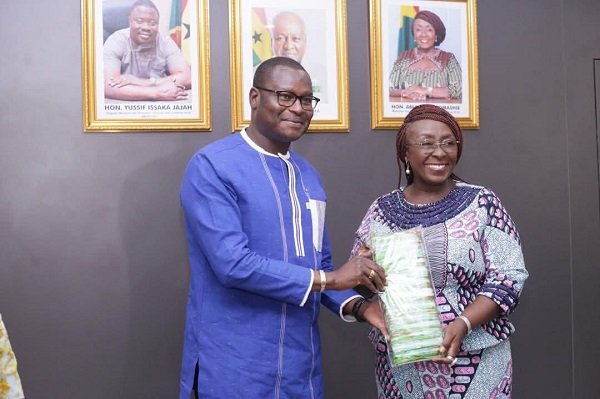
Ghana has officially accepted an invitation to serve as Guest Country at Burkina Faso’s 22nd National Culture Week in Bobo-Dioulasso from April 22 to May 2, 2026.
The invitation was extended by Burkina Faso’s Minister of Communication, Culture, Arts and Tourism, Gilbert Noël Ouédraogo, accompanied by the Ambassador of Burkina Faso to Ghana, H.E. David Kabré.
Receiving the delegation, Abla Dzifa Gomashie reaffirmed Ghana’s commitment to deepening cultural diplomacy and strengthening historic ties between the two nations.
She noted that the festival will create opportunities for young creatives, expand exhibition platforms and promote commercial exchange within the creative sector.
The event will feature cultural performances, a community village and gastronomy fair, an arts market, literary engagements, and a craft and trade fair.
Ghana’s participation is expected to further strengthen bilateral relations between John Dramani Mahama and Ibrahim Traoré, while fostering collaboration within the creative ecosystems of both countries.