News
President Mahama visits tidal waves victims in Volta region, pledges swift action

- /home/u249204778/domains/spectator.com.gh/public_html/wp-content/plugins/mvp-social-buttons/mvp-social-buttons.php on line 27
https://spectator.com.gh/wp-content/uploads/2025/03/FB_IMG_1741343619152-960x600.jpg&description=President Mahama visits tidal waves victims in Volta region, pledges swift action', 'pinterestShare', 'width=750,height=350'); return false;" title="Pin This Post">
- Share
- Tweet /home/u249204778/domains/spectator.com.gh/public_html/wp-content/plugins/mvp-social-buttons/mvp-social-buttons.php on line 72
https://spectator.com.gh/wp-content/uploads/2025/03/FB_IMG_1741343619152-960x600.jpg&description=President Mahama visits tidal waves victims in Volta region, pledges swift action', 'pinterestShare', 'width=750,height=350'); return false;" title="Pin This Post">
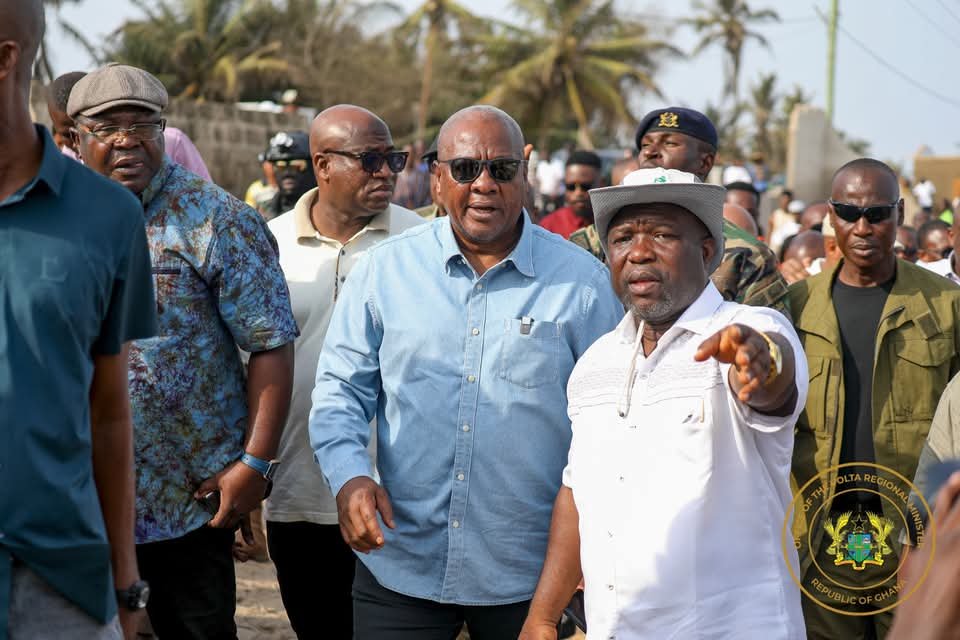
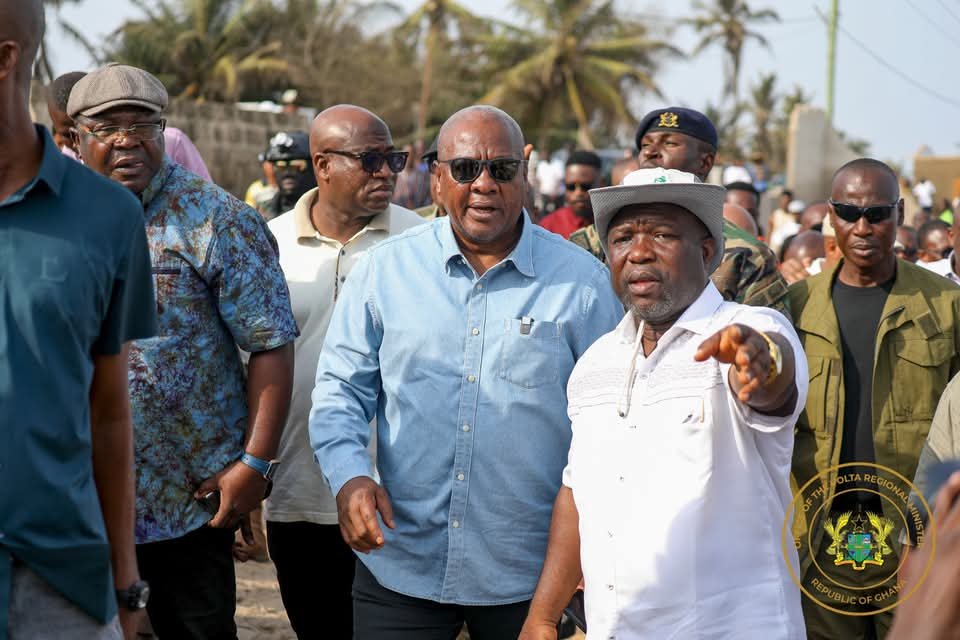
President of the Republic of Ghana, John Dramani Mahama, on March 6, 2025, visited victims of the recent tidal waves disaster in Agavedzi, Salakofe, and Amutinu to assess the extent of the devastation and expressed his solidarity with the affected communities.
The President was welcomed and briefed by the Regional Minister, James Gunu.
Accompanied by key government officials and Members of Parliament, President Mahama assured residents of immediate intervention to alleviate their suffering. 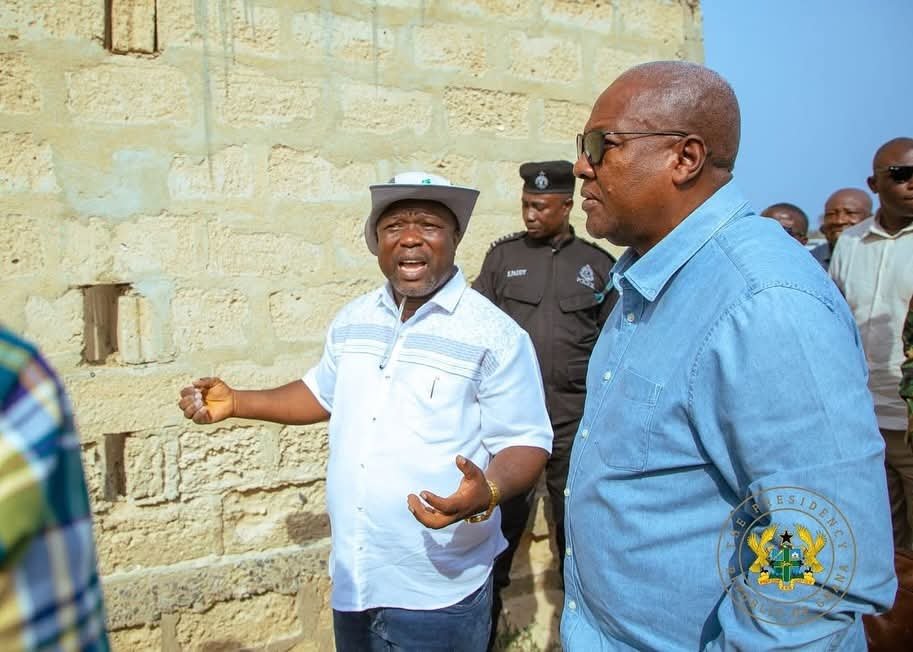
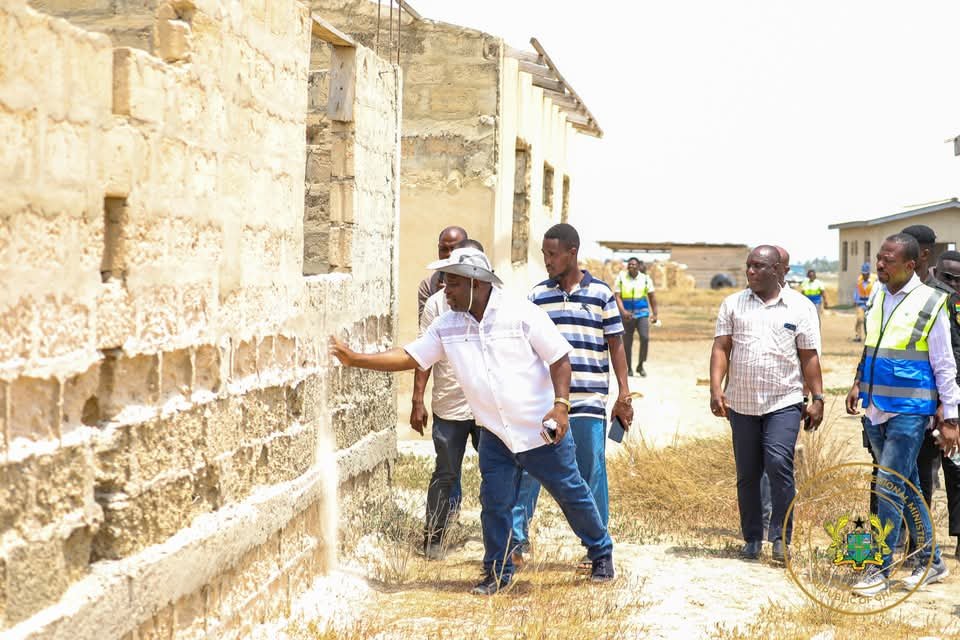
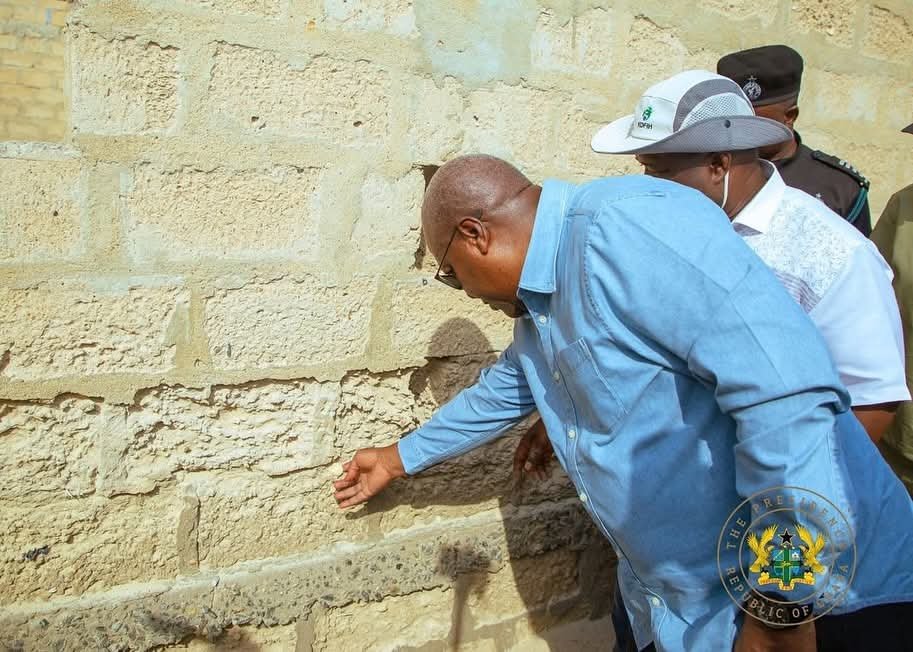
President Mahama reassured the victims that his government remains committed to finding a lasting solution to the recurrent tidal waves crisis.
He announced that Phase 2 of the Blekusu Sea Defense Project, which will cover Agavedzi, Salakofe, and Amutinu, will be included in the national budget set to be released in the coming days.
Additionally, he promised to provide decent accommodation for those displaced by the disaster.
The President also highlighted some of the relief efforts and donations made by key personalities and organizations to support the victims.
They include, Kwame Governs Agbodza, Minister for Roads and Highways (250 bags of rice), Ibrahim Mahama, GHC 100,000 and Volta Caucus of MPs, GHC 100,000.
NADMO also donated several relief items, including 500 bags of rice, 200 cartons of cooking oil, 100 cartons of soap, 30 cartons of mosquito coils, 300 blankets, 300 plastic buckets, cups, and plates.
During his tour of the affected areas, President Mahama also inspected the ongoing Ghana Gas Project and raised serious concerns over its execution.
He noted that the contractors had done shoddy work, questioning the quality and durability of the project.
Additionally, he pointed out that the site where the building had been constructed is prone to flooding, especially during the rainy season, which could pose serious risks in the future.
Residents welcomed the President’s visit with gratitude and expressed hope that the promised interventions would be swiftly implemented to prevent further devastation.
They called for urgent government action to protect their homes and livelihoods from future tidal waves.
With this visit, President Mahama reaffirmed his commitment to the people of the Volta Region, pledging that his administration will prioritize their safety, infrastructure needs, and overall well-being.






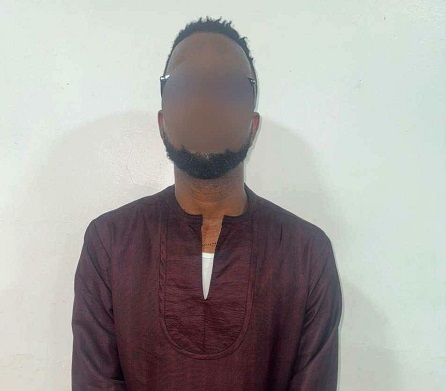
The Ghana Police Service has arrested a man suspected of running a romance scam that targeted women with false marriage promises, blackmail, and the non-consensual sharing of intimate images.
The suspect, Nana Yaw Bonsu Kwarteng, was arraigned alongside Sally Akosua Amoasah before the Accra Circuit Court 1 on charges of conspiracy to commit crime, defrauding by false pretences, and non-consensual sharing of intimate images.
According to preliminary investigations, Kwarteng posed as a pastor conducting online church services on Instagram. He allegedly told women that “God had revealed” they were his future wives.
To gain their trust, police say he went as far as meeting their families and presenting them with promise rings.
Investigators allege the suspect then obtained intimate images of some victims and used them to blackmail them for money.
He is also accused of introducing victims to a fake car tyre business. Under the pretext of shipping and clearing containers of tyres, he allegedly collected thousands of dollars from them before becoming unreachable.
Police further allege that Kwarteng shared the intimate images of some victims with his wife, Sally Akosua Amoasah, who is also accused of threatening the victims.
Seven victims have so far reported the matter to the Police. Investigations indicate the offences date back to 2021.
The court remanded Nana Yaw Bonsu Kwarteng into Police custody to reappear on August 6, 2026. Sally Akosua Amoasah was granted bail.
The Ghana Police Service says it continues to receive complaints from other possible victims.
The Service is urging anyone who may have had similar encounters with the suspect to report to the nearest Police station to assist with ongoing investigations.
By Edem Mensah-Tsotorme
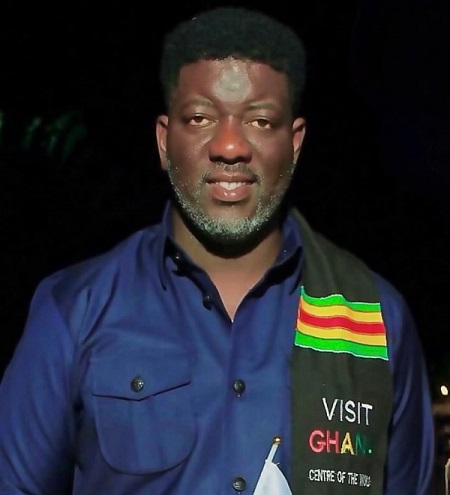
Ghana’s tourism industry is in mourning following the sudden death of Prince Anthony Bart-Appiah, a pioneering figure credited with helping to reconnect the African diaspora to the continent.
Prince Anthony passed away in the early hours of Saturday, July 26, 2026, at his private residence in Spintex, Accra.
He was instrumental in the development and promotion of “The Year of Return,” the flagship tourism campaign that invited members of the African diaspora to return to Ghana in 2019.
The initiative is widely regarded as a turning point that boosted Ghana’s tourism numbers and strengthened cultural ties with Black communities across the world.
Beyond his work with the GTA, Prince Anthony was the Chief Exexutive Officer (CEO) of Bridgezone, an agency dedicated to showcasing Africa to Western audiences and fostering cultural and business connections between the continent and the diaspora.
Colleagues describe him as passionate, strategic, and committed to telling authentic African stories that drive tourism, investment, and pride.
Widely known as Prince Anthony, he served as a Board Member of the Ghana Tourism Authority from 2025 to date.
A former British Army officer and a royal of the Akwamu clan, he brought discipline, vision, and a deep sense of heritage to every role he held
Prince Anthony was also a proud father to two teenagers, whom he deeply cherished.
In a statement, the *Ghana Tourism Authority extended its heartfelt condolences to the grieving family, friends, and all sympathizers.
“The tourism industry has lost a pioneering figure and a vital link to the diasporan community,” the statement read.
The statement further added that “We pray for strength for the family during this difficult time.”
Tributes have since poured in from tourism stakeholders, creatives, and diasporan groups who say Prince Anthony’s legacy will continue to shape how the world sees and experiences Ghana.
By Edem Mensah-Tsotorme