News
Persons with albinism call for specialised healthcare


Mr Gomez Agbodo, the Secretary to the Persons with Albinism in the Ketu South Municipality of the Volta Region, has appealed for an urgent establishment of a dedicated healthcare support systems for this vulnerable group across the country.
He said persons with albinism in Ketu South and other parts of the country continued to face serious challenges in accessing specialised and quality healthcare, particularly skin and eye care, exposing them to life-threatening conditions such as skin cancer and visual impairment.
Mr Agbodo made the appeal during a New Year interaction, organised by Madam Abla Dzifa Gomashie, the Member of Parliament (MP) for Ketu South, which brought together Persons with Disabilities and other vulnerable groups in the Municipality.
He noted that due to the unique genetic condition of persons with albinism, they required consistent medical attention, early diagnosis and specialised treatment, which were often unavailable or poorly handled in many public healthcare facilities.
“The struggle to access proper healthcare as a person with albinism is overwhelming. Many health facilities lack trained personnel who understand our condition, and this affects the quality of care we receive,” he explained.
Mr Agbodo recounted a personal experience where he sought medical care at a local health facility in the municipality but was discouraged by the level of professionalism and understanding exhibited by health workers.
“I once visited a hospital here, but the care was not encouraging. Eventually, I had to travel to a specialised clinic in Togo to receive proper treatment,” he narrated.
He explained that persons with albinism were highly vulnerable to the effects of direct sunlight, insect bites and untreated skin conditions, which could easily develop into skin cancer if not managed early.
“Our skin lacks melanin, so when we are exposed to harsh sunlight or suffer minor skin injuries like mosquito bites without early treatment, it can lead to severe complications, including skin cancer,” he explained.
Furthermore, Mr Agbodo noted that although early medical intervention could prevent most of these conditions, the lack of specialised services, dermatologists, sunscreen support and sensitised healthcare workers, remained a major barrier.
He appealed to Madam Gomashie to raise the concerns of persons with albinism at the national level and advocate for policies that would prioritise their health needs, including the establishment of specialised clinics and training of health professionals.
He expressed hope that with strong advocacy and government commitment, persons with albinism would receive the dignity, protection and healthcare they deserved.
The New Year gathering provided a platform for various vulnerable groups to interact with the MP and share concerns affecting their welfare, inclusion and development. –GNA
Join our WhatsApp Channel now!
https://whatsapp.com/channel/0029VbBElzjInlqHhl1aTU27


Any persistent cough lasting more than two weeks should raise suspicion of tuberculosis (TB), a physician specialist at the Greater Accra Regional Hospital (Ridge), Dr Woedem Tettey, has cautioned.
She said individuals who also experience unexplained weight loss, recurrent night sweats and difficulty in breathing should promptly seek medical attention and test for TB.
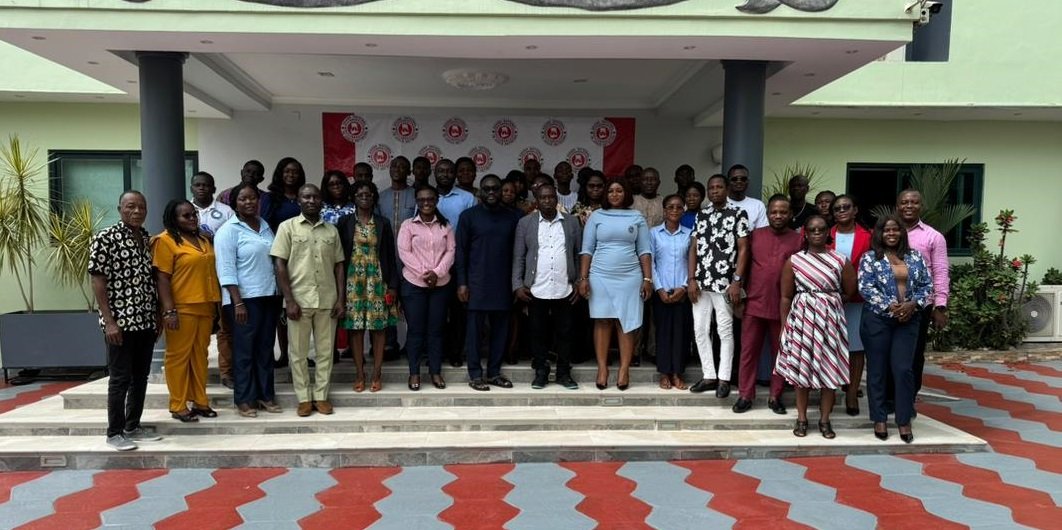
Dr Tettey gave the advice in an interview with The Spectator at a TB capacity-building workshop for journalists in Accra last Thursday.
Although TB is curable, she noted that delayed diagnosis could lead to serious health complications.
“The earlier the disease is detected, the better the outcome,” she said, explaining that prolonged untreated infection allows the bacteria to cause extensive damage to the lungs and other organs.
Dr Tettey said the lungs were the most affected by TB but the disease could also damage other parts of the body, including the spine, lymph nodes, kidneys and the brain.
“So if someone has been coughing for two weeks and is diagnosed early, that person stands a better chance of avoiding complications than someone who has been coughing for a whole year before it is picked up,” she explained.
She emphasised that early diagnosis, adherence to treatment and completion of medication greatly improved survival and recovery.
Dr Tettey also cautioned the public against stigmatising or discriminating against people diagnosed with TB, stressing that the disease was both preventable and curable.
“TB is in the air, so we are all at risk. That is why it is a public health issue. But with appropriate treatment and strict compliance with medication, a person can be cured and live a normal life,” she said.
Tuberculosis is a contagious airborne disease caused mainly by Mycobacterium tuberculosis and primarily affects the lungs. It spreads when people with active TB cough, sneeze or spit, releasing the bacteria into the air.
Health experts advise the public to practise proper cough etiquette, including covering the mouth and nose when coughing, and to seek medical care early when symptoms persist.
By Abigail Annoh
Join our WhatsApp Channel now!
https://whatsapp.com/channel/0029VbBElzjInlqHhl1aTU27

Mental health experts and advocates have called for urgent national attention to the mental well-being of young people, warning that neglecting their struggles could have devastating consequences later in life.
Professor Emmanuel Nii-Boye Quarshie, President of the Association for Suicide Prevention Ghana (GASP), said adolescents and young adults remained the most vulnerable group globally when it came to deaths by suicide, driven by a complex mix of social, economic and personal pressures.
Prof Quarshie made the call on the sidelines of a capacity-building workshop for media practitioners held in Accra on Friday. The workshop was organised by GASP in collaboration with the World Health Organisation (WHO) Ghana Office and the Department of Psychology of the University of Ghana.
The programme sought to raise awareness of the WHO guidelines on suicide reporting and to educate participants on the application of localised reporting guidelines within the Ghanaian context.
Prof Quarshie noted that while bullying existed in earlier generations, today’s youth faced additional challenges such as cyberbullying and the pressure of unrealistic lifestyles portrayed on social media.
“Many of our young people are losing their self-esteem and sense of self-worth in silence, particularly in the virtual world,” he said.
“Unaddressed mental health challenges in the early years often persist into adulthood with serious consequences.”
He explained that evidence showed most mental health conditions began early in life and that failure to intervene promptly could lead to crises marked by hopelessness and loss of meaning, sometimes with fatal outcomes.
Worsening economic conditions, unemployment, poverty and difficulties in accessing education were additional stressors confronting young people, he said, adding that even families benefiting from the Free Senior High School programme still struggled to provide basic support for their children.
Prof Quarshie therefore called for deliberate efforts to build resilience, strengthen life-skills education and introduce safeguards within the digital space to protect young people’s mental health.
Sharing a personal account, Dr Pokua Osei Yeboah, who lost her son to suicide, stressed the importance of open and consistent communication between parents and their children.
She said many parents failed to engage their children in honest one-on-one conversations, often missing warning signs until it was too late.
“Checking in is very important. We need to ask questions about their lives, their struggles, school, relationships and whether they are being bullied,” Dr Osei Yeboah said.
“Parents should also ask directly if their children are having thoughts of harming themselves.”
She admitted that cultural attitudes and traditional parenting styles sometimes discouraged openness, causing emotional distress to be dismissed as weakness.
“Looking back, I didn’t see the danger coming, even though his struggles started when he was an adolescent. He never shared, and I never pushed the conversation. I have learnt my lessons after the passing of my son,” she said.
Dr Osei Yeboah called for increased public education, improved funding for mental health services, reduced stigma and the establishment of a national crisis hotline similar to emergency services available in other countries.
Dr Johnny Andoh-Arthur, Secretary to GASP, highlighted the lack of reliable national data on suicide and attempted self-harm, noting that most available figures were derived from media and police reports.
“As a country, we do not have a dedicated system for recording these cases, and without data, prevention becomes difficult,” he stated.
Dr Andoh-Arthur noted that although Ghana decriminalised attempted suicide about two to three years ago, implementation remained incomplete without adequate investment in mental health services.
He expressed concern that less than two per cent of the national health budget was allocated to mental health, limiting the ability of health facilities to provide timely and effective support.
He stressed that with the decriminalisation, people in crisis should be encouraged to seek help without fear of punishment, which would require well-resourced facilities, trained professionals and accessible services.
While the decriminalisation marked important progress, he said sustained national commitment, data-driven policies and compassionate support systems were necessary to protect young people’s mental health and prevent avoidable loss of life. — GNA
SEO Key Phrase
young people’s mental health in Ghana
SEO Description
Mental health experts warn of rising risks among Ghana’s youth, calling for urgent national action, better funding, data systems and support services to prevent suicide and protect young lives.