Hot!
Pay us compensation for taking our lands – Weija Chiefs

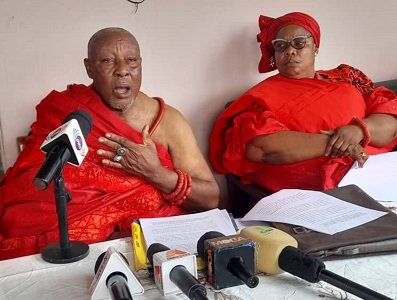
The traditional authority at Weija in the Greater Accra Region has appealed to President Akufo-Addo to as matter of urgency pay the compensation for their lands government acquired since independence.
The traditional leadership again asked the government to release portions of over 13,000 acre lands outside the buffer zone of the Weija water headworks to them for development since the town was currently overpopulated.
Ogbedada Boafo Danyina-Nse I, the Dzaasetse of Weija addressing the media on Wednesday on the issue of the acquisitions, said apart from the compensation of £5,000 paid to Nii Kojo Ababio IV, and then Chief of James Town for acquisition of 4,550 acres of land to develop Weija, no compensation had been paid for subsequent acquisitions.
He said that from 1959 to 1996 governments’ had acquired a total of 15,005.65 acres and an additional 28.56sqml lands from them for various national developments projects without any form of compensation.
“In all these acquisitions,we are yet to receive compensation in that respect and after 44 years, successive governments have still not kept faith with us,” he told the media at Weija,
The Dzaasetse said persistent delay in the payment of compensation due them by the government continued to affect the community which population has grown to the extent that there was the need for infrastructural development to meet the ever increasing demand of the indigenes.
Ogbedada Danyina-Nsre, therefore, asked government to ensure that the compensation was paid to the rightful landowners since other mischievous persons were parading as beneficiaries of the compensations.
On the issue of releasing some of the lands which have not been put to use he said this was based on the fact that the town had grown to the extent that there was the need for expansion saying” these acquisitions have made the indigenes squatters in their own God-given land.”
By Spectator Reporter


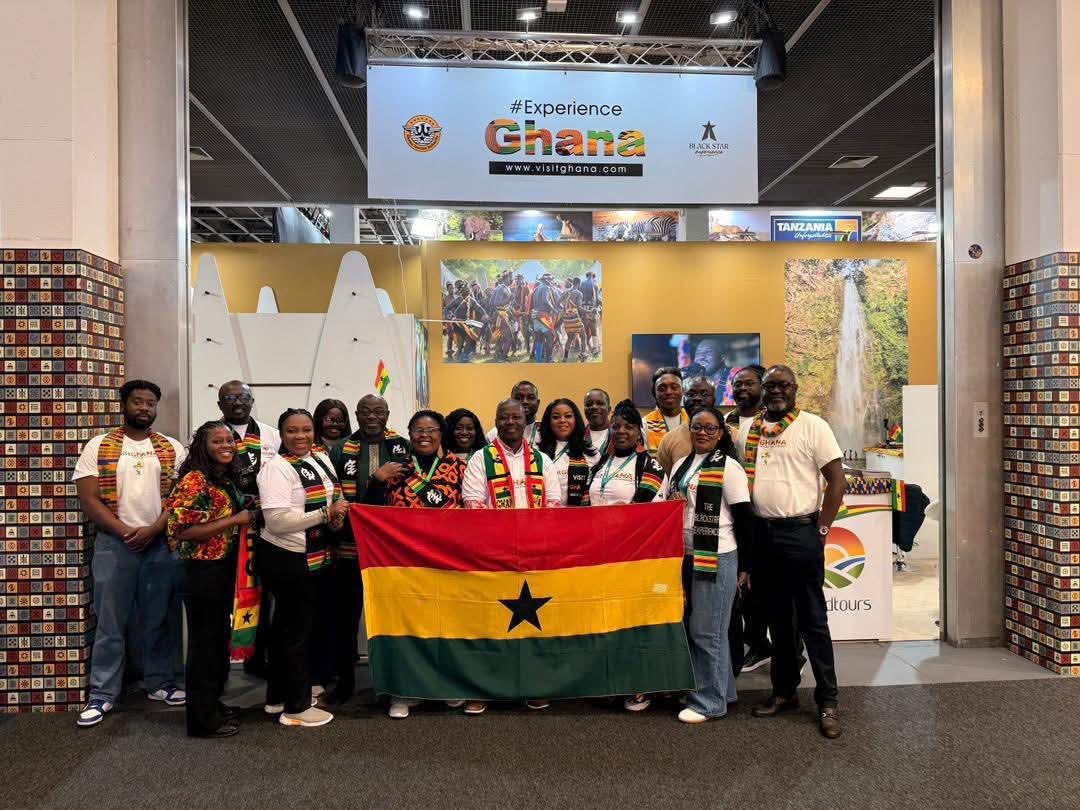
Ghana Tourism Authority is leading Ghana’s participation at ITB Berlin, which opened in Berlin with a vibrant national pavilion highlighting Ghana’s rich cultural heritage, tourism destinations and investment opportunities.
March 5 has been designated as Ghana Day, a special platform to promote Ghana’s languages, cuisine, Kente, festivals and business prospects to the global tourism community. The stand has already drawn strong interest with traditional arts and crafts displays, immersive multimedia presentations and popular Ghanaian snacks.
Seven private-sector players are exhibiting alongside government officials as part of efforts to deepen trade partnerships, expand market access, and attract investment across the hospitality, heritage tourism, ecotourism, and creative arts sectors.
Ahead of the official opening, the Ghana delegation also engaged young Ghanaian investors in Germany in collaboration with V Afrika-Verein and the Ghana Embassy, strengthening diaspora investment linkages and highlighting opportunities within the tourism value chain.
Ghana’s coordinated presence at ITB Berlin 2026 reinforces its strategy to position the country as the Gateway to Africa and a competitive destination for leisure travel and global investment.
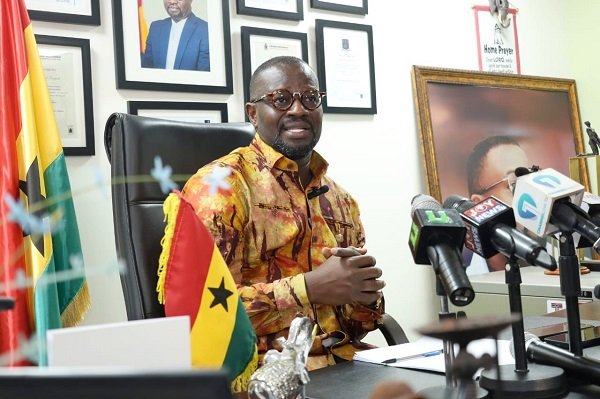
The Member of Parliament for Nsawam Adoagyiri, Frank Annoh Dompreh, has expressed concern over delays in the release of the District Assemblies Common Fund, warning that the situation is stalling development across the country.
On his facebook page, he described as a matter of urgent national importance, the Minority Chief Whip pointed to what he sees as a growing crisis of unpaid contractors, abandoned projects, and halted infrastructure works in many districts.
He noted that several communities are grappling with half completed schools, unfinished health facilities, abandoned markets, deteriorating roads, and stalled sanitation projects.
According to him, many contractors who have executed projects for district assemblies have not been paid, forcing some construction firms to demobilise from sites while workers lose their jobs.
He stressed that the District Assemblies Common Fund is not a discretionary allocation but a constitutional requirement under Article 252 of the 1992 Constitution, intended to support development at the local level.
In his view, years of delayed releases and accumulated arrears have weakened district development financing and disrupted projects meant to improve living conditions in communities.
He further argued that some payments made in recent years were largely the settlement of old debts rather than funding for new or ongoing projects, a situation he believes has affected contractor confidence and local economic activity.
He described the issue as more than a budgetary challenge, characterising it as a development emergency and a governance concern.
He therefore urged the appropriate authorities to pay outstanding DACF arrears, settle contractors who have completed their work, and ensure that transfers to districts are automatic and predictable.
He maintained that decentralisation can only succeed when district assemblies receive adequate and timely funding to carry out development projects.
He emphasised that stalled projects directly affect ordinary citizens, since they rely on such infrastructure for education, healthcare, transportation, sanitation, and economic activities.
He called for renewed attention to grassroots development, insisting that national progress should not be concentrated only in major cities but extended to all communities.
By: Jacob Aggrey