News
Over 40,000 applied for 7,000 teaching vacancies within 24 hours- Education Minister

- /home/u249204778/domains/spectator.com.gh/public_html/wp-content/plugins/mvp-social-buttons/mvp-social-buttons.php on line 27
https://spectator.com.gh/wp-content/uploads/2026/07/WhatsApp-Image-2026-07-28-at-14.44.15.jpeg&description=Over 40,000 applied for 7,000 teaching vacancies within 24 hours- Education Minister', 'pinterestShare', 'width=750,height=350'); return false;" title="Pin This Post">
- Share
- Tweet /home/u249204778/domains/spectator.com.gh/public_html/wp-content/plugins/mvp-social-buttons/mvp-social-buttons.php on line 72
https://spectator.com.gh/wp-content/uploads/2026/07/WhatsApp-Image-2026-07-28-at-14.44.15.jpeg&description=Over 40,000 applied for 7,000 teaching vacancies within 24 hours- Education Minister', 'pinterestShare', 'width=750,height=350'); return false;" title="Pin This Post">
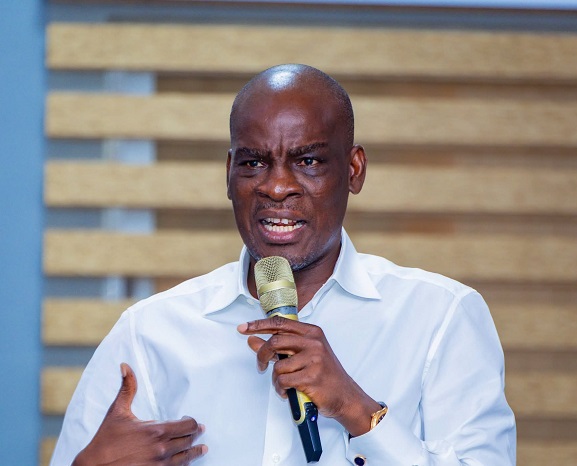
Education Minister Haruna Iddrisu has disclosed that more than 40,000 people applied for 7,000 teaching vacancies within 24 hours, describing the situation as a major challenge for the government.
According to him on Channel one TV in the July 27, 2026, the Ministry of Education currently has financial clearance from the Ministry of Finance to recruit only 7,000 teachers this year.
“I have applications within 24 hours of over 40,000. What can you do? I don’t have the magic wand,” Mr Iddrisu stated during a media engagement.
He explained that although Ghana needs between 50,000 and 90,000 teachers to fill staffing gaps nationwide, the government must recruit within the limits of the public sector wage budget.
He noted that other sectors, including health and the wider public service, also require recruitment, making it impossible to employ all qualified teacher applicants immediately.
Mr Iddrisu further revealed that the government plans to recruit an additional 8,000 teachers in 2027 as part of a phased recruitment exercise announced by President John Dramani Mahama.
He said the second cohort would begin work around April 2027, while another 8,000 teachers are expected to be recruited later in the year.
“The President announced that we can stagger recruitment of 16,000 teachers in two phases of 8,000 and 8,000,” the minister explained.
He added that the phased approach would help reduce the teacher deficit gradually.
Mr Iddrisu disclosed that he had earlier requested approval to recruit 50,000 teachers before the 2025 budget was prepared, but only 7,000 positions were approved.
“I made a case for 50,000 teachers, and I got only 7,000. So that is the challenge,” he stated.
Meanwhile, concerns have emerged over the Ghana Education Service recruitment portal.
A listener who participated in the programme alleged that some applicants uploaded their certificates, including newly issued certificates, but the portal later indicated that no certificate had been uploaded.
The listener further claimed that the portal was opened and closed within 24 hours, which allegedly affected many qualified applicants.
The listener questioned the transparency of the recruitment process, arguing that some applicants were rejected without clear explanations.
By: Jacob Aggrey




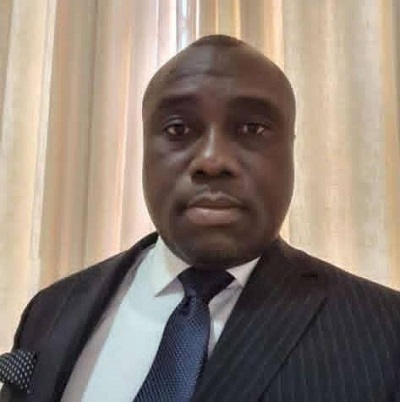
The Director of Legal Affairs of the New Patriotic Party (NPP), Gary Nimako Marfo, has questioned who will bear the cost of conducting presidential and parliamentary primaries following the Supreme Court’s ruling on the party’s delegate system.
Speaking to journalists, Mr. Nimako Marfo said he would not immediately comment on the ruling, adding that he wanted to wait for the full details before sharing his views.
“I don’t want to comment on it now. Let’s wait,” he said.
When asked about the Supreme Court’s decision that all members in good standing should vote in party elections, he shifted attention to the financial implications of implementing the ruling.
According to him, allowing all members in good standing to vote would increase the cost of organising internal party elections.
He questioned who would pay for the expanded electoral process.
“Who is going to pay for the cost of the elections?” he asked.
When a journalist suggested that political parties would bear the cost, Mr. Nimako Marfo replied, “Let’s wait and see.”
The comments come after the Supreme Court ruled that political parties should allow all members in good standing to vote in their internal elections, a decision that is expected to expand participation but also increase the financial and logistical demands of organising presidential and parliamentary primaries.
By: Jacob Aggrey
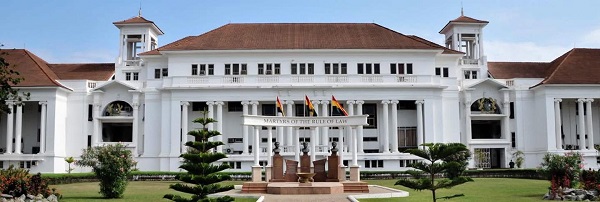
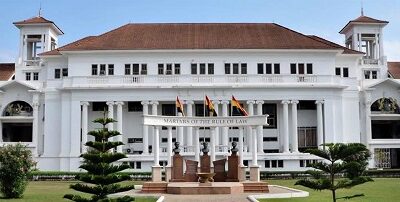
The Supreme Court of Ghana has declared the delegate system used by political parties to elect presidential and parliamentary candidates unconstitutional.
In a 5-2 majority decision delivered, the Court ruled that the long-standing system violates democratic principles and ordered all political parties to ensure every registered, card-bearing member participates in presidential and parliamentary primaries.
The ruling brings to an end decades of internal party elections conducted by a limited number of delegates.
The suit was filed by former Minister for Environment, Science, Technology and Innovation, Professor Kwabena Frimpong-Boateng; veteran politician Dr. Nyaho Nyaho-Tamakloe; and former Minister for Lands and Forestry, Dr. Christine Amoako-Nuamah.
The plaintiffs argued that the delegate system created inequality among party members by granting voting rights to a privileged minority while excluding ordinary members in good standing.
They told the Court that restricting voting rights to delegates was inconsistent with the democratic principles enshrined in the 1992 Constitution.
The Attorney-General’s Department supported the suit and urged the Court to adopt a “one member, one vote” approach.
In its submission, the State argued that political parties perform an important public function in Ghana’s democratic framework and that their internal electoral processes must reflect constitutional values of equality, participation and universal suffrage.
The Attorney-General further submitted that expanding voting rights to all registered members would strengthen accountability and deepen internal democracy within political parties.
The judgment means that going forward, presidential and parliamentary candidates will be selected by all registered members of a political party, instead of by delegates alone.
Political parties are expected to review their constitutions and structures to comply with the Court’s directive ahead of the 2028 general elections.
By Edem Mensah-Tsotorme