News
OSP to charge former finance minister Ken Ofori-Atta and others over SML deal

- /home/u249204778/domains/spectator.com.gh/public_html/wp-content/plugins/mvp-social-buttons/mvp-social-buttons.php on line 27
https://spectator.com.gh/wp-content/uploads/2025/10/WhatsApp-Image-2025-10-30-at-17.13.10.jpeg&description=OSP to charge former finance minister Ken Ofori-Atta and others over SML deal', 'pinterestShare', 'width=750,height=350'); return false;" title="Pin This Post">
- Share
- Tweet /home/u249204778/domains/spectator.com.gh/public_html/wp-content/plugins/mvp-social-buttons/mvp-social-buttons.php on line 72
https://spectator.com.gh/wp-content/uploads/2025/10/WhatsApp-Image-2025-10-30-at-17.13.10.jpeg&description=OSP to charge former finance minister Ken Ofori-Atta and others over SML deal', 'pinterestShare', 'width=750,height=350'); return false;" title="Pin This Post">
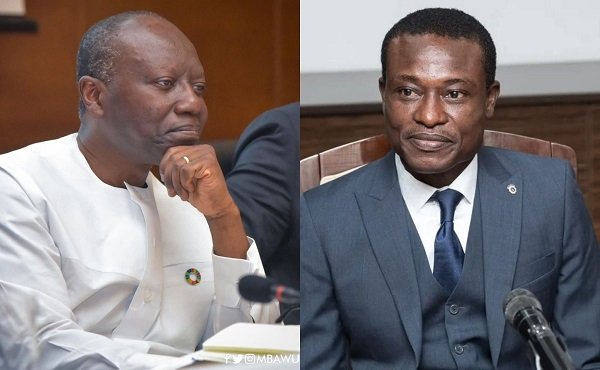
The Office of the Special Prosecutor (OSP) has completed its investigation into the controversial contract between Strategic Mobilization Ghana Limited (SML) and the Ghana Revenue Authority (GRA) and will soon begin legal action against several key figures, including former Finance Minister Ken Ofori-Atta.
At a press briefing in Accra today, Special Prosecutor, Kissi Agyebeng announced that Mr. Ofori-Atta and six others will be charged with various corruption and corruption-related offenses before the end of November 2025.
The individuals to be charged include Ken Ofori-Atta, former Minister for Finance; Ernest Akore, chef de cabinet
to the former Finance Minister; Emmanuel Kofi Nti, former Commissioner-General of GRA; Amishadai Owusu-Amoah, former Commissioner-General of GRA; Isaac Crentsil, former Commissioner of the Customs Division of GRA; Kwadwo Damoah, former Commissioner of Customs and current Member of Parliament for Jaman South; and the General Manager of SML Ghana Limited.
According to Mr. Agyebeng, the investigation found that the government’s agreement with SML was “unnecessarily deceptive” and caused significant financial loss to the state.
The OSP described parts of the deal as misleading, particularly the conversion of SML’s payment from U.S. dollars to Ghana cedis, which the OSP said disguised the true cost.
He revealed that the fixed monthly fee agreed upon in the November 2024 addendum amounted to the cedi equivalent of $1.43 million (₵16.29 million) per month, inclusive of all taxes, at the Bank of Ghana’s exchange rate at the time.
The OSP said the GRA has not made any payments to SML since December 2024 due to the ongoing investigation.
Mr. Agyebeng further stated that the OSP will seek to recover funds lost to the state as a result of the deal.
In addition, SML will be made to refund ₵125 million, described as “unjust enrichment” money the company received unfairly from the state.
Explaining the decision, the Special Prosecutor said the refund amount was calculated based on the principle of quantum meruit, a legal concept that ensures a person receives fair compensation for benefits conferred, even if the underlying contract is invalid.
He explained that although some of SML’s contracts were unlawfully awarded and services were only partly performed, the company had invested in infrastructure such as setting up and maintaining offices.
The OSP therefore adjusted the refund to reflect the fair value of work done.
The Special Prosecutor also said his office has initiated processes to recover the full financial loss caused to the state from the individuals involved.
Mr. Agyebeng emphasised that the OSP remains committed to holding all public officials and private actors accountable for corruption and abuse of office.
The SML deal, signed under the Ministry of Finance and GRA, was intended to enhance revenue assurance in the petroleum downstream sector but has faced public backlash following allegations of inflated payments and poor performance.
By: Jacob Aggrey







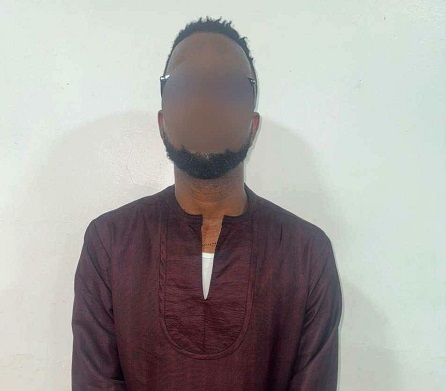
The Ghana Police Service has arrested a man suspected of running a romance scam that targeted women with false marriage promises, blackmail, and the non-consensual sharing of intimate images.
The suspect, Nana Yaw Bonsu Kwarteng, was arraigned alongside Sally Akosua Amoasah before the Accra Circuit Court 1 on charges of conspiracy to commit crime, defrauding by false pretences, and non-consensual sharing of intimate images.
According to preliminary investigations, Kwarteng posed as a pastor conducting online church services on Instagram. He allegedly told women that “God had revealed” they were his future wives.
To gain their trust, police say he went as far as meeting their families and presenting them with promise rings.
Investigators allege the suspect then obtained intimate images of some victims and used them to blackmail them for money.
He is also accused of introducing victims to a fake car tyre business. Under the pretext of shipping and clearing containers of tyres, he allegedly collected thousands of dollars from them before becoming unreachable.
Police further allege that Kwarteng shared the intimate images of some victims with his wife, Sally Akosua Amoasah, who is also accused of threatening the victims.
Seven victims have so far reported the matter to the Police. Investigations indicate the offences date back to 2021.
The court remanded Nana Yaw Bonsu Kwarteng into Police custody to reappear on August 6, 2026. Sally Akosua Amoasah was granted bail.
The Ghana Police Service says it continues to receive complaints from other possible victims.
The Service is urging anyone who may have had similar encounters with the suspect to report to the nearest Police station to assist with ongoing investigations.
By Edem Mensah-Tsotorme
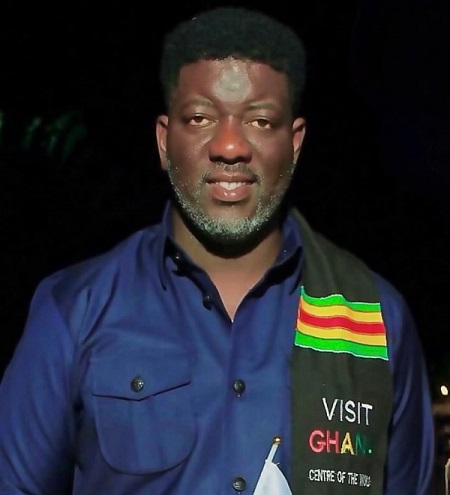
Ghana’s tourism industry is in mourning following the sudden death of Prince Anthony Bart-Appiah, a pioneering figure credited with helping to reconnect the African diaspora to the continent.
Prince Anthony passed away in the early hours of Saturday, July 26, 2026, at his private residence in Spintex, Accra.
He was instrumental in the development and promotion of “The Year of Return,” the flagship tourism campaign that invited members of the African diaspora to return to Ghana in 2019.
The initiative is widely regarded as a turning point that boosted Ghana’s tourism numbers and strengthened cultural ties with Black communities across the world.
Beyond his work with the GTA, Prince Anthony was the Chief Exexutive Officer (CEO) of Bridgezone, an agency dedicated to showcasing Africa to Western audiences and fostering cultural and business connections between the continent and the diaspora.
Colleagues describe him as passionate, strategic, and committed to telling authentic African stories that drive tourism, investment, and pride.
Widely known as Prince Anthony, he served as a Board Member of the Ghana Tourism Authority from 2025 to date.
A former British Army officer and a royal of the Akwamu clan, he brought discipline, vision, and a deep sense of heritage to every role he held
Prince Anthony was also a proud father to two teenagers, whom he deeply cherished.
In a statement, the *Ghana Tourism Authority extended its heartfelt condolences to the grieving family, friends, and all sympathizers.
“The tourism industry has lost a pioneering figure and a vital link to the diasporan community,” the statement read.
The statement further added that “We pray for strength for the family during this difficult time.”
Tributes have since poured in from tourism stakeholders, creatives, and diasporan groups who say Prince Anthony’s legacy will continue to shape how the world sees and experiences Ghana.
By Edem Mensah-Tsotorme