News
NPP began losing its core in 2007 after Akufo Addo choice- Rashid Tanko Computer


- /home/u249204778/domains/spectator.com.gh/public_html/wp-content/plugins/mvp-social-buttons/mvp-social-buttons.php on line 27
https://spectator.com.gh/wp-content/uploads/2026/01/WhatsApp-Image-2026-01-15-at-16.05.18.jpeg&description=NPP began losing its core in 2007 after Akufo Addo choice- Rashid Tanko Computer', 'pinterestShare', 'width=750,height=350'); return false;" title="Pin This Post">
- Share
- Tweet /home/u249204778/domains/spectator.com.gh/public_html/wp-content/plugins/mvp-social-buttons/mvp-social-buttons.php on line 72
https://spectator.com.gh/wp-content/uploads/2026/01/WhatsApp-Image-2026-01-15-at-16.05.18.jpeg&description=NPP began losing its core in 2007 after Akufo Addo choice- Rashid Tanko Computer', 'pinterestShare', 'width=750,height=350'); return false;" title="Pin This Post">
Acting Chief Executive Officer of the Ghana Investment Fund for Electronic Communications GIFEC and Deputy Director of Elections for the National Democratic Congress NDC Rashid Tanko Computer has argued that the New Patriotic Party NPP began losing its core values in 2007.
He traced the decline to the party’s decision to elect Nana Addo Dankwa Akufo Addo as flag bearer instead of Alan Kyerematen.
Mr Tanko Computer described the NPP formed in 1992 as a strong and disciplined political force that posed a serious challenge to the NDC.
He recalled that even after losing the 1992 presidential election, the NPP remained formidable, producing a well known report on the elections and maintaining a strong presence in national politics despite boycotting the parliamentary polls at the time.
According to him, figures such as Professor Albert Adu Boahen former President J A Kufuor and other early party leaders helped build a party that was respected even while in opposition.
He noted that the performance of NPP MPs after entering Parliament in 1996 made governance difficult for the NDC and contributed to the party’s victory in the 2000 elections.
However, Mr Tanko Computer stressed that things began to change in 2007 during the NPP flag bearer race.
He explained that the emergence of 17 aspirants alone was not the issue, but rather the calibre of candidates and the final choice the party made.
He argued that Alan Kyerematen was widely seen as a strong and popular candidate at the time, adding that within the NDC there was concern about facing him in a general election.
Mr Tanko Computer claimed that the election of Nana Akufo Addo marked the beginning of deep internal tensions within the NPP.
He referenced warnings he attributed to then President J A Kufuor, who cautioned party leaders against choosing a candidate who would bring tension and unrest to the party.
According to him, those warnings were ignored, leading to internal conflicts, including the removal of party executives, which he described as evidence of growing instability.
Mr Tanko Computer further argued that the NPP has now become fragmented, with what he described as active and virtual members within the party.
He explained that the virtual group refers to members who feel sidelined and disconnected from the current leadership.
He criticised the party’s recent strategy of electing a presidential candidate before reorganising the party, describing it as unusual and unhealthy.
He questioned how party executives who led the NPP to secure only 38 percent in the 2024 elections could oversee such a process without first rebuilding the party.
Mr Tanko Computer said these developments show how far the NPP has moved from the strong and united party it once was.
By: Jacob Aggrey



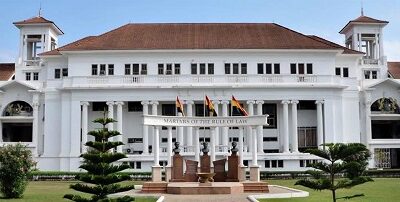



The Director of Legal Affairs of the New Patriotic Party (NPP), Gary Nimako Marfo, has questioned who will bear the cost of conducting presidential and parliamentary primaries following the Supreme Court’s ruling on the party’s delegate system.
Speaking to journalists, Mr. Nimako Marfo said he would not immediately comment on the ruling, adding that he wanted to wait for the full details before sharing his views.
“I don’t want to comment on it now. Let’s wait,” he said.
When asked about the Supreme Court’s decision that all members in good standing should vote in party elections, he shifted attention to the financial implications of implementing the ruling.
According to him, allowing all members in good standing to vote would increase the cost of organising internal party elections.
He questioned who would pay for the expanded electoral process.
“Who is going to pay for the cost of the elections?” he asked.
When a journalist suggested that political parties would bear the cost, Mr. Nimako Marfo replied, “Let’s wait and see.”
The comments come after the Supreme Court ruled that political parties should allow all members in good standing to vote in their internal elections, a decision that is expected to expand participation but also increase the financial and logistical demands of organising presidential and parliamentary primaries.
By: Jacob Aggrey

The Supreme Court of Ghana has declared the delegate system used by political parties to elect presidential and parliamentary candidates unconstitutional.
In a 5-2 majority decision delivered, the Court ruled that the long-standing system violates democratic principles and ordered all political parties to ensure every registered, card-bearing member participates in presidential and parliamentary primaries.
The ruling brings to an end decades of internal party elections conducted by a limited number of delegates.
The suit was filed by former Minister for Environment, Science, Technology and Innovation, Professor Kwabena Frimpong-Boateng; veteran politician Dr. Nyaho Nyaho-Tamakloe; and former Minister for Lands and Forestry, Dr. Christine Amoako-Nuamah.
The plaintiffs argued that the delegate system created inequality among party members by granting voting rights to a privileged minority while excluding ordinary members in good standing.
They told the Court that restricting voting rights to delegates was inconsistent with the democratic principles enshrined in the 1992 Constitution.
The Attorney-General’s Department supported the suit and urged the Court to adopt a “one member, one vote” approach.
In its submission, the State argued that political parties perform an important public function in Ghana’s democratic framework and that their internal electoral processes must reflect constitutional values of equality, participation and universal suffrage.
The Attorney-General further submitted that expanding voting rights to all registered members would strengthen accountability and deepen internal democracy within political parties.
The judgment means that going forward, presidential and parliamentary candidates will be selected by all registered members of a political party, instead of by delegates alone.
Political parties are expected to review their constitutions and structures to comply with the Court’s directive ahead of the 2028 general elections.
By Edem Mensah-Tsotorme