Hot!
NMC should’ve been involved in closure of 4 Bawku radio stations – MFWA


- /home/u249204778/domains/spectator.com.gh/public_html/wp-content/plugins/mvp-social-buttons/mvp-social-buttons.php on line 27
https://spectator.com.gh/wp-content/uploads/2024/02/PHOTO-2024-02-27-10-37-47.jpg&description=NMC should’ve been involved in closure of 4 Bawku radio stations – MFWA', 'pinterestShare', 'width=750,height=350'); return false;" title="Pin This Post">
- Share
- Tweet /home/u249204778/domains/spectator.com.gh/public_html/wp-content/plugins/mvp-social-buttons/mvp-social-buttons.php on line 72
https://spectator.com.gh/wp-content/uploads/2024/02/PHOTO-2024-02-27-10-37-47.jpg&description=NMC should’ve been involved in closure of 4 Bawku radio stations – MFWA', 'pinterestShare', 'width=750,height=350'); return false;" title="Pin This Post">
The Media Foundation for West Africa (MFWA) has expressed reservations about a decision by the National Communications Authority (NCA) to shut down some four radio stations in Bawku over security concerns.
The NCA, in a statement on Saturday, February 24, 2024, announced the shutdown of Bawku FM, Source FM, Zahra FM, and Gumah FM following the recommendation of the Upper East Regional Security Council and the Ministry of National Security.
Speaking to Citi News, the Programmes Officer at the MFWA, Kwaku Krobea Asante, said the NCA should have involved the National Media Commission (NMC), the agency responsible for regulating media content before closing down the stations.
“What we would have wished to have seen is that this whole exercise should have involved the National Media Commission because, essentially, it is the National Media Commission that the constitution gives the powers to oversee the professional and ethical standards of the media.”
“I understand that the NCA has its own provisions and laws to take actions like that, but the precedent that this sets for our press freedom and other similar engagements like this can be a little worrying.”
Meanwhile, the West Africa Center for Counter-Extremism (WACCE) says the NCA’s decision has come too late.
The Executive Director of WACCE, Mutaru Mumuni Muqthar said the closures came too late, considering the harm that the stations’ presenters and panelists have caused in the area.
“This is even too late in terms of the impact with the kind of panelists that have been featured on some of these radio stations in the Bawku area. I think that it is actually late, but it is better that it has come because it can prevent the bad situation from becoming worse, and so I think that this is something we should have had a couple of years ago when the conflict escalated. For this to happen now, we must embrace that and also feature other measures that can help calm the situation.”
Source: Citinewsroom.com



The Tema Regional Police Command has arrested a 32-year-old man for allegedly posing as a soldier and extorting money from unsuspecting members of the public at Ashaiman.
The suspect, identified as Bright Atsu Kudiabor, was arrested by the Ashaiman Police on Wednesday, September 16, 2026, at about 7:00 a.m.
According to the Police, he was arrested at an area known as “I Shall Return”, where he was allegedly parading himself as a soldier and demanding money from people.
The Police said Kudiabor, who is an ex-convict, was initially arrested by personnel of the Ghana National Fire Service in Ashaiman with assistance from other members of the public.
A search conducted on him after he was handed over to the Police reportedly led to the recovery of a set of military camouflage uniform.
The suspect is currently in Police custody and assisting with investigations.
The Tema Regional Police Command said he would be processed for court after investigations are completed.
The Police urged the public to remain vigilant and report anyone who falsely presents themselves as a soldier or a member of another security agency to deceive or extort money from the public.
By: Jacob Aggrey
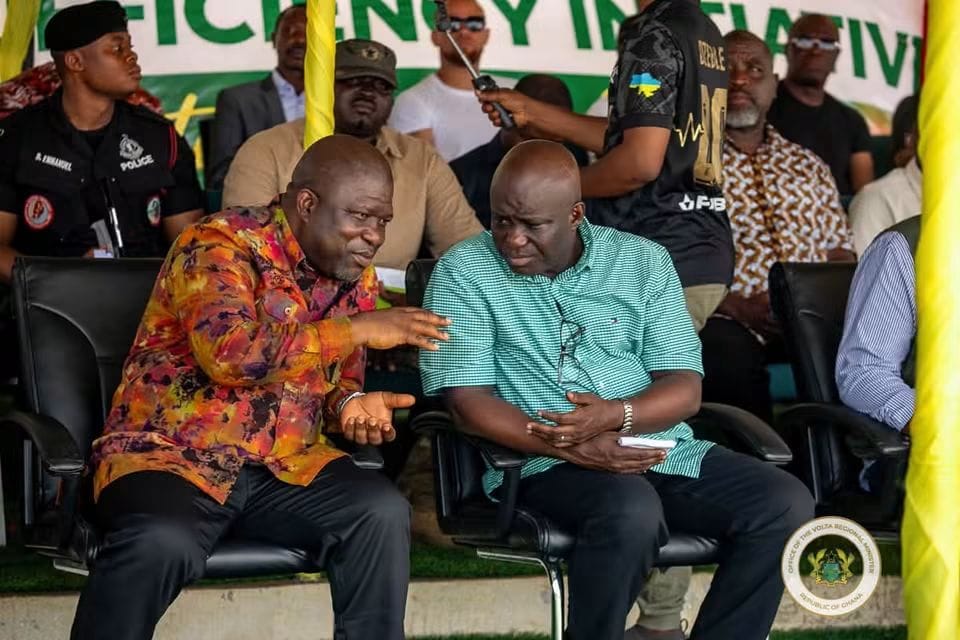
Volta Regional Minister, James Gunu, says the Volta Region holds enormous agricultural potential and efforts must be geared towards connecting farmers to the needed resources to unlock that potential.
He said focus must be on linking farmers to resources, technology, financing and markets to increase production, create jobs and build sustainable livelihoods.
Hon. Gunu made the remarks at the national launch of the Ghana Tomato Self-Sufficiency Initiative (GHATSI) held at Anloga in the Volta Region on Tuesday, September 15.
The initiative, under the theme “Produce at Home. Feed the Nation. Export the Surplus,” seeks to boost local tomato production, processing and marketing while reducing Ghana’s heavy reliance on imported tomatoes.
The launch was attended by the Minister for Food and Agriculture, Eric Opoku, his Deputy, John Setor Dumelo, Feed Ghana Coordinator, Bright Demordzi, Members of Parliament, traditional leaders, MMDCEs, farmers and other stakeholders.
Mr.Gunu expressed appreciation to the Minister for Food and Agriculture for the support announced for the region, including two excavators, 200 cartons of organic fertiliser, and GH¢200,000 for Ms. Kuatudzo Esther Dela, a tomato farmer and processor from Ziope.
He described the initiative as an important step towards making agriculture a stronger driver of food security, job creation and economic growth in the Volta Region.
By Edem Mensah-Tsotorme