Hot!
Missing Titanic sub search in critical phase amid fears over oxygen levels


The huge search for a missing submersible vessel near the wreck of the Titanic has entered a critical stage, as fears mount over the oxygen levels that may be on board.
If the sub is still functional and intact, it may only have low levels of oxygen left based on earlier estimates.
It went missing in a remote area of the North Atlantic on Sunday with a four-day oxygen supply for its crew of five.
And on Thursday many questions remained over how it could be recovered.
The minivan-sized submersible, which was owned and operated by the private company OceanGate Expeditions, is yet to be located. If it is found, it will need to be reached by complex rescue equipment and then brought to the surface in an operation that would likely take hours.
That would need to happen before the oxygen supply runs out and without damaging its structure or endangering those on board.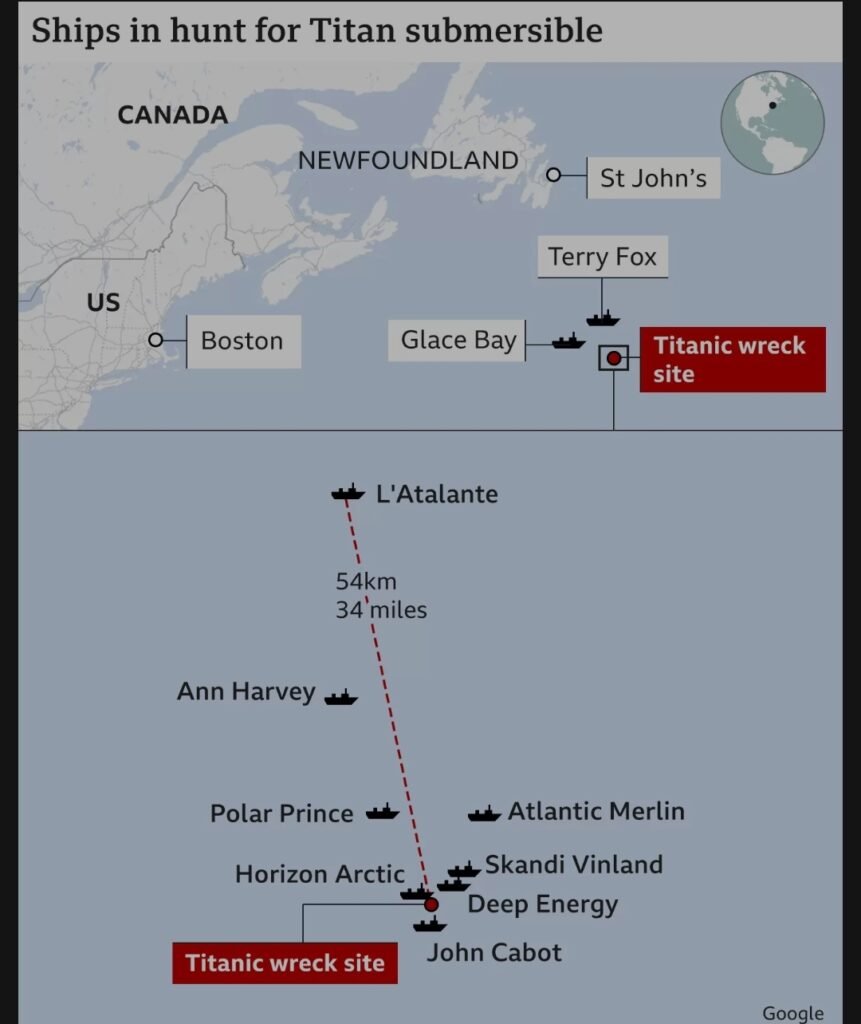
The condition of the vessel and its crew of five is unknown, but the US Coast Guard said the operation remains a rescue mission. “This is a search-and-rescue mission, 100%,” Captain Jamie Frederick told reporters on Wednesday.
There appeared to be a glimmer of hope after officials said undersea noises had been detected by Canadian search planes on Tuesday and Wednesday.
But it is still unclear what these were, and officials said they may not have come from the submersible. Remote-controlled underwater search vehicles (ROVs) were deployed to the area where the sounds were detected but are yet to find anything.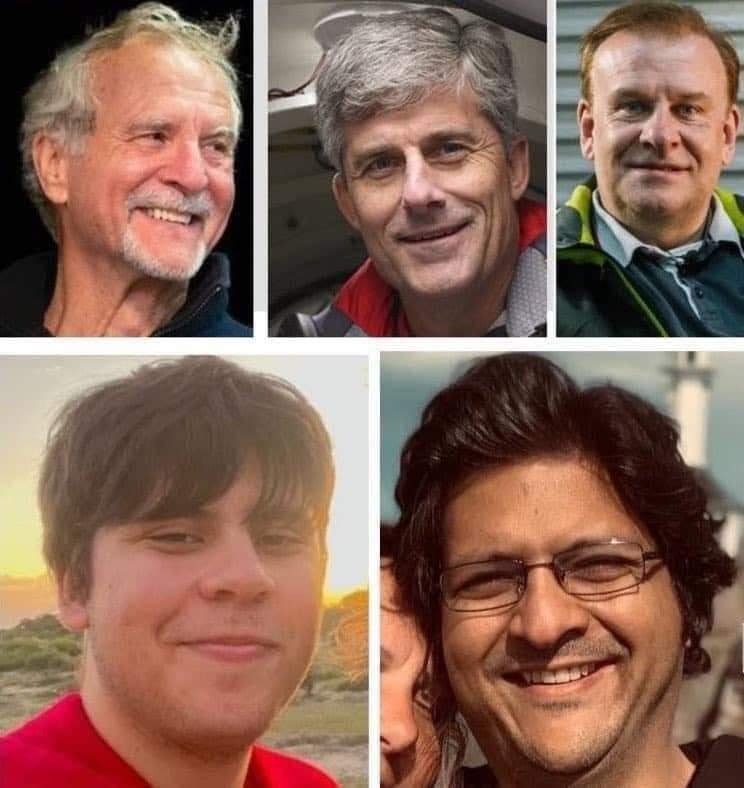
One of the ROVs, deployed from the Canadian vessel Horizon Arctic, reached the ocean floor early Thursday morning. Several more were expected to arrive at the site later in the day, along with more multi-national support.
A French research ship, the Atalante, also arrived in the area on Thursday morning and deployed its own ROV, the US Coast Guard said. That robot is capable of researching depths below the Titanic wreck, which lies about 12,500 ft (3,810m) below the surface, and has experience of surveying the Titanic.
The overall area of sea being scoured is about 26,000 sq km (10,000 sq miles), twice the size of the US state of Connecticut. The area is prone to stormy conditions and poor visibility which makes search operations more challenging, experts say.
On board the 21-foot vessel is British businessman Hamish Harding, British-Pakistani businessman Shahzada Dawood and his son Suleman, former French navy diver Paul-Henry Nargeolet and the CEO of OceanGate – which operates the submersible – Stockton Rush.
“One of the factors that makes it hard to predict how much oxygen is left is that we do not know the rate of the consumption of oxygen per occupant on the sub,” Rear Admiral John Mauger from the US Coast Guard told the BBC.
Dr Ken LeDez, a hyperbaric medicine expert at Memorial University in St John’s, Newfoundland, told the BBC it was possible the crew could survive even as oxygen supplies dwindle, depending on the crew’s fitness and the conditions in the submersible.
While it is impossible to know the exact conditions inside, Dr LeDez said the crew will likely be facing increasing levels of carbon dioxide and could also be dealing with cold temperatures, along with the declining levels of oxygen.
A combination of these factors could lead to hypothermia and a loss of consciousness, he said. But these conditions aren’t necessarily deadly and their metabolisms slowing down because of the cold could help them survive longer, he added.
“They’re very smart… very accomplished people in there,” he said. “If anybody can survive” in it, “it’s these individuals.”
source :BBC



The Ghana National Fire Service (GNFS), Hohoe Municipality Command, has conducted fire safety inspections and public education at selected fuel filling stations within the municipality.
The exercise, held from July 3, 2026 to July 5, 2025 was led by the Municipal Commander, DO III Bismark Hosu-Porbley.
During the inspection, the team assessed the fire safety preparedness of the facilities. Staff were also educated on fire prevention, emergency response procedures, and the proper use of firefighting equipment.
Management of the affected fuel stations expressed appreciation for the exercise and pledged to comply with the recommended safety measures.
The GNFS said the exercise reaffirms its commitment to continuous fire safety awareness and risk reduction to safeguard lives and property.
By Edem Mensah-Tsotorme

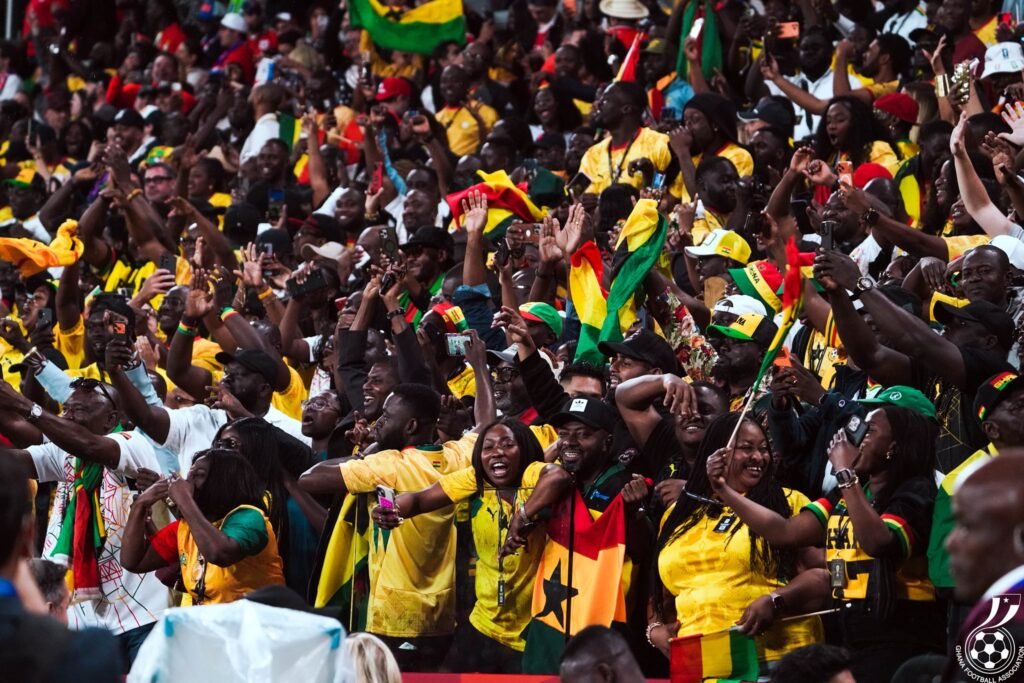
Massive celebrations were recorded countrywide as the Black Stars opened their 2026 World Cup campaign with a 1-0 victory over Panama in Toronto on Wednesday.
Midfielder Caleb Yirenkyi scored the only goal of the match late in the game as he shot in a decent cross from substitute Brandon Asante.



The win gave Ghana a positive start in the competition, placing them in second position behind England, also with three points but with a superior goal aggregate.
After the final whistle, the streets and other viewing centres were turned into partying grounds as fans, mostly clad in the team’s paraphernalia, danced to several World Cup-themed music.
Others blew the vuvuzelas in joyous mood with others putting up a spirited ‘jama’ session.