Hot!
Kwaku Antwi Boasiako in ‘comfortable lead’ with his 12-feet Rasta hair


Unless they want to maintain an afro, most men would visit a barber’s shop, at least once every month, to get a clean shave and haircut.
Even those who admire dreadlocks or Rasta may not have the patience to keep it up to a certain length let alone sustain it for life.
But 58-year-old Mr Kwaku Antwi Boasiako is comfortable with his 12-feet (365.76 cm) long hair which is about twice his own height.
rasta measures 12-feet
When he first visited The Spectator in 2003, the hair, arguably the longest kept by a Ghanaian Rastafarian, was only six-and-half feet long.
The 5.8 feet native of Bekwai in the Ashanti Region is determined to still grow the already longer hair further, as long as he lives.
Origin
Interacting with this paper once again, on Tuesday, Mr Boasiako explained that he became a Rastafarian at 16 years so he could “get closer to God and understand his spiritual being.”
Recounting the genesis of his 37-year-old journey of Rasta hairdo, he said he was exposed to a Pan-African society at St Peter’s Secondary School at Kwahu Nkwatia in the Eastern Region and later decided to transform his natural hair in accordance with the tenets of the group.
He noted that his parents were initially, against the idea of keeping a bushy hair as they thought that decision would interfere with his education but they eventually gave in after he had convinced them.
Education
True to his assurances, Mr Boasiako completed his ‘O’ level at St Peters Secondary School, pursued a private Advanced Level (A-Level) course, and gained admission to do Diploma in Communication Studies at Ghana Institute of Journalism. He later acquired Bachelor of Artsin Administration at University of Ghana, Legon.
He said he could not pursue a post-graduate programme due to financial constraints but he would have loved to study law and defend Rastafarians.
Influence
Mr Boasiako, quoting sections of the Bible throughout the interview, maintained that members of the group defended the spiritual cause of black people regardless of their peculiar outlook.
He said the rise in Pan-Africanism, subtle influence of Bob Marley music, and the other forms of indoctrination by peers deepened his interest in the virtues of Emperor Haile Selassie of Ethiopia who was and is considered the ‘Messiah’.
According to him, his ‘Rasta-man-ship’ was strengthened through prayers as he grew up to realise that there were more spiritual undertones to Rastafarianism than what others perceived.
“Rastafarianism encourages those who believe in the movement to fast and pray for spiritual uplift. You cannot be a real Rasta man without prayers,” he noted, adding that “no other race could maintain Rasta except the black man.”
Discrimination
He admitted that the decision to maintain the Rasta came with “discrimination and frustrations” at the workplace and society as a whole.
“I could not work to my full potential at my former workplace. Eventually I had to leave. They were not giving me the opportunity to work like other people. Sometimes I felt bad and discriminated against because I wanted to practice journalism than any other profession,” he noted.
Since then, he decided to operate his own venture as a real estate agent, however, some sections of the public still mocked at him for sustaining his Rasta hair throughout the years.
Maintenance
Unlike other people, Mr Boasiako revealed that he did not apply any chemical nor went to any special outlet to treat his natural hair which took only five minutes to wash.
“As much as it does not cost you to bath, it does not cost to maintain this hair. I only wash it with warm water and soap to remove dandruff and sometimes I apply lime which acts as natural disinfectant,” he said.
Asked how heavy the thick hair was, he replied: “your hair is like a cloth. When there is water in it, it is heavy, when there is no water, it is light.”
Ridicule
Although social and technological advancement have contributed to the acceptance of Rastafarian culture, Mr Boasiako noted that some people had often asked if he was able to sleep at night.
“I always tell them I have been standing ever since I was born. When I step out of my house, I always pray to God to help me to tolerate all the ridiculous comments people make,” he said.
Advice
Mr Boasiako encouraged young men who aspire to be Rastamen not to perceive the movement from a radical point of view.
“The motive behind this lifestyle is to uplift the spirit. It is not to encourage violence and radicalism. Aspiring Rasta men must “keep themselves neat so people do not confuse them with bad men,” he stressed.
He further argued that Ghanaian ladies must not be carried away by western hairstyles but rather maintain their natural hair and cover it with scarf so they will “look very simple.”
To him, Rastamen were not supposed to shave part of their dreadlock and leave other parts or even dye their hair.
“Some people say they are Rasta so they do not wear shoe or slippers but that is not Rastafarianism,” he added.
Mr Boasiako has two children. He is a member of the Ethiopian Orthodox Church and the Rastafari Council of Ghana, and loves reggae and gospel music.
Indeed, there are other people with longer hairs but he insisted he is in a “comfortable lead.”
By Ernest Nutsugah


The professor who spends his days exploring the intricacies of African languages found himself at the centre of a different kind of lesson on Friday, October 2, 2026. 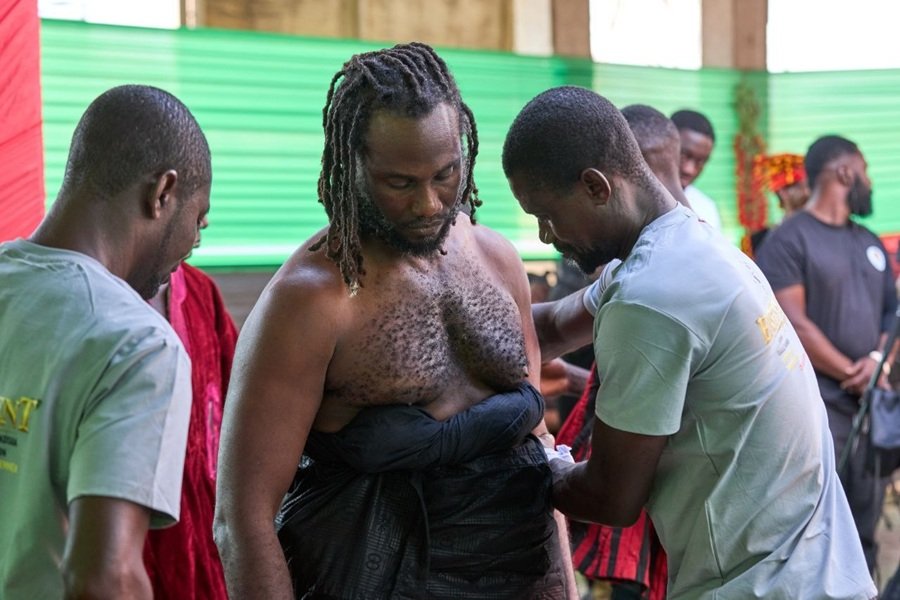
This time, there were no lecture notes, academic arguments or university classrooms. Instead, there was the weight of tradition, the rhythm of a community celebration and the solemnity of an oath at a royal palace.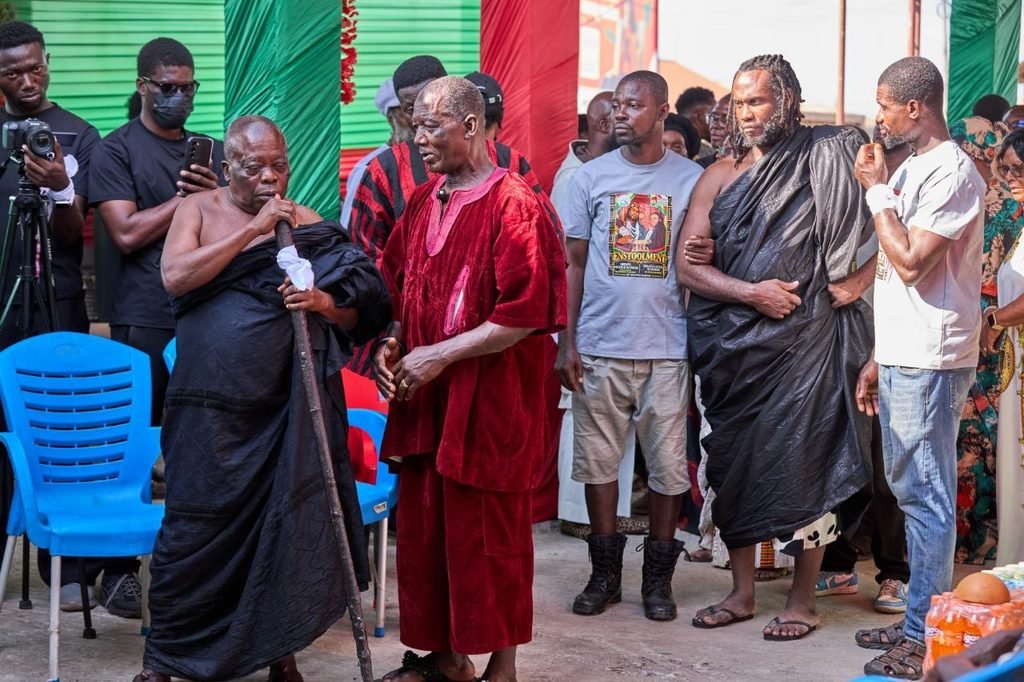
Professor Ọbádélé Kambon, a full Professor of African Linguistics at the University of Ghana, was enstooled as Apagyahene and Sunsum Ɔsahene of Akuapem Mampong in the Eastern Region in a ceremony that brought academia and traditional authority together.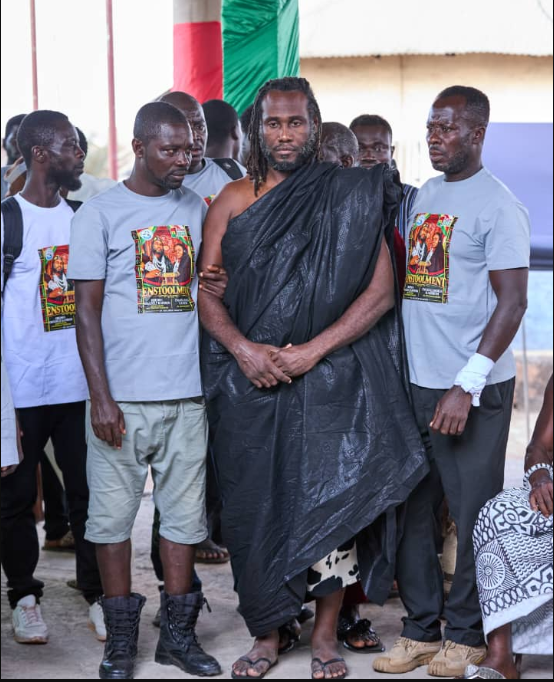
For the professor, the occasion was more than a new title. It was a moment that connected his academic interests in African languages and indigenous knowledge with the living traditions of an Akan community.
The day’s events unfolded through a series of customary observances. Kambon was first taken to the compounds of the Ɔkyeamehene and Gyasehene, where the preparations for his installation continued.
Then came the application of hyire, the white kaolin powder associated with traditional rites.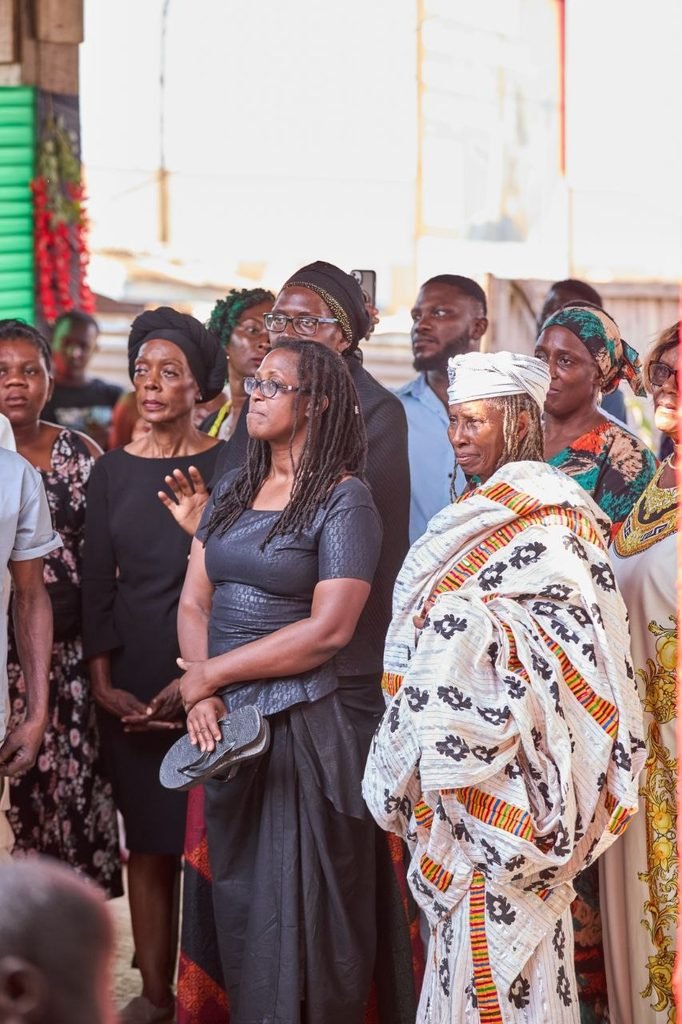
With the customary proceedings underway, the new chief was lifted onto the shoulders of celebrants and carried along the main thoroughfare of Akuapem Mampong.
The procession transformed the streets into a public stage for a ceremony rooted in the community’s traditional institutions.
There was something striking about the image, a university professor, accustomed to the measured language of academic discourse, being carried through the town in a display of traditional recognition.
Yet the celebration was not complete with the procession.
A ram was sacrificed at the Mamponghene’s compound before Kambon was taken to the palace, to swear the oath associated with his new offices.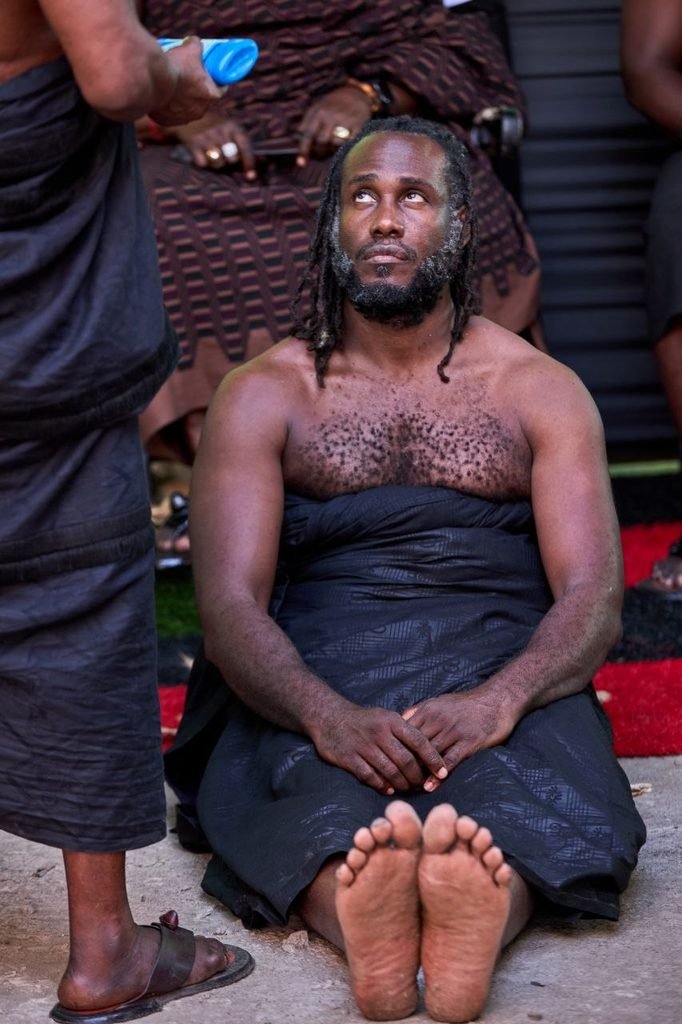

The ceremony brought him formally into his roles as Apagyahene and Sunsum Ɔsahene.
Beyond the colourful proceedings, the titles themselves carry layers of historical meaning.
Kambon in his research explores the historical connections between Apagya and Akan political and military organisation.
Accounts cited in his work linked Apagya to an asafo, or military company, while historical writing traces an Apagya stool in Asante to the reign of Opoku Ware I in the eighteenth century.
These historical associations offer a glimpse into the institutions that have shaped Akan society over generations, although they do not automatically define the precise responsibilities of the office in Akuapem Mampong.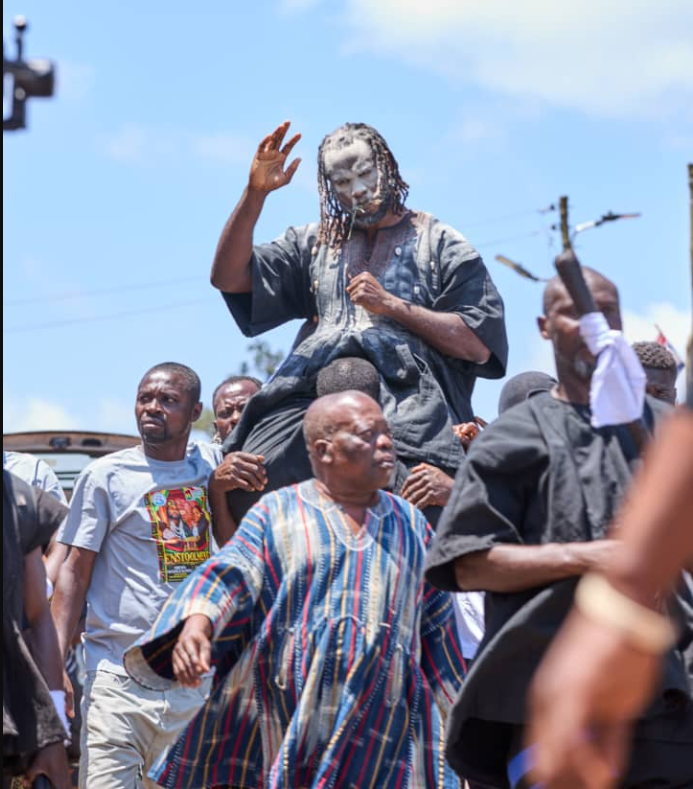
Kambon’s own professional life reflects a similar interest in preserving and examining African knowledge.
His work encompasses Akan language structure, naming practices across the Black world, proverbs and indigenous intellectual traditions.
Through Abibitumi, the platform he founded, he also promotes language learning, scholarship and cultural engagement.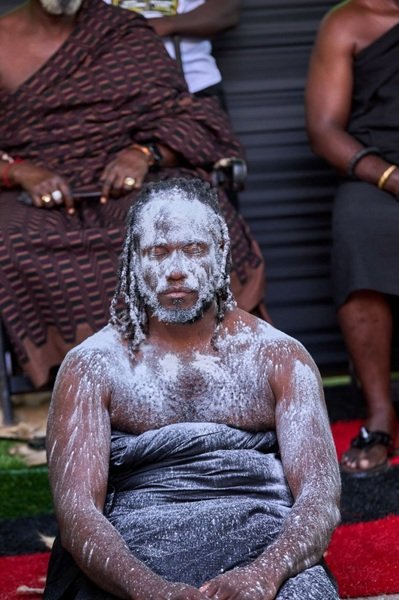
But tradition was only one part of the story that day.
When the formal ceremony gave way to a reception, the occasion expanded into a celebration of three milestones: Kambon’s enstoolment, his promotion to full professor and his daughter Ama’s admission to the University of Ghana.
The gathering therefore carried a personal significance that went beyond the honours bestowed on one man. 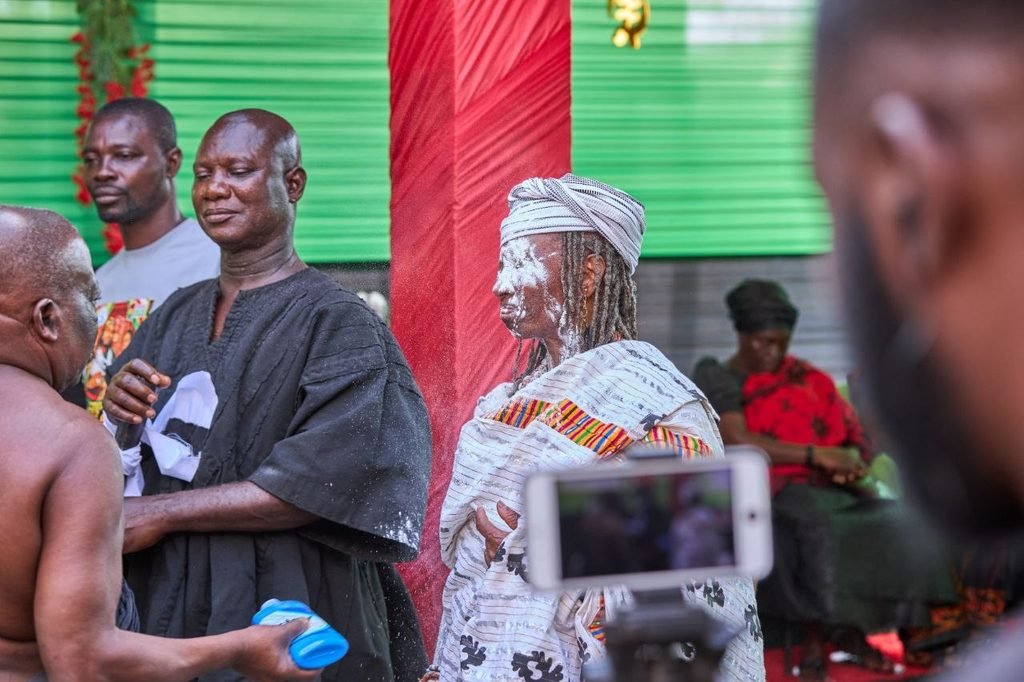
It celebrated professional advancement, the continuation of family aspirations and a connection to cultural heritage.
For a father, seeing a daughter gain admission to the same university where he holds a distinguished academic position offered another reason to celebrate.
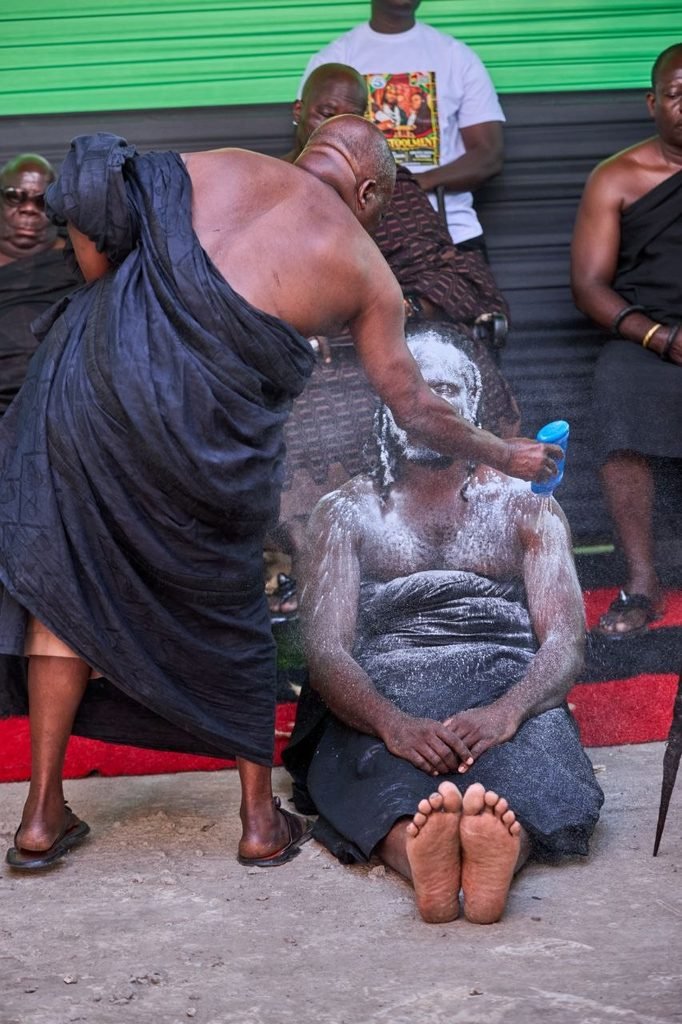
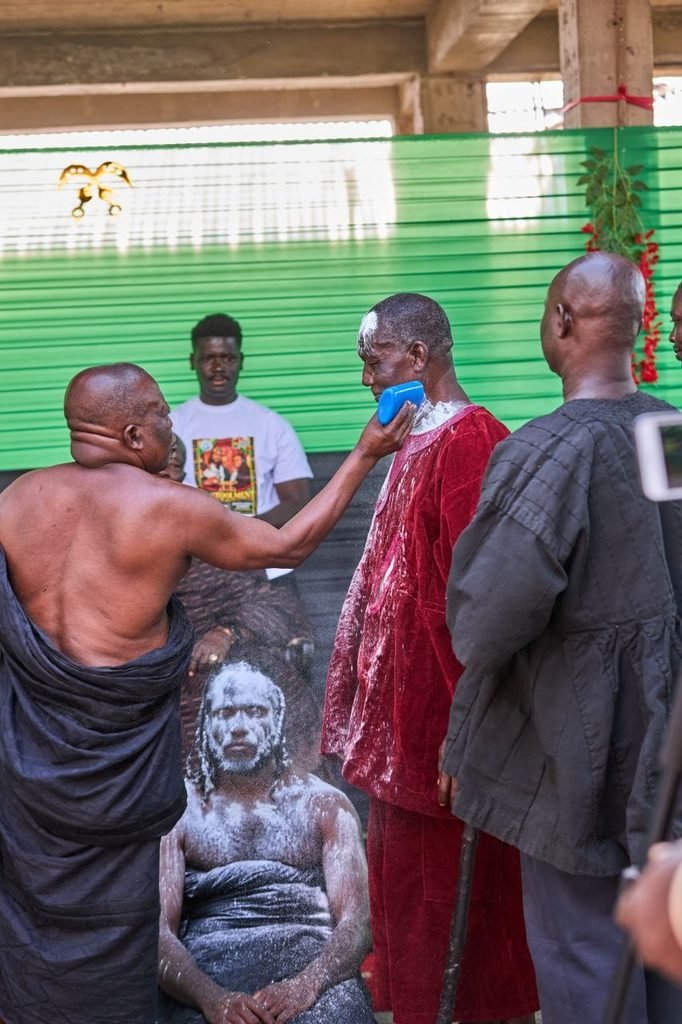
For the professor, the moment placed family achievement alongside his own professional and traditional milestones.
Kambon had already established a place in the traditional life of Akuapem Mampɔn through an earlier installation as Banmuhene Kyidɔmhene, recorded in 2017.
His latest enstoolment adds another chapter to that relationship.
In Akuapem Mampɔn, the day brought together the university, the palace and the family table in one celebration. And for Kambon, the journey from the lecture room to the traditional procession showed how scholarship, cultural responsibility and family achievement could converge in a single memorable occasion.
By Enoch Ntiamoah Siaw
SKIP THE QUEUE, TAP THE NEWS
You can now read the Ghanaian Times and The Spectator newspapers from the comfort of your device via TimesNewsPlus.
Join our WhatsApp Channel: https://whatsapp.com/channel/0029VbBElzjInlqHhl1aTU27

Intercity STC Coaches Limited has interdicted a driver captured in a viral video allegedly hitting a Sprinter bus during an overtaking manoeuvre at Pokuase before driving away from the scene.
In a public notice, the company described the driver’s conduct as unacceptable, stressing that it did not reflect the safety standards and professionalism it upholds.
Management said it had commenced an immediate investigation into the incident and identified the driver, who has been interdicted pending the outcome of the disciplinary process.
The company added that it was awaiting an official report from the Pokuase Police Command to help establish the facts surrounding the incident.
STC reaffirmed its commitment to passenger safety and responsible road use, while thanking members of the public for bringing the incident to its attention.
Management assured the public that appropriate action would be taken following the investigation.
By: Jacob Aggrey