News
Isaac Adongo replies Kojo Oppong Nkrumah over Bank of Ghana loss claims


- /home/u249204778/domains/spectator.com.gh/public_html/wp-content/plugins/mvp-social-buttons/mvp-social-buttons.php on line 27
https://spectator.com.gh/wp-content/uploads/2026/05/WhatsApp-Image-2026-05-08-at-11.29.53.jpeg&description=Isaac Adongo replies Kojo Oppong Nkrumah over Bank of Ghana loss claims', 'pinterestShare', 'width=750,height=350'); return false;" title="Pin This Post">
- Share
- Tweet /home/u249204778/domains/spectator.com.gh/public_html/wp-content/plugins/mvp-social-buttons/mvp-social-buttons.php on line 72
https://spectator.com.gh/wp-content/uploads/2026/05/WhatsApp-Image-2026-05-08-at-11.29.53.jpeg&description=Isaac Adongo replies Kojo Oppong Nkrumah over Bank of Ghana loss claims', 'pinterestShare', 'width=750,height=350'); return false;" title="Pin This Post">
The Ranking Member on Parliament’s Finance Committee, Isaac Adongo, has responded to claims by the Minority in Parliament that the Bank of Ghana recorded losses of about GH¢44 million under the National Democratic Congress (NDC) administration.
Mr. Adongo’s response follows a press conference addressed by Kojo Oppong Nkrumah and members of the Minority at Parliament House on Sunday, May 3, 2026.
At the press conference, the Minority accused the Bank of Ghana, Governor Dr. Johnson Asiama and the NDC government of mismanaging the economy and worsening the financial condition of the central bank.
The Minority argued that the reported losses at the Bank of Ghana showed signs of poor economic management under the current administration and questioned the direction of the central bank under Dr. Asiama’s leadership.
But reacting to the accusations in an interview with Edem Mensah-Tsotorme, Online Editor of ghanaiantimes.com.gh , Mr. Adongo said the New Patriotic Party (NPP) had no moral authority to criticize the current management of the central bank because the Bank of Ghana recorded far bigger losses under the previous administration.
“Under the NPP, the Bank of Ghana suffered its worst ever loss of GH¢55 billion in one year,” he said.
According to the Bolgatanga Central MP, the 2022 financial statements published in 2023 showed that the central bank recorded losses of about GH¢55 billion, while its negative net worth stood at about GH¢61 billion when the NDC government assumed office.
He further alleged that additional costs linked to the financial sector cleanup were transferred to the central government budget to conceal the actual financial state of the Bank of Ghana.
“If we were to add all of that, we really would have been around close to GH¢90 billion in negative net worth by the time we took over office,” he stated.
Mr. Adongo also accused the previous administration of hiding the real fiscal burden of the banking sector cleanup through accounting arrangements in the national budget.
According to him, the current administration and the Bank of Ghana have instead focused on stabilizing the economy through policies aimed at increasing foreign exchange inflows and reducing pressure on the cedi.
He explained that government used gold exports through the Gold Board to generate foreign exchange for the economy.
According to him, the initiative brought in an average of one billion dollars every month, helping stabilize the forex market and strengthen the cedi.
He said the improved forex situation reduced speculative demand for dollars and contributed to the appreciation of the local currency.
“We ended up the year with about 40.7 percent strengthening of the cedi,” he stated.
Mr. Adongo added that the stronger cedi had also helped reduce inflation and interest rates, bringing relief to businesses and consumers.
He praised President John Dramani Mahama for appointing Dr. Asiama as Governor of the Bank of Ghana.
According to him, the President identified Dr. Asiama as the right person to manage the central bank after assessing the country’s economic challenges.
“He saw Dr. Asiama as the best and safer hand to manage the bank,” Mr. Adongo added.
By: Jacob Aggrey

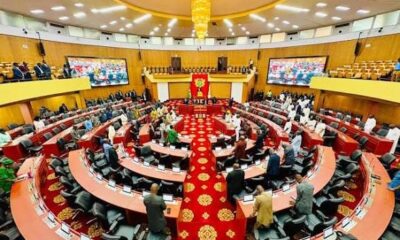


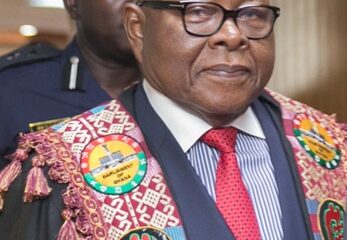



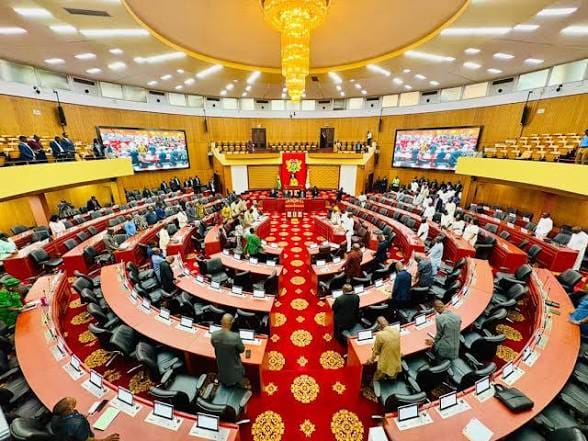
Parliament has clarified public commentary on social media regarding a notice on its notice board that read “No Vacancy for National Service Personnel 2026/2027. Kindly go for reposting.”
In a statement, signed by the Director of Media Relations, David Sebastian Damoah, Parliament said the notice has been misconstrued and was not a policy statement, a freeze on national service placements, or a change in its support for the National Service Scheme.
According to Parliament, the notice was a routine administrative message to prospective personnel who reported to the House, informing them that it has received more personnel than it can accommodate for the 2026/2027 service year and that they should seek reposting to other institutions.
It said it remains committed to the National Service Scheme and values the contribution of service personnel to its work, and regrets any confusion or inconvenience the wording may have caused.
By Edem Mensah-Tsotorme
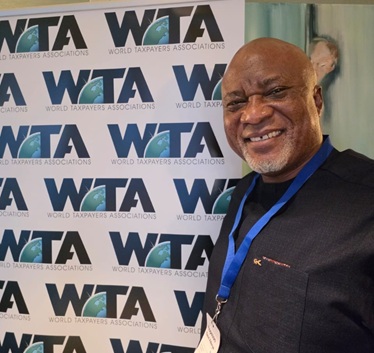
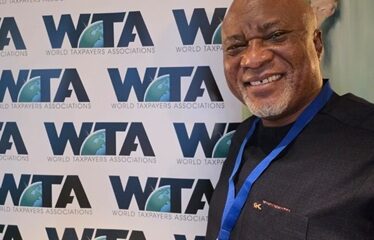
Ghanaian public advocate Hopeson Yaovi Adorye has been elected to the Board of Directors of the World Taxpayers Association (WTA).
The election took place on Sunday, October 5, 2026, during the Association’s conference in Kraków, Poland.
His election marks a significant addition to his international leadership portfolio and provides a platform for Ghanaian and African perspectives to contribute to global discussions on taxpayer rights, responsible taxation, transparency and prudent management of public resources.
Reacting to his election, Mr. Adorye expressed appreciation to the leadership and members of the WTA for the confidence reposed in him.
“I am deeply honoured by this confidence and conscious of the responsibility that comes with it. Taxpayers are at the heart of every economy, and they deserve fairness, transparency, accountability and value for the taxes they pay. I look forward to working with colleagues from across the world to strengthen the voice of taxpayers and promote responsible fiscal governance,” he said.
According to him, taxation should not be viewed solely as a mechanism for raising government revenue, but also as an important component of the social contract between citizens and the state.
Mr. Adorye said governments have a responsibility to ensure taxes are collected fairly and public resources are utilised efficiently to deliver quality infrastructure, healthcare, education, security and other essential services.
His election also creates an opportunity to bring African experiences into international conversations on taxation and public expenditure.
Mr. Adorye, who is Executive Director of Taxpayers League Ghana, has previously served as Global Board Chairman of the International Youth Network for UN Security Council Resolution 2250, an NGO associated with the United Nations Economic and Social Council (ECOSOC).
He is expected to use his new role to champion fiscal accountability, taxpayer education, good governance and stronger citizen participation in public financial management.