Editorial
Intensify tourism promotion in the country

One area that can be promoted by the country to generate more revenue is tourism, because it has great potentials that must be exploited to the full.
When it comes to tourist sites, they exist in two main forms. These are; naturally endowed sites and man-made sites.
The naturally endowed sites include beautiful rivers, unique mountains, some monkeys and birds that are not common to find in the world. Other naturally endowed sites may also contain uniquely attractive fountains of water and many other scenes that beat the imagination of people. Such naturally endowed sites can be found in all the 16 regions of the country and this calls for a special purpose investment to preserve and upgrade them together with certain facilities like roads and accommodation as well as restaurants that will make the place attractive to everybody.
We need to develop a special project for this purpose and if it will mean going for international assistance, we will have to do it and earn more money for the country. What is the point in keeping national habitats such as special birds and animals in the country without making them known to would-be visitors whose desire would be to visit and explore such places to satisfy their curiosity, interest and welfare as a people in the country?
We need a special project to make this a reality, so we need to work towards it within specified and achievable timelines.
When we come to man-made tourist sites, we have many of them in various parts of the country, especially along the coasts of Ghana. We have heard of forts and castles built by colonial masters for their own security purposes and used such buildings to keep and transport slaves from the Gold Coast to other parts of the world.
A good example is the Fort Orange located near Sekondi in the Western Region. This fort was properly built by the colonial people who used it to trade in humans and goods.
The forts and castles will have to be utilised to generate wealth for the country, having existed for over 400 and 500 years. Examples are Elmina Castle, Cape Coast Castle and the Christianburg Castle which became known as the Osu Castle and was used as seat of government by various governments until recently.
The use of castles for tourist sites will mean developing them to attract tourists. One good thing that can come out of this is that apart from income generation, they will help in the education of people in the local level as well as foreigners who will come to visit such places. An interesting point to note about the communities in which these forts and castles are located is that most of the people do not know much about them and the purposes they were used for.
As has been pointed out already, such areas stand the chance of boosting up the local economy to promote domestic trade and business.
Thus, when it comes to man-made sites such as forts and castles or naturally endowed tourist sites such as beautiful sites, animals and birds, what we need to do is to put in as much investment as possible to be able to preserve them and make them attractive for sale to people whether Ghanaians or foreigners. This is how both domestic and international tourism can be promoted in this country.
And to be able to succeed in this dream, the investment cannot be avoided in terms of roads, bridges, healthcare, housing and flyovers where necessary. This is how Ghana can move forward in the tourism sector.

Dear Editor,
I wish to draw the attention of the relevant authorities to the poor state of the railway crossing area of the Neoplan Station, near Kwame Nkrumah Circle in Accra, which is increasingly disrupting the smooth flow of traffic.
The damaged section of the road has become a major inconvenience to motorists, as vehicles are forced to slow down considerably when approaching the crossing to avoid damaging their tyres, wheels and suspension systems.
This situation causes unnecessary delays, particularly during peak hours when traffic volumes are high.
The crossing is an important route for commuters and commercial drivers who use the Circle area to connect to other parts of the capital.
The deteriorating road surface therefore affects not only individual motorists but also the general movement of vehicles through this busy transport hub.
Beyond the inconvenience, the situation could increase the risk of minor accidents as drivers brake suddenly or attempt to manoeuvre around damaged portions of the road.
I respectfully appeal to the Department of Urban Roads, the Accra Metropolitan Assembly and other relevant agencies to inspect the affected section and undertake urgent repairs to restore the smooth movement of traffic.
Timely intervention will reduce delays, improve road safety and make commuting through the Circle area more convenient.
Yours faithfully,
Concerned Citizen
SKIP THE QUEUE, TAP THE NEWS
You can now read the Ghanaian Times and The Spectator newspapers from the comfort of your device via TimesNewsPlus.
Join our WhatsApp Channel: https://whatsapp.com/channel/0029VbBElzjInlqHhl1aTU27
Dear Editor,
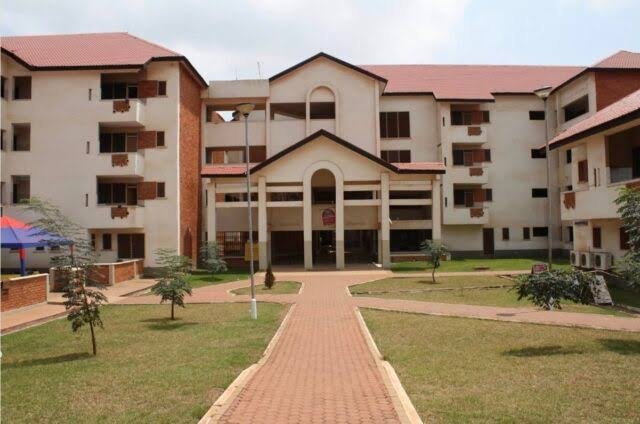
I wish to draw the attention of the authorities and the general public to the increasing cost of hostel accommodation, particularly for students in tertiary institutions.
The high cost of hostels has become a serious challenge for many students and their parents.
In some areas, hostel fees have increased significantly, making it difficult for students from low- and middle-income families to secure decent accommodation.
Apart from the hostel fees, students also have to pay for transportation, food, learning materials and other academic needs.
The rising cost of accommodation therefore puts additional financial pressure on families and, in some cases, forces students to live in overcrowded or poorly maintained facilities.
I believe hostel owners and relevant authorities must work together to ensure that accommodation remains affordable while maintaining acceptable standards.
Tertiary institutions should also consider expanding student accommodation and encouraging affordable private hostel projects.
The government and local authorities could further support the development of low-cost student accommodation through appropriate policies and incentives.
I therefore appeal to the Ministry of Education, tertiary institutions and other stakeholders to treat the issue as a matter of urgency.
Affordable and decent accommodation is essential to creating a conducive environment for students to study and succeed.
This has in a way also empowered the private people in the accommodation sector to take undue advantage of the situation to charge exorbitant rates for their services.
Kwame Ampiaw,
Accra
SKIP THE QUEUE, TAP THE NEWS
You can now read the Ghanaian Times and The Spectator newspapers from the comfort of your device via TimesNewsPlus.
Join our WhatsApp Channel: https://whatsapp.com/channel/0029VbBElzjInlqHhl1aTU27