News
GIS intensifies crackdown on exploitative migrant street begging networks in Ashanti Region

- /home/u249204778/domains/spectator.com.gh/public_html/wp-content/plugins/mvp-social-buttons/mvp-social-buttons.php on line 27
https://spectator.com.gh/wp-content/uploads/2026/04/WhatsApp-Image-2026-04-22-at-12.02.42.jpeg&description=GIS intensifies crackdown on exploitative migrant street begging networks in Ashanti Region', 'pinterestShare', 'width=750,height=350'); return false;" title="Pin This Post">
- Share
- Tweet /home/u249204778/domains/spectator.com.gh/public_html/wp-content/plugins/mvp-social-buttons/mvp-social-buttons.php on line 72
https://spectator.com.gh/wp-content/uploads/2026/04/WhatsApp-Image-2026-04-22-at-12.02.42.jpeg&description=GIS intensifies crackdown on exploitative migrant street begging networks in Ashanti Region', 'pinterestShare', 'width=750,height=350'); return false;" title="Pin This Post">
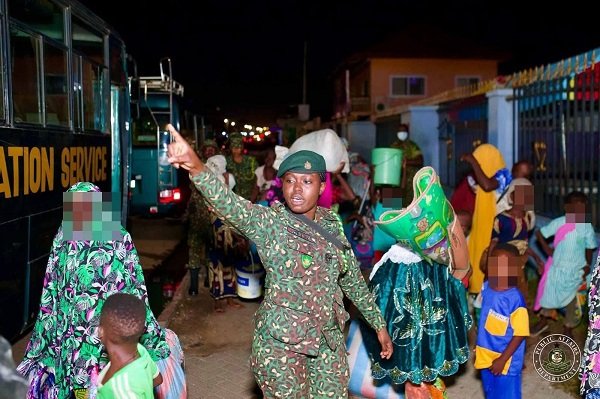
The Ghana Immigration Service (GIS), through its Ashanti Regional Command, has conducted an intelligence-led operation in the early hours of Tuesday, April 21, 2026, to rescue undocumented migrants from exploitative street begging networks in Kumasi.
The operation, which commenced at dawn yesterday, targeted identified hotspots including Asawase, Alabar, Akwatia Line, Dagomba Line, Sabon Zongo, and Aboabo.
A total of 606 individuals were rounded up, comprising 381 children, 72 females, and 153 males. Many of those rescued are believed to be victims of human trafficking and forced begging.
This exercise forms part of a nationwide GIS campaign to address the growing menace of organised street begging networks across the country.
In a related operation on April 15, 2026 in parts of the Greater Accra Region–including Abossey Okai, Zongo Junction, Nima, Madina, and Kaneshie–the Service facilitated the safe repatriation of 356 West African nationals to their home countries, namely Niger, Nigeria, and Burkina Faso.
In line with the ECOWAS Free Movement Protocol, which guarantees visa-free travel residence, and establishment rights for citizens of Member States, GIS emphasises that these operations are targeted at criminal exploitation and irregularities, not legitimate regional mobility.
The Service, in collaboration with the Nigerian High Commission in Accra, assisted 89 Nigerian nationals to regularise their documentation and facilitated their handover to relevant anti-human trafficking authorities in Nigeria
The GIS has also engaged various African diplomatic missions in Accra to ensure coordinated and humane interventions, particularly for the protection of vulnerable children and destitute persons.
The Comptroller-General of Immigration, Mr. Samuel Basintale Amadu, reaffirmed the Service’s commitment, stating: “The Ghana Immigration Service remains resolute in safeguarding Ghana’s borders and enforcing immigration laws, while upholding our obligations under the ECOWAS Protocol. We will continue to strike a balance between regional integration and decisive action against trafficking and exploitation.”
The public has been reminded that the Beggars and Destitute Act, 1969 (NLCD 392), prohibits street begging by both citizens and non-citizens. Offenders are liable to fines, imprisonment of up to three months, or both.
Members of the public have been encouraged to report suspicious activities involving foreign nationals to the nearest GIS office.
By Edem Mensah-Tsotorme






Former Attorney-General, Godfred Yeboah Dame has expressed disappointment with what he described as the court’s failure to compel the State to return the passport of his client, Hanan Abdul-Wahab, to the court registry.
Speaking to journalists after court proceedings today, Mr Dame explained that the passport had originally been deposited with the court as part of the bail conditions imposed on Abdul-Wahab.
According to him, the court had ordered that the passport be returned to the registry by July 14, after Abdul-Wahab completed an approved trip.
Mr Dame said the passport was not returned because it was allegedly seized by the Economic and Organised Crime Office (EOCO) following Abdul-Wahab’s arrest.
“The order for the passport to return to the registry was actually given by the court,” he stated.
“If the court is no longer concerned about the compliance with its own earlier orders, I do not have any problem. At the appropriate time, when there is a need for him to travel, we will make an application to the court” he mentioned.
He maintained that his legal team did not need to file a separate application for the release of the passport because the issue, in his view, was the enforcement of the court’s earlier directive.
Mr Dame further argued that the judge acknowledged that EOCO had seized the passport but did not order the agency to return it to the court registry.
“The judge was concerned about the seizure of the passport by EOCO, but failed to order EOCO to return the passport to the registry of the court in compliance with the court’s own earlier orders,” he said.
He added that the Republic should not have to be “policed all the time” and called for what he described as the proper enforcement of court orders.
By: Jacob Aggrey

Vice President Prof. Naana Jane Opoku-Agyemang has called on the Church to protect its moral authority by remaining independent of partisan politics and consistently speaking out against corruption, injustice and abuse, regardless of which political party is in power.
She made the call while delivering the keynote address at the Accra Ridge Church’s 90th Anniversary Lecture II in Accra on Wednesday July 15, 2026.
Prof. Opoku-Agyemang stressed that the Church’s guidance to government should go beyond the tenure of any administration and should not be influenced by political party interests.
“The Church’s counsel to government must outlast any single administration or party colour. Speak on principle, not on partisanship,” she said.
According to her, the Church risks losing public trust if it becomes closely aligned with any political party.
She noted that corruption, injustice and abuse should always concern the Church, irrespective of which government is in office.
The Vice President also encouraged religious leaders to know when to offer private advice to government and when to speak publicly on national issues.
“Wisdom lies in knowing which moment calls for which voice,” she stated.
She added that government must also avoid seeking the Church’s approval simply to gain public support instead of accepting constructive criticism.
Prof. Opoku-Agyemang further highlighted Ghana’s religious diversity, describing the country’s peaceful coexistence among Christians, Muslims, traditionalists and people of other beliefs as one of its greatest strengths.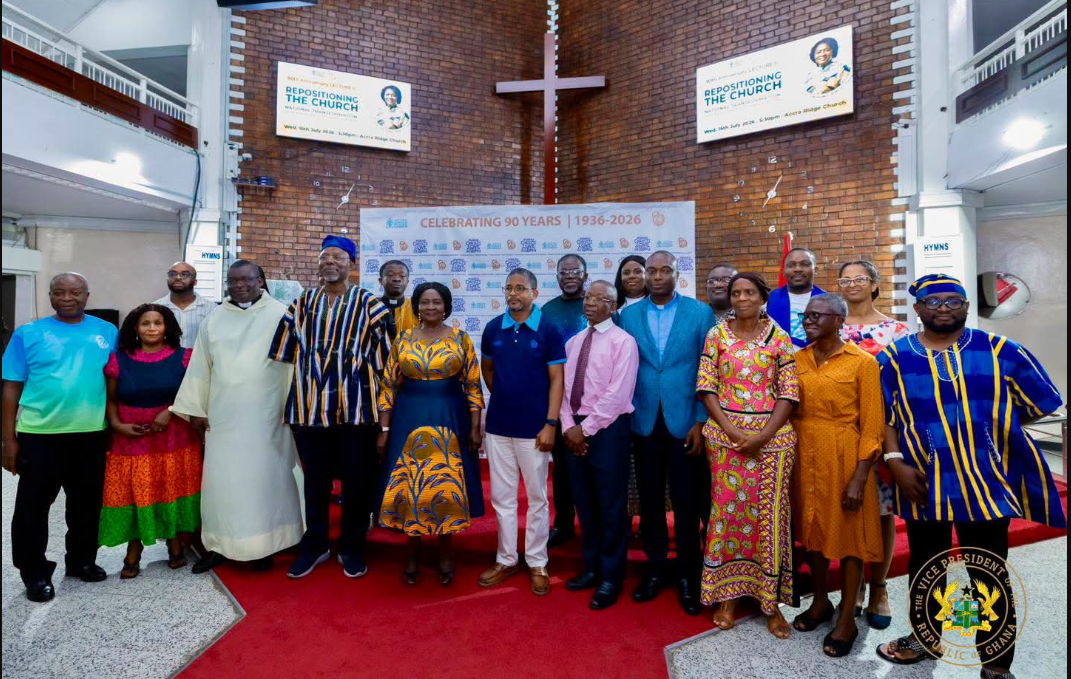
She said generations of leaders had preserved this harmony by choosing cooperation over division and by putting the national interest first.
The Vice President added that protecting free and fair elections, upholding the rule of law, defending freedom of conscience and safeguarding vulnerable people are national responsibilities that should never be treated as partisan issues.
By: Jacob Aggrey