News
Ghana’s industrial gold output sees 6% increment in 2019

- /home/u249204778/domains/spectator.com.gh/public_html/wp-content/plugins/mvp-social-buttons/mvp-social-buttons.php on line 27
Warning: Trying to access array offset on false in /home/u249204778/domains/spectator.com.gh/public_html/wp-content/plugins/mvp-social-buttons/mvp-social-buttons.php on line 27
&description=Ghana’s industrial gold output sees 6% increment in 2019', 'pinterestShare', 'width=750,height=350'); return false;" title="Pin This Post">
- Share
- Tweet /home/u249204778/domains/spectator.com.gh/public_html/wp-content/plugins/mvp-social-buttons/mvp-social-buttons.php on line 72
Warning: Trying to access array offset on false in /home/u249204778/domains/spectator.com.gh/public_html/wp-content/plugins/mvp-social-buttons/mvp-social-buttons.php on line 72
&description=Ghana’s industrial gold output sees 6% increment in 2019', 'pinterestShare', 'width=750,height=350'); return false;" title="Pin This Post">
Industrial gold output from Ghana, Africa’s top producer of the precious metal, increased six per cent in 2019 from the previous year while small-scale gold production dropped 20 per cent, the Chamber of Mines said in its annual general meeting held last Friday.
Industrial mines produced 2.989 million ounces of gold in 2019, up from 2.808 million ounces in 2018, according to the annual report of the Chamber, Ghana’s main mining industry association.
The drop in production from the small-scale gold sector – to 1.588 million ounces from 1.984 million ounces in 2018 – could be partly attributable to a clampdown on illegal mining, Chamber of Mines President Eric Asubonteng told a virtual AGM.
The mining sector was the second-biggest contributor to government revenue in 2019.
Its fiscal contribution increased by 70 per cent to 4.02 billion Ghanaian cedis ($701.6 million), from 2.36 billion cedis ($411.9 million) in 2018.
Gold mining companies active in Ghana include Newmont, Gold Fields, Kinross, and AngloGold Ashanti, whose redeveloped Obuasi mine started producing in December.
Among bulk metals, manganese output increased by 18 per cent and bauxite by 10 per cent.
Diamond production dropped by 41 per cent from 57,531 carats in 2018 to 33,789 carats in 2019.
Ghana was the second-most popular destination for mining exploration investment in Africa in 2019.
While neighbouring Burkina Faso drew $132 million, Ghana saw $98.6 million invested in exploration, according to the report. Mali came third in Africa, attracting $91.9 million.
Chamber of Mines President Asubonteng said the COVID-19 pandemic was causing significant uncertainty and could trigger a reversal of investment flows into Ghana.
“We don’t know what lies ahead,” he added.


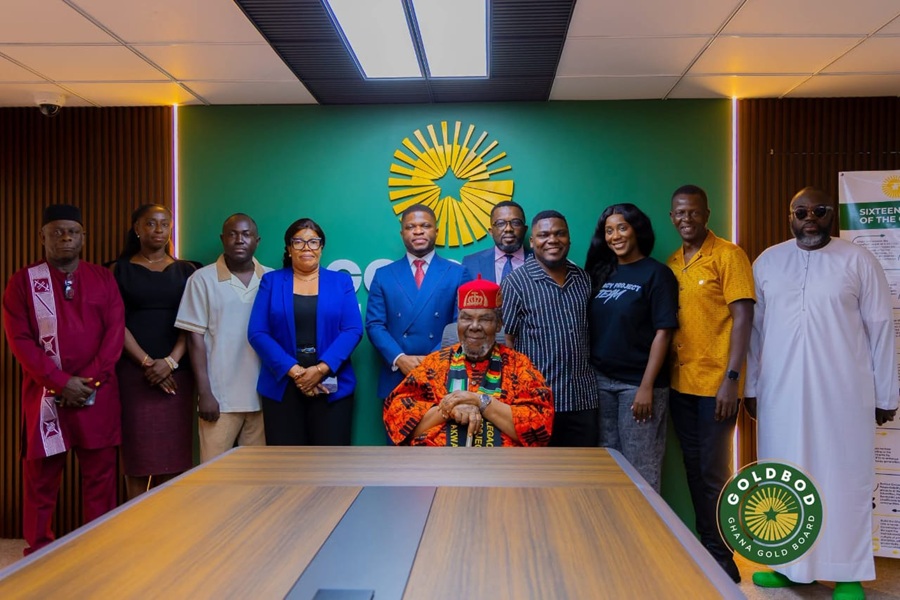
Veteran Nigerian actor and African screen legend, Pete Edochie, has paid a courtesy call on the Chief Executive Officer of the Ghana Gold Board (GoldBod), Sammy Gyamfi, during his visit to Ghana.
Edochie is in Ghana to launch the African Legacy Project, which includes a book, documentary film and an African Youth Mentorship Initiative targeting about 500,000 young people across the continent.
Mr. Gyamfi welcomed the opportunity for GoldBod to support the mentorship initiative, noting that it aligns with the Board’s Special Intervention Programme and its focus on social impact and economic empowerment.
GoldBod’s work is also referenced in Pete Edochie’s new book, which highlights Ghana’s efforts to ensure its gold resources contribute to national development.
By Edem Mensah-Tsotorme
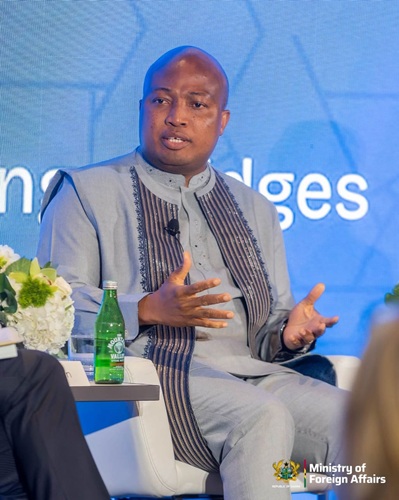
The Ministry of Foreign Affairs has warned Ghanaians seeking employment in Zambia to be cautious of fraudulent job offers that could expose them to human trafficking and forced involvement in cybercrime.
The warning follows the arrest of six Ghanaians in Lusaka, Zambia, during a joint operation by the Zambia Police Service, the Drug Enforcement Commission and the Department of Immigration on August 23, 2026.
According to the Ministry, the operation targeted a facility suspected of being involved in organised cybercrime activities and led to the arrest of 79 people, including 10 Zambians and 69 foreign nationals.
The Ministry said six of the foreign nationals arrested were Ghanaians.
It explained that reports received by the Ghana High Commission in Lusaka indicated that some of those arrested had been recruited through what appeared to be legitimate employment opportunities, including online data entry jobs.
However, the Ministry said some were allegedly forced into online scam activities after their passports were confiscated by their employers.
It warned that the situation highlights how human trafficking groups are using fake employment opportunities to lure unsuspecting job seekers into illegal activities.
The Ministry has therefore advised Ghanaians travelling to Zambia or seeking employment there to thoroughly verify job offers, recruitment agencies and prospective employers before travelling.
Ghanaians living in Zambia have also been urged to remain vigilant when responding to online job opportunities and maintain regular contact with the Ghana High Commission in Lusaka for consular assistance when necessary.
The Ministry said the government remains committed to protecting the welfare and interests of Ghanaians travelling to or living outside the country.
By: Jacob Aggrey