Hot!
Ghana to lose $3.8bn if anti-gay bill is signed – Finance Ministry tells Akufo-Addo


- /home/u249204778/domains/spectator.com.gh/public_html/wp-content/plugins/mvp-social-buttons/mvp-social-buttons.php on line 27
https://spectator.com.gh/wp-content/uploads/2024/03/WhatsApp-Image-2024-03-04-at-4.44.50-PM.jpeg&description=Ghana to lose $3.8bn if anti-gay bill is signed – Finance Ministry tells Akufo-Addo', 'pinterestShare', 'width=750,height=350'); return false;" title="Pin This Post">
- Share
- Tweet /home/u249204778/domains/spectator.com.gh/public_html/wp-content/plugins/mvp-social-buttons/mvp-social-buttons.php on line 72
https://spectator.com.gh/wp-content/uploads/2024/03/WhatsApp-Image-2024-03-04-at-4.44.50-PM.jpeg&description=Ghana to lose $3.8bn if anti-gay bill is signed – Finance Ministry tells Akufo-Addo', 'pinterestShare', 'width=750,height=350'); return false;" title="Pin This Post">
The Ministry of Finance is pleading with President Akufo-Addo not to assent to the recently passed anti-LGBTQ bill by Parliament.
In a press release on Monday, March 4, the Finance Ministry cautioned that approving the bill could result in significant financial consequences for Ghana.
According to the Finance Ministry’s statement, Ghana stands to lose a substantial amount of World Bank financing, estimating a potential loss of USD$3.8 billion over the next five to six years.
Specifically, the impact for 2024 includes a loss of USD$600 million in budget support and USD$250 million for the Financial Stability Fund, adversely affecting Ghana’s foreign exchange reserves and exchange rate stability.
The Ministry has also recommended that the President engage with religious bodies to discuss the implications of signing the bill and to establish a robust coalition and framework for supporting key development initiatives.
“The Presidency may have a structured engagement with local conservative forces such as religious bodies and faith-based organisations to communicate the economic implications of the passage of the ‘Anti-LGBTQ’ Bill and to build a stronger coalition and a framework for supporting key development initiative that is likely to be affected.”
It also added that “the President may have to defer assenting to the Bill until the court rules on the legal issues tabled by key national stakeholders (CSOs and CHRAJ).”
Credit: Citinewsroom.com
Below is the full statement by the Finance Ministry
IMPLICATIONS
Impact on World Bank-funded programmes
i. The expected US$300 million financing from the First Ghana Resilient Recovery Development Policy Operation (Budget Support) which is currently pending Parliamentary approval might not be disbursed by the Bank when it is approved by Parliament.;
ii. On-going negotiations on the Second Ghana Resilient Recovery Development Policy Operation (Budget Support) amounting to US$300 million may be suspended;
iii. On-going negotiations for US$250 million to support the Ghana Financial Stability Fund may be suspended;
iv. Disbursement of undisbursed amounts totaling US$2.1 billion for on-going projects will be suspended; and
v. Preparation of pipeline projects and declaration of effectiveness for two projects totaling worth US$900million may be suspended. Full details of the World Bank portfolio are attached as Appendix 1 & 2.
vi. In total, Ghana is likely to lose US$3.8 billion in World Bank Financing over the next five to six years. For 2024 Ghana will lose US$600 million Budget support and US$250 million for the Financial Stability Fund. This will negatively impact on Ghana’s foreign exchange reserves and exchange rate stability as these inflows are expected to shore the country’s reserve position.
Impact on the Implementation of the 2024 Budget
The potential loss of these financial resources creates a financing gap in the 2024 budget that must be addressed either through a significant reduction in the expenditures or additional domestic revenue mobilisation. Failing this, Government’s ability to achieve the targets in the 2024 Budget will be undermined and the IMF-ECF Programme will be derailed.
Impact in the IMF Programme
While there is no direct conditionality in the IMF-ECF Programme relating to the passage of the Bill, the principles of the current IMF-ECF Programme are built on predictable financing from Development Partners (Financing Assurances) including the World Bank funded Ghana Resilience Recovery Development Policy Operations. Hence the non-disbursement of the Budget Support from the World Bank will derail the IMF programme. This will in turn trigger a market reaction which will affect the stability of the exchange rate.
Impact on Debt Restructuring Programme
Negotiations with the Official Creditor Committee (OCC) and Eurobond holders under Ghana’s debt restructuring programme is predicated on the success of the IMF programme. Hence, a derailed IMF programme will have dire consequences on the debt restructuring exercise and Ghana’s long term debt sustainability.
Impact on African Development Bank Programmes
The African Development Bank has indicated that the passage of the bill will not have any adverse impact on the cooperation with Ghana.
Possible adverse reaction from Germany and the wider European Community
In several discussions, with officials from the German Government, MoF officials have been informed that the German Government is against the passage of the Bill. Given Germany’s relative strong influence in the European Union and the Official Creditor Committee, there is the need to manage the relationship to forestall a strong negative reaction.
- RECOMMENDATIONS
i. At the Presidency level, We recommend;
a. a structured engagement with local conservative forces such as religious bodies and faith-based organizations to communicate the economic implications of the passage of the “Anti LGBTQ” Bill and to build a stronger coalition and a framework for supporting key development initiative that are likely to be affected;
b. an effective engagement with conservative countries, including the Arab countries and China. This could help trigger resources to fill in the potential financing gaps to be created; and
c. H.E. the President may have to defer assenting to the Bill until the court rules on the legal issues tabled by key national stakeholders (CSOs and CHRAJ).
ii. At the MOF Level,
a. The Ministry will continue to engage with the IMF on the alternative credible sources of funding that will plug the financing gap;
b. GRA to embark on a vigorous revenue mobilisation drive focusing on implementation of approved measures as well as compliance;
c. Consider possible expenditure rationalisation to accommodate the shock from the potential withdrawal of resources; and
d. Leverage on the Ghana Beyond Aid Principles and change the structure of our resource mobilisation. We must improve our domestic resource mobilisation efforts by working towards our medium-term tax revenue to GDP target of 17%-18% and eventually wean ourselves off the unsustainable dependency on development assistance.
- CONCLUSIONS
The passage of the new Bill calls for fortifying local financial systems, strengthening African financial institutions as well as our development journey in partnership with other countries. In line with the Ghana Beyond Aid Agenda, Ghana can navigate the complexities of international relations and emerge with a robust, resilient economy with Ghanaian ownership of the commanding heights of the economy.



The Tema Regional Police Command has arrested a 32-year-old man for allegedly posing as a soldier and extorting money from unsuspecting members of the public at Ashaiman.
The suspect, identified as Bright Atsu Kudiabor, was arrested by the Ashaiman Police on Wednesday, September 16, 2026, at about 7:00 a.m.
According to the Police, he was arrested at an area known as “I Shall Return”, where he was allegedly parading himself as a soldier and demanding money from people.
The Police said Kudiabor, who is an ex-convict, was initially arrested by personnel of the Ghana National Fire Service in Ashaiman with assistance from other members of the public.
A search conducted on him after he was handed over to the Police reportedly led to the recovery of a set of military camouflage uniform.
The suspect is currently in Police custody and assisting with investigations.
The Tema Regional Police Command said he would be processed for court after investigations are completed.
The Police urged the public to remain vigilant and report anyone who falsely presents themselves as a soldier or a member of another security agency to deceive or extort money from the public.
By: Jacob Aggrey
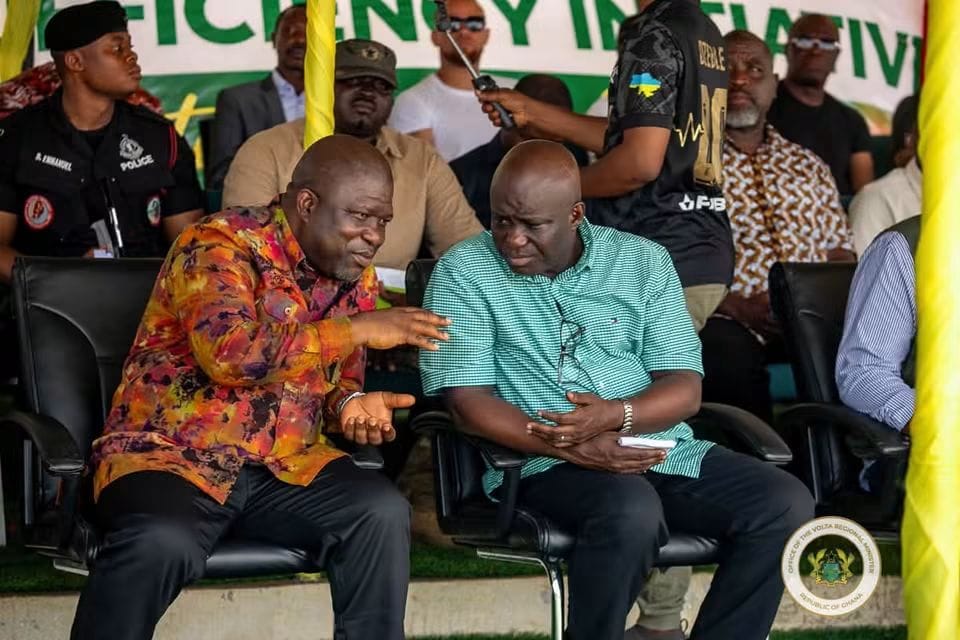
Volta Regional Minister, James Gunu, says the Volta Region holds enormous agricultural potential and efforts must be geared towards connecting farmers to the needed resources to unlock that potential.
He said focus must be on linking farmers to resources, technology, financing and markets to increase production, create jobs and build sustainable livelihoods.
Hon. Gunu made the remarks at the national launch of the Ghana Tomato Self-Sufficiency Initiative (GHATSI) held at Anloga in the Volta Region on Tuesday, September 15.
The initiative, under the theme “Produce at Home. Feed the Nation. Export the Surplus,” seeks to boost local tomato production, processing and marketing while reducing Ghana’s heavy reliance on imported tomatoes.
The launch was attended by the Minister for Food and Agriculture, Eric Opoku, his Deputy, John Setor Dumelo, Feed Ghana Coordinator, Bright Demordzi, Members of Parliament, traditional leaders, MMDCEs, farmers and other stakeholders.
Mr.Gunu expressed appreciation to the Minister for Food and Agriculture for the support announced for the region, including two excavators, 200 cartons of organic fertiliser, and GH¢200,000 for Ms. Kuatudzo Esther Dela, a tomato farmer and processor from Ziope.
He described the initiative as an important step towards making agriculture a stronger driver of food security, job creation and economic growth in the Volta Region.
By Edem Mensah-Tsotorme