Hot!
Ghana advances women’s football development with expanded national team structure

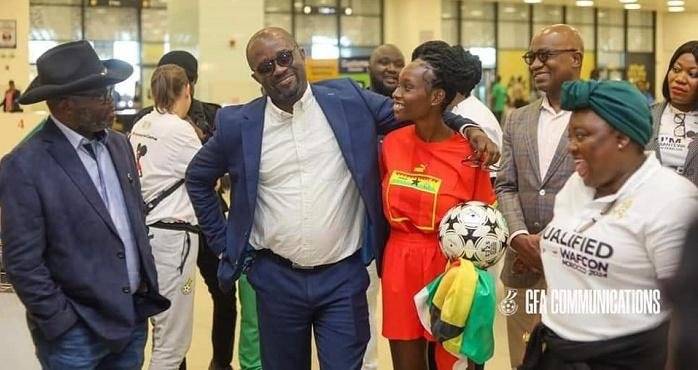
In a clear statement of intent towards enhancing Women’s 1¹¹¹1 development, Ghana has announced the formation of new national teams across additional age categories.
This initiative aligns with Ghana’s overarching Women’s Football Strategy, which seeks to create a sustainable pathway for player progression from grassroots levels to elite competition.
With the addition of the U16, U18, U19, U21, and U23 squads, the West African nation now boasts a comprehensive structure catering for the progression of female football talent. The newly created categories are configured to complement the already established U15, U17, U20, and senior national team, the Black Queens.
This strategic move underscores Ghana’s commitment to nurturing young talents and building a productive pipeline for the progression of future stars in Women’s Football.
The newly introduced national teams will serve as pivotal platforms for player development, providing opportunities for aspiring footballers to hone their skills and gain invaluable experience at various stages of their careers.
It’s noteworthy that while the existing teams, including the U15, U17, U20, and senior national team, primarily focus on competitive endeavors, the recently formed squads—U16, U18, U19, U21, and U23—are designed with a clear developmental mandate.
These teams will function as incubators for emerging talent, offering structured training programs, exposure to international competitions, and expert coaching to nurture the potential of young footballers.
By investing in youth development and providing comprehensive support systems, Ghana aims to enhance the quality and depth of its talent pool, thereby strengthening its position in Women’s Football in Africa and globally.
The significance of this expansion goes beyond mere numbers; it symbolizes Ghana’s proactive approach towards gender equality and inclusivity in sports.
By bolstering opportunities for young female footballers, the nation not only cultivates athletic prowess but also empowers women to excel in traditionally male-dominated fields, promoting diversity and social inclusion.
The introduction of these age-specific national teams, further underscores Ghana’s recognition of the importance of early talent identification and nurturing.
By establishing structured pathways for talent development, the nation ensures that promising young players receive the guidance and support needed to realize their full potential, ultimately enriching the talent pool of Ghanaian football.
As the new national teams embark on their journey, they carry the hopes and aspirations of a nation eager to witness the emergence of future football icons.
Their success will not only be measured by victories on the pitch but also by the enduring legacy of empowerment and opportunity they represent for generations to come.
In the ever-evolving landscape of women’s football, Ghana stands at the forefront of progress, blazing a trail of innovation and inclusivity.
With the establishment of national teams across all age categories, the nation paves the way for a brighter and more equitable future for female footballers, solidifying its position as a beacon of inspiration for the global football community.
GFA COMMUNICATIONS


Massive celebrations were recorded countrywide as the Black Stars opened their 2026 World Cup campaign with a 1-0 victory over Panama in Toronto on Wednesday.
Midfielder Caleb Yirenkyi scored the only goal of the match late in the game as he shot in a decent cross from substitute Brandon Asante.


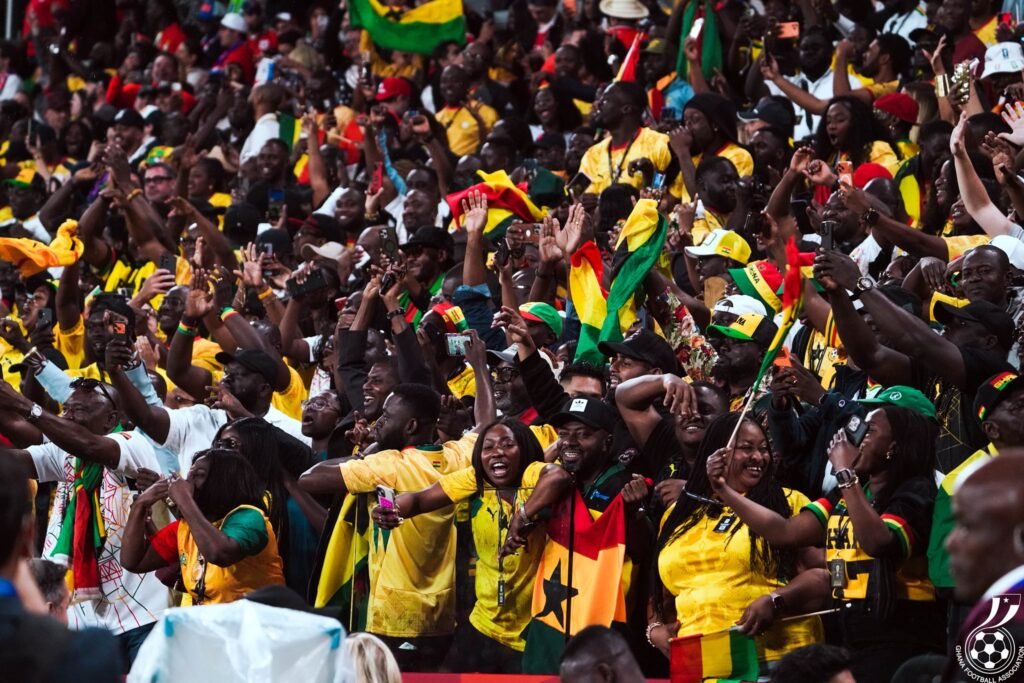

The win gave Ghana a positive start in the competition, placing them in second position behind England, also with three points but with a superior goal aggregate.
After the final whistle, the streets and other viewing centres were turned into partying grounds as fans, mostly clad in the team’s paraphernalia, danced to several World Cup-themed music.
Others blew the vuvuzelas in joyous mood with others putting up a spirited ‘jama’ session.

Former New Patriotic Party (NPP) parliamentary candidate for the Adentan Constituency, Akosua Manu, has urged party members to move away from what she describes as an “entitlement mentality” and focus on unity, sacrifice and hard work as the party prepares for the 2028 general election.
In a statement titled “Is Loyalty a Queue?”, and posted on facebook, Ms. Manu argued that loyalty to the NPP should not be judged by how long a person has been in the party but by their contributions and commitment to its growth.
According to her, the NPP’s history shows that many of its leaders faced significant opposition from within the party before eventually leading it to electoral success.
She cited former President John Agyekum Kufuor as an example, saying he had to overcome resistance from influential figures within the party before winning power for the NPP in 2000.
Ms. Manu noted that after the party lost power in 2008, former President Kufuor faced criticism and accusations from some party members.
However, she said supporters eventually put their differences aside and worked together to rebuild the party.
She pointed to the experience of former President Nana Addo Dankwa Akufo-Addo, who, according to her, faced opposition from some factions within the NPP despite his long service to the party.
“His trials were ten times what Kufuor endured,” she stated, adding that Akufo-Addo eventually overcame the challenges and became President of Ghana.
Turning to the NPP’s current flagbearer, Dr. Mahamudu Bawumia, Ms. Manu said he also faced resistance from different groups within the party while seeking leadership.
She praised Dr. Bawumia for contributing to policy-based political discussions in Ghana and for remaining composed following the NPP’s defeat in the 2024 elections.
According to her, party members must now rally behind him in the same way they supported former Presidents Kufuor and Akufo-Addo.
Ms. Manu, however, warned that internal divisions and a sense of entitlement remain major threats to the party’s future.
She argued that some party members place too much emphasis on how long individuals have belonged to the NPP rather than on their contributions and capabilities.
“This entitlement does not question impact. It does not ask what you sacrificed or what you built. It asks only how long have you been here,” she said.
The former parliamentary candidate cautioned that such attitudes could discourage committed members and prevent the party from selecting the best people for leadership positions.
She further called on the party’s incoming national executives to strengthen the NPP’s core values of sacrifice, honesty, integrity and dedication to national development.
Ms. Manu addressed the concerns of young party supporters, many of whom she said became discouraged following the NPP’s electoral defeat in 2024.
According to her, many young people remain eager to see the party return to power but are unwilling to support internal conflicts driven by personal ambitions.
She urged party elders to place the interests of the NPP above their individual goals and to demonstrate leadership that attracts rather than alienates members.
“The NPP is bigger than any one of us. It always has been. Our collective responsibility is to act like it,” she stated.
By: Jacob Aggrey

 News1 week ago
FSD Africa, others launch Green Project Preparation Facility to unlock investment in climate infrastructure in Ghana
- News1 week ago
Bryan Acheampong calls for unity, urges Kennedy Agyapong to support Dr. Bawumia
- News1 week ago
Merck Foundation holds 13th Africa Asia Luminary with 12 First Ladies to advance healthcare capacity across Africa and Asia