Hot!
Football’s season of demonstrations

- /home/u249204778/domains/spectator.com.gh/public_html/wp-content/plugins/mvp-social-buttons/mvp-social-buttons.php on line 27
https://spectator.com.gh/wp-content/uploads/2024/02/Chocolate-coins-thrown-by-fans-at-the-Bundesliga-match-between-Heidenheim-and-Wolfsburg.jpg&description=Football’s season of demonstrations', 'pinterestShare', 'width=750,height=350'); return false;" title="Pin This Post">
- Share
- Tweet /home/u249204778/domains/spectator.com.gh/public_html/wp-content/plugins/mvp-social-buttons/mvp-social-buttons.php on line 72
https://spectator.com.gh/wp-content/uploads/2024/02/Chocolate-coins-thrown-by-fans-at-the-Bundesliga-match-between-Heidenheim-and-Wolfsburg.jpg&description=Football’s season of demonstrations', 'pinterestShare', 'width=750,height=350'); return false;" title="Pin This Post">
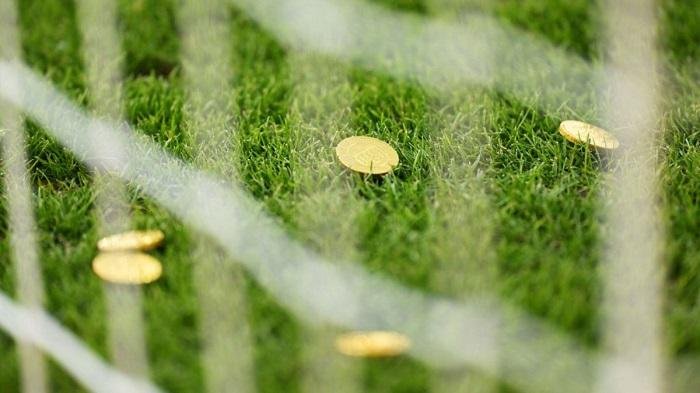
Chocolate coins thrown by fans at the Bundesliga match between Heidenheim and Wolfsburg
The state of Ghana football has become an enormous worry for Ghanaians lately.
And it has reached a point that required drastic measures, damned the consequences, to keep the nation’s passion afloat.
The situation has led to a historic fans’ demonstration in the capital spearheaded by sports journalists who feel the state’s intervention was required to halt the direction the Kurt Okraku Ghana Football Association (GFA) administration is driving the game.
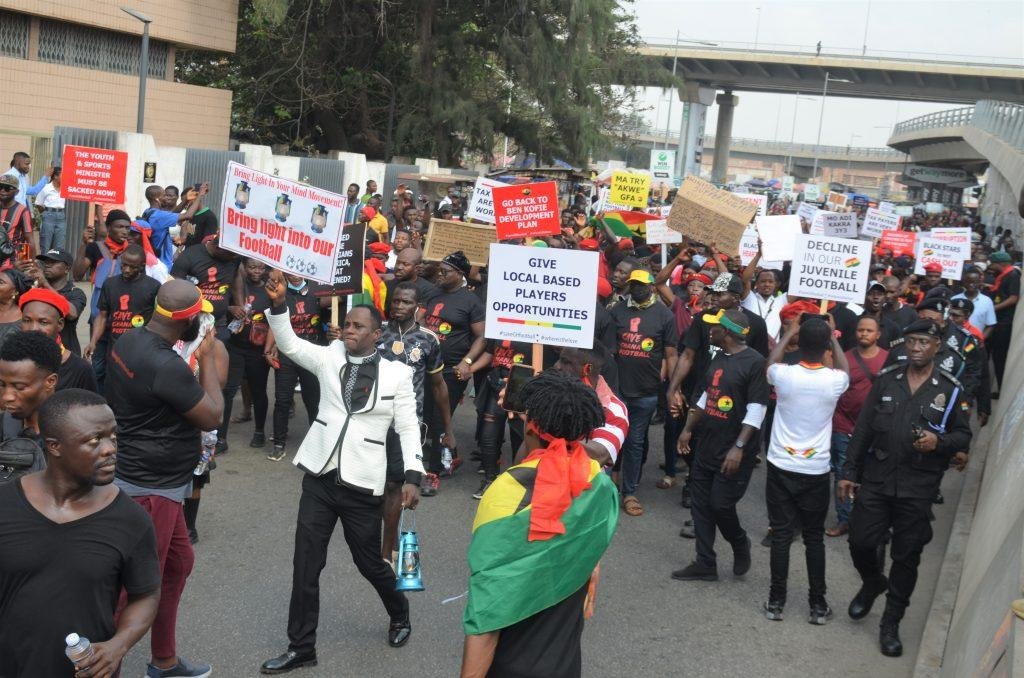
The involvement of these seasoned journalists in the football rescue operation makes the development even more exciting due to the fact that this kind of exercises have usually been seen as a preserve of the fans.
So, for them to abandon their microphones in their respective studios to march under the scorching Accra sun tells a story of how disturbing the situation has become.
But trying to understand exactly what their actions were about, it is very important to decipher the factors under consideration in arriving on the subject of the ‘state of Ghana football.’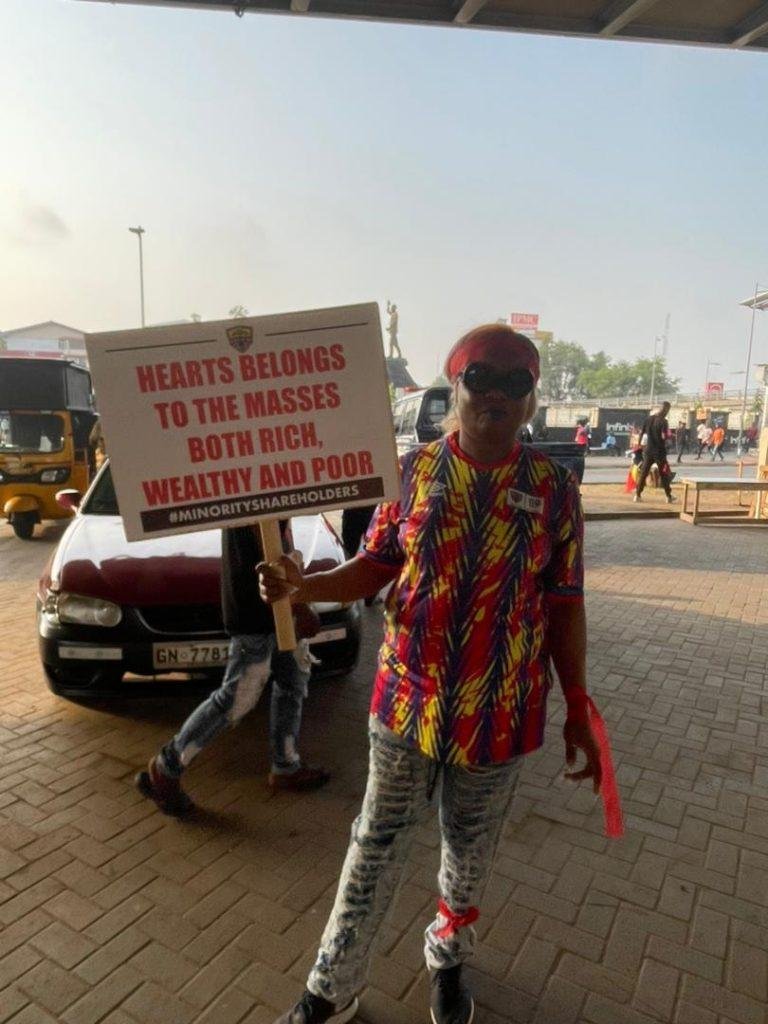
As expressed by an ex-player John Paintsil on a television programme recently, Ghana football should encompass the game’s administration from the very grassroots to the very top, the Black Stars which performance appears to have been the cause of the actions.
That, in itself, is another problem football lovers must try to seek redress to due to the over concentration on the cash cow (Black Stars) to the detriment of all others.
The quality of the game from the lower divisions all the way to the Ghana Premier League (GPL) has been nothing to write home about. Matches are very boring with clubs using crude tactics to win matches.
Referees are not left out of the chaos as they churn out unimpressive performances that raise a lot of question marks over their competence.
The fans also contribute their quota in a negative way to make it murkier with their violent conducts at venues, attacking opposing teams and fans as well as referees.
All of these contribute to taking the shine off our so-called beautiful game which should have attracted the attention of the conveners.
But, as usual, it is the rapid decline of the Stars that is giving almost everyone sleepless nights and warranting such actions.
I read in the last few minutes before this piece that a second demonstration earmarked for Kumasi in the Ashanti region was called off due to scheduled engagement with some of the major stakeholders in the line of restoring Ghana’s lost glory in football.
It would have been bigger than the Accra edition due to the passion fans in the region have for the game.
A 15-point petition called among other things a political will and support of the legislature to fashion out a policy to deliberately develop the game.
That touches on the game’s administration in Ghana, from the Juvenile Leagues, the Division Two League, Division One League, Ghana Premier League, and the National football teams, particularly the Black Stars.
It also highlighted the development of a national football policy, disbandment of the management committee, structural reforms, government investing massively in school sports, technical development, infrastructure, grass-root football, the establishment of national training centres for all national teams’ coaches and their contracts.
These are very genuine concerns but the question on the lips of many vexed in football would be the kind of interpretation or spin to be put on the invitation of government and its legislature in this matter.
This has happened in other jurisdiction and has been described as political interference and led to bans and formation of Normalisation Committees. This should be fresh in our memories.
One may then ask about the specific role of the government, knowing the consequences of taking such actions.
I feel the onus lies on the FA to do exactly what the masses are calling for without necessarily government intervening. As football people, they understand the concerns of the masses and are well placed to fix them. What they need now is a complete change of attitude.
But call the week a season of demonstrations and one would not be far from right.
Far away in German, fans launched a series of protests, independent of the clubs, aimed at reversing or at least reconsidering a law that allowed the influx of capital for football broadcasting.
The protests were carried out by supporters of different teams in Germany and caused matches to be disrupted.
The interesting thing about their demonstration was the manner it was carried out.
While Ghanaian fans carried several placards with captivating inscriptions and walked for a few hours, the Germans attended their games and interrupted play anytime a goal was scored by throwing tennis balls and chocolate coins onto the pitch, delaying the starts and restarts of games and forcing referees to abandon matches.
During a second division match between Hamburg and Hanover, banners with a target superimposed over the face of Hanover’s president were displayed. The match was interrupted for 30 minutes when tennis balls and other objects were thrown onto the pitch.
Similar protests delayed the start of the Bundesliga match between Bayer Leverkusen and Bayern Munich on February 10.
The weekend’s game between Bochum and Bayern Munich was also disrupted several times by the fans action.
Two days fans of Accra Hearts of Oak also hit the streets in the typical Ghana demonstration fashion, also wielding placards with several inscriptions and calling for reforms.
Maybe as the attention of the German and Ghana FAs are drawn to their respective issues, fans or demonstrators of the two countries can also share a few ideas about holding demonstrations. That may help them know the best way to go about it – walking for hours or causing match disruption.
By Andrew Nortey



The Tema Regional Police Command has arrested a 32-year-old man for allegedly posing as a soldier and extorting money from unsuspecting members of the public at Ashaiman.
The suspect, identified as Bright Atsu Kudiabor, was arrested by the Ashaiman Police on Wednesday, September 16, 2026, at about 7:00 a.m.
According to the Police, he was arrested at an area known as “I Shall Return”, where he was allegedly parading himself as a soldier and demanding money from people.
The Police said Kudiabor, who is an ex-convict, was initially arrested by personnel of the Ghana National Fire Service in Ashaiman with assistance from other members of the public.
A search conducted on him after he was handed over to the Police reportedly led to the recovery of a set of military camouflage uniform.
The suspect is currently in Police custody and assisting with investigations.
The Tema Regional Police Command said he would be processed for court after investigations are completed.
The Police urged the public to remain vigilant and report anyone who falsely presents themselves as a soldier or a member of another security agency to deceive or extort money from the public.
By: Jacob Aggrey
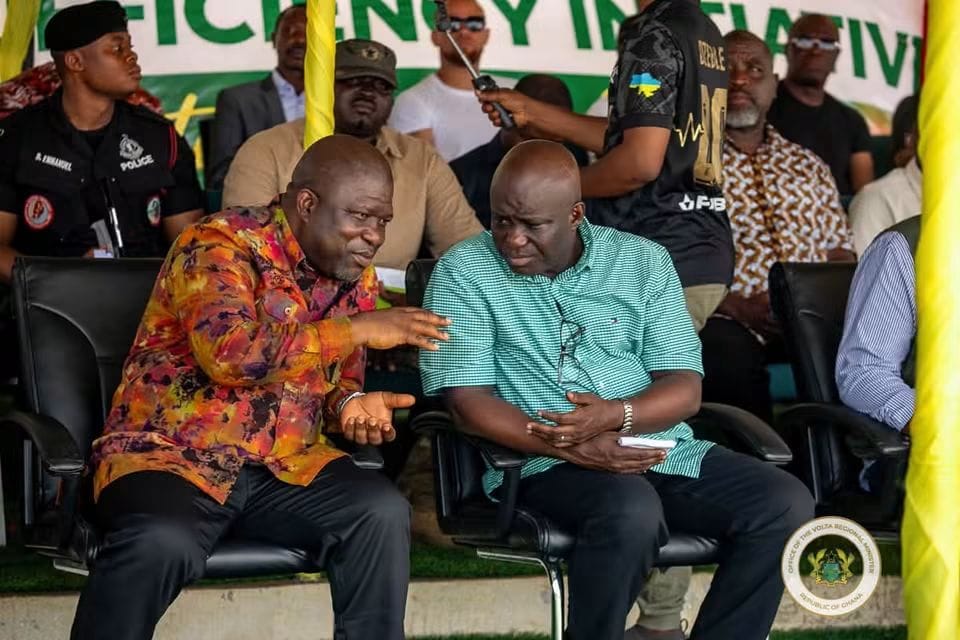
Volta Regional Minister, James Gunu, says the Volta Region holds enormous agricultural potential and efforts must be geared towards connecting farmers to the needed resources to unlock that potential.
He said focus must be on linking farmers to resources, technology, financing and markets to increase production, create jobs and build sustainable livelihoods.
Hon. Gunu made the remarks at the national launch of the Ghana Tomato Self-Sufficiency Initiative (GHATSI) held at Anloga in the Volta Region on Tuesday, September 15.
The initiative, under the theme “Produce at Home. Feed the Nation. Export the Surplus,” seeks to boost local tomato production, processing and marketing while reducing Ghana’s heavy reliance on imported tomatoes.
The launch was attended by the Minister for Food and Agriculture, Eric Opoku, his Deputy, John Setor Dumelo, Feed Ghana Coordinator, Bright Demordzi, Members of Parliament, traditional leaders, MMDCEs, farmers and other stakeholders.
Mr.Gunu expressed appreciation to the Minister for Food and Agriculture for the support announced for the region, including two excavators, 200 cartons of organic fertiliser, and GH¢200,000 for Ms. Kuatudzo Esther Dela, a tomato farmer and processor from Ziope.
He described the initiative as an important step towards making agriculture a stronger driver of food security, job creation and economic growth in the Volta Region.
By Edem Mensah-Tsotorme