News
Fact sheet about agric machines in Ghana

- /home/u249204778/domains/spectator.com.gh/public_html/wp-content/plugins/mvp-social-buttons/mvp-social-buttons.php on line 27
https://spectator.com.gh/wp-content/uploads/2021/12/Pix-1.jpg&description=Fact sheet about agric machines in Ghana', 'pinterestShare', 'width=750,height=350'); return false;" title="Pin This Post">
- Share
- Tweet /home/u249204778/domains/spectator.com.gh/public_html/wp-content/plugins/mvp-social-buttons/mvp-social-buttons.php on line 72
https://spectator.com.gh/wp-content/uploads/2021/12/Pix-1.jpg&description=Fact sheet about agric machines in Ghana', 'pinterestShare', 'width=750,height=350'); return false;" title="Pin This Post">
It is interesting to note that:
- Diesel/kerosene fired dryer was released in 2014. This is a dryer that employs indirect heating for drying grains and for processing food. It is applicable in all maize growing areas in Ghana.
The dryer is suitable for crop grain drying and for food processing; atomiser is locally manufactured; does not use exhaust fumes for drying. The technology reduces postharvest losses.
- Walk-in hot air cabinet dryer was released in 1993. The walk-in hot air cabinet dryer is available in four sizes 56 trays, 84 trays, 100 trays and 140 trays.
The dryer uses electrical energy as its source of fuel and has automatic temperature control system and a 24-hour timer to predetermine period of operation.
It is applicable in all cereals, root and tubers, and fruits growing areas in Ghana. It is used for drying of food commodities such as roots and tubers, vegetables, fruits, cereals, etc.
- Micro-nutrients fortification mixer for dietary supplementation for malnourished community was released in 2007.
The technology is for fortification of food with vitamin premix for malnourished children and women in Northern Ghana.
It is applicable in Northern Ghana. It is used for improvement of nutritional status of rural communities of northern Ghana.
- Snail meat preservation was released in 1995. The technology describes a more hygienic, appropriate and low-cost method for the preparation, spicing and solar dehydration of snail meat.
A second technology developed involved spice extraction and snail meat preparation for the corning of snail meat in brine. It is applicable in snail rearing communities.
It is used for snail meat preservation (solar dehydrated and canned) to offset scarcity of the product during the dry season when snails are scarce.
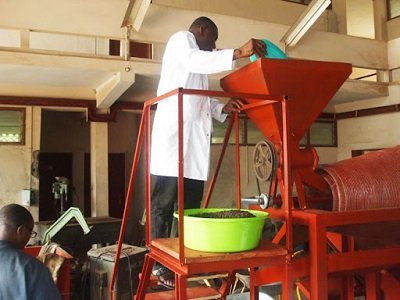
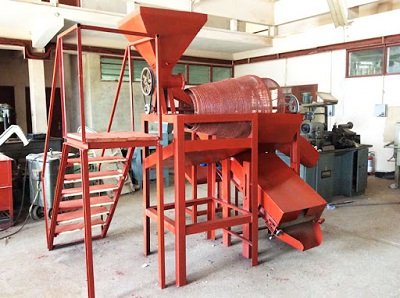
- Palm kernel shell separator was released in 2012. The technology reduces time for kernel shell separation from 24 hours per 60 kilogramme material to seven minutes per 60 kilogramme material.
It eliminates the use of water in the kernel separation process. Additionally, it eliminates the use of clay in the kernel shell separation process. The efficiency of separation ranges between 90 per cent and 95 per cent, depending on the cracking efficiency. It is suitable for separating palm kernel shells.
Two levels of beneficiaries are targeted. The first would be agro-industrial machinery fabricators who can be trained to fabricate the equipment for sale to palm kernel oil producers. Second, the numerous women and women’s groups scattered all over the country and nearby countries who are involved in palm kernel oil production.
- Best processing practices indicators for artisanal mills to produce high quality crude palm oil was released in 2012.
Attributes: Minimum boiling/sterilisation time of two hours 30 minutes. Keep fruits and ‘digested fruit matrix’ hot throughout digestion and pressing process. Ensure adequate clarification. Ensure adequate sieving to reduce dirt or insoluble content.
The technology is suitable for grain drying and food processing. It is used for production of crude palm oil that meets standards. It minimises postharvest storage of fruits prior to digestion to three to five days.
Source: Manual of Agricultural Technologies developed by
CSIR, MAG and MoFA
Page: 137-140


Lawyers for former NAFCO Chief Executive Officer, Hanan Abdul-Wahab Aludiba, say they will file an appeal despite a High Court directive for the Attorney General to amend two counts of defrauding by false pretences in the ongoing case.
The court on Wednesday ordered the AG to amend the two charges in the case involving the former NAFCO CEO and co-accused, Faiza Seidu Wuni.
Reacting to the ruling, counsel for Hanan Aludiba, Godfred Yeboah Dame, expressed dissatisfaction with the decision.
“Even though they’ve been ordered to amend some of the charges, we’ll still file an appeal. I think the decision was not so sound,” he said.
The case is part of ongoing prosecutions linked to alleged financial irregularities at the National Food Buffer Stock Company (NAFCO).
The High Court’s directive means the prosecution will have to revise aspects of the charge sheet before the trial proceeds further.
Background
Counsel for former NAFCO CEO Hanan Abdul-Wahab Aludiba, led by Godfred Yeboah Dame, filed an application seeking to have the charges against their client dismissed.
They contend the charges are fundamentally flawed and violate his right to a fair trial.
The State, represented by Deputy Attorney General Dr. Justice Srem-Sai, opposed the application, maintaining that the charges are valid and that the accused ought to face trial.
Lawyers for Hanan’s wife, Faiza Seidu Wuni, led by Augustine Obour, who would also benefit if the application succeeded, yielded their time to the lead counsel for the first accused.
By Edem Mensah-Tsotorme
News
High Court rejects dismissal request in NAFCO Case, orders prosecution to amend 2 of 16 Charges Against former CEO


The High Court has declined a request by lead counsel for former National Food Buffer Stock Company (NAFCO) Chief Executive Officer, Hanan Abdul-Wahab Aludiba, to dismiss charges against him, but has directed the Attorney General to amend two of the 16 counts filed against him.
Presiding Judge, Justice Francis Apangabonu Achibonga, a Justice of the Court of Appeal sitting with additional responsibility as a High Court judge, ruled today that while the prosecution must revise Counts 9 and 14, the trial will proceed on all charges.
This means the trial of the couple will continue on a combined 20 counts.
Hanan Abdul-Wahab Aludiba is facing 16 counts, while his wife, Faiza Seidu Wuni, is facing 4 counts. Both pleaded not guilty on May 18, 2026 and are currently on bail.
Godfred Yeboah Dame, former Attorney General and lead counsel for the first accused, had argued for the dismissal of the charges. Reacting after the ruling, he said the decision was not sound and indicated plans to file an appeal.
“Even though they’ve been ordered to amend some of the charges, we’ll still file an appeal. I think the decision was not so sound,” he stated.
Augustines Obuor is lead counsel for the second accused, Faiza Seidu Wuni, whiles the Republic was represented by Dr. Justice Srem-Sai, Deputy Attorney General.
The case relates to alleged financial irregularities at NAFCO and is being closely watched as part of government’s efforts to hold public officials accountable.
The court has directed the prosecution to effect the amendments to Counts 9 and 14 before the trial proceeds further.
By Edem Mensah-Tsotorme