News
Explosion of two tankers, kills boy 2, at Apremdo


On Wednesday, a two-year-old boy died when two diesel tankers exploded and caught fire, near the Apollo traffic light junction at Apremdo, in the Effia–Kwesimintsim Municipality.
The deceased was burnt beyond recognition, while his auntie, Maame Abena, a MOMO agent, narrowly escaped from the fire.
The Effia-Kwesimintsim Municipal Assembly (EKMA), has established that operators of the fuel tankers which exploded and caused fire at a parking space, near the Apremdo market, on Wednesday, have no permit to run such business at the premise.
It stressed that the operators have only been granted permits to erect temporal structures for businesses “and not to use the place as a parking lot or distribution point for fuel”.
The Municipal Chief Executive for Effia-Kwesimintsim, Kojo Acquah, told journalists after the fire incident that, the tanker operators have been running their operations at the blind side of the assembly, adding that “the trucks have not been given any permit”.
He has, however, indicated that EKMA would undertake a thorough investigation into the accident, assuring that, the necessary actions and sanctions would be applied against persons or groups whose negligence caused the disaster.
Sources narrated that, the child was left to sleep in one of the containers which served as MOMO joint at a parking place near the Total Filling station, at Apremdo.
The inferno, which began about 1:30 pm, sent thick dark clouds, billowing into the atmosphere and caused people at the scene to run for their dear lives.
For about four hours, the raging fire swept the entire parking area and destroyed six containers used as mechanical spare-parts shop, a drinking spot, an eatery, a MOMO joint, and an Opel taxi cab.
Reports at the scene indicated that, the fully loaded fuel tankers were parked at the parking location(yard) behind the Total Filling station, awaiting directives to discharge fuel at the pump stations before the explosion occurred.
Eye witnesses spoke about earlier efforts of crew aboard two fire tenders, who made frantic efforts to control the raging fire from spreading to other areas including the Total Filling station while an anxious milling crowd at the scene prayed it did not affect the nearby ‘Abenbenbobom market’ at Apremdo.
“I heard an explosion and the place was suddenly consumed by the fire. My brother, the inferno here is no joke,” an eyewitness recalled.
The Public Relations Officer of the Western Regional Command of the Ghana Fire Service, Divisional Officer 111, Emmanuel Kojo Bonney, said six fire tenders were deployed to the scene to control the fire, adding that “it took our team about an hour and forty-three minutes to ‘tame’ the wild fire”.
Complaining about the crowd which milled at the fire scene, he said, “In fire-fighting, every second counts so when the crowd invades the scene, we have to meander through the crowd to fight the fire…this delays our time in fighting the fire. So the police had a hectic time dispersing them.”
FROM CLEMENT ADZEI BOYE, TAKORADI


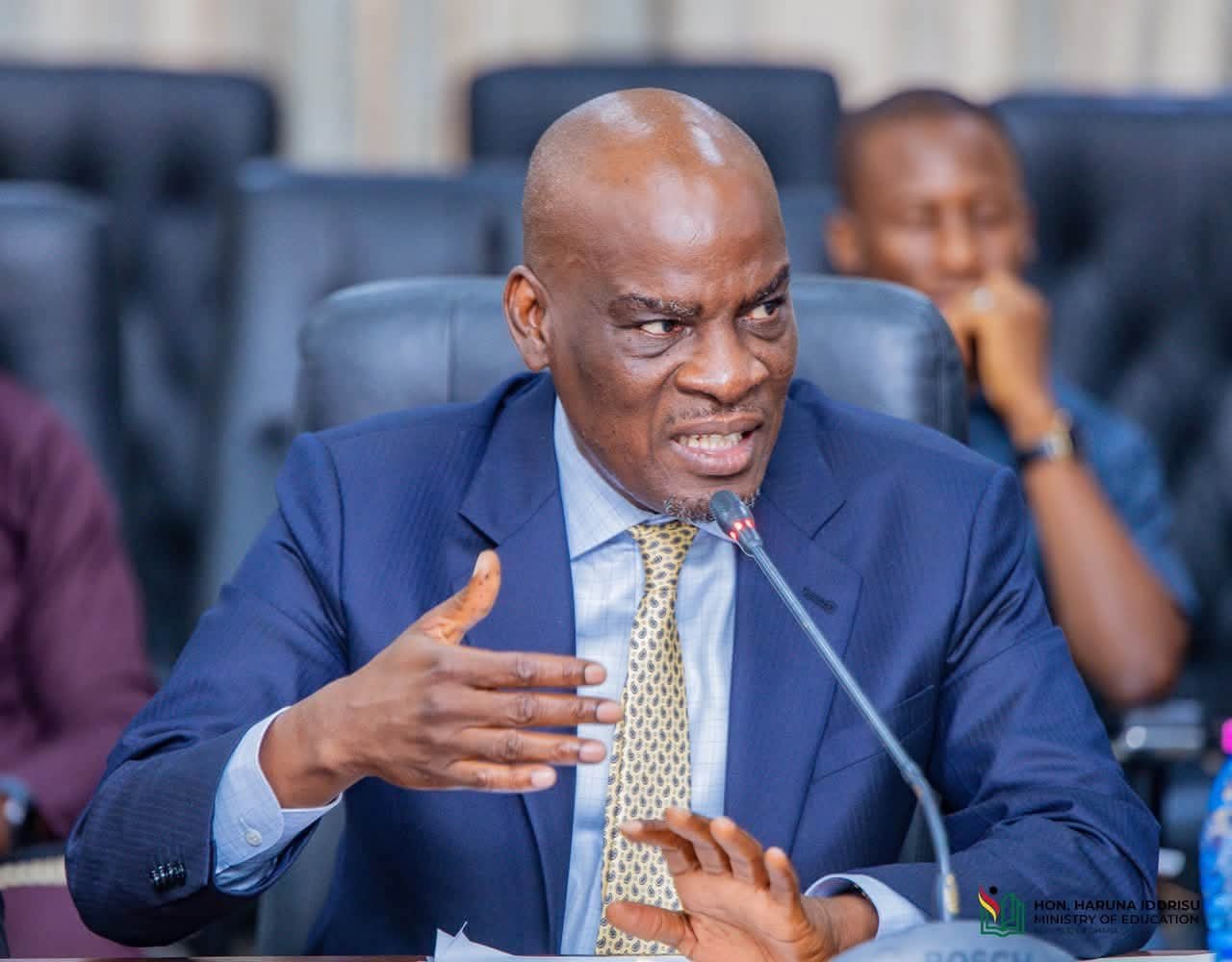
Management of the Ghana Education Service (GES) has interdicted two staff members of Aduman Senior High School over alleged sexual misconduct against a male student.
The teachers are Mr. Isaac Yankey and Mr. Palance Kwakye.
According to GES, Management received reports of the alleged sexual misconduct involving the two staff members against the male student.
Following receipt of the report, the matter was referred to the Police for investigation. The two staff members have since been arrested by the Police in connection with the alleged incident.
In addition, Management has interdicted the two teachers pending the outcome of the investigations.
The alleged victim has also been provided with psychosocial support to safeguard his well-being.
Management has assured the public that appropriate measures will continue to be taken to ensure that all students learn in a safe environment.
By Edem Mensah-Tsotorme
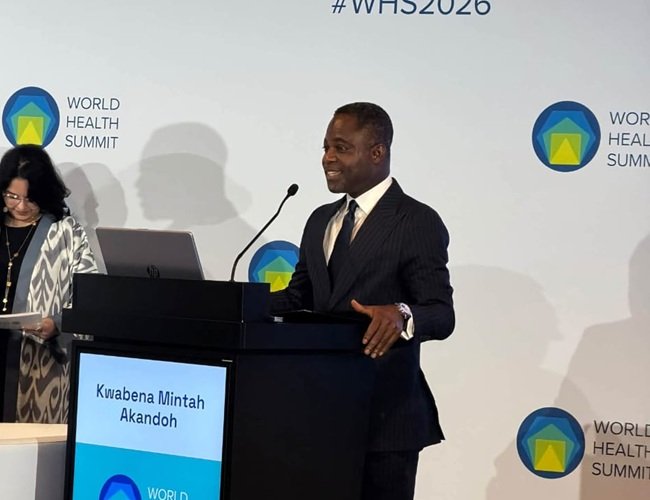
The Ministry of Health has cautioned the public against a fraudulent fundraising campaign being aired on Ghanaian televisions, which falsely solicits money to support patients seeking surgical treatment through Mercy Ships.
Mercy Ships International, an international Christian organisation providing free surgical care and education across Africa, currently has its hospital vessel, The Global Mercy, docked at the Tema Port.
The vessel is expected to provide free surgeries to more than 2,500 Ghanaians over a 10-month period ending in June 2027.
The Ministry has clarified that patients scheduled for treatment were identified and pre-screened ahead of the vessel’s arrival through a coordinated process involving Mercy Ships and the Ministry, based on established medical and eligibility criteria.
According to them, Mercy Ships is currently operating at full capacity and is not accepting additional patients for the ongoing field service.
The Ministry emphasised that payments or registrations through third parties will not guarantee access to treatment.
The fraudulent broadcast, featuring an organisation identified as ‘HELP Save LIFE Foundation,’ solicits financial contributions through an MTN Mobile Money account.
“The Ministry wishes to state categorically that the campaign is not affiliated with, authorised by or endorsed by Mercy Ships,” the statement noted.
They reminded the public that all medical services provided by Mercy Ships are entirely free, and no patient is required to make payments, donations or mobile money transfers to access treatment.
Members of the public have therefore been advised not to make payments, share personal or financial information with individuals claiming to facilitate access to the services, or engage with similar suspicious solicitations.
The ministry encouraged the public to rely solely on official Ministry of Health and Mercy Ships communication channels for accurate information on medical services and patient access.
By Edem Mensah-Tsotorme